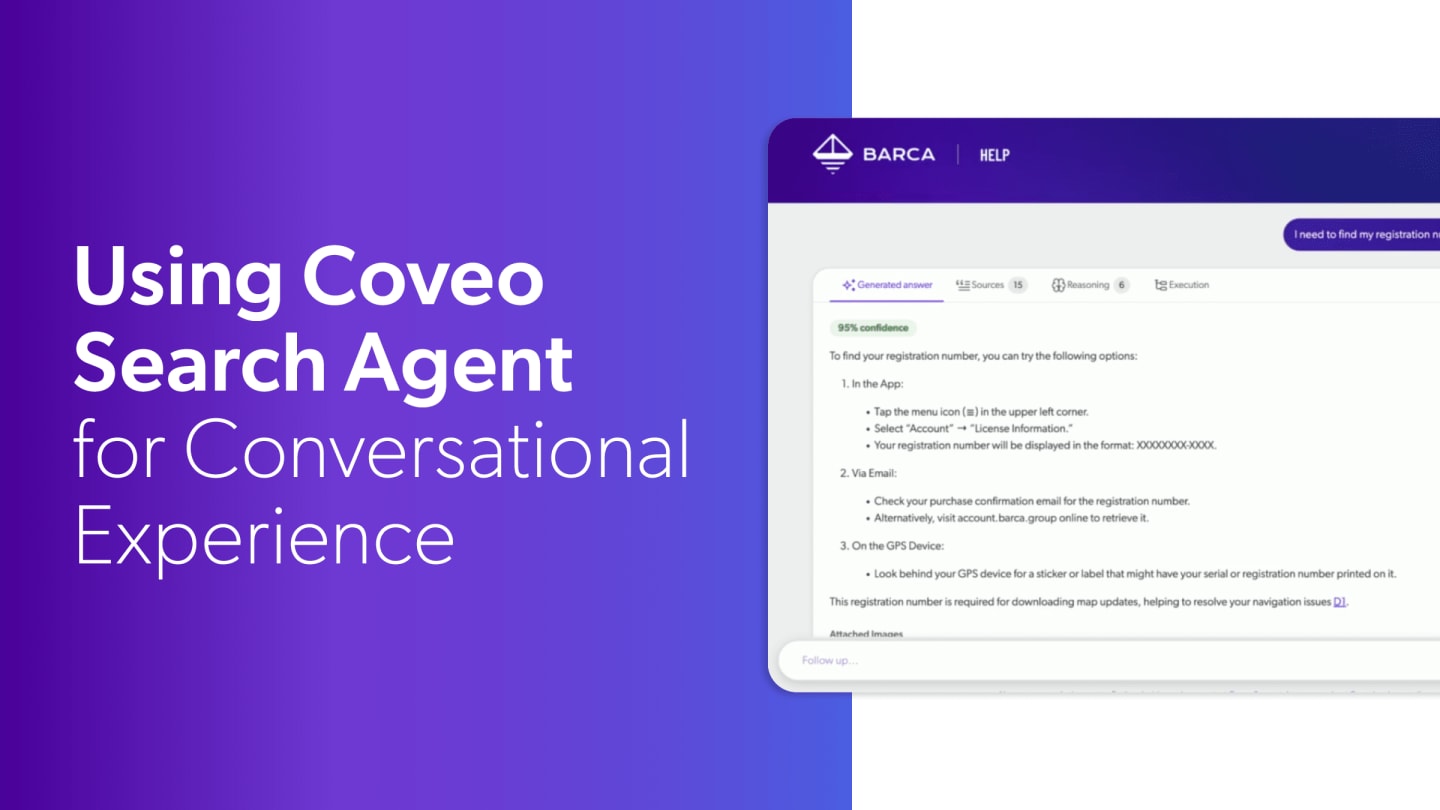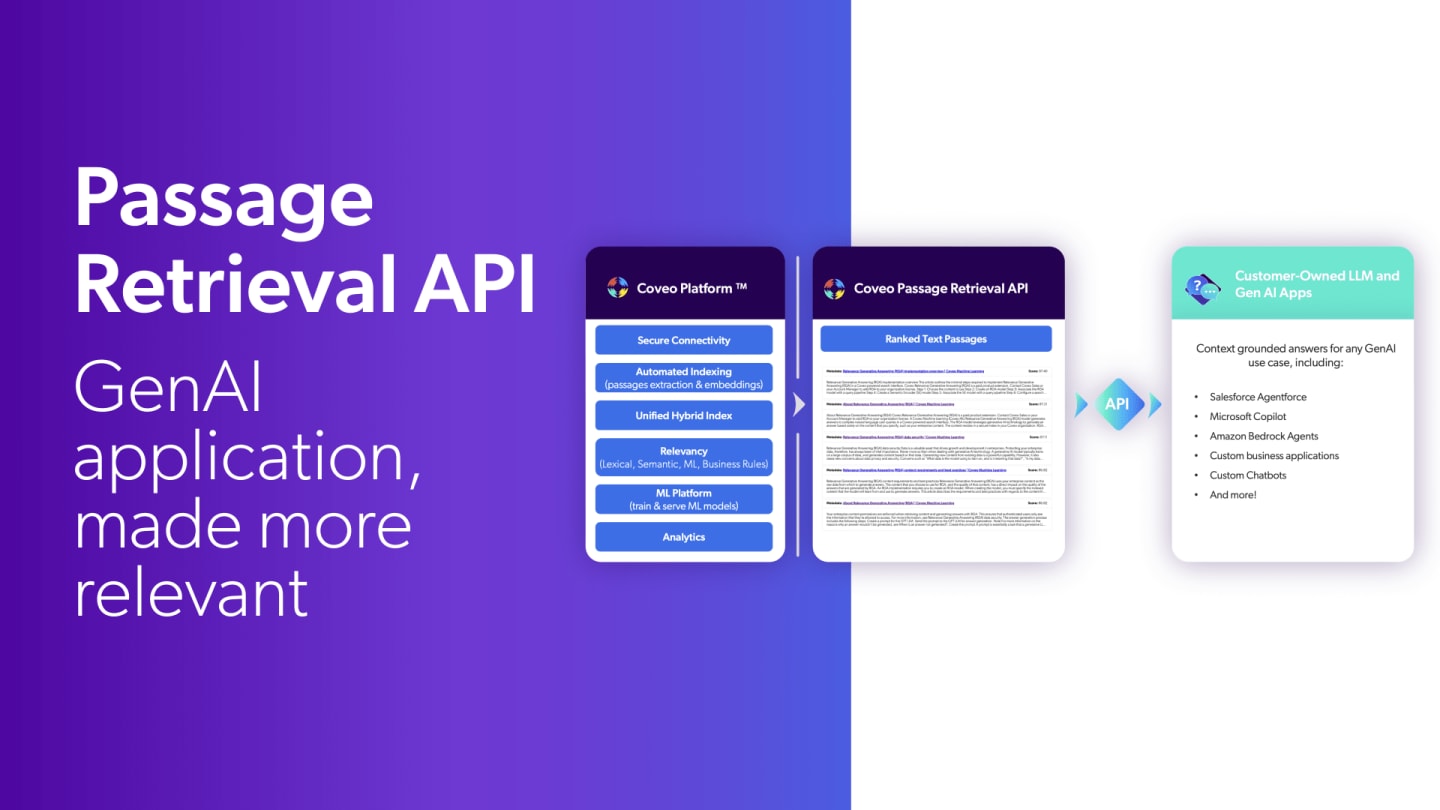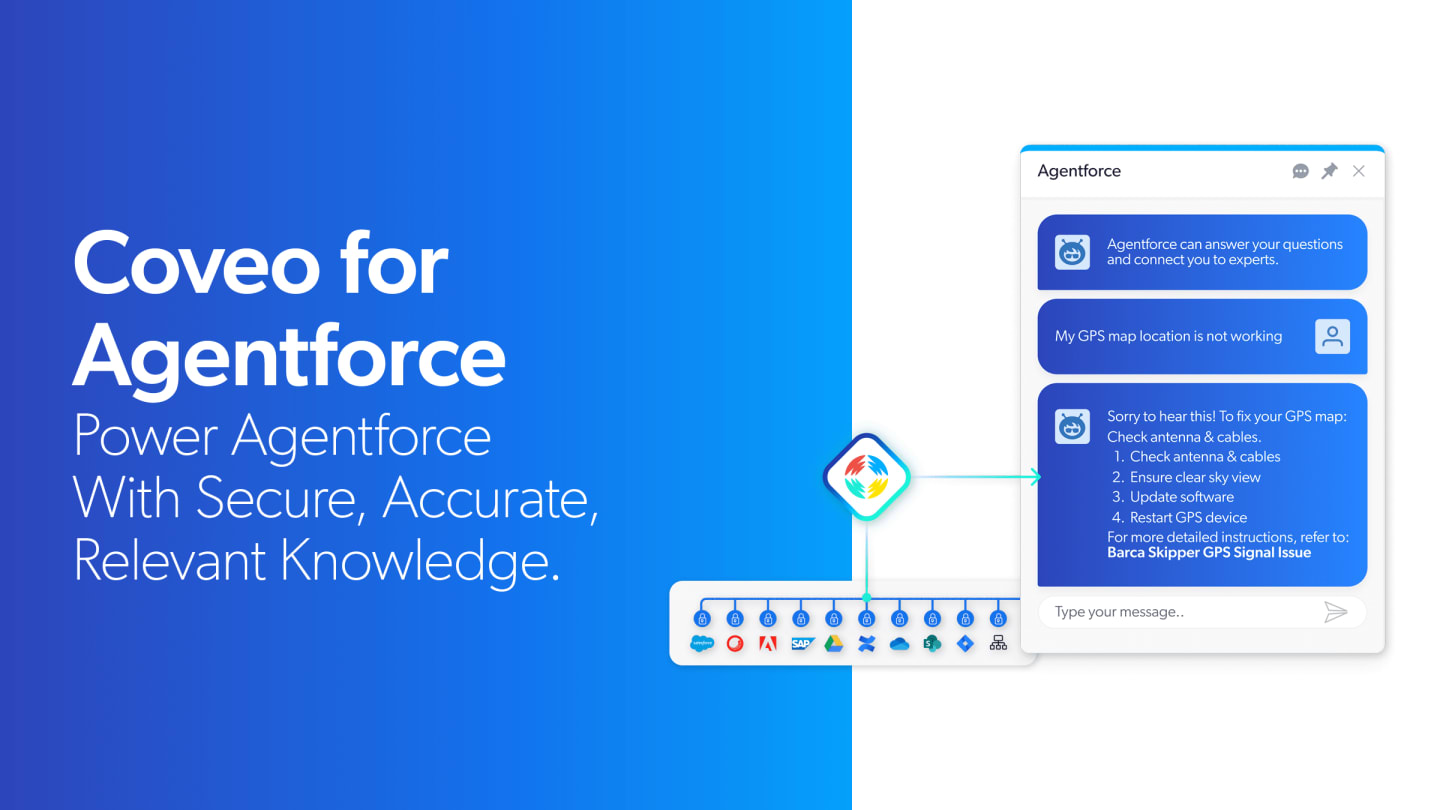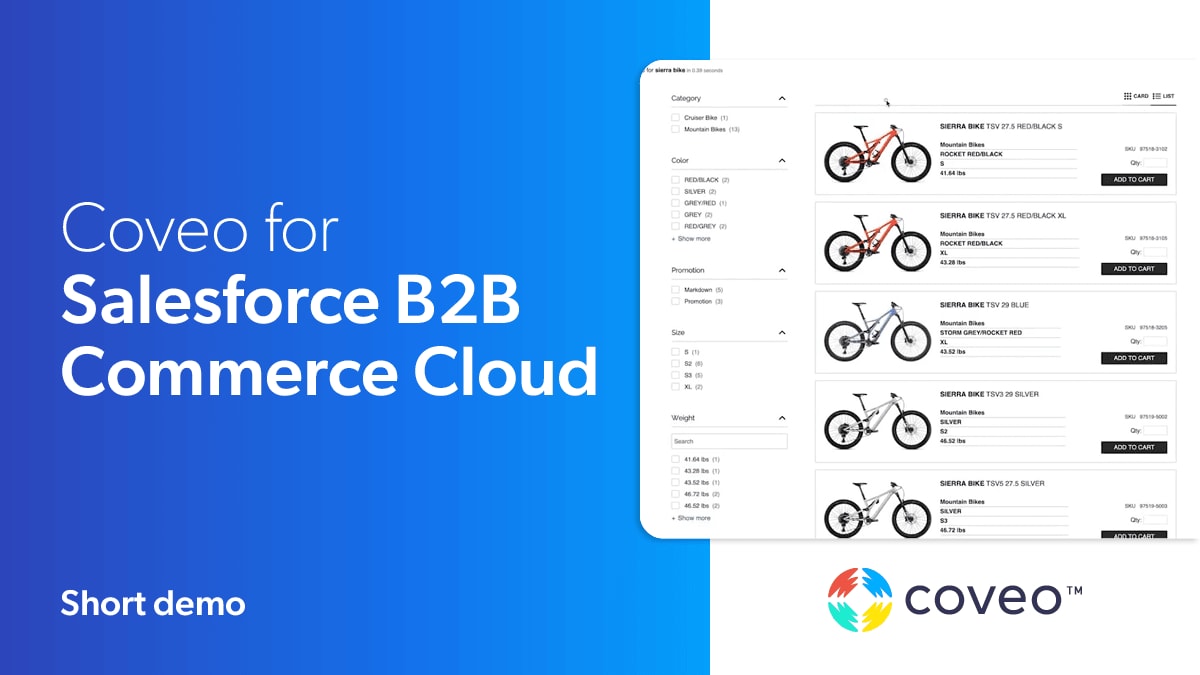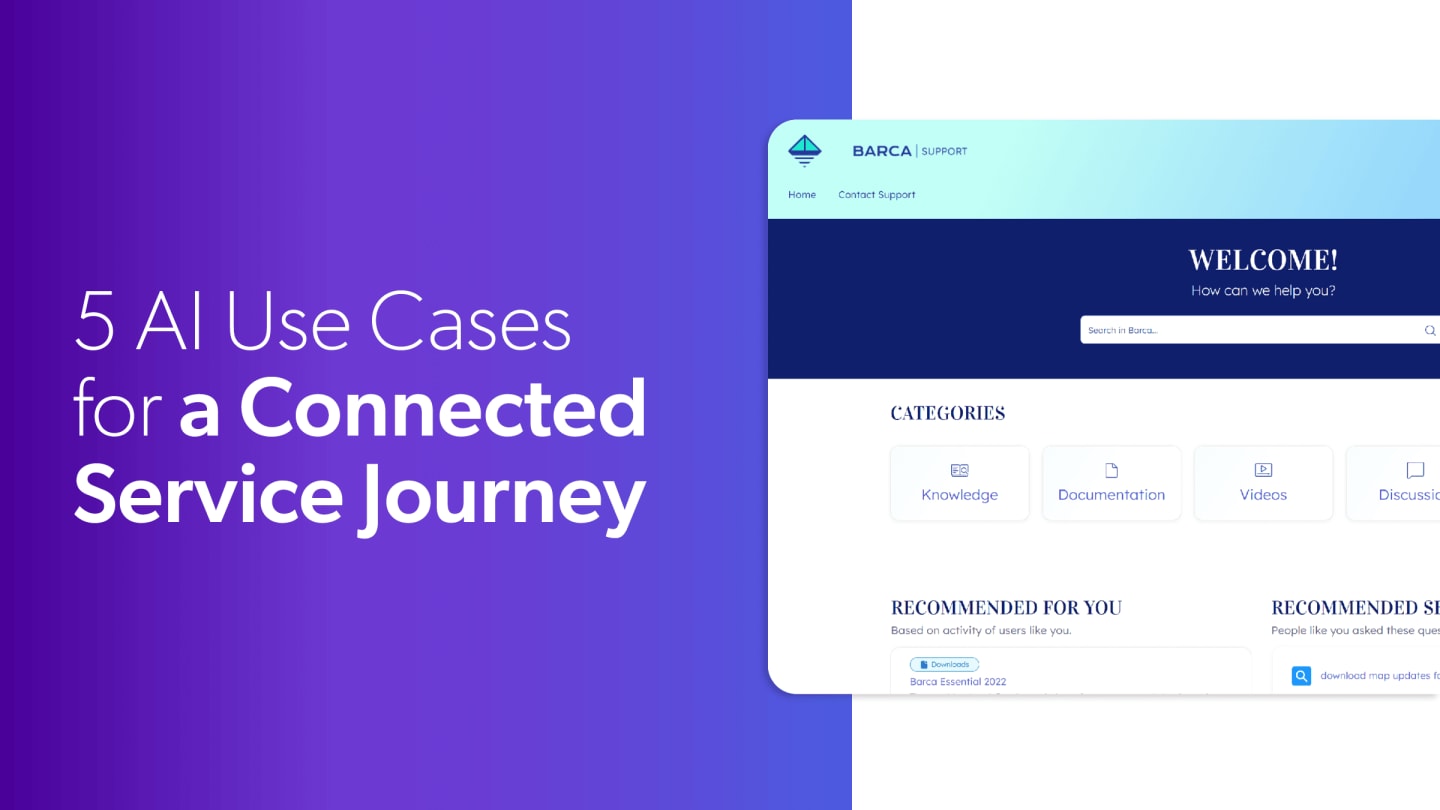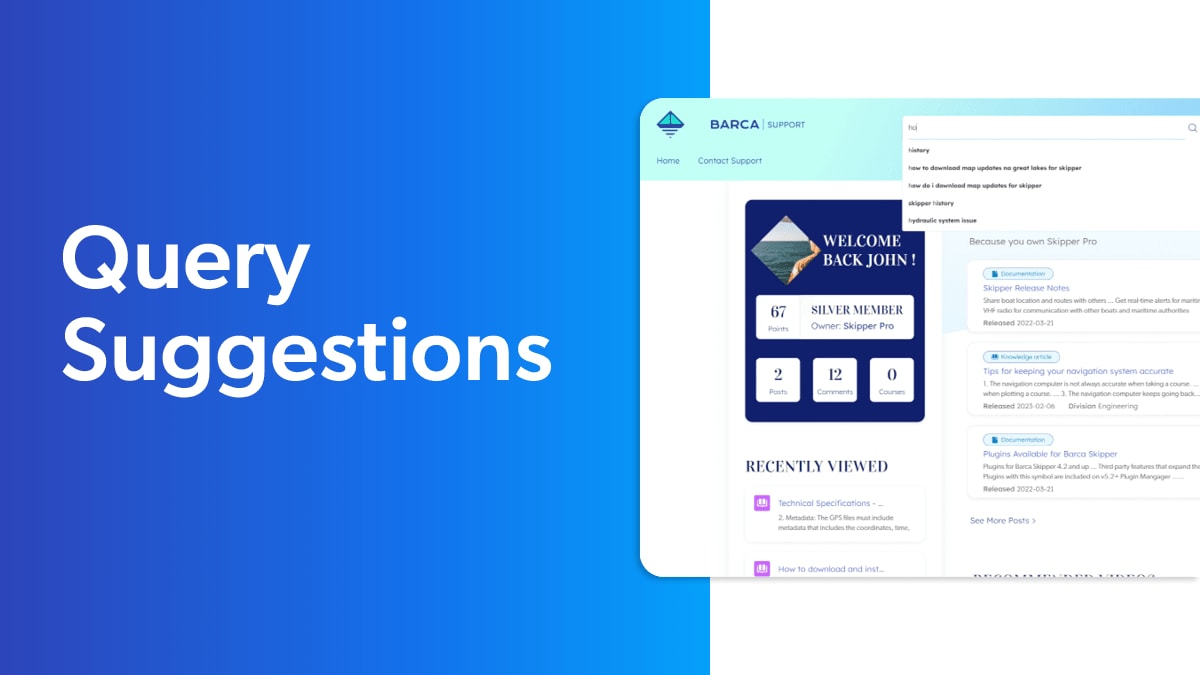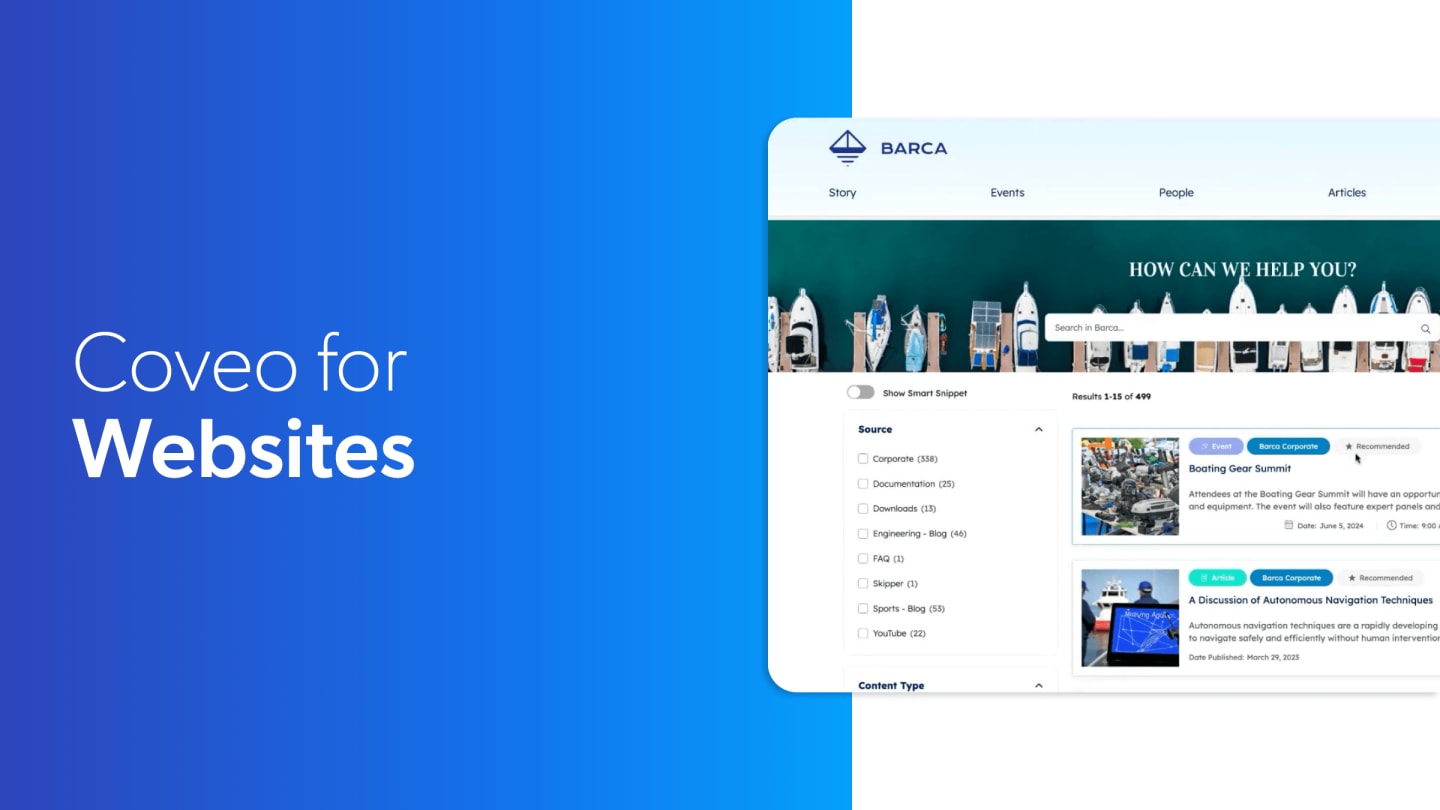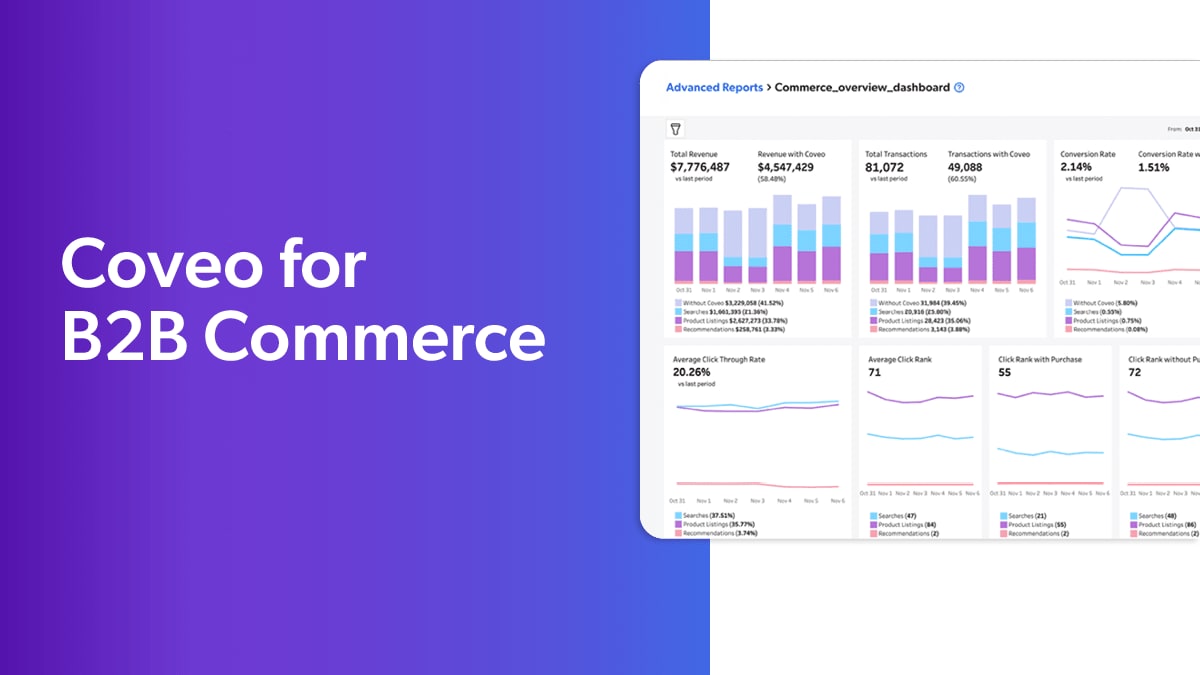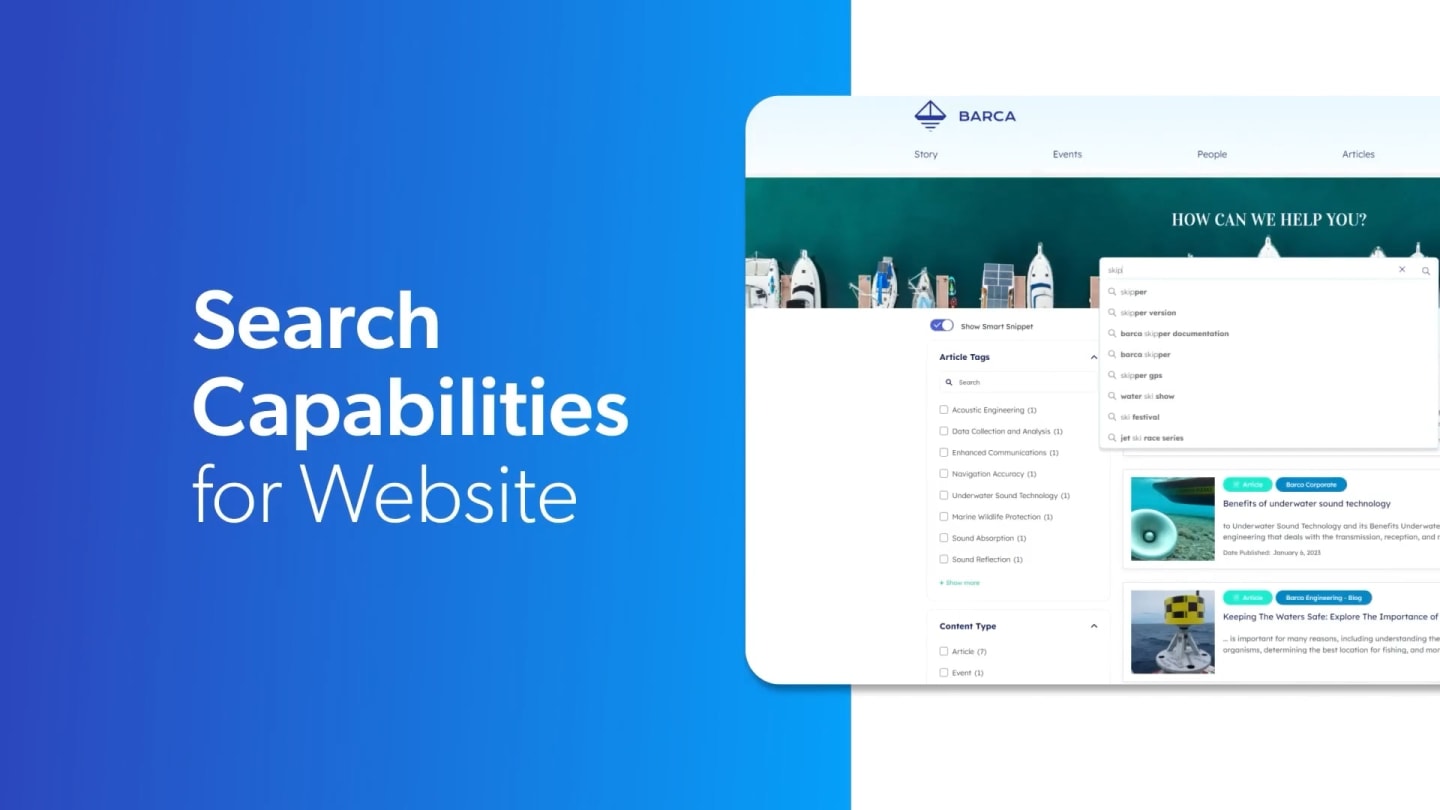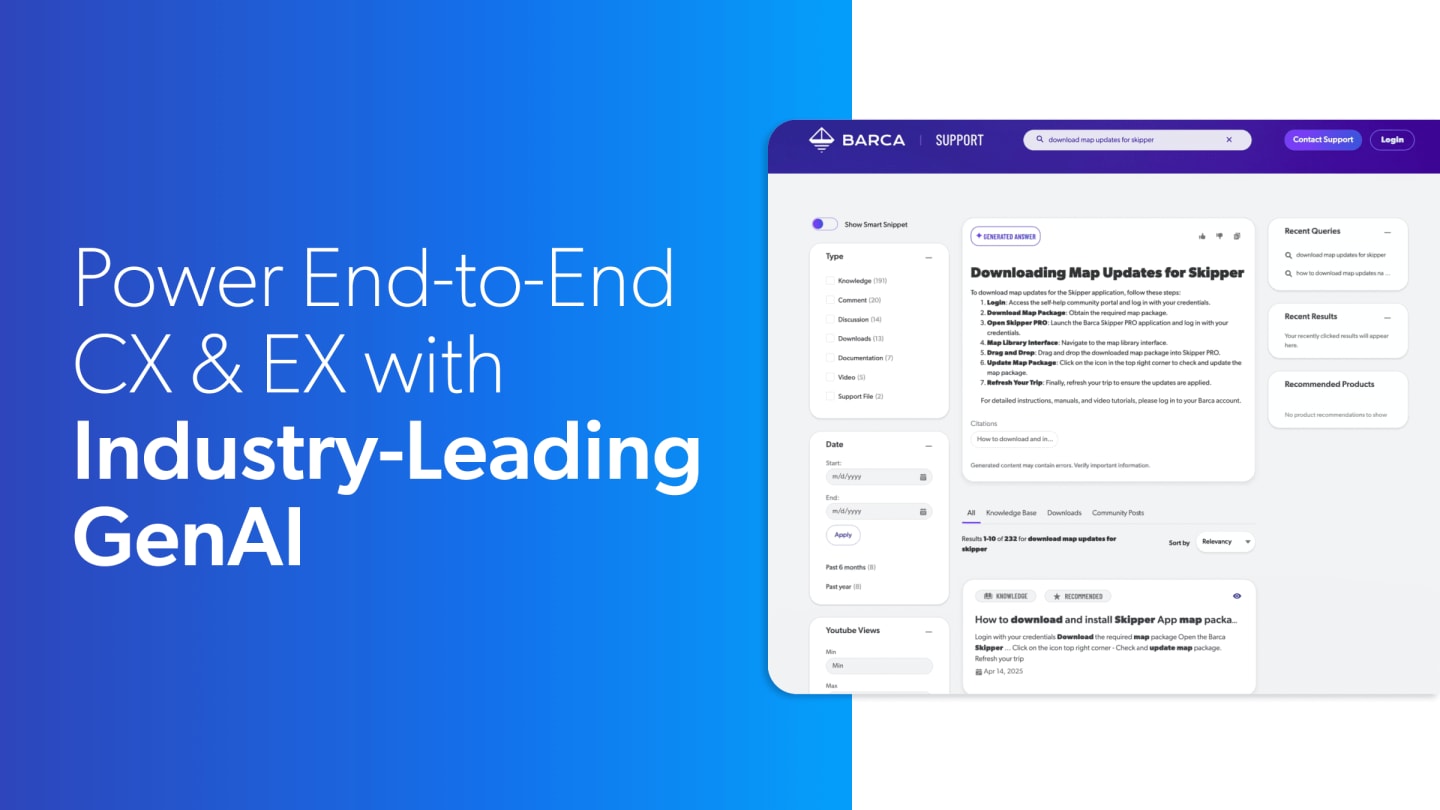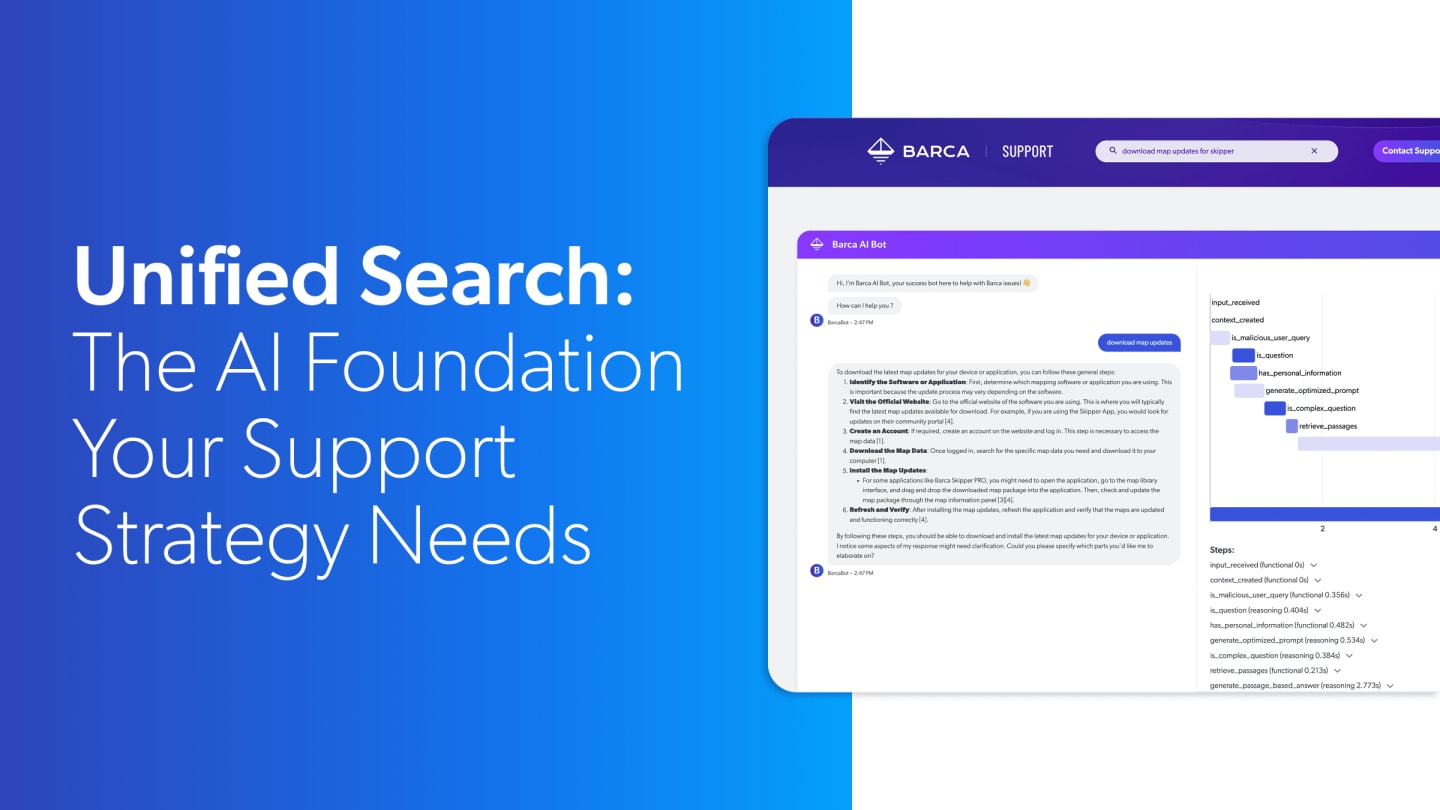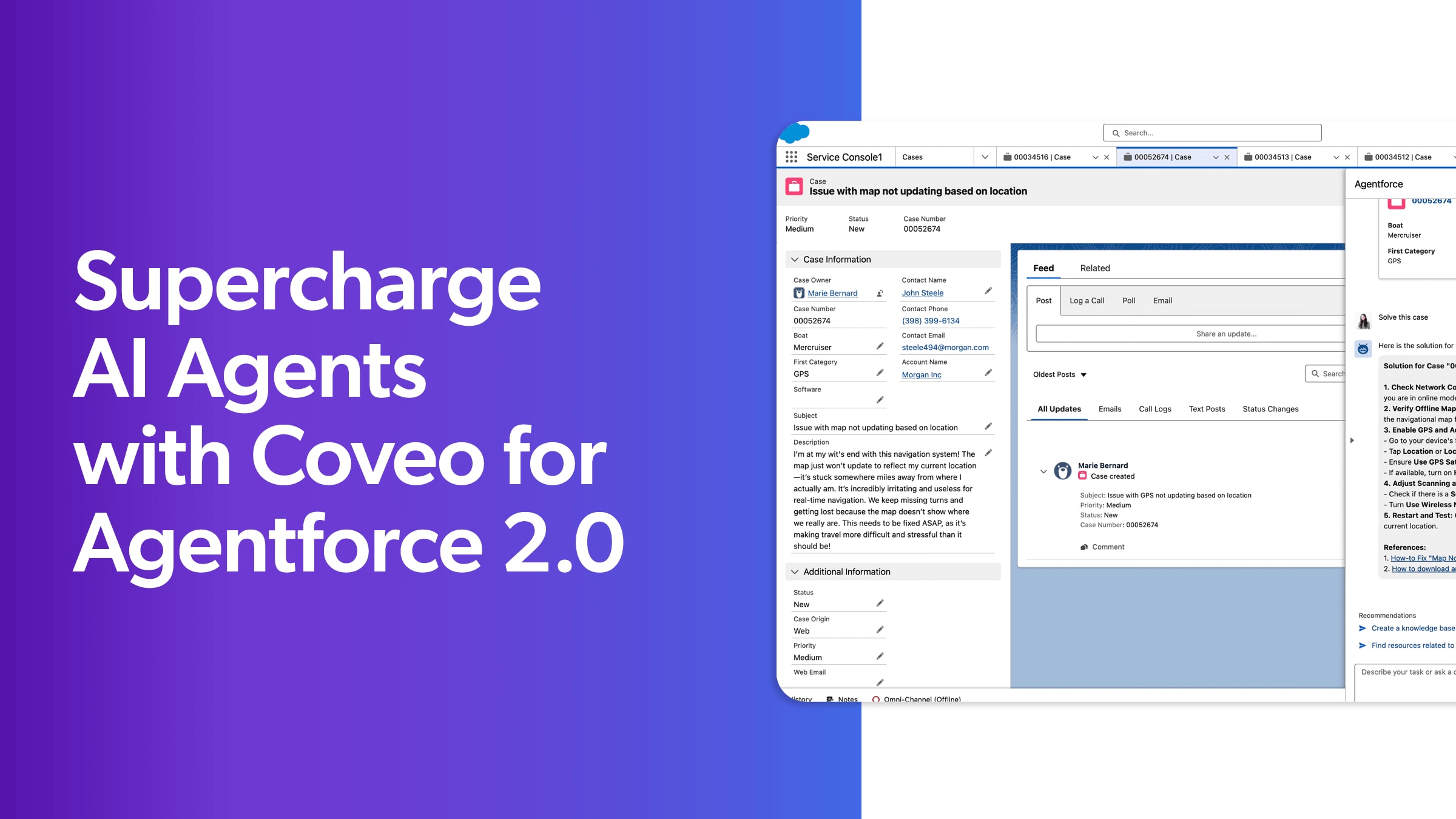
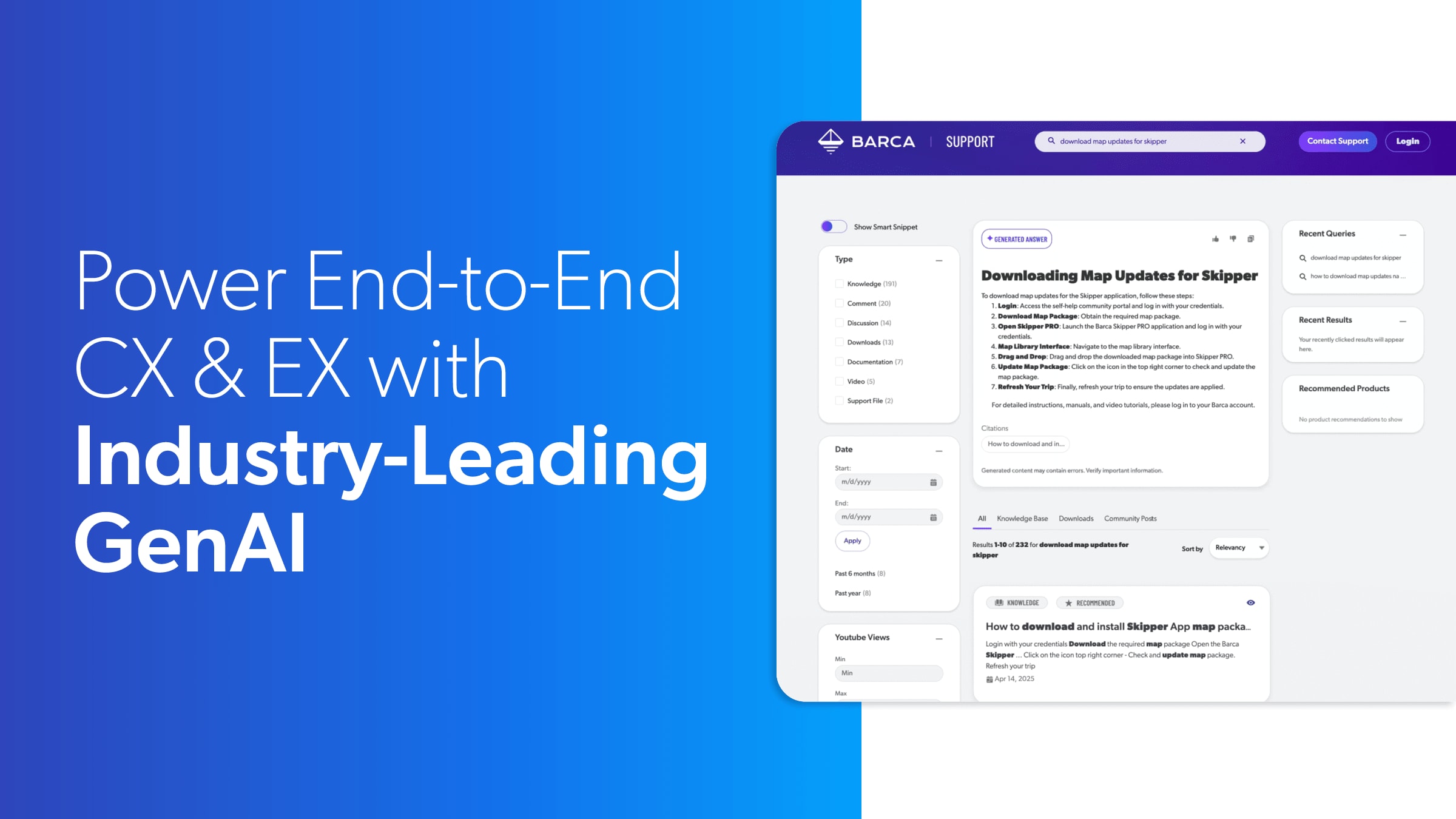
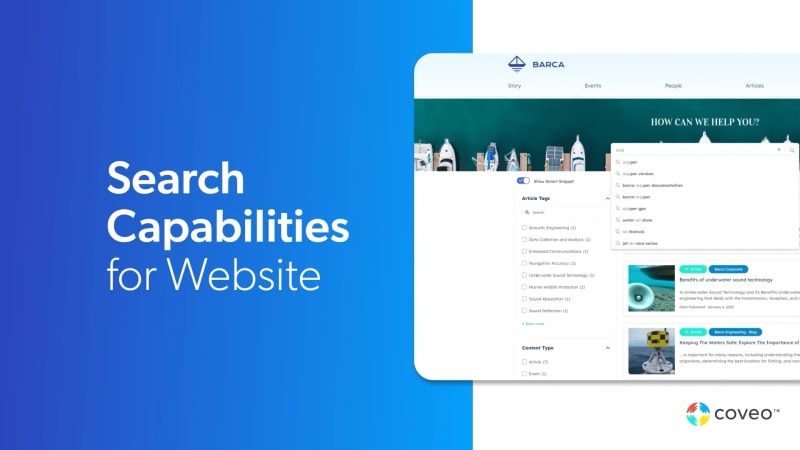
In this brief video, we'll demonstrate the powerful search capabilities of Coveo for website search. Coveo offers advanced search recommendations and generative answering across multiple use cases, with websites being the use case we explore today. With Caveo, you can create a unified index that unifies access to content from various sources across and beyond your content management systems, including support portals, discussion boards, and even internal intranet. Today, we'll showcase key Coveo features using a demo website for Barca, a fictional boating company. Barca uses Coveo across multiple applications, including their corporate intranet, customer support portal, various commerce sites, and their main corporate website. For this demo, we'll focus on the corporate website. This site houses a range of content, including marketing materials, event listings, blog posts, product documentation, FAQs, and team member information. With Coveo, content location isn't a barrier. You can ensure that visitors quickly find what they need. On the search page, you'll see filters or facets on the left side to narrow or broaden search results. These facets can be drawn from standard or custom metadata and are normalized across the various content sources used. You'll also notice tabs or links at the top, providing another way for users to refine their search. Result templates are customizable to ensure the layout makes sense for the content being presented. This helps users easily understand and interact with the search results. Caveo offers more than just links and titles. It provides additional context AI publication date, content type, and relevant images. You can sort results by relevance, date, alphabetically, or any other criteria that best serves your users' needs. Our goal is to help users find what they're looking for quickly and easily. The prominent search box encourages users to ask detailed questions, not just enter keywords. As I begin typing a query, Coveo's machine learning model provides spelling mistake aware query suggestions based on successful queries from other users. This ensures that users can easily find relevant results. Let's search for information about Barca's Skipper product, a global positioning system. As I type Skipper, Coveo offers highly specific suggestions, such as product versions and general GPS information. When I search for skipper GPS, Coveo quickly delivers even more highly relevant results. Notice how the facet values automatically adjust based on the returned content, helping users understand its origin. A recommended tag next to a top result indicates that Coveo's automatic relevance tuning powered by machine learning has boosted content based on user behavior, making it easier to find the most useful information, enhancing the user experience. Now let's explore a more complex query. Suppose I'm looking into Barca's Skipper GPS, but I want more information about GPS systems in general. Searching for how to use a GPS performs a semantic search, returning highly relevant results based on the user's intent, such as best practices for using GPS systems. However, with AI and large language models becoming more common, users expect more detailed answers. Coveo meets this expectation by leveraging a secure, generative large language model that returns answers to complex questions written in human language and based solely on your content. The generated answers include citations, and users can provide feedback on the quality of the answers, helping content creators improve their content over time. This capability enhances information discovery, FAQ management, and product discovery on your website. It also helps marketers get more out of their content with the ability to combine the most relevant parts of various pieces of content to generate the best answer. As mentioned earlier, Barca uses Coveo across various applications. For instance, on the events tab, the content layout differs, offering filters and search options relevant to event dates. Similarly, when searching for people, different criteria are highlighted, such as department or expertise instead of date relevance, which may not be as critical for this search. Coveo's content recommendations feature is another powerful tool to help users not only AI, but discover more of your content AI to their needs by analyzing user behavior, what they search for, what they click on. Coveo can automatically suggest related content within documents, like in the you may also be interested in section. This reduces the burden on marketing teams and enhances content discoverability. Note that we're able to take advantage of and learn from user behavior to enhance the findability of information. Caveo enables the creation of a rich, relevant search experience by leveraging AI and machine learning models. We hope this brief demo has been helpful, and we look forward to discussing how Coveo can enhance your website.

Search Capabilities for Website

Discover how Coveo for Website Search empowers users to find exactly what they need quickly and easily. This demo showcases Coveo’s advanced search, semantic understanding, and generative answering capabilities, applied to a fictional boating company, Barca. From product documentation to blogs, FAQs, and team information, Coveo unifies content from multiple sources and delivers highly relevant, AI-powered results. See how machine learning and generative AI improve content discovery, enhance user experience, and help marketers maximize the value of their content.

Highlights:

  • Unified index bringing content from multiple sources, including intranets, support portals, and CMSs.
  • Advanced search suggestions aware of spelling mistakes and successful user queries.
  • Facets, filters, and customizable result templates for a tailored search experience.
  • Semantic search and generative AI answering for complex user queries.
  • AI-powered recommendations for related content to increase engagement.
  • Feedback and analytics tools to continuously improve content relevance.
  • Enhances product discovery, FAQ management, and overall website experience.
  • Reduces content management burden while maximizing discoverability.
drift close

Hey 👋! Any questions? I can have a teammate jump in on chat right now!

drift bot
1