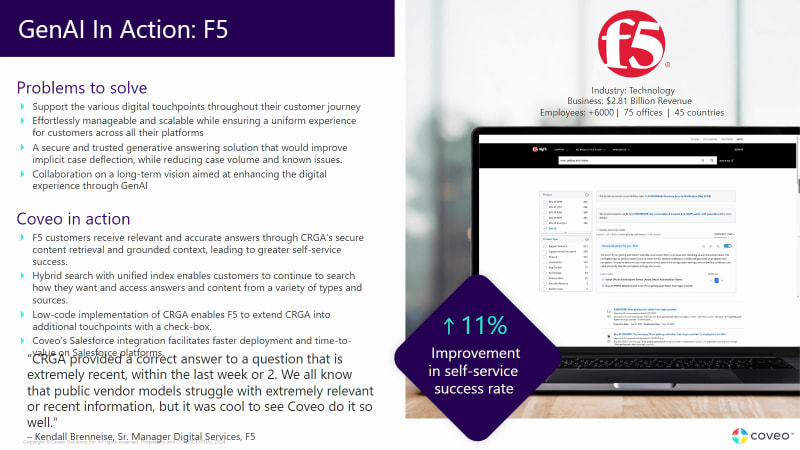
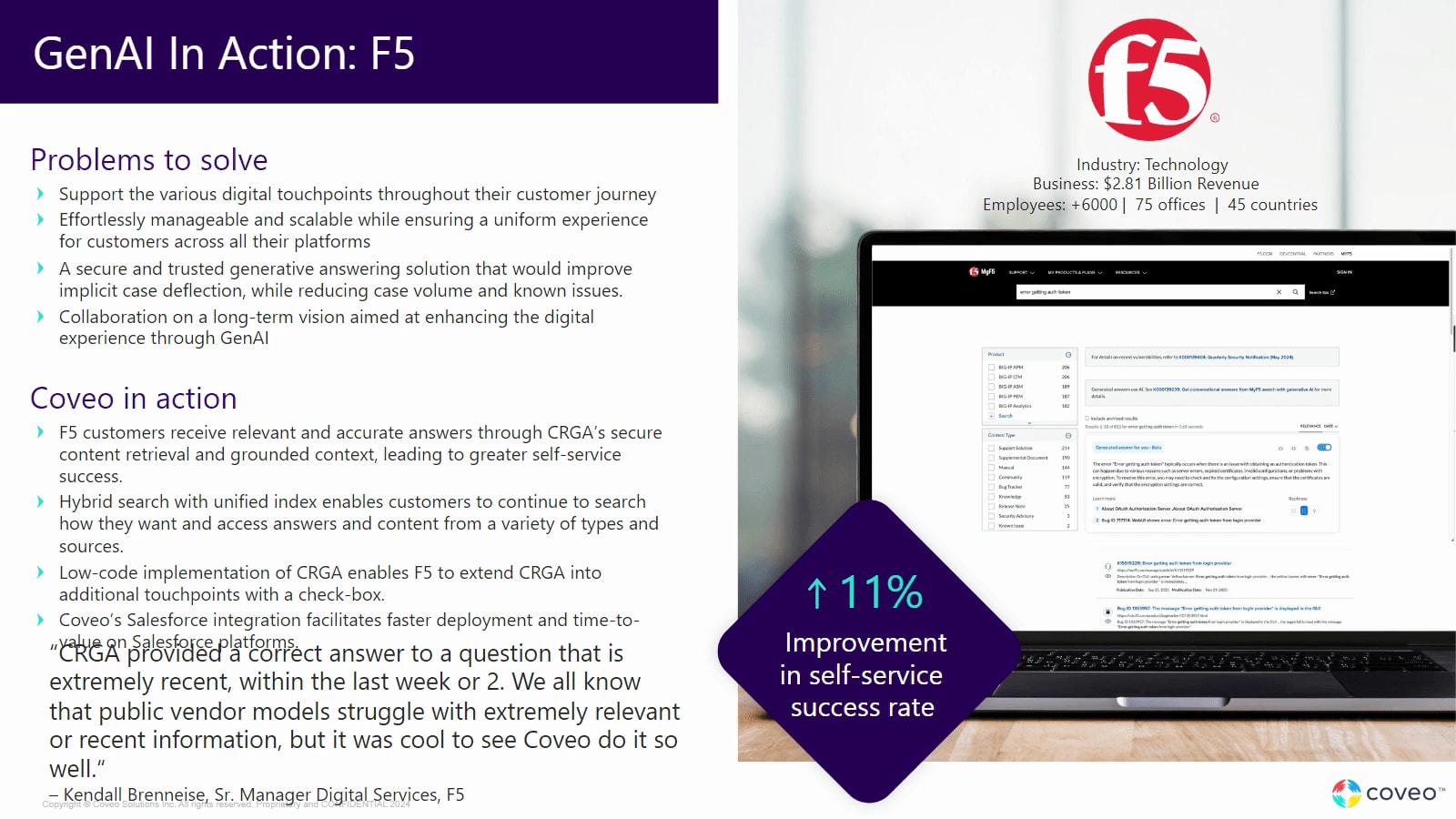
Hello, everyone, and welcome to today's CRM Magazine web event brought to you by NICE, Coveo, and Boost dot ai. I'm Bob Fiernke, and I'm the publisher of CRM Magazine, and I'm gonna be the moderator for today's broadcast. Our presentation today is titled how AI assisted self-service can transform your CX. But before we start, I just wanna explain how you can participate in this live broadcast. At the end of the event, we will have a question and answer session. So if you have any questions during the, presentations, just put them into the, question box, hit on the submit button, and we'll get to them at the end of the event. If so, for some reason, we can't follow-up, today, we'll follow-up by email. Plus, if you'd like a copy of the presentation so you can download a PDF from the handouts tab on the console once the event is archived. And just for participating in today's event, you could win a one hundred dollar Amazon gift card. So now to introduce our speakers for today, we've got Elizabeth Tobey, head of marketing, digital, and AI at NICE. Welcome, Elizabeth. We've got Bonnie Chase, senior director service marketing at Coveo. Welcome, Bonnie. And Chase Tarkington, senior vice president in GM North America at Boost AI. Welcome, Chase. So now I'm gonna pass the event over again to Elizabeth Tobey, head of marketing from NICE. Welcome to the broadcast, Elizabeth. Yeah. Wonderful to be talking to you today. And, you know, I'm excited to kick off this conversation. And I think to sort of set us up here, I want to acknowledge that in today's world, customer experience isn't just part of business. In so many ways, it truly is the heart of your business. And brands pay a heavy price if they're not meeting customer expectations. Customer loyalty can disappear when brands fail to deliver these great customer experiences as quickly as with one or two bad experiences anywhere across the brand. And yet we're seeing that there's this gap widening between what companies provide and what customers expect every single year. And, just to hammer this home, Forrester actually reported that CX quality has fallen for a second year in a row, and multiple industry studies are showing that the same disappointing trend is happening. And so we really take the approach that every single interaction matters, and these interactions are taking place everywhere. Whether they are with your employees or your agents or on your bots or on your website, customers are interacting with your organization across numerous touch points. They're looking for answers on your website. They're purchasing on the phone. They're chatting with your bots. They maybe are calling in or typing in in a traditional contact center. But at the same time, we have AI emerging as an answer that can really help brands deliver these great experiences for their customers. But as with the title of this webinar, the question we are grappling with is how do we actually make AI work for us. And so to, you know, center this from our perspective at NICE, when we think about AI, we open and close all of our conversations by explaining that we have a platform approach because we really believe that in order to get the full value from AI for CX, it needs to be part of a complete CX platform. And we define that as something that is interaction centric, treating every single interaction, voice, digital, synchronous, asynchronous, but consumer led, agent led to be equally important. And they need to have a rich convergence of CX capabilities, and it needs to be infused with AI that is purpose built for CX. And you'll notice this throughout our platform. And I wanna get to the heart of this question as to how we actually do this, and I really wanna zoom in on knowledge here. There are many different components that we think about, at NICE, but we really do believe that knowledge management is AI management. So when it comes to AI for CX, you might not be sure as a brand or as an organization where you wanna start, but you wanna set yourself up to leverage large language models and other types of AI by investing in a single source of truth that works for your entire CX organization. So for your agents, for your customers, everything that you need for your AI to consume to be able to have it be on topic, on brand, accurate, and correct. And so why do we believe that knowledge management is so important and synonymous with AI management? We think of this as the guardrails defining what your LLM is going to say, and it's helping your AI powered IDAs help your customers and be on topic and accurate just like your best trained agents. And we wanna make sure that our bots are trained by what is relevant and wanted and needed by the business. And so when you're taking that knowledge first approach for your AI, you know the information, the data that is coming out in any of those answers generated, whether they are agents or whether they are directly to consumers through bots, that it is correct, that is accurate, and it is exactly what you want to be said and presented the same time every time. And so let's take that a little bit forward and talk about, you know, how do we make sure that your bot is working with knowledge for self-service in a way that is relevant and accurate. So if you think of this as a depiction of your knowledge base and each one of these dots is an article or a fragment of information stored within your entire data lake, within your whole knowledge base that can form an answer to any question. And so if you see up in that top left corner, this is a query coming in. Maybe, a customer is asking a bot. And using this information, we can use multiple different ways to be able to plug into our knowledge base and find different snippets and pieces of information to extract those human like personalized answers using large language models to present a personalized response back. And we're doing this with word vectors, which cluster together those individual topics and those small nuggets so that whether it is a bot or an agent creating a query for the LLM, the LLM can then extract each of those nuggets and put them together with the right information for the topic at hand for that accurate and personal response to come back. And with those word vectors, we can parse the intent behind any query so we can understand exactly what that customer wants to know and what the optimal outcome can be so we can find the right response based on previous knowledge and based on previous best outcomes for that brand so that we're able to present the best answer or the best next step for the person who is making that query, making that request. And so while we're talking about this mostly in the context of self-service right now, it does work for both an employee situation or customers directly. And then, you know, when you're thinking about this one step forward and breaking it down into how this technology works, you know, you have that question on the left here with our flowchart, and then we have the word vectors to find the best information out there to answer the question being pulled from knowledge, being trained through our LLMs to build that personalized response. And in the case of NICE, we have CXone Expert, which is our knowledge management system to make this possible. And so part of the process is when you wanna implement generative AI and especially our point of view at NICE is you want to take a knowledge first approach and convert that knowledge base into a vector database to form those guardrails for your AI. And this will, again, help keep you up to date and accurate, make sure all of that information should proliferate throughout the organization no matter how often you are updating things. You're not going off topic. You have those accuracy and those guardrails to help you stay away from anything that is irrelevant, that is out of scope for your AI, that is outdated, that might be seen as a hallucination. And so, again, thinking about this here, in this intelligence and in the intelligence of your CXAI, you really want the conjunction not just of your knowledge, but also brand specific interactions. So think about all of the historical information you have around voice and digital interactions and what makes interactions positive, what makes them negative, what helps bring about the best outcomes that matter for your business, and you take all of that information, that historical information of your interactions, and you're also marrying it to your specific knowledge, and you wanna integrate these two together. And so for this, with the coupling of those two together, you are able to be able to affect outcomes of every interaction in real time. So if you think about this here, you have a conversation. And no matter how it flows, whether this is happening over a couple minutes, a couple different interactions, or even a series of weeks that happen from a call to a bot to an email and then back again, we are always able to vector towards that positive outcome to be able to turn a negative interaction into a positive one. Because in real time using AI models, you're always going to be able to match what is being said, and those utterances are going to be mapped to intents. And then those intents are going to be mapped to optimal outcomes to be able to have that AI be able to converse, understand what's being said, and then be able to act to fully resolve the needs in a positive way. And so now let's take a look at how this can come together with an IBA to actually help and enable customers to self serve. So getting into a little bit more of a product, focus here for us, Enlighten Autopilot is our way to be able to bring in an AI powered intelligent virtual agent that can learn from historical conversations and take customer queries and be able to fully resolve customer needs. So under the hood for us, this is taking natural language understanding and a series of our Enlightened AI models called Enlightened XO, that stands for experience optimization, which are a set of purpose built AI models that help optimize and analyze omnichannel interactions, uncover customer intents, prioritize them by ROI, and then help the business understand where to automate and how to automate. And then autopilot can also, with something called auto flow, be able to take all of these intents and with a no code solution, be able to build these intents into new flows within autopilot so there's no manual coding needed to add these new and covered intents to your bot. And And if you think about this, there's other conversational AI solutions out there that can import some utterances or intents out there, but for us, it was really important with auto flow for it to be immediate and seamless and to be able to import the entire conversation flow. So all of the steps and tasks agents undertake from identifying an intent to resolving an issue. And for us, we really wanted to make sure that we didn't bring in human in the loop work here, again, so it can be seamless and immediate. And it's this integration between XO, the IVA, and with auto flow that can massively help accelerate that speed to value with conversational AI, which is huge because we know the pace this technology is moving and the pace of business is accelerating every single day. So being able to iterate rapidly is hugely important. And to double click a little bit on what XO looks like, this is actually a screenshot of what it would look like if you were working in the actual tool. This is how you can map those utterances and intents to find those best opportunities for automation and even highlight gaps in your business' self-service flow so you can plug those holes. And this is analyzing all of your customer conversations. It's not just keyword spotting. It's ingesting that ingesting that entire interaction. And, again, it's using those prebooked CXI models to be able to identify those customer intents and prioritize those intents by ROI. And so this is how we are able to arm your IVA with specific brand knowledge so that you can execute those transactions and then fully resolve those customer needs and to be able to have that massive path to value accelerated so that you can keep up as the world evolves faster and faster. And on the flip side, I do wanna say we've talked a lot about, you know, that full resolution and be able to have self-service really be able to actually take the reins and fully resolve needs of customers even if they're very complicated. But sometimes you do need an FAQ bot that can give personalized targeted answers to folks that doesn't necessarily need to help actually take any action. And there are a lot of FAQ bots out there, especially the first generation that aren't fit for purpose. And for us, what we've done is we've created autopilot knowledge, which is leveraging generative AI with c x one expert leading auto knowledge management to be able to make this super smart bot. And this, again, will be able to answer questions that are semantically different every time something is is asked, but is always technically consistent and adhering to your knowledge base. And for customers out there who maybe already have expert, this is a super light lift. It will take hours to deploy this. So the quick time to value that we're seeing is pretty huge. And because we know that, as I said, this approach needs to be seamless to customers, we know that sometimes questions can move to then needing to take action and resolve things. So if you do ever need to step into the world of being able to have an IVA resolve an issue, that hand off between autopilot knowledge and autopilot is seamless behind the scenes, something the customer would not ever have to notice, and even being able to move it into a situation with an agent assistance. All of this information can be moved into Enlightened Copilot so that all of this history and important information will move forward so that the customer never has to feel any friction or any disconnect or feel like they have to backtrack. And so last but not least, a little bit of under the hood of what c x one expert looks like and why knowledge management is so important here. Expert here can ensure accurate, consistent information is available for customers, agents, and the AI alike. This is SEO optimized. So, again, it's living within and beyond your brand specific apps or websites or pages or knowledge management tools, and it allows brands to create, manage, and publish content to any channel where it's needed. And this publication's evolution, again, is very instantaneous. So it also is a massive help to your entire work stream because when you publish something within thirty seconds or a minute, you can proliferate out to all of those different areas and all of those different departments and teams that need the information. And the AI is only gonna draw on this knowledge base for those factual answers which is going to eliminate a lot of those news articles or embarrassing moments out there that we may have seen in the last few months. And, again, this allows brands to render this intelligence flexibly and even base dynamic permissioning across any channel or any persona. So it's very, very flexible based on how your company is set up and the needs of your actual employees. And last but not least, I do wanna highlight one of our case studies that, we just put out there, with Sony. Sony Electronics contact center provides sales and support for a huge range of consumer professional technologies, and their customers are frequently looking for assistance on topics that might be handled by a different group of Sony. And so as part of a larger effort to control data and the customer experience, Sony Electronics reimagined their funnel for voice chat SMS with a virtual agent that is powered by in lite and autopilot. In live contacts, NICE also provides the infrastructure for that true omnichannel experience. And thanks to Autopilot, Sony was able to increase customer satisfaction across all of these different channels. In twenty twenty three, they also saw significant increases in containment to self-service and huge jumps in feedback response rates for each of these channels. And not only are their customers happier and self serving more often and more effectively, but Sony's also been able to further identify different and more opportunities for automation with autopilot, and they're rolling those out to their customers in the near future. So, again, these realizations we're seeing are already making a big impact for some of our customers. And I'm really excited to hear from, the rest of our group. So thank you so much. Hey. Great. Thanks. That was so, that was so great, Elizabeth. Really wanna, like, kinda check back on the auto flow feature. That's the first time I've I've heard that. I guess I guess that's the secret sauce, really, for, that's what it sounded like. So now I'm gonna pass the event over to Bonnie Chase, secret director service marketing at Coveo. Welcome to the broadcast, Bonnie. Hello. Thank you so much, and hello, everyone. So today, I really wanted to really lean in on the Gen AI side of the customer experience, really talking about some best practices for how we should be thinking about this as we're looking at implementation. Now twenty twenty four is being dubbed the year of GenAI operation operationalization. And as we look at the these stats, we can see that there is a huge desire among digital leaders to integrate this capability into their customer experience tech stack. But as we all know, this is easier said than done. And there are a lot of things that are top of mind for not just customer experience leaders, but for the technical leaders behind the scenes. When we look at these top concerns, you know, there these were the things that were top of mind. People are really kind of unsure of how we're going to implement this technology and keeping it secure. We wanna make sure we're not exposing private data that it's accurate and we're preventing it from hallucinating. Additionally, there's the need to bring in all of your content, reducing costs, and then delivering the experience your customers expect. Because at the end of the day, without having that security and trust, it can lead to lawsuits as we saw happen with Air Canada. And, you know, with Air Canada, they had a customer who interacted with their generative chatbot and was provided with incorrect information, which ultimately led to a lawsuit where Air Canada was ordered to pay compensation. So those are the things that CIOs are trying to avoid and and what we're wanting to make sure, doesn't happen when we implement this technology. But over time, the last couple of years as vendors and solutions are building out, their generative AI capabilities, we're seeing that, these things are table stakes. Right? You know, if you don't have the security and compliance in place, people are not going to purchase your solution. So as we look through, you know, this evolution of GenAI and how we're incorporating it into our experience, it's really moving from, you know, a technology discussion to a use case application and ROI discussion. So over the last year, different companies have started implementing the technology, whether it's in starting internally with the workplace, and even some are doing it in a customer facing way. And there are so many exciting things that you can do with GenAI. Right? There's, you know, image generation. There's coding and graphics. And in the customer experience and service space, the main goal really is to give customers faster, easier access to answers for more complex questions. And Gen AI is perfectly suited for this task. But when we think about it, you know, we already have a lot of knowledge, information and products that make up a company's identity. And this is where customers struggle to, you know, find the information that they need. Right? So whether you're internal or external, content lives in a variety of places, and this disjointed experience can make it difficult to really provide the best answer and provide the best experience. And we know that bad experiences can result in higher costs and customer churn. You're not going to get ROI with just technology. If customers are continuing to struggle with high effort customer experiences and it's difficult to find answers, if there's too many places for them to look, you know, they're going to be at a churn risk. You're going to have, you know, bad word-of-mouth and potentially financial loss. So this is why it's so important as we're thinking through GenAI technology that we really need to ensure experience really meets the customer's expectations as well. So I wanna highlight, you know, an example of what that disjointed experience looks like, so this fractured digital experience. And one of the risks that I wanna call out is as you're thinking through how to leverage GenAI, you know, I think Elizabeth said something about having a single source of truth. You know, if you're looking at that organizational wide, you know, the different applications, the different teams, and the different types of content that you have to leverage for these answers, it can be very easy for, you know, let's say, somebody in support to implement their own GenAI technology, somebody in marketing to implement their own GenAI technology. But what happens is you have this fractured digital experience where customers will continue to struggle to find that relevant information. So, you know, if I search in one place, I might get a different answer than if I search in another place. I've seen companies who have implemented an experience where all of their technical information is on their doc site, but all of their how to information is in their community. And that type of experience is a is a bit confusing for customers because they might go to your community and ask a question and and expect an answer that actually lives in this other place where they have to go to that other website to find that information. And, again, the the disjointed experience, that friction can really create a bad experience. So as we look at how we can unify this experience, what's important is that you have that one single unified intent and content interaction mechanism. So no matter where they're interacting, they're getting that same single source of truth. It doesn't matter where you go, you're able to find the answer. And so having that single source of truth, extending that same interaction mechanism across all of your digital touch points really ensures that they are, you know, not confused. You're giving a consistent experience, and they're getting the answers they need no matter where they are. So what this looks like is, you know, whether it's a dot com site or a service portal or intranet, you get that, you know, generative experience that can also be extended within the service management application or a full search. And again, this can be extended into a chatbot, insight panel, and in product help. So if I were to, you know, kind of summarize the experience that, that you where you can achieve those business outcomes, that experience needs to be relevant to each individual. So that means if Elizabeth goes and asks a question and I go and ask a question, but we use two different products, we're going to want two different answers. Right? She's going to want answers relevant to her products, and I'm going to want answers relevant to my products. You need to have that seamless experience across channels so that they're not getting a different whether it's a different, you know, content source or a a different type of answer. You wanna make sure it's seamless across those channels, and having that single source of truth is really important for that. Accuracy, obviously, this is really important, and that secure infrastructure, which we know is table stakes. So we talked about the technology at a high level. We talked about some of the experience and what's needed there. And, ultimately, I wanna talk a little about about ROI as well. You know, we've been talking to customers who have, you know, implemented, generative answering for both their internal solutions as well as customer facing. And what I would say is, you know, there's a a few different ways of measuring success when it comes to these applications. And I wanted to just give an example of how we view, self-service success as an example. So there's different ways of measuring. And, one of the things that I've noticed is it really depends on on the the company. Right? Depending on what what are those levers that you are trying to move to make that experience better. So here you can see, you know, an example of value drivers. So in this example, the value drivers that we're using to measure the impact, include the self-service success rates, which is both the explicit case deflection where we know that a customer was trying to submit an issue. They received, an answer that, made them say, okay. I actually don't need to submit the issue, as well as implicit case deflection, which assumes that, you know, they asked the question, they got the answer, and they didn't submit a ticket. And then, of course, on the assisted service channel side, we're looking at, you know, wanting to get reduce that cost to serve. So at the end of the day, you know, you come up with what are those key value drivers that you're trying to measure so you can get the impact, and what are those business outcomes that you're trying to achieve. And with that, you can set your baseline and then measure your success along the way so that you can start seeing the results and getting that ROI to then say, you know, hey. This is working. Let's keep doing this. Let's keep investing. Or, you know, if it's not working, let's make some adjustments. Let's make some improvements, tune it, train it, whatever that is that you need to do to make it work. So I wanna give you a couple of examples of customers who have implemented, Coveo generative answering on their self-service experience. And the first one that I wanna talk about is Xero. So Xero is, you know, they've been a customer of Coveo since twenty seventeen, and they have multiple digital experiences or multiple digital touch points within their customer experience. So they they have their website. They have a marketplace. They have an in product help experience, and they also have their community and their agent console. So when they were looking at getting a generative answering solution, you know, their goal was really they wanted to stay at the forefront. They wanted to continue to innovate. They wanted to show their customers that they were really able to, use the latest and greatest technology for their experience. And so they actually implemented, generative answering in Xero Central, which is their global customer learning and support site. So here, they were able to not only provide the answers but embed citations, which, you know, gives that source transparency so they can check and validate that, you know, that answer. You know, if that answer is is high level, maybe they can click into those citations and read the full article to see where that answer came from. All of their answers are generated by the see where that answer came from. All of their answers are generated from their, support content, which includes not just break fix, but how to content. So they're really able to index all of that enterprise wide content to ensure that no matter the intent, they're able to provide that answer. And then, of course, you know, avoiding those hallucinations with relevant information that's customer specific. And so for Xero, it was really exciting because they wanna stay sticky for their customers. They want their customers to stay in their platform. And what they've been able to do, you know, they've extended it into their, zero central, but they're also looking at extending it into those other touch points as well so that, again, no matter where the customer is in the journey, they're going to find the answer they need and have that consistent experience. Now the other customer I wanna talk about is f five. And so f five is another customer who really, they have ten different touch points across their digital experience, everything from their website to their community to their dev portal, and they have a few other different sites. Right? So, again, you know, as a customer, if you have ten different digital touch points, I don't want to have to guess which website is going to I need to search in to be able to get the answer that I want. So here, their goal was really to support their various digital touch points. They wanted to make sure that they were able to have that uniform experience, get that trusted and secure generative answering, and they wanted something that would scale with them. So as they continue to evolve their digital, digital landscape, they're able to kind of extend this experience into all of those. So with, with f five, they implemented this actually onto their website, f five dot com, where they are getting generative answers. And, again, because they're using a single source of truth, it doesn't matter what type of question they're asking, whether it's a break fix or a how to or, a question about f five. They're able to get their the answer that they need. And the exciting thing for them was just how quickly they were able to refresh their content. You know, when you have a new product launch, you wanna make sure that your, your content is available and accessible by the generative answering solution so that, you know, those customers have those answers right away. So those are just a couple of examples of those customers. So if I were to summarize, you know, some key takeaways for this, you know, you wanna ensure when you're thinking about generative AI that it's integrated into the full experience, not a bolt on on the side. Because if you if you just bolt it on on the side and you do that for every digital experience, it's really going to be tricky on, the customer side. Right? So maybe it's working on the technology side, but what does that experience look like for the customer? You wanna benchmark and measure success. Met metrics may change with GenAI. You you may have to kind of, adjust what you're measuring and how you're measuring. But I hope that the example that I provided can can be kind of a a a good example for you to to start with. And then finally, expect to iterate. With JennyI, it's not a silver bullet. It's going to continue to evolve. All of these vendors are, you know, building these solutions, and and they're slowly getting better and better. So, it's just remember that this isn't a set it and forget it type of thing. It will continue to evolve. So do expect to iterate. So that's that's all that I have. Hopefully, this gave you a high level insight into, you know, ensuring that you're not just thinking about the technology, but also how that technology looks to the customer and what that experience feels like. Thank you so much. Hey. Great. Thanks so much, Bonnie. That was fantastic. Now we're gonna pass things over again to Chase Tarkenton, SVP and GM North America at Boost dot ai. Welcome to the broadcast, Chase. Yeah. Thanks. It's great to, be here with everyone today. So let's go ahead and get started. So we're gonna spend a little bit of time talking about, why transforming CX via AI assisted self-service is not just a luxury, but it's a necessity. We'll spend some time talking about how leveraging AI can help you to meet customer expectations for quick, efficient, and personalized experience and really be a differentiator for your business. Most of you are on here today because you already know that your customers prefer self-service. But if you're on the offense, let's look at the analysts. Seventy two percent indicate that this is a hard Coveo requirement, and we're seeing this across the full spectrum of, customer segments that are out there. What's more important is the businesses that are making this a priority are winning, and they're growing at two and a half times faster than their peers. This number oscillates a little bit, but you can see this across the different analyst community to see that regardless if it's two x, three x, or one x, self-service has to be a priority, and it's something that we have to solve for. Now moving in this direction is not without challenges. There is complexity that comes along with it. It doesn't matter if you're a large enterprise, midsize, or small business. The complexities remain. And so how we navigate that, I think, is critical and where we can all come together as an ecosystem to solve for some of these challenges that exist. From our perspective here at Boost dot ai, first off, you have to understand customer expectations. If you don't understand the expectations of the audience, you can't win. Underpinning that, what our customers want? Speed and efficiency, hyper personalized experiences, and twenty four seven availability. Underpinning all of this is the complexity of people, the complexity of legacy IT systems that have to talk to one another, ensuring that we're delivering a predictable, safe, compliant brand voice at scale. And, of course, you have to make sure that you're not only solving for today, but you're thinking down the road, three years and five years at least, if you can. So let's take a minute to look at the, challenges to transformation and some of the the buckets that are there that I would encourage each of you on this call to be thinking about. First off, before we even get to tech, and I know we love talking about AI, you gotta have a vision. You have to set that vision within the organization and make sure that all stakeholders are aligned. Have you brought IT into the mix? Have you brought in security, marketing, the executive team, operations? If you don't have a vision and you if you haven't designed on paper what the optimal customer experience is and where the friction points lie, you can't win. You can't solve for it. So start there. That's that's recommendation number one. And how do you measure your success? Number two, data privacy is huge. We all know this. We talk about it, but I can't emphasize it enough. What are the compliance issues that you have to be thinking about? How does that change if you serve international markets? How will you protect the data of not just your business, but of your customers as well? After you get through these buckets, then you start looking at vendor and technology selection. Do you have partners that you're working with that can help you honor these, elements while serving the needs of the customer at the same time? You shouldn't compromise on this. And what's that evaluation criteria to ensure that you're making the right decision for today and for the long term? For our organization, when we work with clients of different sizes in different markets, we see four key pathways to solving CX challenges. Number one, you can develop it in house. Pros and cons. Very expensive. Lots of overhead. Execution risk is a con. Some of the pros, you have full control. You might even come out of it with proprietary intellectual property, but you typically have to have a big stable of developers and IT staff to pull this off. Not saying it's right or wrong. It's just one pathway. Another thing to be thinking about is partnerships and collaboration. When it comes to self-service, when it comes to AI, partnerships and collaborations can be hugely valuable to your organization. I've seen businesses before strike tremendous partnerships with universities, think tanks, even other businesses, if you feel that you can coexist with them. It's a great way to drive expertise, share the cost, and have innovation. The challenge, now you're working with different stakeholders, and you have to make sure everyone is aligned on the same goal. The most common path is in the bottom left quadrant of what you're looking at, and that's direct solutions from vendors. We all know why folks move in this direction. It's faster. There's expertise. And, typically, companies that focus on this day in and day out have the ability to execute with greater frequency. The challenge, less customization, and you may have some integration risks that are out there as well. Right? The the bottom right is interesting to me from an acquisition standpoint because we're seeing more and more enterprises in the in the marketplace buying organizations, not just because of what they deliver as their core business, but because of how they have AI infused within their business already. And they view that as an accelerant to bring AI into the customer experience and accelerate that road map. Downside is it's expensive. Not everyone has acquisitions or m and a as a part of their growth strategy. To net it out, do what works for you. But I think the key hallmark here is you have ways and choices of getting to the ultimate vision and customer experience that you're looking to achieve. And to the extent that it involves AI, which is why we're here and talking about that, all of these are applicable in that particular area. I wanna take a few minutes talking about an organization that navigated some of these challenges successfully and went through many of the same struggles that you might be facing today, and they came out on the other end in a very, very positive way. Meet Ben Maxim. Ben is the chief innovation officer for Michigan State Federal Credit Union. MSUFCU is an eighty five year old organization in the financial services space space, which is one of the most highly regulated industries that we know about. Ben went into the decision of saying, we have to get closer to our members through the use of technology. It's a it's a requirement. We can't get away from this. It's how we compete. It's how we bring folks to the brand, and it's part of the culture to innovate within their organization. Ben wasn't always the chief innovation officer. Through AI and his success in executing and making smart career choices, he went from AVP of digital to VP of digital to now he's the chief innovation officer. He was ambitious. He saw the opportunity with AI. He brought it into the organization, executed, and it has been a great accelerate not only for the business, but his career as well. Let's take a bit of a closer look at what Ben did with the organization to implement AI and some of the learnings that you can take from this. Today, if you interface with Michigan State Federal Credit Union, there will be two chat based virtual agents that you can speak with. Number one is Fran, and number two is Gene. Michigan State started out with a chat solution, back in twenty nineteen. They were struggling to understand the intent of the audience and resolving it. It created a lot of frustration for the members, and it just wasn't successful. They approached Boost, and in ten days, we built a prototype for them that they were able to pilot with their employees a safe audience. At the beginning of the pilot, they surveyed the group and said, do you think that AI is gonna make your job better? Fifty percent said yes. The other fifty percent said no. By the end of the pilot, almost one hundred percent of the piloted employees said, yes. This internal virtual agent is gonna make me better at my job. So very quickly from there, Michigan State Credit Union made the decision to move forward with Jean, who you can see that's the internal virtual agent that chats with employees, helping them to perform their job better, answering questions related to their work, or it could be HR related. And they quickly created Fran. Fran is the external facing virtual agent that is helping members with authenticated and unauthenticated use cases. This has been hugely successful for the organization. As you can see here, a ninety eight percent resolution rate. It's important to look at resolution rate when you're measure measuring the impact that an AI powered self-service virtual agent can have. Containment is a great metric when you're looking to contain cost. Not saying that it's wrong. But the real question that we all need to be asking ourself, did the technology resolve the issue or the need of the audience? In this particular case, ninety eight percent of the time, the answer is yes. Boost is able to effectively understand what the customer or the employee wants. Automate it. Resolve it. And they never have to go to a human to get it completed. That's the real power of AI assisted self-service. Now the beauty of this too is Michigan State Credit Union did not have to have a data science team. They did not have to hire headcount. They are not a massively large organization. We stood this up in ten days for a pilot. Within twelve weeks, they were in production. And within thirty days, they were seeing tangible results and ROI impact. The technology is there. It's safe. It's secure, and it's scalable, whether you're a large organization, medium, or small. Ben did a phenomenal job setting the vision for the organization and driving this through, and Boost also had, an integral role in the success as well. We are providing a blended offering of conversational AI and generative AI so that as an organization, you have the ability to converse with your members, your customers, your employees through multiple channels underpinned by the Boost AI trust layer. And the trust layer is what gives you the confidence that you can mask private information, that you can withhold information and make sure that the virtual agent doesn't speak in a way that compromises data integrity, compliance. And equally, it speaks in your brand voice in a highly personalized fashion twenty four seven every day of the year. I find many clients look at the planning phase of self-service in AI and the after effect, before they look at implementation planning. And I would encourage everyone to spend time on this topic even beyond today's discussion, discussion. But, hopefully, what I'm about to share with you gives you some ideas so you can be more successful as you move down this path. So a few expert tips for a successful AI implementation. Number one, know your customer. If you don't know your customer, you don't know how to solve the problem for them. Define the optimal experience, and how are you gonna measure success? Number two, make sure your data is taken care of. You need a good governance practice in place covering integrity, security, and privacy. We work with our clients daily to help them on this front and make sure that they're in the right, position, that the data that's gonna be put into the virtual agent for self-service is ready, whether it be structured, unstructured. And we as an organization invest in some of the highest regulatory and compliance standards just to ensure that we're protecting our customers equally. Select the right vendor. It's a huge, huge world of AI right now. It's extremely difficult to be in the shoes of of a of a business and make the right decision. I I don't envy, where many of you are sitting right now. It is overwhelming the amount of information that's out there. So how do you make the right choice? How do you land on a vendor that can help you to execute and be successful? Well, it it that's a whole another session that we can get into, but I'll give you one word of advice. Always, always speak to customer references. And don't just talk to one, talk to several. Ask them, how was the deployment? How long did it take to stand this up? What was it like working with the team? How are you measuring success? Alright. That's a really, really key one, and it doesn't just apply to this. It's for all of it. And then monitor the AI performance. Look at the analytics and constantly tune it. This is an iterative process. You don't have to solve for everything day one. Little bite sized advancements over time, that's what helped that Maxim be successful with Michigan State Credit Union. You can do the same thing, and I would encourage you to take that approach. So let's recap real quick before we open it up. I think if there's three key takeaways from this session, number one, AI assisted self-service is not just a luxury. It's a necessity. If you're not trying to service your customers through digital channels and if you're not looking at AI to power that, you're at a disadvantage compared to your competition. Number two, there are multiple ways to solve for this. Choose the one that's right for you. It's right for you based on the size of your business, based on the amount of resources you have. Work with good partners that can guide you down that pathway. They're out there. And number three, always speak to multiple reference customers before choosing an AI partner. This is this is really key, and you will learn a lot. And there's a sense of community as many businesses are on this journey together. Most folks will share and be very open with what they're doing that's been successful as well as unsuccessful. Learn from others. Don't go at this alone. So thanks for the time, and, we can open this up. Great. Thanks so much, Chase. What a what a fantastic, presentation. I loved your use case too. I just absolutely love when people tie in use cases, ROI, and real results. So, Elizabeth, I'm gonna jump back to you, and I have a great question here and kinda ties in with with what we're just talking about. Plus, I wanna remind everybody, hey. You've got Chase, Elizabeth, and Bonnie on the line. Now's a really good time to to ask some questions. You, you know, you won't be able to ask, anyone else. So, Elizabeth, here's a question for you. If you had to choose, let's say your top three impactful use cases, great ROI, using AI for CX. Where would you start and why? Well, I think I would say that, first off, I don't think there's a universal top three for any brand. And so, you know, echoing what Chase said, working with your vendor and talking to folks is very important there. One of the things we like to do with in, like, Nexo is actually help map out where based on your KPIs you would find the best value and the best returns, for automation self-service. That being said, there are some really big areas that you definitely can use AI right now. We've seen this next generation of chatbots become leaps and bounds more useful in terms of understanding humans, responding back with human like answers. And so I think both in the instances where we've talked about just having FAQ or knowledge answers that are just delivering really personalized responses so that folks don't have to read multiple articles or more information than they need to. Huge value there real quick to value, as well as IVAs that can fully respond and resolve things. Because I think another thing that we've seen with chatbots right now is if you have anything complex to deal with, they sort of fall flat and you need to end up getting transferred. And that's where we get stuck in the world of transfer me to an agent without even giving the IVA a chance. And I think that the third use case is really something that you would wanna look into. Some folks are looking to help reduce volume because their call center can't keep up. Some folks are looking for augmentation to help their agents be able to service more personalized answers or be able to be more responsive across multiple different modalities, and this will really matter based on the brand. Alright. Fantastic. You know, we got we got two great questions coming in here asking pretty much the same question from from different perspectives. I'm I'm gonna start off, with Bonnie on this one. So the question is, where should a company start with their generative AI adoption? And David also has a question very similar, and he he doesn't have any self-service, right now. So where would, you recommend that he start using AI? Yeah. That's a great question. I mean, when it comes to generative AI, and this, you know, this is really depends on the company. Right? So I've seen a lot of companies really focus in on those internal use cases where, you know, you're not exposing answers to customers because, you know, whether there's risk involved, you know, you you wanna make sure that you're not providing that bad experience. But I've also seen customers who are ready to, you know, as long as you have that secure technology in place, which, like I said, a lot of these, these vendors are ensuring that that security is in place, then they start exposing it to to customer facing solutions. What I will say is it depends on what outcomes you're trying to achieve. So if you're really wanting to improve that self those self-service success numbers really showing that, you know, customers are able to find the answers that they need and you're reducing case volume, that's one approach where self-service is really good. If your goal is really to make agents more efficient, more proficient, give that better experience as they're interacting with customers. Or if you're wanting to improve the way that agents handle knowledge, whether it's being able to summarize a case so they can quickly create a new article that get then gets used in the self-service experience, then that's where you would start with the the agent experience side of things. I'm also seeing it on the, the buying experience. So all of these things tie together, but, again, it really depends on the outcomes that you're trying to achieve. And that's where I would start because you don't wanna get into a situation where you're implementing the technology and your leadership is saying, these are the numbers that we want to see move, but you're the where you've implemented it isn't moving those numbers. So that's what I would say there. And, you know, related to that, to to the other question, if you have no self-service, where would you start? I mean, you can start internally whether it's from a workplace perspective and just ensuring that, your teams are able to find internal knowledge faster. Or, again, that agent experience, you know, that's where you're you can more easily measure the ROI because you can see how though those, changes are impacting those interactions with the agent and the customer. Alright. Fantastic. Okay. So this is from, this is this question is for Chase from, Boost. And, I mean, you had covered it with, the Ben Maxim story, but here's another question. My team is so concerned about security and privacy with our conversational AI project that it's paralyzed. So how would you break the log jam? Mhmm. Yeah. Highly regulated. Everybody's got that issue. Yeah. And this is this is very common, so it's good to bring up with the group. So it's it's not uncommon to get somewhat paralyzed with what could go wrong. And and, you know, in the best interest of securing your data and protecting your business, protecting your customers, almost not being willing to take that immediate next step. So my recommendation would be twofold. Number one, pick a use case that maybe doesn't have as much dependency on some of that sensitive information. It's not uncommon for businesses that we work with that, you know, may maybe have those concerns, to, you know, pick some use cases where maybe it's just answering basic FAQs or maybe you're not leveraging generative capabilities initially. Maybe you're just training the models on your company data. So that's that's where I would start. You can ease into it. A lot of businesses that have more of a conservative culture around this start with employee facing because it's a little bit safer than if you make a mistake, you know, or say something incorrectly to a customer. So that would be high level, you know, ideas to think about. You know, don't let it paralyze you entirely. Try and compromise and find something where you can just get started, and it's it's not high stakes. Number two, there are a lot of technology providers and partners out there today that have really robust capabilities in their tools to make it to where that sensitive information doesn't get to that situation of, breaking, legal compliance. And so when you bring those teams into the evaluation process, what you really have to do, you have to bring these folks out from behind the curtain and make them part of the process. They will typically have a better understanding and comfort with this just through education. So that's very common too. So to boil it down, you know, maybe fall back to something that's lower stakes, maybe employee facing to start, test it out, maybe run some pilots. And then number two, make sure you're working with vendors that are, have the tools and, you know, incorporate those other stakeholders as well. Alright. Fantastic. Did you have, anything you wanted to add to, I believe it was David's question about where to start if you don't have self-service right now? Yes. Yeah. I do. Yeah. Self-service is a huge topic. Right? I mean, it expands far beyond, you know, even what, you know, the group is talking about here today. So it is a wide, wide world. But I'll tell you one area if you're feeling a little bit lost in where to start, get your call data. A great a great step is to get the call data. And if you have the analytics, look at the call drivers. Why are your customers calling you? In most cases, customers call you because they could couldn't get what they needed through self-service. And what you will start to identify is the patterns and the trends of what are the most common call drivers. Now how do you how do you distill that down into which of those are ripe for some type of self-service play? You know? And then you can decide what's the right channel, what's the right modality, the right mechanism to give them what they're looking for. So maybe they don't have to call if if the goal is to keep them from doing that. But it with everything else, you know, being a little overwhelming at times of where do you start, I think if you go there, that can really open your eyes to some great insights. And then from there, you might find the right pathway. Alright. Fantastic. Elizabeth, I wanna jump back to you with Glenn's question. And his question is, how do you control what data AI has access to and what it does not? Yeah. I think that's particularly important for enterprise grade AI. For us, governance is very important in security. So again, echoing talk with your vendor and then talk with the resources that they have for folks who have already implemented to ensure that security is up to your standards is important there. But using knowledge and your brand constitution, your brand guidelines there will help ensure that the AI is only using the information within your database and your customer profiles that you are giving it access to and the knowledge that you want it to be accessing. So I think these are two really important things to think about both from the models and the philosophy of how the vendor is approaching implementing AI and ensuring they have those security protocols in place. And they can also very specifically talk about how your individual customer and knowledge data is going to be used to ensure that is the only thing that is being used in those answers to help guide both customer and employee interactions. Great. Thanks so much. I wanna apologize to Lynn on in the audience. I was gonna ask your question, but I just looked at the time, and it looks like we're at the top of the hour. So, thank you for asking it, but we'll have to follow-up later. I wanna thank everyone that joined us today, everybody that asked questions, especially, I'd like to thank our speakers and sponsors, Elizabeth Tobe, head of marketing, digital, and AI at NICE, doing great things there. Bonnie Chase, senior director, services marketing at Coveo, same. And, Chase Tarkington, SVP and GM, North America at Boost. Really, really great presentations. And if you'd like a copy of the presentations, you could download it once the event is archived. If you'd like to review the event or send it to a colleague, you can use the same address that you used for today's event. It will be archived for ninety days. And don't worry, you will get a email once the archive is up and posted. And just for participating in today's event, you could win a one hundred dollar Amazon gift card, and the winner will be announced on June twenty eighth. And we'll reach out to you via email if you are selected as this month's winner. So that concludes our broadcast for today. Thanks everyone for joining us.
How AI-Assisted Self-Service Can Transform Your CX
Our panel of NICE, Coveo, and Boost.ai experts will discuss how AI-assisted self-service can enrich customer interactions.
In this webcast, we will cover these fundamental points:
- Why AI management is knowledge management
- Key elements to address before implementing genAI
- How search plus genAI delivers the best customer experiences
- AI's role in CX: triumphs, traps, real-world cases, and expert tips

Make every experience relevant with Coveo