Hello, everyone, and welcome to today's webinar, Building an Intelligent A Case Study, brought to you by Technology and Services Industry Association and sponsored by Barca. My name is Vanessa Lucero, and I'll be your moderator for today. Before we get started, I'd like to go over a few housekeeping items. Today's webinar will be recorded. A link to the recording of today's presentation will be sent to you within twenty four hours via email. Audio will be delivered via streaming. All attendees will be in a listen only mode. Your webinar controls, including volume, are found in the toolbar at the bottom of the webinar player. We encourage your comments and questions. If you think of a question for the presenters at any point, please submit through the ask a question box on the top left corner of the webinar player, and we will open it up for a verbal q and a portion at the end of today's session. Lastly, feel free to enlarge the slides to full screen at any time by selecting one of the full screen button options, which are located on the top right corner of the side player. I would now like to introduce our presenters today. John Ragsdale, distinguished researcher and vice president of technology ecosystems for TSIA, and Devin Poole, senior product marketing manager for Kadeo. As with all of our TSIA webinars, we do have a lot of exciting content to cover in the next forty five minutes. So let's jump right in and get started. John, over to you. Well, thank you, Vanessa. Hello, everyone, and welcome to today's webinar. I know that all of you are under a lot of pressure right now to scale your operations, to reduce costs, to increase the customer experience. These are somewhat conflicting goals. But we're going to be talking today about the role of technology in really enabling all of these. And we are thrilled to have, a team from athenahealthcare to help us go from concept to reality and talk about how they've been able to achieve some amazing results. So I wanna cover just a a few metrics to talk about the economic reality of this challenge. If we look at, the trend around support incident, on average, thirty six percent of inbound support calls are not necessarily a break fix issue or a a part issue. It's customers not knowing how to use the product. And TSIA has documented the rise of technology complexity for the last decade, and we're seeing that an average b to b support incident is costing around two hundred and fifty dollars. So that means that the support organization is putting in a huge amount of resources, basically becoming the training center for a lot of tech companies. And this is why you see enormous planned spending around self-service, to try to boost the success of self-service so customers can find those questions and not have to call in for support. So even though we know that customers do prefer self-service, on our last channel preference study, eighty two percent of customers in North America said that they preferred or occasionally use self-service compared to only sixty three percent who preferred or occasionally used phone. If we look at how we are doing with self-service, in spite of, an awful lot of planned spending for many years, it's not so good. So on a five point scale of five being highly satisfied, assistant support is averaging a four point six, which is really good. But self-service is a three point five, and I have to tell you, I've now been with TSIA for almost seventeen years, and this number is not going up. So we're throwing a lot of new capabilities, at websites, but we don't seem to be really hitting, that ultimate goal of achieving self-service success. So some metrics around that, the average self-service success rate is fifty percent, which means half of customers going to a website aren't finding what they need. And then depending on how you calculate deflection, I I don't wanna get into too much because that's a whole different webinar. The average of implicit deflections, thirty six percent, twenty nine percent for explicit deflection, which is something you've really got data to prove it was a deflection. So before I turn things over, I'd like to bring our guest speaker in. Devin Poole is the senior product marketing manager for Caveo. He's also a former, Gartner senior director. So, Devin, thrilled to have you on the webinar today. Yeah. John, excited. We can, you know, cross the the aisle here and to talk about what we're really here, which is helping our leaders solve problems. Right? So I you've seen a lot of data like this. I mean, why do you think it's been so difficult for companies to get this self-service right? Customers wanna use it, but they're not having the experience they expect. Yeah. I mean, of course, self-service is the ultimate win win for leaders because not only do customers want it, it also costs a heck of a lot less when we can solve a problem, that way. And I think what's often happened is that for a lot of organizations and why we're so excited to talk about the athenahealth story today, service has often been siloed. Right? We have the contact center, and we have self-service. And often, the two don't ever meet in the middle, and they don't build much, of a truly unified, service function that goes to the customer as one cohesive group. And so that's where a lot of organizations I've talked to have the past, which is we have one set of content for our support reps. We have another set of content for our agents. And sometimes the two conflict, and that causes a lot of problems as well. So I'm not surprised, but when you put metrics up like this, you know, to to see it. Well, as I said, it's, always amazing to have an actual success story and and the the people responsible for it here to share their story. So, Devin, I'll turn things over to you. Yeah. Thanks so much, John. And, really looking forward to this conversation because that's, of course, what we want it to be, a conversation with three rock star practitioners from, Athenahealth. Right? So we've got, Brandy, we've got Kushnuma, and we've got Brian here, on the line, and I'll I'll turn it over to them in just a second to each quickly introduce themselves and their roles. But for those of you not familiar, athena Health is a cloud based health care and and product and services provider. They're, nationwide across the US, with a network of a little over a hundred and forty thousand providers. You know, and they share their expertise across the board. So, let me kick it over to you guys here. Brandy, I'll I'll start with you, and then we can go to to Brian, and then we can go to Kushnuma from there. But, Brandy, can you just quickly tell us, like, what what's your role at athenahealth? Brandy, Mike. I believe you're on mute. No. Unfortunately, we still don't hear you. Should we, Devin, should we pivot to maybe Kushnema? Yeah. Kushnema, would would you, mind taking the microphone quickly? Sure. Hi, everyone. My name is Krishnamo Madrisco. I am a senior associate who onboards and enables different various teams, to the KCS or knowledge centered service program as well as its subprograms like the publisher, knowledge domain expert, and the coaching program here at Athena. Fantastic. And Brian? Yeah. I'm Brian Devine. I am the KCS program manager for athena Healthcare. So working with, very closely with Kush on, really delivering the both agent assisted, knowledge as well as the self-service and building that ups to to help our customers find it. That's kinda what we were talking about right here. Fantastic. And, of course, the the world runs on knowledge these days. Right? If we can't get the information that we have in our heads as organizations after our customers, it's gonna create a lot of problems and a lot of inefficiencies. Brandy, let me throw it back to you one last, last ditch effort here. So funny. Still can't hear you. The things that work, when we do sound checks and don't work, when we go live. We'll just have to ask you to flail frantically when when, when we get into this a little bit more. But, let me give you just a quick overview of the the support organization at at Athena Health. You guys have four hundred agents. You field around sixty thousand calls per month, and you handle around twenty four thousand online cases per month as well. You know, Brian, let me kick it to you here. What how else would you describe the the service organization? What what's it like, you know, within the walls of athenahealth today? Well, we've got our, agents who are actually spread per fairly widely geographically. Right? We're we've got, US based Manila, Chennai, in in even in the US, they're spread, you know, spread geographically within the US. So it's really, you know, how do we, deliver the calls to them, give the best customer support, get the knowledge out to those agents so that they can deliver that that quality support regardless of where customers, customers calls or cases happen to land. So that that's that's the the the challenge and, really the, opportunity that that we're kind of facing with this. So Yeah. And and with such a geographic spread, I'd imagine that any knowledge trapped in one person's head is pretty hard to get from site to site without good knowledge sharing processes, without good, ways for people to converse with with one another. Yeah. Traditional mentorship is really difficult in in that geographically dispersed area. So that knowledge that you used to be able to ask your neighbor about because they, you know, they were the expert, you know, your your virtual neighbor may be, you know, the other side of the world. So, so, yeah, the the the information sharing is much more of a a challenge. Yeah. And, of course, we've got all the tools in the world. But if I'm engaged with one customer, you hope that I'm not looking at Slacks, from someone else or, you know, Teams messages or however we're communicating person to person. But, that that's fantastic. So let me introduce everyone to the the story that, that that you've displayed here just starting with just a a quick high level overview. Right? So looking at the the journey that that you went on. And I say a journey purposely because it wasn't just a flip a light switch situation. This took you, quite a a while to build. Right? But what you built is ultimately a a more modern and a more unified service organization. You created a dynamic, operating system that's driven by AI powered relevance where self-service and assisted service support each other to the the mutual benefit of, you know, your organization, but, of course, ultimately, your customers. That's what we're here for. It's just a couple of bullet points on the page. You know? I know that you started, by identifying that there's a lot of customer frustration in not being able to self serve. So you looked at that problem first. How do we get the right information into people's hands? You know, you as a result, you started to see that, you know, your agent role was getting a bit more complex. So you had to improve the employee experience, by putting a single source knowledge search directly within their resolution workflows. And then finally, to make the business as a whole get better, you had to rely on analytics capabilities throughout multiple levels to improve, you know, coaching conversations, to improve your overall knowledge management strategy. So we'll unpack each of these across the the course of this session. But let's start, you know, where all good stories tend to begin and that's with the pain points. Right? What drove you to start to make a look at the changes that you did? So on the page here, we're outlining the two major challenges that, you said you were facing as we started to get involved together as Coveo and, athenahealth. Right? And this led you to take a different approach to service. Now I'll tell you, when I first heard your story, really what stood out to me is just how common these problems are. Right? If you look at the two blue dark blue boxes, neither of these are new. Right? And I'll spare everyone my singing rendition of tale as old as time. Right? But, these are, problems that have been around as long as the service function has existed. Of course, as we've evolved as leaders and we solve for these challenges, they spring up in new and fun, yeah, fun ways. Right? So on the left, right, inefficient experiences where, you know, limited self-service or scattered knowledge leads to, experiences that could have gone a lot faster. I know that you guys were facing these, and we'll, talk about them in a second. And on the right, of course, these two, again, go hand in hand. That led to frustrated agents. Agents who just, weren't getting, or feeling like they were necessarily getting the success that they wanted. Right? And siloed systems serving your, dispersed agent base, what I always have called sticky note syndrome where someone's got a a sticky note, stuck to the the side of their monitor or their desk somewhere. And that's just a bit of information, something they've learned that can never be shared. And that put customer satisfaction on hold. Right? Customers were dragged, you know, into long conversations because agents were, taking a look for for knowledge through different parts of the the knowledge base, different screens, different systems. So, you know, would you mind adding a little bit more color to this? Right? How how else would you elaborate on on the situation that you were in, the the way you diagnose these challenges, and ultimately, the impacts that those were having on the business as a whole? Yeah. So it it really exactly kind of what you're saying here. Right? Our customers were frustrated because they they would get, you know, potentially different answers from different people. Yeah. They couldn't necessarily find it themselves. The time it took to answer sometimes even basic questions, you know, was was far too long. And then, you know, internally, it's like, when people didn't know, they would transfer the call to somebody else and then transfer it again and transfer it again. Right? Because you you wanna get that person who actually has that knowledge. And then once that knowledge you know, once the customer got the answer, the the people down the line didn't necessarily know what that answer was. Right? So it didn't didn't necessarily spread out the tribal knowledge very quickly. So, you know, given given that we, you know, I think as everybody, we realized we needed to kinda make a change and, really think about how do we get information to our customers as efficiently and and quickly as possible. Whether that be, self-service where we can get the simpler stuff out. But then when they need to call, we get those more complex things that require that interaction, you know, right up front as they need it. Yeah. And you bring up such a great point, Brian, that, sometimes people do need to call. Right? Lost in the shuffle of the the drive to meet customer preferences, meet them where they are. They'd probably prefer to self serve for every little thing that they could. Right? But some things warrant a a conversation. Some experiences are just better, when you're able to have a human connect with with another human, whether that's digitally in chat or email or on the phone using voice. As you look at that, though, it it also seems to me that, you would run into a a pretty common question. I I expect this company to to have the answer right away. And when they don't, I start to distrust that information. Is that something that that you ran into as well? And, Brandy, Kusha, I can kick it over to the the both of you as well. Yeah. Hopefully, you can hear me now. It's Brandy. Yeah. Definitely, we lost customer trust, within that, examples that you provided. So sometimes they would call in and know one they were getting a tier one agent and they would, instantly ask for a higher skilled, Weber customer service agent. So they felt more comfortable they would get the answer that way. Because when agents prior to, you know, implementing Caveo and agents always had to dig into the, you know, the system to find the answer, sometimes there was lots of hold times or they would put the customer on hold multiple times during the call so they could try to find documentation to try to assist the customer. And if the customer was on hold too long or they just couldn't find the answer, then they were always, you know, transferring to a higher skilled agent, a lot of the times when really that level one agent should have been able to answer that question. But it was just taking so long to find the answer that they just didn't want to, you know, make the customer suffer any longer with hold times or, you know, just having them call back or whatever was needed. Yeah. So it's almost a a double whammy of, like, tick, tick, tick, tick in the back of my head as an agent going, oh, my HP is gonna go through the roof. I'll just get this off my plate and and go somewhere else. And, you know, we're reinforcing often bad behaviors from our customers. You know? Like, hi. Welcome to Athena Health. How may I help you? Manager, please. No. We we don't want that because we want them to get that first touch resolution. Khushi, you had something to add as well? Yeah. I mean, yeah, I think Brandy, covered a lot of it. I I think part of the long wait times also involve the different repositories that we had agents searching through. Right? And you didn't have that easy to search one place. So that was contributing also to longer wait times and that trust thing going. Fantastic. Well, thanks for all of that. Let's jump into the the meat here of the the case. You know, start to unpack how you solve these challenges ultimately using, again, AI powered relevance, and that that started with a a better self-service experience. So let's take a look here. Right. Here here you can see just the the very simple and straightforward self-service that you put in front of your customers. A couple of things, again, that stood out to me. I've been looking at this industry reassuring, language choices that you used. Right? Like, we're here for you, and how can we help you? The very prominent search box, right at the the top of the screen, dead center of the page because that's ultimately, like, the the way that the vast majority of us just solve nearly all of our problems in our lives today. Right? Whenever you have some sort of problem, what's the first thing you go to? Google, of course. Right? So that's how we start to look for information. We've changed our our brains. Humans have actually evolved. And maybe this has been one of your studies, but humans have evolved that we no longer remember facts and figures as much anymore. Instead, we remember where those things are stored and how to get to them very quickly and easily. Right? And so that's what's going on in the backdrop here. And, you know, the this site that that you've created, it's like a duck. Right? It's calm on the surface, but paddling like heck underwater. So take a look at the left, right, where we're outlining your approach, and I'm gonna, turn it over to you really quickly here. Right? But, we we know that to achieve that this simplicity, that this unification, you, ultimately started to prioritize search as a primary component of this, and you pull everything into one single user interface. And when you think about that, how has this changed the journey for you and for your customers? Sure. That's a that's a great question. We're striving to provide our clients and agents with more self-serviceable means upfront. So having our search be main and center enables that, which in turn gives our clients back more time in their day to do their jobs by simply searching for their issues and finding those answers themselves rather than open a case or chat, or be on hold for a while, and wait or wait for your case to get transferred to the right team after a couple of hours or days. Having a knowledge base that is, self-serviceable to search and it allows, even our agents more time back in the day to do that more value added work and focus on more complex issues that come in rather than the simpler issues that our clients are able to resolve on their own. Yeah. Absolutely. You know, and and another thing that that I started to find really refreshing about your case is you didn't overcomplicate it. You said, man, there's a lot of simple issues that that we can get out of the contact center. Let's start with those. Let's work there at the the low hanging fruit, so to speak. And so many times, it doesn't go that way. Way. Right? There's likely so much content or SMEs that wanna push a certain part, of the the knowledge base or SMEs who are just diversified all over the organization, and they wanna get their stuff out there. So would you mind describing for sort of the the process that you go through for knowledge creation, how many folks are involved? What what does that work? I know you follow the KCSS methodology, very closely. So what what does all of that look like at your organization? Absolutely. Well, like you said, this is where our KCS program comes in, and we don't treat KCS and our case process separate. They are integrated, which means our agents follow this, the KCS methodology search first and search often approach, when thinking about knowledge creation, edits, and attachments. They they search early in the case interaction. So a case comes in, they read the case, they start searching for the issue, in our knowledge base early in the case interaction. And so they search often with different keywords if they're not able to find what they're looking for. And they when they find what they need, meaning they open the resource, the knowledge article, it's what it it it actually solves the client's problems, and they attach that to the case after opening and reading through. But when they can't find their answers after multiple search attempts with different keywords, they create an article. And during the creation or edit process of a knowledge article, we make the article more self serviceable self serviceable and help the AI learn to surface that knowledge article higher in the results list by adding proper client facing verbiage to the description field. So we have multiple different fields of of our knowledge article. And the main one that we like our AI to focus on is that description field, which is putting the client verbiage of the issue in there so that when our so let let's say we publish that client facing. So that becomes a self-serviceable knowledge resource for the clients to go back into our knowledge base later and search for. And we have this thing at Athena where we have Athena speak versus client speak. We're, like, speaking two different languages for the same thing. And so when we add the client's verbiage in that field, they're searching their issue, and they're able to solve it on their own when that article populates based on their verbiage. Yeah. That's so smart. Oh, go ahead. Go ahead. No. I was just saying I love everything you you're saying. Right? Because it's such a common problem that you're describing. We say it one way, our clients say another, and there's no one better than the front line. There there there's no one better positioned than the front line to put the right verbiage in there because they're talking to your clients all day long. Right? Absolutely. And we have about nine hundred knowledge workers contributing to this knowledge sharing ecosystem, which is spread across, like, eighty, eighty five departments and teams with multiple content product areas within each of those departments. Wow. And I know that you you're also using Coveo's machine learning models, and that's allowing me to create that this more personalized experience for your customers as well. So they said you have nine hundred knowledge workers. How many different systems do do they tend to work in? How many things have you connected into the back end of the this clean, you know, slick looking, search and support portal? We pull in our, some of the sources that we're pulling in are, like, our case our cases, so case information, our ideas, discussion, training and events pages, obviously, our knowledge articles, our Barca end online help pages. Brian, Brandy, am I missing any? No. I think Yeah. We're trying to get Yeah. I think you got most of them. It's really trying to get you know, we don't really care where that information comes from. It's just how do we get the information to the user. Right? Yeah. Yeah. Exactly right. And you can pull in any source of information. Whether it's like, well, we have these videos on YouTube, that could be solving a problem or, you know, we we've got these different sources of information giving that one unified source for customers. This is the source of truth, And now they know they can go there for, you know, almost anything that that that has to do with, a support issue for you. And that's the starting spot, which is fantastic to see. You've been having such great success here. Right, you're avoiding nearly twenty six thousand cases per quarter. Of course, we saw the the stat, John, that you shared earlier. So almost two hundred and fifty dollars per case. Well, you do some back of the envelope math. That's about six million dollars and change there, per quarter that that you're avoiding. That's fantastic. The click rank around one point eight, meaning you're putting the right information. Right? Top two results, are what people are clicking on, and that's what you wanna see. Because if you're not up there, then people are scrolling and real quickly, they will abandon. Right? So that that's fantastic to start to hear all of this come to fruition. Of course, with such success in the customer portal, common side effects may include more in common complex problems flowing to assisted channels, which results in support ad agents having to be on point all day long. So, of course, naturally, you all turned your focus next to the agent experience. How can we seek ways to make their jobs easier? Well, let's take a look at that over on the next page here. Not only, were were your agents seeing more complex problems, they were also facing a common side effect of our architecture. Right? Too many systems. That created a fragmented experience. You've touched on this, a little bit before, right, that they were hopping into different knowledge repositories. But as we're highlighting on the page here, you took a very purposeful approach, one that mirrors your, you know, self-service, approach to your, agent, experience and agent support approach, pulling everything into one, you know, unified source of information for your customers and embedding that knowledge directly into the agent workflow, into the CRM that you use. So let's start there. Remind us what desktop are you using for your agents? We use Salesforce Lightning. Okay. So, yeah, Salesforce Lightning. Right, and you're pulling information directly into their workflow using things like, you know, user actions and and things we'll we'll go through in just a second here. But before we we jump into that, how many different systems were your agents expected to know, to access, to remember? You know, I was left to play the game of, like, who's got the highest number in the room, and I can tell you you probably don't. But how how many was it off the top of your head? I don't know. A lot. We had different systems like Kush had mentioned. We have, the in app resource. So when they were in our app using it, we had a system called o help that they would reference that gave them, like, best practices and quick references and user guides. And then we did our monthly release notes, so agents would have to go in there to find content. Sometimes they would use different cases, ideas, learning modules. A lot of our agents too, because we had so many repositories, they would keep a list, like, in OneNote or Notepad of where repositories that they would have to access. Yeah. Of course. That's just the things they have to do to solve problems for customers, more or less the other systems and tools they gotta know to, you know, be an employee at the company. And so Correct. Yeah. That that's overwhelming for sure. And so you you pulled all of that. It's embedded directly within, the the Salesforce, deployment that you have. And that that, you know, focus shifting toward that that enablement side of things. You're making jobs easier by, again, providing them with with user actions. So what did the the client search for before contacting us? What knowledge articles did they read so that you're not making people repeat information? Oh, let me suggest this knowledge article to you. Yeah. I already read that. Right? That you you avoid all of that friction that happens. I know you you're working to deploy things like smart snippets to allow you to, you know, get direct answers from big long documents because like a lot of organizations, you've got big, long, heavy, complex knowledge articles and knowledge documentation. And if it's I only need to know is very small, you know, snippet of that information. You're getting that up and running. And then the insight panel as well, which, you know, proactively provides knowledge recommendations. So based on what's coming in in the case, what the customer's intent is, what they've asked, you're able to say, here's the the thing that we you you ought to be reading here. So, again, as you take a look at all of these changes that you've made, you know, how has that changed the agent experience? What what what's it feel like now to work there versus what what would it felt like in the past? I would say the biggest change is we've given our agents power. We have given them the power to find the content that they need in the moment that they need it, and we've feeling empowerment is powerful feeling empowerment is powerful, and I think it keeps them happy and it will help your tenure, within your agents. Having the federated search and the articles are now automatically surfacing to them via the insight panel, versus them having to search different repositories has made a huge difference for them. Articles also service not just like, they don't always have to do a manual search. So when a case comes in to a agent, the client enters a case subject and a case description prior to the agent getting the case. So when the agent gets that case, it's automatically populating content based off the subject in the description that the client has entered into the case. So sometimes the agents don't even have to search. Sometimes it's the first or second article that automatically pops up for them. Yeah. But they can refine it. So, like, if the agent I mean, if the customer has additional questions or maybe their subject and description wasn't right on, the agent can refine that in the insight panel. We've also added some badges in the insight panel, which tells the agent if the article's internal only, meaning the customer doesn't have visibility to it or if it's visible and shareable with the customer. And that's made a huge impact, because our cuss our agents can identify if that's a customer facing article, refer the customer to it, the walk them through the instructions while the customer is also viewing that same article. And user actions has been great because it allows the agent to see what the customer, as you stated, has searched for, what documents they've clicked on. So that makes it very helpful for the agents to continue the call or move down the path with with the customer. Yeah. That that that's so great to to hear, right, that they don't have to start all over. It doesn't feel like I'm starting at step one. Right? It's there's work that's already been done. Most of the time, the agents picking this up partway through the customer's journey. And when they can be on the same page and say, great. I I know where you are. Let's continue moving forward. What a great feeling that is for the agent. Like you said, that it's a powerful feeling to go, man, I'm doing well. I'm doing a great job. Now I know at at athenahealth, like, many organizations, you had SMEES kind of all over the place. They were focused often on, you know, their own product, their own process, what whatever that might be. And that in of itself causes a a lot of problems, especially with with knowledge consumption among the the front line. Right. So as you started to look at that, you found that this was especially acute in new agents in particular. So let's take a look at this part of the the story. Right? One of the things you shared with us when we were talking was that you you discovered how powerful it was to put that relevant information in the hands of your least tenured agents. Right? A little bit of what I I always used to call it the the v eight moment if anyone remembers those commercials where the agents like, oh, I shoulda had a v eight. Alright. It's like, oh, wish I had this before. Right? And I know you mentioned it a second ago that you focused on using badging for articles to let, you know, them know not just, you know, what's internal, what's external, but also what's recommended in this situation. What's a a how to versus a web help versus a PDF. Right? So as you're looking at this, how did this change, how did this ultimately change the experience, you know, for your newer agents? Right? How did they come on board faster, or or how did they find working differently, when they had these types of tools at their hands? What it did for our newer agents is it made it so they didn't have to learn and retain, so much content, like, right off the bat. Right? So we got to lower the amount of training that they had to spend through and things that they needed to write down or learn where to go to find that content. It was actually we just needed them we needed to train them on how to use the agent insight panel. Right? Like, how it surface content to them, how to refine the search, how to make a a good search. And this also lowered them, from bugging their neighbor. I feel like a lot of newer agents when they hit the floor would try to search, and then if they couldn't search, they instantly looked at their neighbor and was like, please help me. Yeah. They're now able to find the right information at the right time. Also with Conveio, we've seen, a fifty percent inflow reduction to our tier three teams, meaning that the tier one agents are finding the content when needing it. How I'd spoke earlier when they were to also if they couldn't find the information or just weren't lost, they would transfer to higher skills. Now that they're able to find that content, they're able to use it and help the customer. They're no longer needing to transfer to the higher skill levels. So a fifty percent inflow reduction there, which is huge. That, I mean, that that in and of itself, right, it allows your higher skilled, more tenured agents to be working on the more complex, problems that that rise to their level. That that's just fantastic to see. And, of course, I'm also guessing your low tenure, the newer agents, they could focus on things like building the right soft skills, right, on building that rapport with customers, so that that they could learn the job, not just have to learn the content because it's there. I know what's gonna come to me. Final element of the the story that we're gonna cover here and something I'm particularly interested in hearing about from you because it's such a big blind spot for so many service organizations is that you really generated some pretty powerful and actionable, insights that just weren't available before. So let's take a look at those quickly here. Right? Becoming, really powerful at your organization. You're you're starting to extract Coveo information with Snowflake information, and I know you're putting that all together into your CRM to just get a complete sort of three sixty degree view of your customers. Right? Seeing data on digital behaviors, like, what what exactly are customers searching for, looking for? You're using that to continuously rethink, you know, self-service and the knowledge that you mentioned. Like, we can update articles on the fly, but also we wanna rethink what's missing. What are the gaps that we need to close? How do we see that journey end to end? And it seems like this was, especially in self-service, a big, missing piece of the the puzzle for you. Right? So we would love to get your thoughts. Right? You know, when when you start to look at, your, analytics, you start to look at content gaps and measuring where are customers clicking, what's happening, what are we missing. So what was the driving force behind starting there? So really the the analytics, you know, it's really exciting how well the agents can search and the users can search and that that adds a lot of value. But just as powerful as kind of the back end of Coveo, right? Because now we can get how did they search, what search terms did they use, did how many things did they find, what kind of click ranks did they have. So we can really look at all of the behavior both from our customer searching and our agent searching to really understand what's kind of going on and then combining that with the Salesforce data and some of the other, data, we can we can really get a good picture of what's happening. Right? So now we can look and go, do we have gaps? Do we you know, what are some of the levers we need to pull to get that? Do we have the data in the knowledge article, but it's not worded the way that the customers are phrasing it, so they're not able to find it. So now we can go in and and tweak those kinds of things, and and really start making that knowledge repository better and better. And we find the more we more questions we ask of the analytics and the more answers we get, the different questions we want to ask. So it's this ever evolving loop Yeah. In here. So you know? And and the data's kinda nice is our our our biggest challenge is what questions do we want to ask, not can we get it. That that's awesome. I mean, it's the definition of continuous improvement. Right? This is always getting better, always getting smarter. And I know it really came together for you all, you know, in this, story here of Athena flow. I'll kick it to you, to to give us sort of the the sixty second overview of this, but I know you're rolling out a new product, and that meant you really had to change the way that you were working with your customers. They had to change the way that they were working with customers. They had to change the way that they were working with you. And this all came together beautifully in this solution here. So, Brian, tell tell us exactly what happened. What were you going through, and and how did you solve for it? Yeah. So real quick. DanaFlow is, one is, one of our, you know, clinical management. So electronic health record products that we, we use. It's been around for for quite some time. And we found that we needed to pull out our prescription and medication management module and completely replace it with an with a new vendor, new workflow, that type of thing. And we had a time frame we had to do it in. We had to get all of our customers upgraded to the new version and on a new workflow, and and all of that within about three to four months. Otherwise, they weren't gonna be able to prescribe. Right? So that's for from a practice perspective, that's a big deal. So we were anticipating because it was a new workflow, because we were getting people on this new version of the medication management module, we were expecting quadruple and better case volumes. And at the beginning, that's what our trend was looking like. Like, we were gonna shoot probably even worse than what we had predicted. In, you know, in the middle of that is when we were putting in Coveo for the the particular portal that handles AthenaFlow. And we were able to go from a little bit of self-service where it was nearly exact phrase type searching to a much more intelligent search. So we could get out the information to our customers really quickly, and, and then even internally because we were learning as almost as fast as our customers were to get get the information to the agent quickly. Right? So we could as we learned that information, whether it be, internally, before it went to the the support agents or as the support agents were solving problems, we could get that knowledge in there very quickly. So instead of getting these quadruple numbers, we actually, started seeing our numbers drop. We still had a backlog, so don't get me wrong there. It it still was a big disruption, but it was probably half as much as what we're anticipating. And in addition, we we ended up, increasing our CSAT scores and, making this potentially very negative, interruption into a pretty positive note for our customers. So and that was really thanks to knowledge and the ability to get that searching for customers and our agents, very quickly. Fantastic. Thanks so much, for for sharing that, everyone here. You know, Brian, Brandy, Kush, really, really appreciate that. Vanessa, I'll I'll send it back to you to close this out. Perfect. Thanks so much, Devin. As you all know, unfortunately, we have run out of time for our live q and a section, but don't worry. I know there are quite a few questions we weren't able to answer. We will make sure to follow-up with you personally. And since we have come to the conclusion of today's webinar, a few more reminders before we sign off for today. There will be an exit survey. If you could please take a few minutes to provide your feedback on the content and your experience by filling out that brief survey. A link to the recorded version of today's webinar will be sent out within the next twenty four hours. I now like to take this time to thank all of our presenters, John, Devin, Brandy, Kushnuma, and Brian for delivering an outstanding session and thank you to everyone for taking the time out of your busy schedules to join us for today's webinar, Building an Intelligent Service Organization, A Case Study brought to you by Technology and Services Industry Association and sponsored by Kaveo. We look forward to seeing you at our next PSIA webinar. Take care, everyone.
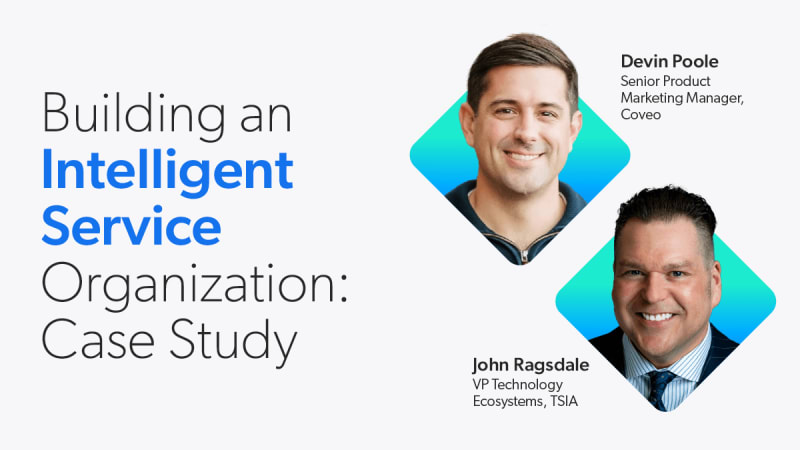

Unlocking Efficiency: Building an Intelligent Service Organization
Unlock the transformative potential of search insights in elevating service success with this insightful webinar:
- How athenahealth achieved a 50% reduction in high-cost Tier 3 contacts.
- Why taking a holistic, knowledge-centered service (KCS) approach helps put better information at agents’ fingertips.
- How athenahealth revamped their approach to self-service.


Improve the healthcare journey for members and your network