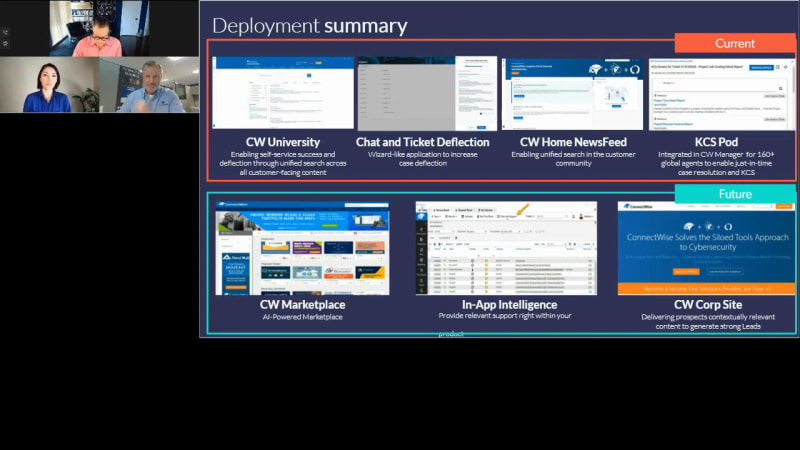
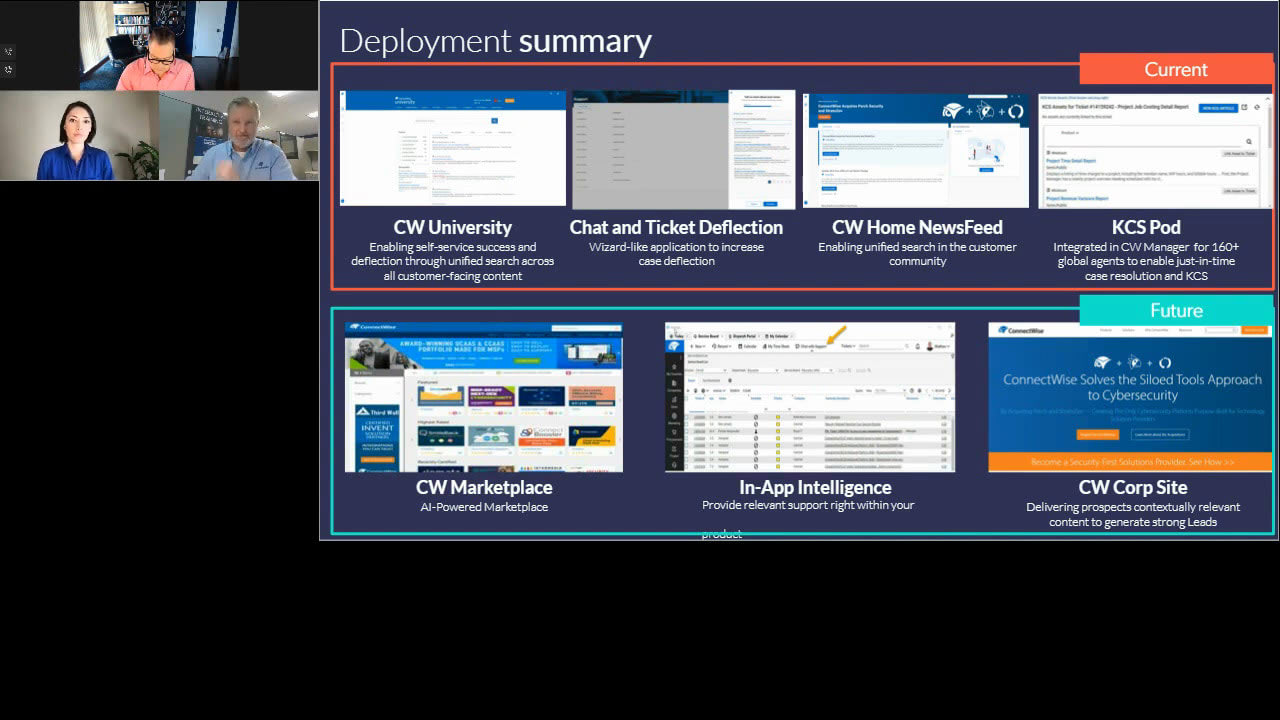
Hello, everyone, and welcome to today's webinar, How to Deliver the Most Relevant Self-service Experience Every Time, brought to you by Technology and Services Industry Association and sponsored by Coveo. My name is Vanessa Lucero, and I'll be your moderator for today. Before we get started, I'd like to go over a few housekeeping items. Today's webinar will be recorded. A link to the recording of today's presentation will be sent to you within twenty four hours via email. Audio will be delivered via streaming. All attendees will be in a listen only mode, and your webinar controls, including volume, are found in the toolbar at the bottom of the webinar player. We encourage your comments and questions. If you think of a question for the presenters at any point, please submit through the ask a question box on the top left corner of the webinar player, and we will open it up for a verbal Q and A portion at the end of today's session. Lastly, feel free to enlarge the slides to full screen at any time by selecting one of the full screen button options, which are located on the top right corner of the slide player. I would now like to introduce our presenters today. John Ragsdale, distinguished Vice President of Technology Research for TSIA Bonnie Chase, Senior Product Marketing Manager for Kaveya and Matthew Bregen, director of education for ConnectWise. As with all of our TSIA webinars, we do have a lot of exciting content to cover in the next forty five minutes. So let's jump right in and get started. John, over to you. Thank you, Vanessa. Hello, everyone, and welcome to today's webinar. Our topic today is how to deliver the most relevant self-service experience every time. And for those of you who are, frequent watchers of our our Thursday webinar series, a common theme for me is that, we need to keep abreast of what's going on in the consumer world because both your employees and your customers, bring a lot of those consumer experiences and expectations into the workplace with them. And definitely relevant content, personalized content, is is one of those things. And I I'm gonna open with a personal example. I was, shopping for some shoes online a couple of weeks ago when I was working on my slides, for this. And these are actual screenshots from my phone. I was browsing these sneakers. I was really interested in these camo looking Tom Ford sneakers. And I clicked and went to the Tom Ford site, and you can see they were out of stock. So I thought, oh, oh, well. I'll find something else. And five minutes later, I logged in to Instagram, and guess what was the very top of my feed is an ad for these sneakers, from another retailer who did have them in stock. So, you know, in some ways, it's a little creepy the way that, you know, social media and Google and all of these, retailers are are tracking our behavior. But on the other hand, as consumers, we're becoming very accustomed that when we're searching for content or we go to a retail site that what we are seeing, what is being prompted to us, and our search results are becoming very tailored specifically to us. And it saves a lot of time. It creates a a great experience that definitely is helping them sell sneakers. But, you know, keep that in in mind as we start going through that because there are a lot of corollaries into the b to b world. And, to kind of frame this discussion, I've been thinking about publishing this paper about a relevancy trajectory, and this this webinar kind of forced me, to to get to work on that idea. And I've come up with, like, four stages of relevance or level of personalization that you can have in self-service. And at the lowest level is really irrelevant. And, I think we've all seen those website. There's a lot of disparate content. They've got all of this unrelated stuff on the website, but there's no real cohesive way to navigate it. And customers are just trying to hunt and hopefully find what they need. A step up from that is getting into manual relevance, and this is where we see unified search introduced so you can do one search and get results from every repository. And there's some manual filtering options that they can filter just for the product they're interested in or the region they're interested in. So it is more relevant, but it's a manual process. The next step up is what I called personalized relevant, and that is where you're prefiltering, FAQs or, content searches to only show the content that is relevant to this customer. And that could be, you know, filtered for the products they're on, the versions they're on, the region they're in, whatever. And the ultimate, where we're seeing just a few companies starting to, get experience is really predictive relevance. And this is mining the customer journey so you can understand before that customer even asks a question what they're probably going to ask and which content, is the most relevant for them. So I've got a couple of slides just to with some data show you where most of our members are on this journey. So comparing the twenty seventeen data to the twenty twenty data, you can see that there's been a pretty big turnaround in the last three years of moving from this idea of an irrelevant experience to a manual relevance experience. So back in twenty seventeen, more than half of companies, fifty nine percent, forced customers to but as of the twenty twenty survey, and this data is from about, December of last year, about two thirds of our members now have a unified search experience. So that is allowing, you know, much better usability, much better access to content, and the ability to manually filter to get exactly what they need. Moving up to personalized relevance, it's still kind of a a lag here. Only twelve percent of our members are offering personalized FAQs. And, you know, the FAQ list can be one of the most impactful things on your website because when they first log in, they see this list of frequently asked questions, and, hopefully, their question is among those. But if that FAQ list is filled with content related to products they don't own, they're probably going to just not even look at that and start ignoring it on future website visit. But by integrating to your CRM system, you could start filtering those FAQ list dynamically so the FAQs are only relevant to the customer. And, unfortunately, only twelve percent of companies are doing that today. Nearly half of companies, however, are doing the real time suggestions during case creation, and that requires an intelligent search platform like, Caveo that as the customer is is filling out the required fields on the case, they're being prompted with information related to probably what their issue is. And we've seen that alone, you know, boost deflection as as much as twenty to thirty percent, in some examples. The the challenges here are you do have to have CRM integration so you know what the customer's environment is, and they do have to authenticate. And sometimes if customers are just anonymously browsing, your website, you don't really know who they are and can't personalize. By the time they get to creating a case, though, you've certainly made them authenticate. So that that gives you a little extra freedom. Moving to that predictive relevance, definitely pacesetter, territory here. The member of, TSIA who has made a lot of progress here is Informatica, and we feature, their story in a lot of conference presenters. But they have done considerable mining of the customer experience. So they understand where a customer is, what questions other customers have asked at that particular point in the journey, and they're taking a lot of AI work, into this, to the point that they are now eighty percent successful in predicting the reason that you're coming to the website, for self-service, and they're even proactively prompting you, with content they think you're going to need. So, you know, fantastic to see companies moving that direction. And we're very lucky today to have Matthew Bregen direct us, and they're also doing a lot of work mining customer journeys, for self-service. And they've had some really exciting business results that he's going to be sharing with you, in just a few minutes. But for now, I'd like to turn things over to our first guest speaker. Bonnie Chase is the senior product marketing manager for Caveo. Bonnie, take it away. Hello. Thank you so much, and I'm very excited to be here, sharing the story with Matthew today. And and to John's point, you know, really talking about delivering relevant experiences, especially when it comes to self-service. And, you know, I'm from Coveo. And if you're not familiar with Coveo, we are a relevance platform, which is really about harnessing that data and leveraging AI to really help deliver those experiences. And so Matthew here is is one of our customers with ConnectWise, and, ConnectWise is the the longest running market leading software platform for technology solution providers. But, Matthew, really, to kick this off, why don't you tell us a little bit about your role and what you and your team do at ConnectWise? Sure. So ConnectWise is currently a company of about, twenty six hundred employees, and, we have about twenty five thousand partners. And our partner base is a lot of, smaller companies, smaller businesses, that we serve. And so there's a a lot of them out there and a lot of them looking for that self-service, which is kind of one of the things that my department, you know, my education department does is we have a group of technical, documentation through technical writers who do all of our product documentation. I have, I think eight of those now, technical writers. And then we also have a team of, in person trainers. They're now virtual in person trainers, obviously, for the time being, but, again, software training consultants. Another team that manages specifically our online, online content and our ConnectWise University. They're the ones that's I have been really digging in and managing the Coveo integration. And we also have our internal training and our, talent development team over in the education department, ConnectWise. We are and and I do know realize that we're pretty lucky. We have a education team of about thirty five people at a company our size, which is shows a real commitment, by our company and by our leadership, towards partner education. So we we realize that we're kind of lucky in that regard that we really focus and know the importance of education towards retention, and we have a team of people here that are are focused on that on a daily basis. Yeah. And and and that's really you know, that that landscape kind of showcases why you really needed to look for, for for more relevance and adding that relevance into your environment. You had multiple teams, multiple audiences, and multiple locations for where they could get information. Why don't you talk a little bit about those challenges that you were experiencing with self-service? Yeah. Specifically, just a lot of it was, like you mentioned, the amount of, information that's out there. We had a ton of content, a ton of different locations, and not just, where it was, but how much we had as well, which made it really difficult, as we've grown and acquired other companies and then wrapped under the ConnectWise brand, our documentation center is now, like, over four thousand pages. We have over five hundred lessons in our university, which which each one is a individual score package that we use to make up our degrees and certification tracks. We have, I think, close to fifteen hundred videos in our video library, and these were all different, you know, repositories where all this stuff was held. And that doesn't even include our, you know, our support side in their knowledge base with all of the knowledge articles that they're creating as well, which are thousands of articles there, which were all in a different location as well. So everybody kinda had to search for those, things in different places, whether it be a customer or a partner, and our support agents as well, depending on what product they supported would have their information somewhere else. So we you know, it comes in regarding an integration between products. They're searching between different repositories, trying to find the right information and piece it together. It was it just was not a very, cohesive experience. What was difficult for me, when I came on board at ConnectWise about three and half years ago is I just saw all the amazing content that this team had. But our partners are in as I say partners, at ConnectWise, we call our customers partners just for reference. So if anybody's confused, but, I saw how difficult, how much difficulty they were having finding what they needed. And so I pulled up a couple of quotes that I had collected a couple years ago when I was going down the road to try to find something like Coveo and to try to express the need of it. So, like, one of them is the support engineer was fantastic. I was hoping to find more info on the ConnectWise University about setting up separate support teams. I found nothing. Why can't we get the same info online? I wasted an hour of my time looking for the info on the ConnectWise University. It took the support agent less than a minute to give me the answer straight away. I'm fully satisfied with chat support, but more frustrated that I could not find my answer myself on the ConnectWise University. It was very simple simple information. And this was the experience we were giving our partners. And what was the frustrating part is we knew and I knew all that information to help them was there. We just could not connect the people to the content in an efficient and just in time manner. Mhmm. And and didn't you have didn't you have a unified search at that time as well? We did have a unified search, that had been in place that we had put into place. It we even with the unified search, I think the it came down to the complexity of the content. And we it's still while we could then everything was in one search database after a while, we got it all tied together. People were searching for it and not actually finding the relevant content for them. Mhmm. Remember that, that search tool had the capacity for us to go in there and manually connect things. So a search term comes in, we'll we're gonna manually connect it to this asset. By the time we left that tool and moved to Coveo, my team had gone in there over five thousand times, made five thousand manual connections and spent the time doing that to try to make the search more relevant. But, you know, that's just impossible to maintain over time. Yeah. And that that's one of the things that I I I really wanted to highlight is when when we think about relevance, it's more than just making the content available. There's really you know, there's a few things to consider, and and those things I kind of highlighted here is, yes, you need to be able to access the content. So getting that foundation in place is key. But what else are they going to do with that content? And so how will they consume the information? What data points do we have that we can leverage? And how can we continue to to measure and optimize moving forward. And so, a lot of times what we've seen in the past few years is people are rolling out self-service. They know self-service is important. They know people need to access all of these content sources, but just putting those pieces in place doesn't necessarily make it successful. And that's where, you know, adding that layer of of intelligence that can do that for you so it's not so manual every time is what helps bridge that relevance gap there. And that's really, you know, you had a lot of things that that you were looking for, you know, moving forward. Can you tell tell us a little bit about your approach and and what you were doing to get that, moving. Sure. One of the interesting things too just I wanna bring up on that last slide is you've talked about access, and John talked about this as well, is, you know, logging in and only showing people what's relevant to the products that they have. Right? So Mhmm. Yeah. I know the effort that we had done back when we had a unified search is we actually tried to restrict instead of, you know, instead of fixing the search, we restricted access so that people can only find stuff very, dependent upon the products that they had. And it just made a mess of things because Mhmm. Sometimes they will be searching for something that, maybe was didn't apply to the product they had, but it'll apply to a product that they should have. And they weren't seeing that any more. So instead of, you know, the our sales and marketing team kind of took a little affront to that saying, well, we have the answer to it. It's just in a different product, but we're not showing them that. Instead, we're showing them no results at all. So the nice thing about where we've gone with Coveo is instead of restriction, we've just used it as insight, as data. Right? So that Mhmm. This information is tied to the customer's ID when they authenticate in. We know what products we have, and we can tailor the search instead of restricting the search and make it that personalized content. So it's been a, I it's really been able to transform, that personalized experience and making getting the right information in front of the right people. But, you know, there's a lot of other things that we've done, and you have the the slide up here. You know, one of the things was unifying our databases and, like, again, making sure that all of that stuff was searchable, in across all of our different platforms. And that was very important, especially on our support side as all of the different agents would, you know, have that information, the the knowledge articles stored in different places, whether it be on their desktop or in one, you know, in OneNote or in different things that teams were using to share information across them. And bringing all that together into one documentation platform and making it searchable, really had a large impact, being able to get all of the content out there, not only in front of our agents, but eventually in front of partners as well. And we also took this opportunity to really curate content. We have a lot a large team and whose focus was on making, you know, creating and making new content, but there was very little focus ever on, deleting something when it was no longer relevant. So we had to really make an effort to, you know, curate what we had and what we're offering and making sure that not only were we putting relevant content in front of partners, but are we is the content that we have out there all relevant itself. And so a lot of these things that we put into place beforehand to try to get, you know, get ready for launch, really, really helped us, you know, with a successful, launch with Coveo and with our relevance directly. One of the things that we really wanna do is with the KCS process as well, and make sure that we were supporting that and the KCS structure and, you know, making sure that we had, the technology in place to really support, the KCS initiatives and making sure we're getting those now those articles out there in front of people and that they could find things quickly and easily. And one of the ways that Coveo really helped with that KCS process is through technology. So, you know, I don't know how familiar the audience is with knowledge center services, but one of the big, roadblocks to that often is a technology piece. With our last search, you know, we would have an issue up, we would create a knowledge base article, and often, you know, it would take twenty four to forty eight hours for the article to be indexed by the search engine. And then we would have to go manually tie it after that to a a partner or customer query so that would come up when they search for it. And, you know, we'd have an emergency situation, and we'd be able to get an article out there to fix it in, you know, a half a week. And so it just wasn't very sustainable. Yeah. And and you also mentioned, you also mentioned at one point, you know, you're you're you're looking to get cross departmental relevance as well. I'm curious, you know, with, with your your current approach, you know, you're you're looking at, university education services. You're looking at support. What other departments are are looking at leveraging relevance? Yeah. Now that we've kind of seen the success of it, and we have been very successful, and we will get to some of the metrics later to to show where we, you know, how the success that we've had, other departments are taking notice. And so specifically now that our product department is really interested in, you know, what possibilities we have of getting Coveo in app. So right in our software, you know, meet our partners where they are and making sure that we can, you know, get that content to them right away. Our vendor, is our vendor department as well that work with our vendors and third parties are interested in getting this in our marketplace as well. Great. Yeah. And and so I pulled up a slide here that kind of shows the the current deployment summary. So you you have it in in a few places now, and you're rolling out in a few places more. So let's talk let's talk a little bit about what that experience is like today. We've talked about, you know, what it was before, how you were your approach to kind of resolving those issues. What is the experience like today? Well, excuse me. Yeah. Well, primarily, you know, we have this in our university, and our university is kind of repository of self-service where people go proactively to learn about the products. Right now, you know, just to kinda give you the size and scope of that, in twenty twenty, we had, I think, close to a hundred thousand unique learners log in to the ConnectWise University. Then we've also done that directly into our chat, support chat. And that support chat is, again, where we try to do the deflection. So just as John mentioned before, if someone comes in and starts typing for something looking for, an answer, we put articles right in front of them as they go, hopefully, to solve that case. We've been very successful with that. We also have another partner portal, which is our c CW home or ConnectWise home. We have a news feed in there that we've used Coveo to tailor what people see in that news feed based upon the products that they have. So they'll come in and the content is they see whether it be product release notes, upcoming events, upcoming webinars will be tailored to their profile that we have and all the information we have, be that based upon product or role in their company, etcetera. And then our KCS pod, which is actually built right into our PSA, which is our ticketing system. So our support agents, when they're working on a ticket with a partner, they're able to search, our document repository using Coveo directly in the ticketing pod that they're working as. So they don't even have to leave the application to find an article or in the case of, you know, not being able to find one to create an article. They can do it all right there in the same screen. So those are our current deployments that we've been, really successful with. And as we mentioned, we're looking at where we can go next. That will be the marketplace where we sell some third party software in app, which is what we're gonna be doing first, and I think we just started that process right now of getting this implement implemented in app. And then on our corporate side as well, tying together some of the marketing and then sales enablement material that we have out there as well. So we're gonna keep moving forward with this and, make try to get this relevance across all of our different platforms. Yeah. That's really exciting. And and, you know, the the thing to remember here is when we're thinking about, you know, this started as a a self-service kind of, you know, maybe maybe you could consider it a findability problem. But if you take a step back and you really look at it, it's not necessarily a findability problem, but it's it's a relevance problem. Right? So it's about being able to you have all of this really good information, all this content that you created. You have all of these insights about the customer, so why not connect those behind the scenes and and let the content find the customer. Right? And so, you know, going from self-service to really across the entire customer experience and delivering relevance wherever they are. And I think it's great that that you've been able to to get this started, and and other departments are are seeing the success that you're having. So let's talk a little bit about those results. One of the things that we we do is we, take some time to really evaluate those, business metrics that are important to you, and we've done this with ConnectWise, and so we'll we'll talk through some of those results. And there are really three key areas that we were looking at with ConnectWise, and that's really, you know, looking at that, that Kilometers strategy and getting results there as well as, improving the ticket deflection and improving the overall customer experience. Do you wanna talk a little bit about why these were the three key areas that were most important to you? Sure. And this is, I'm gonna talk about it a little bit backwards because, you know, is my in my role as director of education, I am really on that proactive learning side. You know, I know that, partner customer education equals retention. But that is harder to show that, you know, and I think a lot of people that are in the kind of the corporate education space know that the KPIs on that and really tying some of that back to retention can be difficult. But we all know it's there. That's why we exist and we know the value is there. But it's much more it's much, simpler to take a number like a ticket deflection, which you can easily tie time and money to and use that as that metric that can really, you know, show an immediate impact and outcome. So, you know, where my goal is, you know, that customer experience and that findability and that relevant and personalized experience for our partners within our university and documentation systems, I partnered with the support team to really focus on the KCS strategy and ticket deflection to initially get that corporate buy in so that we could, you know, get this on board and get moving forward with this project. And it's been successful in all areas. So we're happy with both our deflection, the support of KCS and our CAM strategy, and I'm extremely, satisfied with where we're going with our customer experience within our learning environments. Yeah. Yeah. And that's a really good point that you made about, you know, those metrics. And, what I've seen a lot is that, you know, either organizations are too focused on ticket deflection and they're missing out on these other metrics or maybe we have too many, too many soft metrics and not enough, you know, quantitative, numbers. And so by combining these, you were able to create that broader story that really showed a bigger impact, to leadership. So I I definitely recommend this approach, for anyone who's looking to to establish the ROI. So really getting into it, you know, knowledge management strategy was was key to adoption. And, you know, through Cobay, we were able to start tracking that article attach rate, and we saw, you know, you were reusing a thousand articles per week. And so really able to stick with that that KCS strategy and make that more effective for your, for your agents. Yeah. I see. And with that, you know, as users are engaging more with content, we can see you know, we were able to increase the content found rate or that click through rate by twenty eight percent. So about the second half of last year, we were seeing that eighty three percent, click through rates. And that's really based on presenting relevant content at the right time. Right? So they're they're not having to jump around and look at a bunch of different articles to find their answer. And so by, you know, making that content available, it really does enrich the experience, and so we were able to see that, nineteen percent improvement in average session duration. So with every interaction being tailored, people were were spending more time. And as we know, the more time users spend, the more that they learn. And we actually saw, a big increase in that engagement, so, really doubling the the documentation page views from the education metrics. And so we can see, you know, they were at about a million and, you know, went past two and a half million, so more than doubled their their page views there. And this was exciting to see. Yeah. This is one I share with my leadership on a regular basis when they are like, what, you know, what have we done with relevance? And, you know, this is a great example of, you know, q one of twenty twenty is when we went live with Coveo. And you're you can see it from that trajectory, we're averaging just over a million page views in our doc center, before we went live. And with the launch of Coveo, we also, you know, we launched our KCS program, and you can see the partner usage of our documentation just skyrocketed after that. And people are using these docs almost three times as much now. Yeah. And, you know, we can we get that reflects in the case deflection as well. So they're viewing more articles, but we're also seeing fewer cases. So, you were able to get that forty five percent increase or improvement in in case deflection. Can you talk through that a little bit about that impact? Yeah. And we'll talk about that on this slide because, you know, looking just at the increase from eight percent to eleven point six percent might not seem like a huge jump, but that forty five percent increase is very tangible. And if we look at kind of these numbers on the slide, we average over twenty five thousand cases a month, and so that, you know, that deflection change of just forty five percent is around nine hundred tickets a month. Each one of those tickets is about in between somewhere in twenty to thirty minutes of the agents time to resolve, and so we're starting to see, you know, real time and real money that we've been able to save by getting that relevant content just in time in front of partners. And so, you know, this is a continuous effort that we move forward always, you know, every half a percent that we can increase this and we keep pushing towards how do we make our content more relevant, how do we better utilize the technology that we have, and get that right information quickly in front of our partners because we start seeing real value in, you know, this deflection change. And, you know, the number that we have on there, the estimate is about over half a million dollars in savings, from getting, you know, from relevance and personalization of content. Mhmm. Yeah. And and, you know, the exciting thing is is that, you know, we're just getting started, and we're gonna continue rolling this out and and seeing the performance over time. And so, you know, I hope I hope everyone can see, you know, it really does take, a a holistic approach here, you know, looking at not just making the content accessible, but how can you really personalize and optimize that in the long term, and across, multiple environments as well. And so to really wrap it up just as, as closing, you know, just to to let you know that Coveo does support that entire spectrum. So really thinking through, in each of those environments, how can you leverage search data and AI to provide the most relevant experience for your users? And to John's point about, relevance maturity, we we also follow that model that he shared. And so it's really looking at, you know, where are you today? And and when we met ConnectWise, they were here. You know, they had that that, that unified search that was still very manual, but really, you know, leveraging AI to to handle a lot of those manual interactions, and then being able to personalize that content and eventually get to, you know, where that that content is is more predictive and gives you what you need next. So, if anyone's interested in learning more about Coveo, we are doing a, webinar, next month or next week, really, to, just do a demo and show you the product. So I did want to share that as well, with you all today. So with that, I think, you know, we're ready to take questions, and and I think Matthew's ready to answer anything that you've got for him. Maybe not anything, but I'll do my best. Okay. Well, we actually have quite a few in queue, so we will be busy. But just as a reminder, if you'd like to submit a question, just pop it into the ask a question box in the top left corner of the webinar player. With that being said, we will jump right in. And our first question asks, how many years was this effort, specifically unifying the databases? Well, the the nice thing is it wasn't that bad because, you know, Coveo did most of the work for us when it became to the unification. So we can tie as many sources as we want into that database and unify the search results, as much as it needed to unify the databases. So it really while it pointed out to us a lot of work that we needed to do when it came to cleaning up content, cleaning up duplication, realizing where there was issues, across the sites, having the right technology in place made it a lot easier. So instead of having to go through and, you know, port all the content or transfer all the content into one place, we were able to curate the content, but then bring it all together through the technology rather than having to unify it all into one database. Okay. Our next question asks, are you using KCS for your knowledge base or modifying it to generate technical documentation? No. We it is actually a separate thing. So our technical documentation is and our product documentation is maintained by technical writers. And then we have a, you know, fairly pure, not completely a hundred percent, KCS program that is run through our support agents. And as part of our support agents job, when a ticket comes in, they search for and, use and reuse, knowledge based articles that are specific to issues and problem. They are not technical documentation. They are, knowledge articles, to support partners and issues they may be having, and those are maintained and written by the support agents as well. So while we use the same technology to get them in front of partners, they are different programs and, they are separate. Okay. Our next question, one might be one of those stumps, but no, I don't think so. Here you go, Matthew. With the volume of visits and tickets, how do you calculate deflection? What are your variables? So our deflection, number itself is we have multiple places where partners can come in and create a ticket with us. In each one of those interfaces, as they start, selecting the product, their issue, and then going through and typing their query, we are suggesting articles to them. So at that point, we have measured a contact when they've come in. They've contacted the support interface. If at that point, they click on a document and that session does not end up generating a ticket, they did not go back and say this did not help me get help, I wanna talk to an agent, we consider that a deflection rate. So any document click that does not result in a support ticket being created during that session, we count as a deflected ticket. Okay. Our next question asks, what resources does it take to stand up a robust KCS and set up Coveo. Not everyone can afford that content team of a hundred and twenty five people. Yeah. And it is the KCS. I'm not gonna speak, as an expert on that. That is owned by the support team. I work with them and help them out. But I I don't think the KCS is difficult to set up. It just takes department wide commitment. It is a change in the way of working, more than it is a resource commitment. You have to be committed to changing the way that people work on a daily basis. And I think it's getting that commitment and buy in that is the hard part, but it's really not resource intensive. You can do it with the resources you have usually, and see some impact from it. You know, on the other side, yeah, the Coveo stand up was a big lift initially, but that took a lot of, people on, you know, Coveo side helped us with that to to get that, implemented as long as some internal development, and we were able to do it pretty quickly. I think the entire implementation process, we had done in under three months. Yeah. And I'll I'll add to that, you know, in thinking about, KCS. It, you know, it is a full practice, and so, we do offer assistance that with that too. You know, we do have a full team of, of KCS certified people at Coveo who, who also do training as well. So, you know, when it comes to implementation and and making that work with KCS, we're very, familiar with how that works together. Great. And this next one is actually for you, Bonnie, but I'm going to let them know they were asking for the registration link to the webinar next month. And that's gonna be right underneath the q and a box from your in your resources list. It's top it's the top listed demo webinar. If you click on that, that'll take you right to the registration page. Yes. Thank you, Vanessa. I meant to mention that. No problem. And our next question asks, what advice do you have for those just starting to explore expanding into messaging and or bots with clients? Are you unsure, sorry, excuse me, with bots, with clients you are unsure will leverage and will still depend on call support? That's a good question and I'm not sure if I have the best answer for it. We haven't got too Barca the box ourselves. But if, you know, looking at what we have with bots and with the way we use chat, I think the importance is that the content will go back to that relevance of content. Right? If you put a bot in there that doesn't have the AI behind it, doesn't have the intelligence or the right resources behind it, you know, it's it'll quickly people will quickly see that and go away from it. But if that bot is actually displaying relevant content, the content that people are looking for and need at that time, then they're gonna come to rely on that. That's gonna determine the success. Okay. Next question. Does this or is this approach more suitable for easy cases? The fifteen dollar cost per case tells me those are issues very easy. In my area, enterprise, the cost is over a hundred. That's a great question. And, actually, we we most of our customers are enterprise customers, and so we do get a lot of highly technical cases that are of higher cost. And so it it definitely does, translate to those enterprise sizes. With through our business value assessment, we we take a a specific look at that organization and and how you measure, and those different costs there. And so there is an approach to how we do that assessment, but it's definitely it's not just for easy easy cases or or smaller cases. We do have a large amount of those technical, customers as well. Okay. Moving right along. What tools did you integrate with to track some of these web metrics, Google Analytics, or something else? And did you integrate with your own CRM? If yes, can you share which CRM? Sure. We, use our own tool for our CRM. So we use ConnectWise manage as our repository for everything. So we we do, tie into that. But we also use Google Analytics where I pull a lot of information from. And then we also have a BI team that has, you know, tied a lot of, tied a lot of reporting, and metrics that we can pull directly from our learning management system as well as our documentation site. So we do have it kind of spread out, in quite a few different places where I I pull it all together from. We also pull a lot of that information directly from Coveo as well when it comes to search and click and document usage. Okay. Our next question, I believe you kind of touched on this earlier, but is there a tool in use to unify the databases or unify the searches? Oh, the unify the search is what we're using Coveo for. So that is, been, you know, the one of the big reasons we went with them is, I'm able to pull in information from any I think we have at this point twenty five different sources that we have mapped into our, Coveo instance. And so that when one of our, partners or customers comes into our university system and does a search, they are searching in one spot and getting results from twenty five different, resource depositories at the point to unify that for that. Okay. I think we have time for one more question. And how are you planning on using in app intelligence? Sure. So in the in app intelligence, we're actually gonna have that through depending upon the pod that they are or the area that they are, the module that they are within the product. They'll be able to click on a button, get a, kind of a help button, which is automatically gonna display content that is going to be sourced and sorted by where they are in the product. But then they'll be able to also, at that point, conduct a search, and then that search is also gonna be influenced both by the user who's authenticated, and as well as where they are in the system to try to pull up those, anything else that may be relevant if they're looking for a specific help doc. So they'll just be able to search for documentation, how to videos, other learning assets directly in the product where they're working without having to go back out, and hit the documentation center or, you know, go to our university. Okay. Well, Matthew, you're out of the hot seat for now. We have come to the conclusion of today's live webinar. But don't worry. I know there were quite a few questions we weren't able to answer live. We will make sure to follow-up with you personally. We absolutely have not forgotten about you. Couple quick reminders before we sign off for today. There will be an exit survey at the end of today's live webinar. Please take a few minutes to provide your feedback on the content and your experience by filling out that brief survey, and a link to the recorded version of today's webinar will be sent out within the next twenty four hours. And now I'd like to take this time to thank our presenters, John, Bonnie, and Matthew, for delivering an outstanding session. And thank you to everyone for taking the time out of your busy schedules to join us for today's webinar, How to Deliver the Most Relevant Self-service Experience Every Time, brought to you by Technology and Services Industry Association and sponsored by Coveo. We look forward to seeing you at our next PSIA webinar. Take care, everyone.
How to Deliver the Most Relevant Self-Service Experience Every Time
As consumers, we expect extreme personalization.
As 2020 highlighted, it’s important to be able to adapt to the changing needs and expectations of customers…and quickly.
Companies have established new ways to reach customers, ramped up knowledge management, and broadened the scope of self-service beyond break-fix support.
But to be successful long-term, these experiences need relevance. This means enabling customers and agents with the right information in the right channel through search, data, and AI.
In this webinar, see how Connectwise achieved a 45% increase in case deflection and a 28% improvement in clickthrough rate by adding relevance across the customer journey.
From listening to what customers are looking for through intelligent search, to using full-journey customer insights to constantly refine and personalize results, relevance helps deliver a tailored experience to each Connectwise customer.
In this webinar, you’ll learn:- The key elements to consider when getting started with a new search experience.
- How to ensure your content is ready for unification.
- How to leverage analytics to identify content gaps for a more successful experience.
- How to get cross-departmental buy-in on improving the self-service experience.
Customer, agent, and team experiences and success depend on relevance. As we move from a one-channel world to an omni-channel world, the need for relevant content is greater than ever.
And the best way to ensure relevance is by having access to the right information in the right channel at the right time.
Make every experience relevant with Coveo