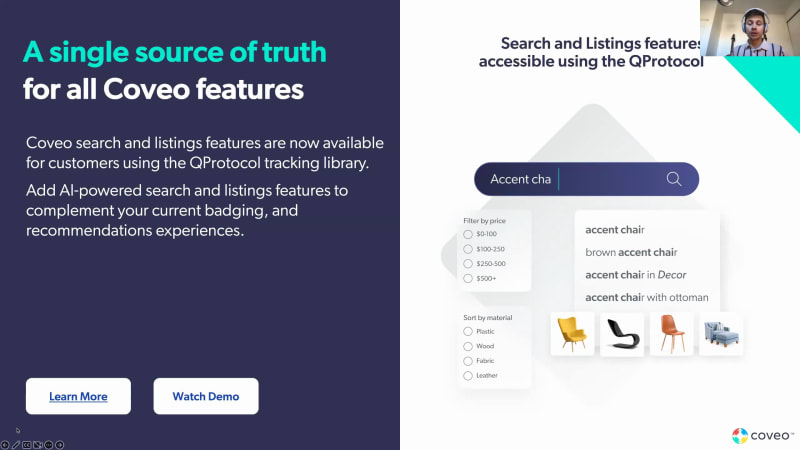
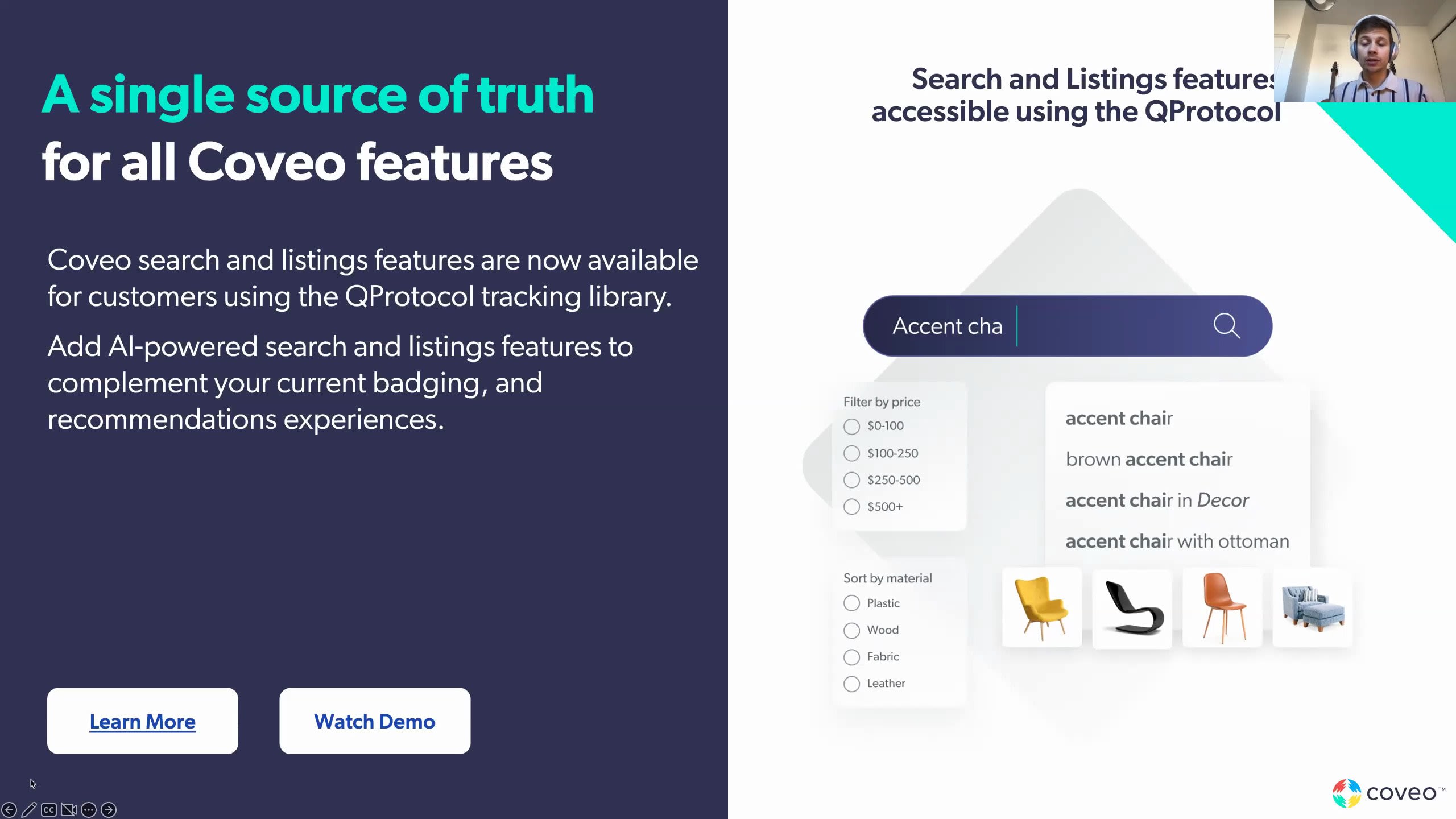
Alright. Good morning and good afternoon to our European customers joining us today. This is our new centigrade. My marketing team and I'm joined by my colleagues from the product management team, Simone Lange and Anthony Delage. Hi, guys. And they will both be walking you through some of the newest functionality in the product today. So first, before we get started, of course, I have the mandatory, housekeeping items to cover with you quickly. Everyone, of course, is in a listen, only mode. However, this session is designed for you, so we want, you to get the most out of it. So please send your questions along in the q and a section on your screen, and we do have some time reserved at the end of the session for Simone and Anthony to answer those. Today's webinar is being recorded, and that's always a popular question. And you'll receive the presentation about twenty four hours after the conclusion of the event as well as a some demo videos as well as some documentation on what we're So to Esme and Anthony, I wanted to just take a minute to highlight that, Qbit last year, Coveo has now expanded our set of functionality, and it really covers the whole spectrum of, shopper intentions as they come to your site. So all the way from those that come to browse and need to be inspired by, let's say, personalized content or recommendations to those who need to be persuaded with social proof and and, badges and urgency badges to those that know exactly what they want, and they simply wanna hit that search box and see the most relevant, filter options to cart and check out. So that with that being said, I'd like to walk you quickly through the agenda for today. We'll be covering a few of our latest innovations, so not everything, but the highlights. First, Simone will showcase our new product listing manager functionality, very exciting, added into the merchandising hub that will help you layer in that business logic on top of this. Then he'll spotlight and demos capabilities around intelligent facet generation. And then AD is going to cover some of, our new recommendation enhancements and the expanded product batching capabilities in the merchandising hub as well. So we will take a brief look at the end on, what our I'm going to hand it over to Simon to get us started. I will stop sharing, and you can share away, Simon. Sure thing. Thank you, Shireen. Alright. So the merchandising hub. So the merchandising hub has been, kind of evolved a little bit, in order to start, adding more and more of the search and, search and listing features, that are available today with Trevail. I wanna make sure that you have the same experience as a merchant when you're managing your badging, your recommendation, as well as your search and listings. We're starting with the listings because, you know, by talking to to you guys, both prospects and existing customers and partners, realize that a lot of the effort, that the merchant put is mostly on the listing. So these different category pages, these product listing pages that we call them, whether they are permanent category pages or temporary promotional pages, there is a need to control, these pages the way they are shown, the way the products are shown. So we have invested heavily into, into this. So I'm gonna show you a quick demo here. So this is the main page for the product listing manager. As you can see down there, the different categories, and I can zoom here a little bit, the different categories on this specific site, which are usually a reflection of the categories that you have obviously, displayed on your front end, on your storefront. And if, for example, you search for a jacket, I add here the jacket women jacket category. So here just a bit of a parenthesis around revenue conversion rate bounce rate. So more and more, are reporting instead of being, you know, always these big dashboard, big attribution dashboard, being able to show a bit more of insights directly where the action is taking place. So in this case here, directly on, this specific, this specific page. So I'm gonna take a look at this page. So at the moment, as you can see, there are no rules, for this listing page, so it's been left as is, with machine learning. So I'm gonna create a rule, and then, you can see already so a bit of an improvement to, for example, the query pipeline is now, the the whole experience a little bit more visual. So you already see some of the standard, field that we expect out of commerce environment, such as obviously the, the thumbnails, the prices, for example. And I'm gonna do a boost action here. So I'm I can use any attributes, that are part of the Kaveo index, part of your catalog. So in this case, for example, the brands, my operator. I'm gonna search for Nike. And here, I can decide, you know, what will be, what will be the boost being applied. So here, for example, I'll go for a more aggressive boost. You can see already without even saving, I'm I'm getting that kind of preview here of, with the position, change on each of the products. So some of these products comes from pretty far. Some comes from, for example, here, twenty seven positions still. Quite page two or page three, depending on the amount of products that you have. So I'll just check and publish this. So I'll call that the night boost, for example, and then publish this. And you can see now in my women jacket, page, I have, you know, the night boost that is a boost action. And I'll create a new rule. So, you know, as I come back here, I have, you know, my night boost that has been applied. And I'll take, for example, this product here. Oops. Sorry. I'll take this product here and put it there at the front and automatically created a pin rule, for this specific product. So I'll just check and publish, and I can call that, you know, a pin for this specific, jacket. And then I can publish my changes, and it will be added to the stat rule and be reflected on my front page. So we are bringing, you know, that experience that was possible already today in the Kaveo query pipeline, but in an interface that makes it just a little bit easier, more seamless, for the merchandisers. The next step is to bring, AB testing directly within that page creation there so that you can test before and after and what's the effect of, of these pages sorry, of these of these changes on your pages. Now that's for the product listing manager. We're gonna have a, a demo available as a lead behind, where you can see it a little bit more in action. If you are using, list Kavail to power your listing pages today, you can sign up for the early access. So just let us know. And we we are always looking for feedback. We're currently, you know, trying to mold that feature around, around the need of our existing customers and prospects. Another feature that has been released, so it's a thing that was, available to that was available for the Kaveo JavaScript UI, which is a UI now that is slowly but surely being deprecated. We're bringing now this feature inside of the Kaveo index directly, which is the dynamic facet generation. So mostly if you have a catalog that has thousands and thousands of attributes, we see that mostly in b two b or in DIY or, in electronics, for example, it's something that we see a lot. The Kaveo the Kaveo index will automatically select the facets that you that you need on your pages. And then our existing feature, the Kodeo dynamic navigation experience, will reorder these facets based on their popularity, and and usage. So, for example, if I look at, this page here, so this is a demo site called Barca engineering. It is a b to c kind of in the line between b to b and b to c, but mostly a b to b experience, with electronic components mostly for boating. It can go it ranges from, you know, radio transmitter, GPS navigation, pretty much anything you can use in modern boats. So lots of attributes, a few thousands of them, which are all facetable attributes. So obviously, you know, if you are building a search page, usually what will happen, you don't necessarily want as a developer to declare, you know, these thousand facets on the page. The load of the page will be a bit too high as well as just putting these different facets in order and all can be a bit of a hassle. So what will usually end up happening, what we see on a lot of ecommerce website out there, is that you'll have the the category, the store name, the brand, and that'll be pretty much in and the price. Usually, that those are pretty much the three or four facets that we see all the time. But you can see here I was searching for a radio model pack, and I get high, the power output, the width, the depth, the both compatible width, Wi Fi rating, etcetera, etcetera. If I search for a completely different query but on that same interface, so for example, navigation GPS right here, so I get my results and you can see my facets already. So in this case, I have the categories, store name, and the brand are actually pinned at the top. So I decided that as a developer that we'll pin pin them there. But you can see the coverage, the height, the interface type, the width, the battery type, the depth, waterproof rating, all of those have been added dynamically by the Coveo index. So as a developer, I simply had to say to put a placeholder saying, here's a place for dynamic facet generation. Just, it just actually fill fill the blank for me. So that is a, a small yet useful feature that we've released, last month. And on this, I'm gonna pass over to Adi for the recommendations. Thank you, Simon. So oh, yeah. Absolutely. Pleasure to be speaking to you all today. So, as Simon noted, he's talking about about Rex. So the we we we've made a lot of, improvements to recommendations over the last, little while, and I wanna kinda share kind of how some of those things are gonna affect users. So first thing we've done is we've added the ability to enrich recommendations with the data. Traditionally, what we use, and then this was kind of something we carried over from the Qubit days, is a flat catalog. So flat catalog where every product had an ID, and that's the only information we had. Right? We didn't And, obviously, in in retail and commerce, it's super common to have, you know, the shoe the shoe in multiple colors, the shoe in multiple colors and sizes, and and that applies to so many different kinds of of products. And so to be able to properly reflect that in the products, I mean, we really kinda decide to make a pretty infrastructural investment at the catalog level to start going from a flat catalog to, pick see availabilities based on size, being able to pick a color swatch, being able to add to cart. You know, the stuff you've seen this in this in this picture here on the right. All of those things, depend on having variant data right there in the carousel. And so, fundamentally, those infrastructure investments are carrying through to a better end user experience. This is something that we have in early access that we're gonna be scaling out, in in in q one. And, it's gonna have kind of tons of knock on effects. Right? So so now you can do these more, kind of advanced carousels. We're also gonna be able to extend this to recommendations rules and allow recommendations rules to look at variant data. Nice things coming throughout the merchandising hub that rely on this kinda unified, more sophisticated catalog. Next thing I wanna talk about is being able to tune the popular recommendation strategy. A lot of the feedback we get from users is that, you know, similar to maybe if you look at the the big giants out there that that it kinda set the stage for what good, you know, user experiences are. I think brands like Netflix. If you go through your Netflix homepage, you're gonna see a lot of different carousels, but some of them are really based on AI tuned to the user very personal. AI or about, you know, kind of more global strategies like what's popular right now. Sometimes a mix is actually what works best. And I think that when you apply them situationally, when you're able to test and and iterate and learn, that's when you actually get to that best end user experience. And so we got a lot of feedback from our users regarding want to kind of add some depth to that. So, historically, we've allowed you to recommend products that were popular, but we didn't necessarily allow you to, control what popular meant. And so what we have here is a new pop is our popular product strategy. But in the next view, we which products are actually seen the most in a in a trailing period. And now we can also look at revenue, conversion, or a blended mix of conversions and revenue to see which you know, to for you to decide what what is it what is the top product. And so I might say, you know, I wanna look at the top products in the last twenty eight days. This is what my popular definition is gonna be. And a really nice thing that we always allow that you do in the in the merchandising hub is to test. Right? So, it's one thing to have a hunch about what what popularity is gonna work best for your users and based on your data, but you can always, you know, test these things head to head. So I might decide to have another one where I'm gonna test popular products. And this time, we'll say, you know, we'll use revenue, and we'll use the last Products. And we could test these things head to head, and they'll go and we'll have a AB test result, and we can actually see what's best. And that's really what we're trying to to encourage is is a world where you can easily go from, you know, having your AI strategies and and and really depending on those as the as the forerunner, but blending you know, you have to move certain kinds of product when you have to reflect certain trends and when your users expect a certain level of, of of product discovery based on your brand. So, that's gonna be the additions to the product strategy. We kinda hope that sophistication gives people, kind of some some more options. It's a better performance. Next thing I wanna touch on is, extensions to product badging. So this has been a really big undertaking in our team where, what we what we started with and what we've been doing in badging the merchandising cup for the last couple years is what we would call single product badging. So on a single on on a on a product a tremendous amount of value out of Strat Bay as you give us your user. Likes and it's always us to go more profitable or or, get a lot of products being shown to user. And it's, you know, I mean, it's not just a question. You look at what we're working on here. Hey, AD. This is Sri. Literally. Can I hear you? Yeah. We're gonna stop you here, Adi, a bit. I'm gonna share because we seem to have a Internet issue on your side. So, I'll take over if you don't mind. Alright. Alright. So I'm just gonna roll back a bit where Adi was. Apologies for this. So mostly on generalized badging, what he was about to say, is that at the moment, the badging was mostly in the merchandising hub, was product per product. So it was really for product detail pages. Now it it's been augmented into the merchandising hub to be able to badge on, pages with multiple products, including product listing pages, as well as recommendation carousels. So mostly when you have list of multiple products, directly from the merchandising hub using the placement logic, that were available, that were available for other feature previously. So while at the moment, it was mostly done with what we call the experimentation hub, which was, a bit of custom code involved. So a more, more effortless, more streamlined experience, for merchant, in the hands of a hub that was built for merchant. And another improvement as well has been on what we call the source of truth. So we've connected the two protocol together between, the Kubeo and Kubeo protocol. So if you were a, Kubeo customer, which now a Kubeo merchandising hub customer, with the current, data tracking that you have in place, you'll have access to all of the Kaveo, search feature. Obviously, the AI power behind the search feature, so not just the search itself, but you'll have access to, sorry, to query suggested query, product ranking, enhancement, as well as query correction, and what we call vector based search or one to one personalization in search. So for search, for listings, as well as for the Vero recommendations, inside of the, sorry, as as the customer. And soon, we will bring all of those feature inside of the merchandising hub. And then finally, the Coveo commerce attribution data model. So at the moment, you were using mostly, the ecommerce dashboards, that were available, you know, inside of the Coveo platform. We wanna make sure that you can self serve. So last year, we've released what we call the Snowflake reader account where you can directly connect to Snowflake to extract the raw data of Kaveo and then being able to to use your own business tool. With Snowflake, you even have connectors to the most popular tool such as Tableau or, Power BI. But what we've done also is to simplify the nature of that raw data. We're also exporting the data model, that is used for attribution. So instead of receiving, for example, the amount of purchases, the amount of searches that have been done, you receive the amount of purchases that has been affected positively or negatively by the search or recommendation or listing. So you so you already get that calculation, which is a multi touch attribution model, which we have documented, publicly in our in our public documentation. So you get that calculation. You don't necessarily need a data analyst to be able to do it. So that's a way for you to be able to properly measure the value of Kubeo within your own tools. And one additional, release, is mostly on the documentation front. So a small change, but, but quite an important one. So you might be aware of, some of the biggest ecommerce platform out there, namely SAP and Salesforce, Salesforce Commerce Cloud, are going are going more and more headless with their storefront. So SAP has released the Angular, SAP's part of the storefront a few years ago. Salesforce just released, with the acquisition of Mobify, the PWA kit, which is a way to go headless with their storefront as well on top of Commerce Cloud, both b c and b two b. We've released documentation on how to properly integrate with the existing Kadeo headless and atomic framework, and how to properly index the data out of SAP and, and Salesforce. So instead of, relying on, you know, integration, full on storefront integration, you can completely direct this, this integration on your own, and we've released the best practices, recipes, and such on our documentation for, for these two for these two products. Now, for the road map, so that's what has been released. I'm just gonna give a little bit of an overview of what's upcoming. So the first thing is, you know, an an improvement of our, existing vector based search models. So the way that we do machine learning, the way that we've been focused on machine learning for the last few years has been around creating vectors and using semantics to understand customer intent. So mostly if I am doing a search, if I am looking at a recommendation, if I am in any way consuming products, whether I'm looking at those products or adding them to my cart or purchasing them, I'm leaving an imprint in a way on that product. So I'm leaving a sort of, you know, a usage or I'm leaving some sort of history on that product. So I'm augmenting this product through my shopping experience. And with this, we're able to create connection in between products and and understand, you know, what are the products that are similar to other or complementary to other without necessarily relying on, you know, the traditional brand category data. We we've pretty much used the usage of that data. So we're able to understand, for example, the intrinsic relationship between, for example, a television and HDHGTV cable. Even if they are not necessarily in the same category, they are complementary product. The same goes, for example, between, the cat food, a bag of cat food, and a bag of dog food, for example. The fact that they are, aimed at different pets, doesn't mean that they have absolutely no similarity. Both of them are food for pet. So this allows us to understand a bit what is the relationship. Now what we've realized through this, by augmenting these products, we're able to actually have a, I would say, kind of a heat map in a way of the catalog. So we're able to understand exactly, in in in detail what are the products that are seen the most often, what are the one and not seen at all. And we realized that for most of our customers, both b to b and b to c, there is the the number of warm warm item or warm products is quite low. Actually, what we realize is that, you know, the warm item, which receives many interactions, are not that common. There's about thirty to forty percent of the catalog, while the cold item makes the majority of the catalog. And the the frozen item, which mean items that never that have never been seen, whether they are new or just completely unpopular, end up at being the tail of, of the catalog. And still, the warm item, are composed of about eighty percent of all the visits, usually. So what happened is you create that kind of popularity vicious circle in a way. And then when you start to introduce new item, they come in completely cold or completely frozen, and they are not ranked accordingly. Mostly, they are not considered for what they are. They are just considered for how popular they are or if they haven't seen before. That's that's the problem of machine learning in general, especially what we call one hot encoding. So what ends up happening is, you know, if we if we end up in a warm journey, then you have a really good impact. Most of the time, you'll get exactly the product you're looking for, a product related to your interest. But if you end up, you know, on cold or frozen products, you end up with issues where you have, bad recall, so you receive very little recommendation, or you receive recommendations that are not relevant at all because we don't necessarily understand your intent. Same thing if you actually step in on a frozen product. So for example, you're browsing around and you end up, you know, you know, with unpopular products, we will have a hard time to understand your intent. So from an AI standpoint, we'll not necessarily understand who's the shopper, what they're looking for at the moment because we we will have very little information about that product. So when you are looking at journeys to journeys and you're trying to find repetition within these journeys, these new products or popular products are pretty much, like, left behind. And some of these products can be interesting, you know, even from a margin standpoint or something like that. So what we have done, is what we call the the long tail vector hypothesis. So mostly, I am taking two categories here. So the vector that is near a popular product, so the vector space here, so you can see all of those products. We are in a way certain that they are similar or complementary to the product being seen. So we have, you know, an assumption, and a pretty confident assumption, usually a very high level of confidence. While if you look at a rare or a new product, we have very low confidence that we have a product that is somewhat similar. And usually what will happen is we'll just default on the category, which obviously gives an experience, unfortunately, a personalization that is somewhat limited. So what we have done in the last in the last year or so is to invest into what we call the long tangle vector hypothesis. And we've released a paper, peer reviewed paper called the vector that came in from the cold, if you're ever interested into the science underneath it. But now we have productized it. It is ready for early access, starting in January. And what it does mostly is that we will look at the description, the image, the metadata, and then try to find any sorts of similarity and bring the usage of the popular product toward the unpopular product. So an example that is maybe a little bit easier to understand here is, let's say you are grocery shopping and you have, you know, a, you have meat for burgers, so mostly beef, and you have the same the same product but vegan. So you have a a vegan vegan meat such as, for example, the Impossible Burger or something like that. In both cases, most of the most of the recipe will be the same. You have, you know, your protein, which is whether the beef or the vegan the vegan patty. You have your buns. You have the, for the the different, vegetables that you can put into your burger. You'll have also mayo, etcetera, etcetera. But just because, you know, you have two completely different journey, one that is looking at meat product, the other one is looking at plant product, there's a good chance that there will be no similarities in between these products, which is actually untrue. The only difference is actually one that is meat, and the other one that is vegan. So we will take pretty much all of our understanding from the meat product, which is usually still today the most popular, and then make an assumption for the vegan product thinking that, you know, most of, the other products that are somewhat similar or complementary to that product will still be similar and complementary to that product, even if it's a vegan product. So just by doing this, for most of our retail clients in control environment, we've increased the catalog coverage, which me which means our understanding of the catalog to over eighty eight percent, in average, so sometimes higher, sometimes lower, which mean that it's doesn't necessarily mean that we'll boost these kind of long tail products. It's not as, you know, simple as that. But it means that when you step on them, we understand a bit more your intent. We understand what are popular complementary product, what are similar products, and then, eventually, we'll make sure that they are recommended as well as ranked accordingly. So if you're interested by this, please reach out to to us, and we can get you signed for early access. And, AD, if you're back on the recommendation. Yeah. Keep sharing my screen. So, can you guys hear me clearly? Good. Give me a thumbs up. Alright. Yep. Thank you very much, and I apologize for the the the loss of the signal early on. So, kind of piggybacking on all of this data science investment and trying to better understand products, I think it's really kind of the the the the way I see this is that this kind of technology is very applicable. Right? When we make these kind of AI investments that that better or that further our understanding of products and their relationships, we can then go off and and for our users, bring this into tons of different places. And so a place that we're bringing this into is into recommendations. And So we're building this bringing this conveyor recommendations technology into the merchandising hub. So this is something that you can sign up for early access for in the in in the New Year. What we'll be, effectively doing is kind of, in the first phase, taking customers who already have recommendations in the Merchandising Hub and allowing them to try that in early access. And then we'll also be providing kind of an adoption path for customers who may already use these strategies but want to use kind of the Merchandising Hub AB testing, configuration, scheduling, etcetera features. And so, ultimately, kinda long term view for for our recommendations is that you're gonna have a great experience kinda configuring them and then managing the merchitizing hub, but that AI is still gonna be that great core technology that uses those vectors. And in the long run, what we see from this is really this, this compounding effect across product discovery. Merchandising Hub is your is your kind of delivery device, but underneath the hood, we have this great AI, and all these solutions are actually piggybacking onto each other. Right? If someone searches for something, that query reveals tremendously important intent, and their knock on recommendations should reflect that. Us having all that information in one place, being able to use that with alongside these factors to to to drive what kind of personalization someone sees is gonna lead to really effective experiences all while maintaining that really kind of tactile control that we've invested so much in. So we're really excited to bring this into q one. Again, reach out if you guys know, wanna be part of the early access. We're super excited to see kinda what kind of results we can get out of this. And I think up next are questions. So if you guys have any questions for us, we're, happy to happy to answer. Alright. Thank thank you both with technical difficulties and all. So I have a couple of questions that came in, and I think it's because, you know, we've been talking a lot about the merchandising hub, and we have some customers on the line that might not have been using it in the past. They're used to the Coveo admin console. So, basically, the question that came in was around the future of the Coveo admin console. Will everything be migrated to the merchandising hub? Will will they still be using both? Can you can you provide some color on that? So everything what what we're targeting is so we're really targeting a new audience in the history of, of Coveo. You know, previously, we were looking at search analysts, search experts, power users in a way, and we're opening the door now more for merchants, which already were well served by the Qubit product, now being added to to the Kaviyo product. So for merchants, the goal is for them never to have to go into the Kaviyo administration console anymore. So to be able to manage pretty much everything, from the merchandising hub. So we'll make sure that all of the feature that they need daily, will be available there. So they'll have more than what's in the administration console, in some parts, and they'll have less of the feature that they don't necessarily need to use. Power users that are more interested into what's under the hood, so for example, source configuration, and even, you know, some more advanced machine learning data or or attributes that can be put in place, will still have access to the Kaveo administration console, as well as, for example, looking at the query pipeline, and then adding some more advanced rules there, such as query functions or, or query redirections or something like that. Okay. Excellent. Thank you. Another thing that get so you talked a lot about the long tail vectors. And the question is around, what does it take for it to work? So, basically, you talked about early access, but what is it that customers have to come prepared with for in order for it to be Yeah. Okay. We need we need a a catalog. So, you know, using the catalog source, if you are using Qbit today with the Google connector feed, we have a fast we have a forward system to bring it to the catalog source. So we pretty much just need the catalog source to be put in place, or the Salesforce source if you are using Salesforce b two b. And on the data side, we need a clean data set, meaning, you know, search to add to cart to purchases. This is the kind of, of, sorry, data health that we need. So we need to understand, obviously, you know, which product are purchased, when, how, and and why. So clean data is pretty much the core of it all. Otherwise, it will be deployed automatically if you already have that clean data in that catalog. Okay. Great. And I can imagine that from a merchandising standpoint, if we're talking about going from coverage from thirty percent to eighty eight percent, talking about a lot less need to actually manually go in there and tweak things for, like, new products that you're introducing and things that normally Absolutely. Don't get surfaced. Right? Yeah. Yeah. Exactly. So, you know, putting boosting on new products, you know, we're working on seasonality, all those kind of things. So we'll try to, I mean, try we're we're pretty confident that we'll be able to reduce the manual tuning that you need to put in place, to get, you know, these new product at the ranking that they they actually the search. Excellent. So less manual tuning and more focusing on that AB testing and under experimenting and and getting more value out of your ecommerce site. Excellent. Okay. Another one, you talked about Snowflake briefly. So, do you need I think you spoke about a reader account or you didn't. Do you do you do do people need a a reader account to be able to use Snowflake? So they receive a reader account. The Snowflake is hosted by us. So if you have your existing Snowflake farm, like you already are doing some some data processing, there is a direct connection that you can create. So you can actually connect the two system together using the reader account. If you don't, you still have access to a kind of front end or I could say almost at the tip of the iceberg kinda thing on top of our hosted Snowflake. So you'll have access to what we call SnowSite, where you can do query, extract content, and such. And you can you have access to the connection, that reader account that can bring to your your favorite BI system. So you don't need to have Snowflake. If you do, then you can connect the two together. Okay. And I believe ADU touched on recommendations Coveo recommendations coming with two the merchandising hub in the near future. So what is it that customers need to do in order to implement or to get access to the Coveo Webex in the merchandising hub? That's a good question. I think I touched on it a bit, but if you're already using recommendations in merchandising hub, the the way we're gonna likely build it is provide almost like a zero implementation kind of migration path. We kinda touched, on kind of being able to take Caveo machine learning and kind of push it, you know, push it through using a queue protocol. And so a lot of that kind of bad stuff is already being scaffolded for you. What we're gonna be kinda helping keep people out within q one is we're actually kinda gonna build, like, a nice migration path to be able to adopt the merchandising hub if you're currently implemented Coveo Commerce. So, again, our goal is to make this as lightweight for people as possible. And so, that's kind of a bit more to come. And if you're interested, reach out to us. We'll we're really keen to work with people and anything make us work. Excellent. Alright. So with that, I think, we're almost at the end of our session today. And thank you everyone, and thank you both, and those for those who, joined us today for this new product showcase. If you're a current Coveo customer and wanna understand more about these features and how to apply them, to your instance, then reach out to your customer success manager as always. If you're not a Coveo customer and wanna find out more, you just need to head to our website and fill out the demo request form, and then we'll get in touch. And, you can see, you can have your own personalized demo and see the, more of the features, that we presented today or other features that you might be interested in. And with that, thank you for joining us today, and have a good rest of your day, everyone. Thank you, guys. Thank you.
New in Ecommerce Showcase Fall 2022
Get even more value from Coveo AI. Watch this recording for an overview and demo of our newest ecommerce innovations. Evolved search, recommendations, merchandising, and personalization – all designed to help you maximize growth.
Learn how you can leverage the merchandising hub and AI to power even more relevant shopper & buyer experiences.Make every experience relevant with Coveo