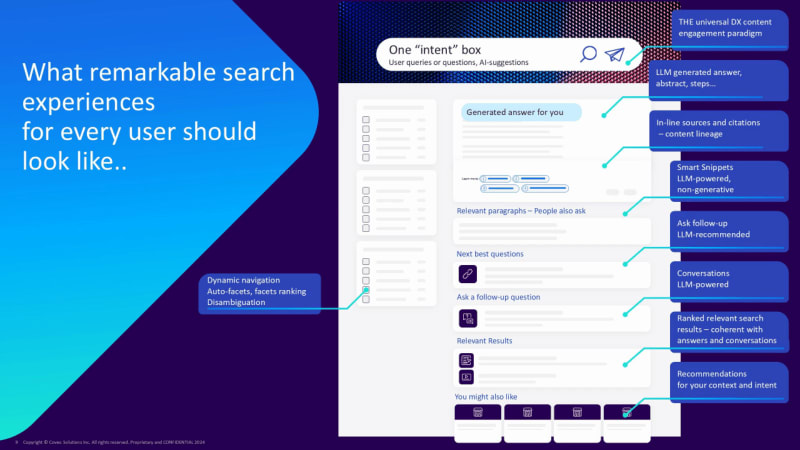
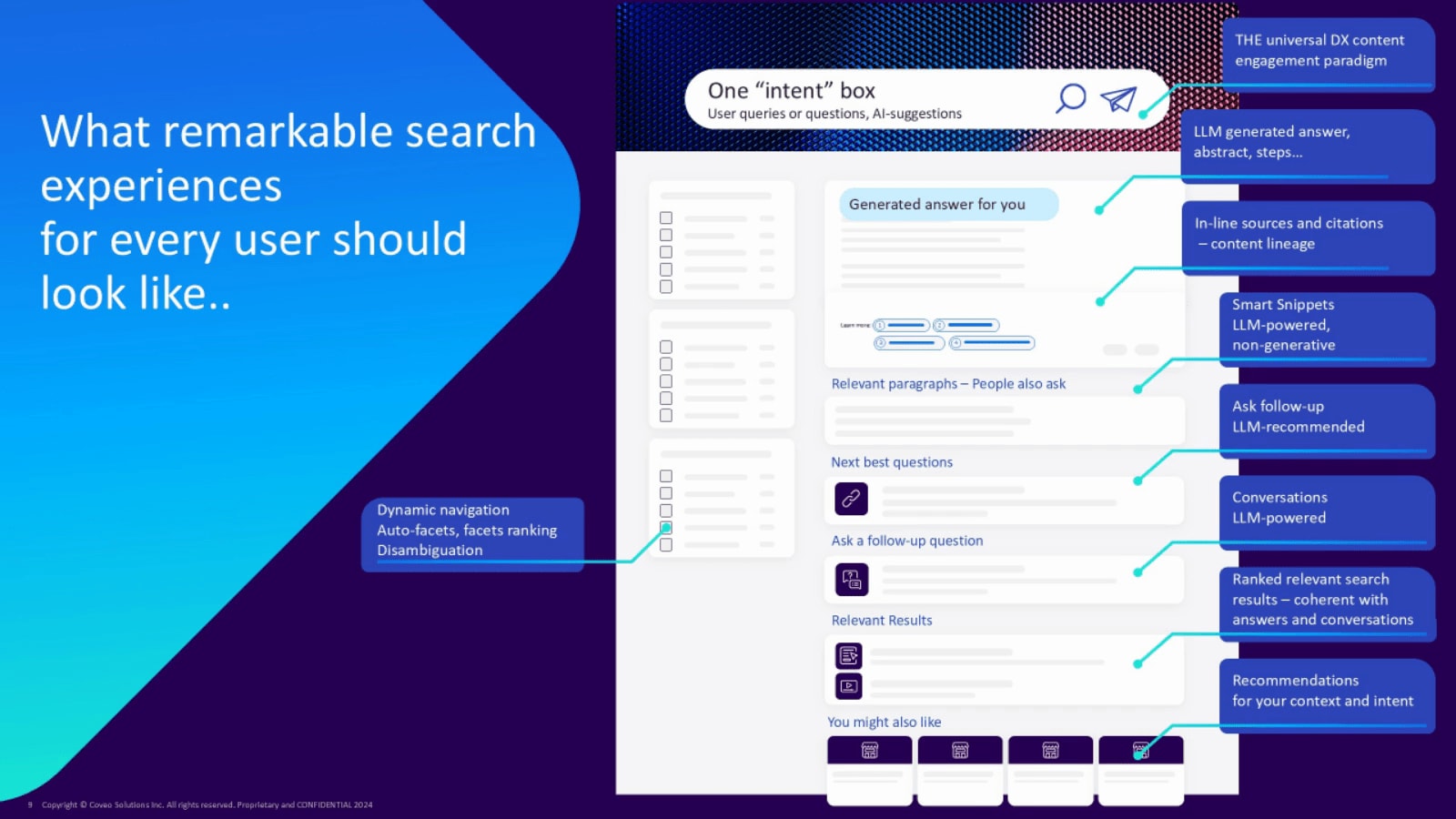
Hello, everyone, and welcome to today's CRM Magazine web event brought to you by NICE and Coveo. I'm Bob Fiernakis, publisher of CRM Magazine, and I'll be the moderator for today's broadcast. Our presentation today is titled AI and knowledge management for customers and agents. But before we start, I just wanna explain how you can participate in this live broadcast. At the end of the event, we will have a question and answer session. So, please, if you have any questions during the presentations, just type them into the ask a question box and click on the submit button, and we'll get to it at the end. And as always, if we can't, get to it, we'll follow-up with an email within a few days. So now to introduce our speakers for today, we've got Heather Hughes, director of product marketing at NICE. Welcome, Heather. And Daniel Orajan, lead product marketing manager at Covea. So now I'm gonna pass the event over to, Heather Hughes from NICE. Welcome to the broadcast, Heather. Alright. Thanks for the intro, Bob. So today, I'm going to talk about building a winning AI powered CX strategy by unifying workflows, agents, and knowledge. And how better to do it than to bring in a winning football team like the Kansas City Chiefs? I hope everybody is interested in football, knows a little bit about football, and you like the analogy. So let's go ahead and get started. Just like in football, where there are so many seconds on the clock, in CX, time is money. And the road to winning in CX is paved with automation and optimization. And the opportunity for this is great. In fact, as you can see by this data, most customer interactions with an agent are inefficient. NICE's analysis of billions of conversations across thousands of organizations ranging from startups to industry giants, new adopters to seasoned users, reveals that only thirty five percent of interaction time positively influences CX. So you can see the next biggest chunk there in purple is noninteraction. When customers on hold or there's no dialogue. So, certainly, automation and optimization can improve this metric. So here's a framework, big picture, that I'm gonna talk about today, and it's a way to think about automation and optimization with AI powered experiences. So the future of AI powered experiences is delivering, is delivered via three strategic pillars using AI, workflows, agents, and knowledge. Workflows optimize every process from start to finish. Agents, and that's both human and AI, they're empowered to deliver faster, more efficient service, and knowledge serves to connect the dots across everything, unifying data and AI insights for smarter decision making. So these three pillars should work seamlessly together and align AI with a core of customer service operations to ensure that you can maximize the ROI of your AI investments. I think we'd all agree that, we're over the initial or, hopefully, a lot of us are over the initial hype of AI, and we're looking to prove ROI. And so together, we say that when these three things, workflows, agents, and knowledge, when they work together, they achieve what every c suite is after, increased customer satisfaction and reducing operational costs at scale. So let's start with workflows. First, you can empower efficiency with intelligent workflows on a single platform. And so on that single platform, you can design end to end workflows across every customer service role, ensuring seamless integration between frontline teams and back office operations. These workflows build seamless connections that break down silos. And as they operate, they self optimize, constantly learning and getting faster and more efficient. So back to our football analogy. Workflows, just think of them like they're like your x's and o's, your plays. If each x or each o does its job, the work flows, eliminating bottlenecks, inefficiencies, frustrations, transfers, delays, and all the other things we need to tackle in customer service. You may have heard the famous saying do your job from Bill Belichick. Well, it worked right, to the tune of six Super Bowl championships. The next so called dynasty just might be the Kansas City Chiefs. And here you can literally see workflows in action. So just think about it. How cool would it be if most every play your team attempts from the back office to the front lines results in receptions? Imagine each play optimized for results. So like the NFL, we also have a long list of stats, higher CSAT, higher FCR, lower AHT and ACW. We know all these things have room for improvement like I demonstrated on that first slide. Those improvements mean things like LTV, life customer lifetime value, increased productivity for your agents, reduced cost, and the list goes on. Okay. Next in our framework is agents. So you can empower productivity gains with advanced agents. You can design experiences where AI and human agents collaborate and dynamically exchange skills. We actually call that reverse prompting at NICE, and it's a really exciting innovation where both AI learns from agents and agents learn from AI. It's incredible. By building AI agents using historical interaction data, they will learn to perform like your very best employees. In fact, all of your employees will operate with high productivity using specialized copilots designed for their unique roles. So there are all sorts of possibilities of how agents and AI can work together and a AI assists an agent versus working autonomously, and they can work together. So each person in this huddle has a role, blocking and tackling, running a route, protecting the quarterback, each to make a play. Each person on your team also has a role, and AI can power their success. So I'd like to suggest you give your team members a co pilot as good as Andy Reid, someone they that they can trust. Like a great coach by your side, copilot helps make the most of every interaction. So with sky high expectations and only seconds to meet them, not unlike the speed at which the NFL NFL plays unfold, companies need real time AI driven assistance to optimize their conversations with customers. And here you can see why Hyatt chose Copilot to provide an easier experience for their agents to drive quicker and more effective responses using things like knowledge, and to save money while improving the experience of agents and guests. So Copilot for agents is purpose built for CX. It provides instant guidance and insights. These capabilities understand each customer's unique needs and dynamically assist agents in personalizing every conversation. With Copilot's AI powered insights, agents can tailor their responses quickly and accurately using real time data from across touch points. So by combining both personal context and knowledge, agents can deliver precise interactions that leave customers satisfied and engaged. So this is really important. I'm not sure if you knew, but fifty nine percent of customers say that that lack of personalization negatively impacts their loyalty. Carnival UK has adopted Copilot for agents to empower their advisers in real time, delivering knowledge, guidance, and next best actions directly to advisers, decreasing their ramp time and empowering them to handle any any interaction. So what you're saying is the agent window, and in the middle is the conversation with the customer. And on the right is Copilot coaching, providing, knowledge, providing help, etcetera. It's very powerful, and it really does help that agent quite a bit. Carnival UK specific knowledge guardrails being that advisers are only offered Carnival UK specific information. So there's nothing taken from the open Internet. The GenAI is retrieving automatically from the Carnival UK knowledge base that specific information that's relevant to that customer and that actually, the agent role as well. So speaking of knowledge for agents, the third essential element of our framework is knowledge. You can empower trust with unified knowledge. That is automation that's designed with all of your data, all of your knowledge, and your AI models in one place. So this builds that protection for your data and brand with robust access controls and guardrails just like I mentioned for Carnival UK. And this unification helps you operate smarter services by injecting contextual insights across workflows. Really, if if you think about it in the in the title of our webinar, AI and knowledge are inseparable. To use knowledge, you have to have AI. So back to football. Here you can see a knowledge source or sources, coach's brain, his play call sheet, and all the other coaches talking in his ear. Remember, there are coaches in the coaches box above the stadium who can see the entire field in real time. They have a three hundred and sixty degree view. So lots of lots of knowledge sources happening in this fast paced game. So same thing with agents and customers. Right? And and customers have multiple knowledge sources. I'm sure you have multiple knowledge sources. And one thing we hear from our customers is that they have these sources in lots of different places, and they just don't know how to bring it together. Well, happily, the whole process of bringing knowledge together has become simpler than ever before with large language models. So the use of large language models has made it possible to crack open and assimilate large volumes of data, quickly sift through that, and find the true meaningful data, which is now more accessible than ever before. So for the first time, customers our customers are able to knowledge to harness all their existing knowledge sources without those huge migration efforts. So those sorts of massive undertakings have almost gone away with generative AI. And what you're left with is the management of those resources. It's no longer a migration stand up effort. And it's this makes it much more of an ongoing management effort because knowledge creation is now accelerated. So this year, the estimated amount of data generated daily was about four hundred and two million terabytes. That's daily. And that's twenty two percent higher than in twenty twenty three, and that's just a daily growth rate. So, you know, there everyone is really grappling with this vast amount of data and knowledge, and today, we can harness that with generative AI. But you need you do need to have systems and processes to disambiguate, to find the conflicts, to resolve the conflicts inside of your knowledge systems wherever they may be. All this means that knowledge itself is no longer just about knowledge management. It's really about beginning to control and to supplement your AI. It's really about AI management. So Xpert is NICE's easy to use knowledge solution. Its superior information architecture and word vectors make it scalable and AI ready. Carnival UK has adopted expert to give their advisers the power to see what guests have searched for and what they've seen prior to contacting them. So they can also see suggested solutions based on the the inquiry. So knowing more about what the guest has been searching for prior to even talking to them translates into reduced handle time. And then being prepared and ready with the right knowledge also reduces that handle time. And this all increases first call resolution Barca to those KPIs or those stats. You know, think of this as like a clean handoff in football. It's a beautiful thing when your agents are are ready and prepared and all the workflows, and they have the knowledge that they need when they need it. So another key result is that expert is optimizing the agent's active engagement with the customer. Age and this this really advanced personalization, this is really also pretty cool, is that expert tailors content to an agent's area of support. So like an offensive line in football, expert is kind of blocking and tackling, and they're clear it's clearing the way for the running back. And like a cleared run to the end zone, agents only see the content they need, and they don't waste time waiting through irrelevant content, which increases efficiency while reducing both guest and agent frustration. And that kind of hearkens back to that personalization and the importance of personalization, and not providing generic information, to your customers or to your agents. Right? So the framework that I've covered today, workflows, agents, knowledge, if you think about this framework, it helps unlock the power of AI driven insights by centralizing all your data knowledge and AI models in one platform. And that platform is c x one empower. It's our plat AR platform for complete customer service automation. It brings together our three strategic pillars, workflows, agents, and knowledge, and it orchestrates them across every phase of customer service from end to end. It's designed to automate customer service, and it's built on that trusted foundation of CXone, the industry's leading cloud native platform. And with CXone Empower, you can bring together all of that knowledge coming from the best agents, all of your data, your integrations in a single place. And all of those resources can be used by all of your workflows within the platform. And when your workflows and your agents and your knowledge are working together like a championship team, the results look pretty good winning. So I wanna thank you, for your time. I had a blast talking about this, and I'm looking forward to your questions. And I will hand it back to you, Bob. Hey, great. Thanks so much, Heather. Really enjoyed your, you really enjoyed your presentation and your football analogy. It was fantastic. So now we're gonna hand thing things over to Daniel, Rajan, again, lead product marketing manager at Coveo. Welcome to the broadcast, Daniel. Hey, everyone. I'm really excited to talk about such an interesting topic. Thanks, Bob. So the topic is AI foundations that unlock the power of generative answering. Before we get started, I just want to give a quick background on who Coveo is. So Coveo is the leading AI platform that brings AI search and generative AI to every point of experience across the enterprise. And what that means in the lens of customer service is that Coveo helps customers and agents discover and use the most accurate, relevant, and up to date knowledge when they need it. And we'll talk more about how that works. I want to start with some thought provoking headlines that have been dominating twenty twenty four, with respect to AI and generative AI. Now while, many enterprises are already using some of these technologies, the success of generative AI hinges on one thing, which is quality data. If you are already testing it, if you're using it, this won't surprise you. But what might surprise you is that many organizations have haven't really tackled their data issues yet. Without clean, organized, and relevant data, search and generative AI's potential will just stay that. It'll just remain a potential because data is foundation is the foundation to AI and generative AI. With that, every major tech vendor today is now in a race to solve for data quality. But what really ends up happening is that they are offering point solutions through data lakes, data cloud, RAG, knowledge graphs. Now with data lakes, it's pretty good, to centralize data. It's designed to do that, but they're still just raw data. It's unrefined and not actionable. With data cloud, it is a step forward in structuring data for business intelligence, but it still doesn't contextualize the data. Now with retrieval augmented generation, some of you might be familiar with this technology. It's focused on con it's focused on context and content retrieval, but there is some complexity about how do we retrieve the most relevant accurate content from our source, and managing that can be, complex. With knowledge graphs, it's really good for providing explicit relationships between data and objects and entities, but the cost and complexity of setup and maintenance makes them really, really hard to scale. Now each of these solutions is also part of the puzzle, but they don't really address the full picture that data needs to be contextualized, but also, easy to maintain. So I'd like to visit revisit an older yet powerful framework, which is data, information, knowledge, and wisdom. Now this framework illustrates the journey from raw data to actionable insights. Now data is foundational, but on its own, it's not enough. You need that information which provides context, and knowledge is what you derive by synthesizing that information. And wisdom finally comes from applying knowledge with experience and judgment and context. And you really need to be able to move from data to wisdom by applying these, different, outside elements, which is experience or judgment and context. And you need to have a closed loop, way for cycling through all of the all of these different stages. Now AI and LMS today specifically are helping in some of these areas, but you still need a human in the loop to validate data and information and provide those checks and balances. And this is where knowledge management practitioners play a pivotal pivotal role, providing the human judgment that AI cannot, replace. So not we established that knowledge management is essential, but here's the challenge. There's way too much data. There's structured data, there's unstructured data, and there's limited people and resource to manage it. And achieving a single source of truth is expensive. But what if there's a way to mitigate all of these challenges with AI search? Not just any search, but AI powered search that's grounded on your organization's information and knowledge, and and that's not just raw data. So here's a statement I want to emphasize, which is search augments AI rather than the reverse. What that simply means is it's it's the effectiveness of AI and generative AI. It hinges on how well your search systems function. Why? Because, because search is the mechanism through which people, through which people find what they need. They people discover insights. People self serve across your sites and systems and applications. So search isn't just a feature. It's really really become a core enabler of how people navigate information in both in work and personal lives. And now we are all familiar with the search box, whether that is the one we use on Google or on your brand's website, but we believe that the search experience has evolved. The reality is that this box holds a lot of power, and we need to rethink search and AI AI powered search specifically. In it really search has evolved because now search has become this opportunity for organizations to have a conversation with their customers and prospects. It is an opportunity to to guide decisions, to provide, decisions, and advice to customers and prospects. It's also a channel where, brands and organizations can deliver seamless, relevant, personalized experiences. It is also an opportunity end of the day to to drive business value by, by providing, by providing relevant results on the search page. Now when done right, it when when it's done right, it becomes search becomes an all in one tool, which blurs the line between search AI and generative capabilities. Now I want to show you what we believe at Coveo is the, is the benchmark. What, for a a truly remarkable search experience, what that should look like. Oh, the the search journey starts with, what we call as the universal intent box because we believe that search has really become an intent box where a user, types in their intent or their query, And this intent box really drives AI powered experiences to deliver relevant results in your on your search page. And some of these key elements you see on your screen right now is once a user types in their intent or the query, there's an LLM generated answer, which is really concise, actionable, and it's also supported by, citations, and that really helps build transparency and trust. And followed by that, there is, what we call as smart snippets. They're really, non generative answers that are pulled directly from existing content. And below that, you will find what, next next best questions that other users have asked, that's relevant to your query. And and we provide opportunities for the for the user to ask a follow-up question. And you also have your standard search results below that should be relevant to your query. And finally, you will you will find recommended content and products that are embedded in your results. And I'll I'll be happy to show some of, these in the real world where some of our customers have deployed, Coveo, and and I'll I'll be showing that in the upcoming slides. And but if a user really wants to further refine their search results, they can do so by using those filters and facets on the left hand side of the search page. Now we've I've shown you what, the benchmark for a really good search experience should look like from the front end, the user facing experience. But I wanna take a a couple of minutes to explain everything that happens under the hood for search experience to be really effective and with with respect to generative AI. So if you pay attention to the image on your screen, it's it's a really stripped down simplified version of Coveo, where you will see content sources that get fed into Coveo's index. You think of all the, information that is scattered across your enterprise. It could be in your Salesforce knowledge base or your SAP knowledge base or it could be in in Confluence, SharePoint. And, no matter where the the your knowledge and information is stored, you are able to bring all of that using connectors into Coveo's index, and then Coveo's AI models get applied. So when a user types in their intent or their query, they are seeing the most relevant and most personal information. So we believe that for generative AI and AI search to be effective, you need out of the box connectors and native integrations that I which I touched upon. You need, the your AI platform to handle large volumes of content across different formats and languages. And when it comes to, hybrid unified index, what what I mean by that is you need a platform that provides, an option to combine structured and unstructured data into one intelligent searchable layer and, which would blend the, which will blend both lexical and semantic searches. We'll think of keyword matching and intent driven approaches that impacts the accuracy of your search results. And all of this really means nothing if there's no security. You wanna make sure that your end users only see what they're allowed to see, protecting sensitive content. And and every time you update content from the end source, you wanna make sure those results are updated in real time. And on top of that, you want your AI models to continuously self learn because they are your end of the day, your users are continuously, changing the way they interact with your system based on their browsing habits, their purchase history, content they view. So you want to make sure that that that your AI models are continuously learning. And and with analytics and insights, you want to be able to track and optimize, search performance with actionable data, data that will help you identify content gaps. What are the top queries that users search for? What are your case deflection and self-service success rates look like? And, ultimately, what is that, cost to serve in terms for, in terms of ROI? And and finally, with, with gen generative AI and AI search, you need to make sure that it is UI content and system agnostic. It needs to adapt to any unique, it needs to adapt to your unique environment without requiring major implementation lifts. Now all all all of the information that I've shared or, up to this point has been theoretical, but I would love to switch gears and show you, real world use cases where, brands like Dell Technologies have and how how they have used, Coveo for customer self-service. So, Dell uses Coveo to power their self-service portal, which addresses a high volume of complex queries from a global audience, which includes high volumes, searches, multilingual support, and and providing guidance and on highly technical issues like firmware updates. Now what you're seeing on the screen, right now is, you what what you're seeing on the screen is where a user types in a long tail query related to troubleshooting their their product. There's an AI generated answer that's created, that's supported by sources and citations, and these generative answers and search results are grounded on the content sources that Dell has connected in the back end. And on the left, you will see there's an option where users can navigate their search experience through filters and facets. And if you scroll keep scrolling down the search experience, you will find query suggestions and questions that are relevant to the user's initial question. And so you will see the search experience is really close to that benchmark, slide that I that I shared previously. And so Dell's search results also include relevant product information product recommendations that that would help, provide an upsell across all opportunities for for the business. And finally, the search results are ranked based on Coveo's AI models where a business can apply various rules to tune ranking based on relevance and business outcomes. Now from self-service, let's move to an assisted service, example with Aetna Health. Now what you're seeing on the screen is the agent console, in Salesforce service cloud. Now Aetna Health uses COVID to empower their agents by surfacing this this search experience inside their agent console itself. And by doing so, they were able to reduce by fifty percent. They were able to reduce the cases that escalated their tier three agents, which led to significant efficiency gains, which means that the tier one agents were able to handle cases themselves without any escalation, which which led to, significant efficiency gains. Now these results are really not just, limited to, two brands. Customers globally have been achieving real impact with Coveo, and I want to specifically call out, two brands and and two two of their success metrics. The ones on the right, which is Salesforce and, SAP Concur. But Salesforce, they use Coveo, in at least eighteen use cases. And in from just one use case, they're we they were able to avoid over twenty thousand, cases leading to two million dollars in cost savings every year. And, also, SAP Concur uses Coveo, and recently, they shared some staggering results. They they save over eight million euros every year through AI search. Now before I, wrap up and finish my presentation here, I want to I want to provide a checklist for you, to see if if you're gonna be able to see success with AI generative answering, you need to make sure your AI search platform is a fully managed AI solution. Now AI itself is hard, but it doesn't have to be if it's fully managed by experts. The next checklist that, the, the next item on your checklist will be a closed loop system. You wanna pay attention if yours, AI provider AI search provider has a closed loop system, which means it continuously learns and adapts based on user behavior. And it also supports multiple use cases, right, from self-service to assisted service, and it works seamlessly across diverse content sources and user interfaces. And and most importantly, you wanna make sure that it it is enterprise scalable, which which means it's able to handle complex, high volume use cases, with ease. And and finally, it offers the best of breed technology, not not not only often not only offers the best technology, but is continuously innovating in the space. And if you're really interested in exploring more about how Coveo is transforming AI search and and how it helps unlock the potential of generative AI, there are two great ways to dive deeper. One is you can see how Coveo works in the wild. Now the the Dell technology example was on a slide, but if you really wanna, test it out yourself, you can, go to their support portal and experience it. Or there are other brands like United Airlines, Zoom, Xero, Blackboard, where you can really experience Kuwait and what that looks like, in the real world. And if you have other questions, you there's also a blog great blog, resource that we have put out, which will help address some of these questions. But, this has been great. With that, I want to conclude my presentation. I look forward to the questions. Back to you, Bob. Hey. Great. Thanks so much, Daniel. Really enjoyed that. I learned a lot. I'm glad you mentioned that, right in the beginning, you mentioned, search augments AI, not the reverse. For some reason, I would have thought that, it was the opposite, but okay. I guess everybody makes that assumption. But yeah. Fantastic. Okay. Hey. Listen. We're going into questions right now. So if you got any questions for either Daniel or or Heather, please, now is the time. But, Heather, right now, I'm gonna jump back to you. And there's a question here, from, James. And the question is, what role does natural language processing, otherwise known as NLP, play in enhancing the accessibility and accuracy of knowledge for customers? That's a really good question. A really good question. Yeah. So one way that NLP enhances the accessibility of knowledge and the accuracy of knowledge, is by the use of what's called vectoring or vectorization. And vectorization, it's really a mathematical representation of words, and it captures the meanings and the relationships in a multidimensional space. And it allows AI to understand the semantic similarities between different words. And when you vectorize your knowledge base, that means that information can be leveraged by other applications. So, for example, you can surface, insights into tools like I showed, like Copilot. We also have a tool called autopilot, that's conversational AI and self-service. So whether you have a tool that's assisting your agent or a tool that's pure self-service, vectorization helps make that that knowledge available. And then the second thing is when you're using your own, knowledge base, it ensures that those answers provided are guardrailed. You know, with the word vectors, we can parse the intent behind a question, find the right responses based on previous knowledge of the best outcomes, and then present the best answer or or next step. So that helps in the accuracy. Fantastic. Okay. Great. Okay. Here's a question for you, Daniel. So how does Coveo handle content, security, and permissions? That's a great question. So there are a couple of things. One is with permissions, During the point of indexing, I showed you that slide where Coveo is able to ingest content from these different sources. But during that process of indexing, Coveo inherits the source permissions during context content indexing at the document level, not just at at the source level. So there are also advanced security features for more complex permissions. And so Coveo, because it inherits, the, perm the source permission itself, it ensures your data stays safe, and and it's accessible only to the right people. And with when it comes to generative AI, Coveo uses a proprietary two stage of approval process. And, what I mean by that is in the first stage of content retrieval, it it's done at the document level to find the most relevant items in from your index. And then there's a second stage content retrieval. So in this stage, the our our generative AI model retrieves the most relevant segments or text chunks from the previously identified, documents. And so this combination of, these methodologies really ensures that Coveo handles, content security, the right way. Okay. Great. You know, I had a a question just when you were going through your presentation. How much different is the information, displayed to someone using self serve versus an agent using, like, assisted, service? Is is it sort of the same or or is it completely different? It it could be, however you want it to be. If you want it to be the same, it could be the same. It it depends on it comes back to the security, question that I answered previously. So if you want a a a piece of document to be, to be visible only to your agents and to your employees, then you can make sure that is not that is not seen by your end users from the self-service side. So you have all the configurations, that with you, then you just have to, turn a couple of knobs and turn on the right switches to make sure, the security and permissions are handled correctly. Great. Fantastic. I'm sure it's a lot harder than turning a couple knobs and switches, but, I I get what you mean. Great. Heather, here's a great question for you. So what do you need what what do you mean, by knowledge being about AI management rather than just about knowledge management? Well, that's a that's a good question. So AI management involves integrating AI into workflows to increase productivity and to improve decision making and to enhance the customer experience. And it requires aligning those systems, those AI systems with your culture, your language, your values through knowledge management to ensure trustworthy and context aware communication. So, you know, as I mentioned before, customers are able to harness all their existing knowledge sources without those huge migration efforts. And, you know, those huge migration efforts have have almost gone away with what I talked about before with vectorization. So I hope that that answers the question. Great. No. It does. You know, there Elaine just asked a great question, and I'm gonna get to it at the end and kinda let both of you chime in because it's it's probably, crossing a lot of people's minds. So we should definitely answer that one. But right now, I'm gonna ask, Daniel, what are the channels that Coveo can be deployed in? Which which channels? That's a that's a really good question, and it Coveo is one of the main value propositions is that, it Coveo is platform agnostic. So Coveo has native integrations with agent consoles from sales for service cloud, your Genesys, CX Cloud, ServiceNow, SAP, Zendesk. So that's the agent side of things. But on on the front end, Coveo can power AI search experiences through, native native integrations with the Salesforce Experience Cloud, your Adobe experience manager, and and your site core. Or you can bring Coveo search comp components to to your own sort support portal, your own Internet, or your own marketing or ecommerce site. So we leveraging our native, integrations and on our and our APIs, you are able to really bring Coveo to wherever you want to, be. And Coveo also has an in in product experience and can also integrate with your chatbot. So it's really platform agnostic. Fantastic. Fantastic. Heather, what are what are some of the I asked this question to Daniel in a different way, but what are some of the approaches to securing, and protecting data and knowledge? Yeah. And and, Daniel, I loved his answer. You know, security is is paramount in our data sensitive world. And with CXone empowered, it ensures that the data is protected with sophisticated role based access controls to help ensure that sensitive customer data is only accessible to the right people, to reduce the risk of data breaches or misuse. And with this management in place, you can maintain strict oversight of who can access, edit, or share information within your organization. And, you know, this also ensures, compliance with data privacy regulated regulations, and provides that extra layer of protection, for both you, your business, and your customers. Okay. Great. And it seems like data protection is and security is one of the top concerns. But here's another concern, which I'm gonna post to you, Daniel. So how does Coveo prevent AI, hallucinations? And are they still as common as, kinda was reported, you know, maybe a year ago or so? Yeah. I I think it is common if you don't, do the right things. So with with Coveo, how Coveo prevents hallucination, it it's by controlling both the prompt and the answer generation process. So with, with Coveo's gen generative AI model, it constructs a prompt that includes detailed instructions, the user's query, and retrieves the most relevant text chunks using our retrieval process. And by confining the generative LLM to only the most relevant text chunks, our our AI model or generative AI model ensures that the generated answer is accurate and it respects the enterprise, the the content permissions. Great. Alright. So we we have this one last question. Someone can wrap up, and I'm I'm gonna give you both of you an opportunity. It's, it's the question for Melon and or excuse me, Elaine in the in the chat. And the question is, are agents generally receptive to GenAI generative AI? Are there is there it or or is there any training or change management issues with those that are more tenured? This has to be a a big concern amongst the agents in the trenches. I don't know if you wanna take the first wiggle swing at that, Heather. Oh, I'd love to. This is a really good question because the answer is, of course, nuanced. Overall, we see that agents are yes. They are generally receptive to generative AI. And some stats, like, sixty, seventy plus percent of agents are excited about GenAI helping them in their day to day, you know, grind. But what I would say is that it depends on the solution. So there are generative AI solutions that work in the background. Right? Solutions like auto summary. We've seen very, very rapid adoption of auto summary and agents saying that they absolutely love it. Once they see the accuracy of the results, that's their number one concern is, is this really gonna be as good as what I could do? Let's say they're tenured and they're very detail oriented and they take lots of after call work time to create a a summary. And once they see the results and they and we have the ability to customize those results, they're they're very pleased with something like that. So, wow, this assistant did this in the background. I don't have to worry about it. Yes. I have the power to check it out, to edit it if I like, so we don't take that power away. We keep them comfortable, and we've seen really rapid adoption. I think I think that there's less or there's a little bit more change management, when it comes to things like having that copilot telling you, you know, sometimes it could be, that you wanna give the right information to the agent, but make sure that they still have the power to choose, yeah, this is a great, suggested response. This is what I'm going to use. And when they see the accuracy of the information again, and I think Daniel gave a really good answer to that, the accuracy is so important because that's part of the trust. Because there has been so much, you know, buzz about, quote, unquote, hallucinations. And when you put the right types of guardrails in place, those and you don't use just generic LLMs and generative generic generative AI, you know, you you have that accuracy in your results that builds trust. And I think that's a big part of any employee, morale and willing to adopt and make a change is that they need to trust that this is good for them, and it's not threatening to them and that it's accurate and that it helps them become more successful. Fantastic. I'm gonna pose the same exact question to you, Daniel. Is there any kinda, like, special, let's say, training that anyone would need on either, of these agent screens, or is it pretty simple? Everything that, Heather just said is spot on. I'm just gonna add by saying, I think, with any new technology, there is gonna be a level of trust that needs to be earned. And given the customer service customer service, contact center space, I think, it's a high it's a high attrition, industry, which it's because the environment is very stressful. They need to meet SLAs. So even by missing the mark by a few seconds or even a a few minutes, things can snowball. So which means it's a highly stressful environment. And so any technology that helps agents to do their best work and creates a happier work environment is gonna be good for the agent. And so it there is some sort of training or this in terms of not just technology, but, onboarding the agent to believe that this AI technology is really, is really good for for the agent. You wanna communicate that this technology is gonna help them do their best work. And so if you position AI like that, it it's it's we found that it's it's to be a far easier, far more easier approach for in terms of AI adoption. Great. Fantastic. That that oh, that's always, an issue when, you know, when there's huge technological changes and people, you know people in the trenches are presented with them. But anyway it looks like that's about all the time we have right now. I think there were a couple of questions that dealt with some of the questions that we had. But, I would like to thank everyone that, came today, everything everyone that asked questions, and especially our speakers and and sponsors. So if you'd like a copy of the presentation, you could download it once the event is archived. If you'd like to review the event or send it to a colleague, you can use the same web address you used for today's event. It will be archived up for ninety days. And don't worry, you'll get a email tomorrow once it's live. So, I'd like to thank our speakers and sponsors, Heather Hughes, director of product marketing at NICE, and Daniel Rojan, lead product marketing manager at Coveo. So that concludes our broadcast for today. Thanks everyone for joining us.
AI & Knowledge Management for Customers and Agents
Learn how AI-powered knowledge management is revolutionizing customer and agent experiences—on your schedule. In this on-demand session, discover how to equip your team with tools that deliver precise answers, automate engagement, and elevate response quality at every touchpoint.
Explore how AI shapes content strategies, streamlines workflows, and extracts actionable insights for better business outcomes. You’ll see how AI-driven knowledge management empowers efficient content creation, real-time adaptation to customer feedback, and seamless collaboration between agents and AI.
What You’ll Learn:
- Accelerate Service Excellence with Generative AI: Discover fast, intelligent solutions that redefine the customer journey.
- Effortless Content Integration: Consolidate knowledge from all sources into a single, powerful index.
- Collaborative Optimization: See how agents, AI, and knowledge management work together to create exceptional customer experiences.
- Build Confidence with AI: Learn strategies to enhance trust and compliance within your knowledge ecosystem.
Watch this webinar to see how AI is reshaping the future of service and knowledge management.

Make every experience relevant with Coveo