Alright. Hi, everyone. We're just gonna wait a few seconds to allow people to join. Alright. I see some people coming in. Thanks for joining us for our conversation today. We'll start in just a few seconds. Alright. I guess we can get started as we have a packed agenda for today. So I'll hand it over to Brian Kielkors who's gonna be our moderator today. Thanks, Clara. Well, my name is Brian Kielkors, and I'm one of the managing partners at RSR Research. And we are a US based research firm that studies the business use cases that drive the adoption of technology in retail. Just a quick, overview of the company. We've been around for fifteen years. We don't do competitive intelligence. So, for example, you'll never hear us compare SAP to Oracle. We don't do those kinds of things. But we instead focus, almost exclusively on the pragmatic use cases that cause retailers to do things with technology or not do the things we thought they were going to do with technology, and we do about twelve benchmarks a year. What we do with that information is we advise largely, we advise technology companies on how to to present effectively to con to, retailers, sometimes how to help them with their road map. And that's very enjoyable work. I'm a retailer by trade. I've been in the retail business since the mid nineteen seventies, believe it or not, and I ended my career in retail as a CIO. I then took a job as a CEO of b two b let me say that again. B two b media company in Boston, And it was while there that we started the research division that became RSR. We bought it out in two thousand and seven, and we've been solo ever since. So that's my story. I have with me I have Andy Warren and Brian McGinn McGlynn, and I wanna just turn them over to the to you for a second so they can introduce themselves. So, Andy, let's start with you. Alright. Yeah. My name is Andy Warren. I am the practice director of commerce at DEG. Also, like you, Brian, a a recovering retailer. I worked in the the retail space for, about seventeen years, with my family in a group of shoe stores that we owned in in Wichita, Kansas. DEG is a full service digital agency. So, we work from commerce to media to social to, email. And we've recently been acquired by a company called Merkle, and we are in the process of being integrated into Merkle. So day to day, I work on commerce accounts. A lot of direct to consumer stuff is really in my wheelhouse, primarily focused around large CPGs that are looking to go direct to consumer for the first time. But we do a lot of b to b work. We do a lot of traditional retail and ecommerce as well. So just kind of the full spectrum. I just happen to focus more in on the the d two c side of things. Very exciting. And in the meantime, you get to help integrate these different companies. Yeah. That is also an exciting job. Never ending process. Brian, how about you? Talk about yourself. Oh, great. And, great to have another Brian that spells his name the correct way. So that's way. We could have here on, on the call. So Brian McGlynn. I'm the general manager and the head of our ecommerce business at Coveos. So, like, Andy, like you had mentioned, we're integrating as well. We acquired a company called Qubit about a month and a half ago, big in the retail space in addition to the retail work that we've been doing at Coveo. Personally, I my first job, in life was at a retailer, so I certainly started early. And then from there, I have been working in the retail technology space for, either Martech, Search, or whatever it may be for close to twenty years. So a lot of crazy stories, certainly seen things over the years from, two thousands and even in the nineties and then up until now. So, I'm really excited to talk about, got a lot of great opportunities and topics and questions that we have, that are coming in today. I'm excited to talk about it. But, one thing I I can observe right about three of us is that we're all old enough to know better. Right? So we've we've been in this industry long enough that we can't deny our our involvement. That's good news. It's it's not a good Sorry. Before we start the discussion, I just wanted to say, that, if you want to participate in the discussion, ask questions, you're welcome to. So please raise your hand, and I will unmute you so you can, take part of it. So don't be shy, and please, participate. Yes. Yeah. We hope to get some, participation questions from the full group here because it's an interesting topic. We're gonna talk about ecommerce, where we are and where we're going. And I'm gonna start this off by giving you a little bit of my sense of the history. Of course, we study ecommerce at great length at RSR because it's ever changing. The first ecommerce, system that I was involved with was part of the the old dot com bubble back in nineteen ninety nine and two thousand. I was actually the executive sponsor in my company for what we called the estore initiative. And in our naivete, we thought that this estore was gonna be just like a like a real store. It's gonna have its own inventory, gonna have its own employees, it's gonna have its own sales. And, I wasn't alone, of course. So there are a lot of companies that did that and thought they were just basically, landing landing their flag on the moon someplace and trying something new. We quickly realized, however, that we had been naive about this, that consumers actually use the ecommerce channel to investigate some of their purchases. And although the volume was very, very low in those days, we could e even see the the the the desire on consumers' part to be able to start a transaction in the digital space and finish it in the physical space. I happen to work for a drugstore chain, and it was a perfect case. Right? It was, consumers wanted to order their refills so that they could pick it up in the store. So the very first hint that I got in my career that we were gonna have to be looking at integrated sales channels. Fast forward to two thousand and ten, which was a very important date for ecommerce because that was when, the the the majority of consumers switched from the old flip phones to smartphones. The Apple the Apple iPhone had been introduced in two thousand and seven, and the Android was in two thousand and nine. And by two thousand and ten, that's something over sixty percent of consumers had a smartphone. And guess what they did with that? They started using the information that they carried around in their purses and pockets to make smarter purchase decisions. And that's when you saw the the very beginnings of omnichannel retailing. If you go back at that time, there was a lot of debate about whether omnichannel was even real. And various analyst companies, very similar to our company, argued who invented the term. If you'd like to know, it was IDC that invented the term in two thousand and eight. So just for just to keep it on the record. But omnichannel is now accepted as as the norm. And in fact, what happened is consumers showed us in no uncertain terms that they didn't see channels. They just saw you as a brand. They saw you as a solution or an impediment if you weren't doing a very good job of getting to the solution they wanted. Now fast forward to this year in the time of COVID, and Google says that something in the order of sixty four or sixty five percent of all transactions that begin in retail or that that are executed in retail begin in the digital space even though they finish in the store. So it's it's a real thing, and it's changed it's changed the way retailers behave in the marketplace, how they solve consumers' problems. And and it's gone from just being a stand alone channel to being a a a a carefully integrated solution to now something that that we are calling in our company, ecommerce three dot o or version three. And that is not quite real yet, but it's what's behind the the push for headless commerce and those kinds of capabilities where instead of it, the ecommerce system being integrated to, order management and point of sale and task scheduling and all of those things. The business rules and the metadata that are inherent in ecommerce are now embedded in the entire selling environment. And this is a big, big change, but it's coming very fast, or at least that's our opinion. But that's what I wanna I wanna test to make sure that I'm not just barking up one of those analyst trees. So I thought I'd ask, Brian, let's start with you. Is is ecommerce three dot o real? Is that is that gonna happen? And if so, what has to happen in order for it to happen? It's interesting we look at from what the one dot o, the first wave, the second wave, and even the third wave, the three dot o. I think the way you define it is real. When you look at it from an omnichannel perspective and and really the whole idea of blurring the line between the physical and and what is the online. Couple different anecdotes, on that. When you go Barca, dial it back years ago, and, yeah, there there is a case where each ecommerce was sort of a test bit. Let's test it out and see that it works. Hey. We got point four percent of our sales are now coming through online. This is great. I made a hundred bucks. So it was, it was they proved that it worked. Number two, it was set up as a separate business and really a separate channel. And and you look at it where like, what was going on right now with Macy's. There's a lot of push in the investment community on should they spin off the the ecommerce. So we've seen that with Saks and and what would have gone on in their side where what for the valuation of ecommerce by itself can be high. But the CEO of Macy's put it very clearly. So look. No. For us, it's bad. He's very clear about the fact that it's not it's an intertwined part of the entire business in the sense that there's a limit on digital inventory. They actually do, and this was what really was it really came full circle in my views. It was an area where it's a good lead gen. It's actually a cost effective lead gen. To think about it, it's like brick and mortar being a cost effective lead gen. But clearly, they've gone in at this point where the names out there, the brands out there, And you think about it from end to end, some of the better experiences. You're walking around, I mean, literally with a computer and with in a sensor where you have location. You have intent. You have all this data from a user within an environment. So So whether they're outside of an environment or in an environment, they're able to bring that in. And I've seen that those, we just bought an older house we've been renovating and seen those in the DIY space that have fully enabled where you can go into a store, search, find information, find the location and bay number, and others where you do a search in the store and there is nothing. I pick based on where I can go in and be more efficient. And, clearly, those that have made those investments are there. So that whole idea is that online or ordering, I think it comes down to it really just blurs. It's an extension. And so from that perspective of three dot o, it's the idea as, in in as we see in the b to b commerce world, it's it's really one and the same in this case. You know, that's you you said a lot there. There's a lot to unpack in that comment. And and, Andy, I'll get to you in just a second, but let's pick through some of these things. The first is is that, we have probably all remember. We were probably all involved in remembering that when mobile phones started to become real, we had an ecommerce channel. So he said, now let's do a mobile channel. And then it you know, the lights went off, and we said, well, wait a minute. It's just a different UI. It's the same thing. It's just a different UI. And that's where we've got our first warnings that the UI and the business rules and metadata that that run underneath that UI, those those could be separated. And this what gave rise to, depending on what you call it, loosely coupled systems or headless systems or whatever you wanna whatever term you you prefer. Another thing you'd mentioned was the whole Sachs and Macy's things. We're we're in violent agreement with the CEO of Macy's. And my own opinion about this is is it's being driven by by investors. It's not being driven by, operators and certainly not being driven by customers. Customers see you as a brand. They see you as a Macy's or they see you as a Home Depot. And you don't get points added or points off if one part works better than the other. It is they just want it to work. But there aren't industry measures in place that I know. We'll talk about this later. To to determine how effective you are at at integrating all the components of your selling environment. And that's something we wanna talk about because you're we're all making big investments on the technology side, both in the store, you know, with order management and all the fulfillment capabilities that are happening and, on the ecommerce side because there's new ideas coming forward all the time. So we're gonna try to unpack some of those things. But, Andy, I wanna get back to the original question. Are we headed toward a three dot o of third wave of ecommerce, and what has to happen for that to be real? No. I'm I'm, on the side. I do a little bit of development work, like, probably not enough to where I could call myself a developer, but, like, I could play one on TV for the most part. Mhmm. And and and a lot of the, open source applications that I dabble in, they have major releases. And in those major releases, when it goes from version two to version three, there will be things in that version that are considered to be breaking enhancements. So they will break from the other version that was currently in use. And so, you know, when I when you look at, are we at two dot five or two dot six or two dot seven? For the most part, everything is kinda operating and working in the same manner. I think for version three, it's gonna have to be a wholesale shift away from where things are right now. And I I do think that COVID was kind of the precipitating factor to that. And and we've kind of been laying this out, internally here at DEG is this idea of commerce everywhere. And so, really, when when you start to pull the entire experience together, both in the digital and the physical space as opposed to having you know, you were talking about, like, m dot sites. But still, we talk about when we look at Google Analytics, when we look at Adobe Analytics, when we look at reporting in general, for the most part, companies are viewing that as a completely separate channel. But when we start to view commerce as this holistic thing where everything is influenced and, leveraged off of the digital experience or the physical space, then I think you've really kind of gotten into this omnichannel vision that everybody's had for a long time. And I think we're getting there, you know, with the API led kind of development that that people are doing with headless now. It doesn't matter what the the ingestion engine is for the APIs that you're serving. It it's just a matter of where people are consuming what the experience is providing. And so I think we're getting pretty close to that. And to me, that does feel like a a big shift from where we have been before. Like, an example I was thinking of is in a physical space, like, my wife and I were at a concert not too long ago, and we were waiting in a long line to buy a t shirt at the concert. And as a result, we were missing part of the concert. And so instead of waiting in the line to buy the t shirt, like, why couldn't I just scan a QR code, have that experience that purchase experience come up on my phone and immediately be back into my seat watching the concert, or better yet, have a little flyer on the seat where I can scan it, just be in the concert experience while I'm making that purchase. So I really think that the the blending of the commerce and the transaction into just everything that we are doing, whether it's consuming content online or in the physical space is really what that three Dotto is going to look like. Yeah. I tend to agree with you, and I think our research is showing signs of that that retailers are seeing the need for that. Now there's all kinds of impediments. And, and not surprisingly, one of the big impediments is the multigenerational nature of their technology portfolio. We were joking on on a call yesterday that there's still an awful lot of people out there with AS four hundreds and, you know, not too many RPG three coders any longer. But, but those systems are still out there still doing their work, and they're now they're never gonna be part of this picture. So, it's it there's a lot of that kind of work just to get to the a level set. Another thought that you triggered, when I was a CIO, I used to give a, a talk to the new employees, and they'd come in and I'd say, okay. What's our role? And our role was to be able to get, business rules and data out to the decision makers at just the right moment in time for just as long as they needed it. And at the time, I was thinking about store employees, and we were talking about being able to enable store employees to do their work better in the box and do those kinds of things. But in today's world, the decision maker could be very, very far away from you physically. Could be halfway across the globe. No. Certainly not an employee. It could be a partner. It could be a customer. It could be any kind of a third party, and you still wanna be able to safely distribute that that business rule and that data so that they can make the right decision, of course, with the bias towards your brand. And then and then pull it all back when the when the when the, transaction is complete. And that is the essence of what we talk about when we talk about API led or headless or whatever you wanna call it. Well, I think we'll talk a little bit, in just a little bit about what what are the next UIs? Because one of the things that's also happening is UIs are emerging faster than we can talk about. So, and what are the considerations there? But, it sounds like we're getting there. I guess, let let me let me go back to you, Brian, for just a second and say, what do you think the time frame for this is? Yeah. I think part of it is we're we're hap it's happening, and we're moving in. Right now. Right now, we're looking at some are there it's it's really whether it's the the early majority or, definitely not the late majority, but the early majority is really looking at it. We're seeing within the the dev cycles. And, clearly, the pandemic pushed a lot of timelines where it goes it's kinda battened down the hatches and didn't make a lot of immediate changes to to make certain to serve their customers. But even just from what we see in our business, the amount of redesign toward I think, Andy, as you mentioned, headless. And really the enablers are looking at that decomposable structure where we can go in and start to add a lot of the net new technologies, to really support that additional wave of commerce on there. Clearly, our business around relevancy has taken a big, big push on it to really look at stitching those pieces together. So we're we're seeing a a big, big part on it. So I would say it it's happening as to really to the level that we see that. Is is it increasing from my perspective? Absolutely. Is it a perspective that, where the where the top of it is, we'll we'll see, but there's definitely things are moving. That's interesting. How about you, Andy? What do you think? Yeah. I think the the bleeding edge is here. I mean, I I think it's it's been here for a while. I've I've been hearing about headless and API led for four years now, I guess. And, I would say I've probably had more people talking to me about it in the last six months in in the prior three and a half years. And I really I think it's gonna be triggered by the adoption of the major players within the platform, so Salesforce, Adobe, Shopify. I mean, I think that they're gonna continue to push the envelope on on what these new UIs look like, you know, whether it's React based or Vue based or what whatever it is that the people are designing UI in. As long as they can build out the APIs to support that, I think they're gonna continue to go in that direction. I mean, if nothing else, it's one less thing for them to have to support on the platform. And so it I think it makes it a little bit easier for them as well. Yeah. I don't think there's any, mystery about why Salesforce acquired MuleSoft. It's because they they have a great API management capability, which is, you know, one of the things we're not gonna talk about too much today. But what does it take from an IT perspective to manage all of this? Although it did occur to me, yesterday when, the entire East Coast of the United States went down because some mystery bug at AWS, but those things are bound to happen. Again, you said quite a bit. I think that the I think that the front edge is here, and there's an awful lot that's that's happening probably before we realize it. But this gets back to another thought that I had about this, and that's that as consumers are starting their their journey increasingly in the digital domain, even if they plan on going to a store, they're starting with an interface that the retailer or the manufacturer has no control over. It's Google, or it might be Amazon. I I I'm guilty of doing that. Even if I'm standing in an aisle at a Target store, I tend to be on an Amazon site not to check prices or availability, but to read the reviews. I do that all the time. I suppose if an executive from Target was standing next to me, they'd say, why aren't you on our site reading reviews? It's just habit. Right? It's it's it goes back for some years. It's an old habit. But one of the things that that happens as a result of that is it is retailers lose their ability to differentiate at the price and availability level, which are kind of the two most basic attributes of value that Walmart and and Amazon in North America particularly do so brilliantly. So the the next question I have for you is this next iteration of ecommerce going to allow or make it possible for the non Amazons and non Walmarts of the world to create differentiating value that they may not be doing very well in the confines of of ecommerce as it exists today? Andy, I'll start with you on that one because it's kind of a fascinating question. Yeah. I mean, I you're never gonna win on price or availability with with either of those companies. And, I've I've worked with, some manufacturers that are going direct to consumer, and they've they've tried that route, and it did not go overly well. Doesn't go well, does it? Yeah. And, you know, it's super interesting because a lot of the the clients that we work with, we will go and start working with them and start asking initially about, you know, what are what are the goals that we're trying to get to? Where are we trying to go? Why are you operating in the space? And a lot of times, there's not, like, a real clear defined sense of purpose for them to be within the direct to consumer space. So and so we work with them to try to understand what that value proposition looks like and then what it is that they're trying to do. Are you trying to be a revenue replacement? Are you trying to be data capture? Are you trying to build up your first party data store? What does that look like? And, you know, a lot of times where we end up going with that is, it it's an old, thing from the shoe business, but, you know, the manufacturers would come in and they would have a shoe book that's this thick. And as a retailer, we would pick six shoes. Right? And so I think being able to offer the breadth and depth of selection within, within a kind of holistically managed catalog is something that, is important and something that I think needs to be represented. The other side of it too that I thought of is oftentimes Amazon and Walmart and Target as kind of this aggregator aren't going to do a great job of disseminating the core brand values that you have. And so having a channel through which you can actually, like, transmit those brand values directly to this consumer is going to be important. And I think that includes being able to guide the consumer in a, adequate fashion towards the product that makes the most sense. Amazon's not good at helping me figure out what pair of running shoes I need to buy in order to make sure that I run effectively. But New Balance is or Asics is or Brooks are. So they take that and then build out guided selling experiences online to show me what I need, in order to fulfill my goals as a consumer. So I think those are some of the the points of differentiation that that brands can have that Amazon and Barca, Walmart are never really gonna fulfill. You know, that's fascinating. You mentioned, some interesting things. First of all, I agree with you. I I don't think that it's really advisable for someone to try to go toe to toe with the supply chain masters, and for the obvious reason that they can drive down the cost of goods to such an extent and pass those savings on to consumers and keep the rest to deliver to their stockholders in ways that mere mortals will never be able to do. It's just and they they're really, really good at it. The other thing you said was is that they've been very successful. I'm putting words in your mouth, of course. But, they've been very successful at simplifying the value proposition to essentially price and availability. And those are if you're winning at those on those dimensions, then you've got it. You've you've got it under control. You don't have to overcomplicate the value proposition. For all the rest of us who at best can get to parity on price and availability, you've got to have something else. And this kinda gets to something you said a little bit ago, Brian, that was about relevance. Relevance is a term that, you know, companies like ours are used all the time. Now you gotta be more relevant. You gotta be more focused on the needs of the customer. And the customer, of course, is leaving lots of breadcrumbs, digital breadcrumbs, to help us to understand what the objective is. The question is, how do you how do you use the technology to get to relevance quickly in this new world? Yeah. I think when you look at it, and it's an interesting part, you compare it to Amazon, you compare it to others. And that really is that differentiator, and and they set the bar in relevance. And that's clearly where our perspective in our our business, Coveo, is about relevance. And that's part of what we look at from a technology perspective is if we're gonna go in and give a retailer or a brand chance to differentiate, first, we need to make certain that the experience is excellent. They've got to match or or even surpass the Googles, the Amazons, and certainly the Wayfarers and the others at this point. For us, a lot of it is making certain that you understand those micro moments that a customer, what they're looking for, anticipating what they're looking for. You're going in based on that that analog experience where you walk into a store, somebody knows who you are, somebody knows what you've looked at, or if you they don't know who you are, they can make the best guess and interact with you to get you directed to that information that you need. So whether that information is product, that information is a video, that information is additional information. Brian, what you mentioned, what I've done as well, I had to go and buy a sink the other day in the house for renovating. And so I'm in there. I'm actually cracking open my iPhone, and I'm digging through, hitting the site. Luckily, the seller had a good website with a lot of information, fitting information. And, certainly, as we go in, it's like I could try to track someone down who's overloaded or, you know, help myself. Let me go in and find what I'm going through. So I thought it wasn't relevant. I got the right sync. It was good. I found the right sizes and got the fitting pieces by doing the research on it. I think we the whole idea that relevant experience being able to go in and and stitch all that information together from various different parts in an effortless way. So the user feels that it's anticipated and it's brought in. And and that's where technology can really play a part in in surfacing that, connecting in, as you mentioned, with MuleSoft. And we kinda look at ourselves as MuleSoft content in a lot of ways being able to go in and and and bring that and and surface it up. And that's where we've certainly seen, at least from from our view, where we work with a lot of clients to to solve that issue and and really make that buying experience much more interesting, whether it's a shopper, buyer, browser, whatever that persona is that they're they're looking at. Boy, that's so interesting. I the thought thought occurred to me as you were speaking that this next generation of ecommerce is is analytics led. It's driven by real time analytics, which is very different from the past. Yeah. But, in the context of Andy. Now Andy just told us that he's a runner. So it's easy to discern very quickly based on a couple of clicks whether what kind of a runner he's in he he is. Is he looking at, New Balance nine nineties, or is he looking at walking shoes? You know, those kinds of things. I think that we're about get to get told that we're very close to the end of our conversation. We are, but I I think we can finish with the, maybe, words from Andy and from you, Brian, and then we we can wrap it up. Yeah. Well, I just, we got, this it's always so fun to plan these things. We we came up with six questions. We almost got through the first one. So, we can turn this into we can turn this into a whole series, but I think what we can all leave from here is the is the is the the thought that there is a an ecom three dot o three dot o coming that is already here in in the leaders, and it and it entails making digital capabilities available in the real space. And that's sort of the kind of things we talked about. There is these these lines of demarcation, these organizational principles of the year digital channel, your your your stores, your partners, your b to b relationships. All of these get blended together in interesting ways, and they all have to do with getting the right business role to the right person at the right time. So, it's here already. It's API led. It's UI independent, and, it needs to be highly relevant for the consumers to detect that it's different from the old way and somehow much better. So that's how what I got out of this conversation. How did I do, Brian? And yet, did I get it all? Yeah. Perfect. Very good. Alright. Well, there you have it. Thank you for talking. I think we have, five more of these podcasts in the future, right, to get to the other questions? Yes. We'll have some more, which we can send to everyone, by email for sure. Okay. Alright. Alright. Over to you. Decision will be continued. Alright. Thank you much. Thank you, John. Thank you everyone for joining, and, I'll follow-up by email afterwards also to send you relevant links. So have a great day, everyone. K. Bye bye. Alright. Thanks. Bye. Bye. Bye. Bye. Thank you so much.
A Discussion About Next-gen Ecommerce Experiences
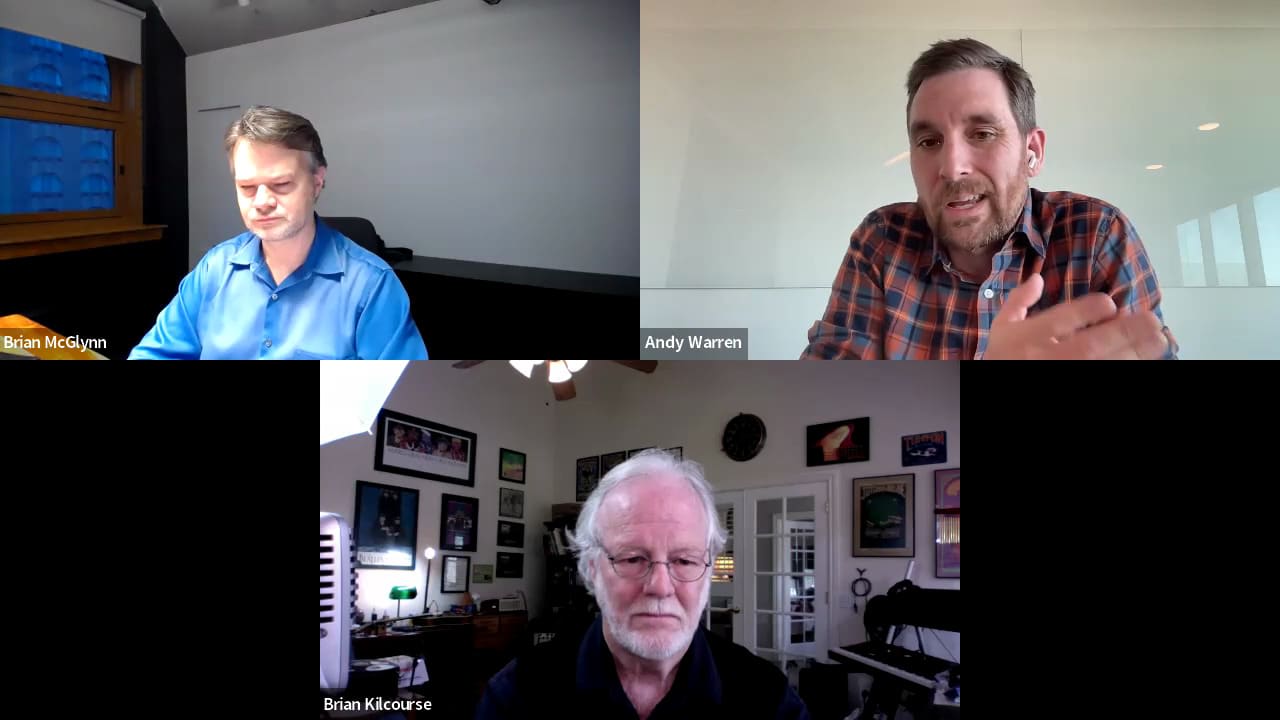
Watch this discussion about all things eCommerce, from overcoming challenges to must-have shopping experience enhancers for 2022. The conversation is led by Brian Kilcourse from Retail Systems Research, whose expertise is to help companies develop winning strategies with leading research in the retail industry. The panelists cover:
- What is the next-gen of eCommerce going to be like
- The attributes of a good personalized front end
- How to create a personalized value proposition
- Building loyalty: how to create a sense of relevance and intimacy
Make every experience relevant with Coveo