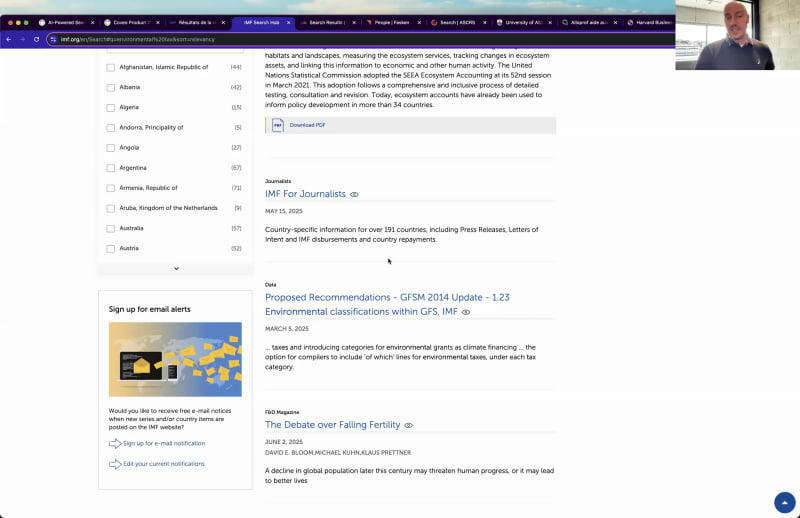
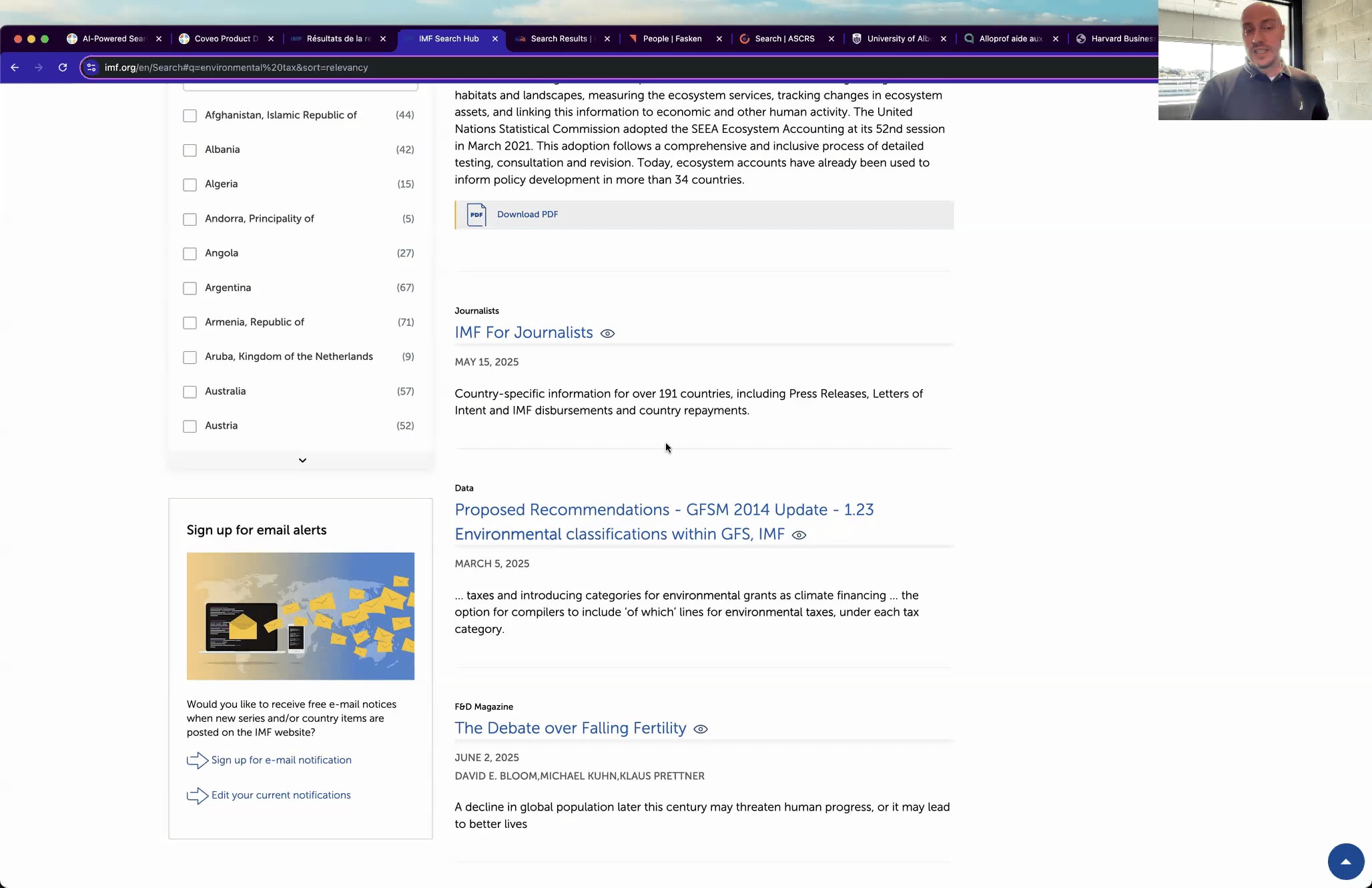
Hi, everyone. Welcome to today's webinar. We're gonna be talking all about your content heavy sites and how you can leverage AI search and generative answering for smarter discovery. So we're gonna be sharing some challenges, a three step path to solving them. And then most exciting, we're going to have real world examples across different industries, including associations, higher ed, and law firms. So my name is Carrie Anne Beach. I'm a senior product marketing manager at Coveo. I'm very lucky to be joined today by my colleague, Vince Bernard. Vince, do you wanna say hello? Sure. Hi. I'm Vince, a director in r and d, responsible for product showcasing and, innovation. So everything that is basically the new shiny thing we're like to play in r and d. So Awesome. So, as we go through today's presentation, if you have any questions, feel free to just put them in the q and a. We will, get to as many as we can, at the end. And then if we're not able to answer them, don't worry. We will follow-up directly with you. So without further ado, let's dive right in. So if you're joining us today, you likely have some kind of public facing website that holds a wealth of information that your prospects and your members trust you for. Whether that's membership value, citizen services, or academic insights and enrollment information, users are coming to you every single day in search of knowledge and answers. And lucky for you, you have a ton of this information that can help them on their journey. But can they find it? Or is it stuck in siloed content repositories that's scattered across your AI, which leads to fragmented and frustrating user journeys. This is a huge problem. I don't have to tell you that because it's more than about knowledge findability. Right? It's truly about trust and perceived value. And when these experiences fail, trust erodes. And we cannot have that, especially because when your content is the product, it absolutely needs to deliver, and this means it needs to be discoverable, relevant, and tailored to user needs every single time. But we also know that that's easier said than done. So as I mentioned before, you likely have a lot of content that's being created in stores in various places across your organization. Right? Your CMS, your support sites, your intranets, they're also all in different formats. You probably have PDFs, web pages, YouTube videos. On top of that, you have various web properties that's owned by different teams. So you need something that's gonna be able to support multisite and language deployments while also driving those consistent experiences across all of your sites to show up as one brand. Then you also have multiple user journeys to support and personalize. So you want the experience to adapt depending on who the person is, where they've been, what is their need, what are they interested in. And then on top of that, I also probably don't have to tell you that user expectations are changing. So we see that people don't just want results anymore. They want answers. They want these conversational experiences because this is what they're seeing elsewhere, and this is what they're coming to expect. And if you aren't giving it to them, chances are your competitors are going to. And then on top of it all, you're managing all of this with limited time, budget, resources, and also knowledge because everyone can't be search experts, AI experts, machine learning experts. This is a field that constantly changes. Vince, you work with customers all the time. Is this resonating as well? It does. And we can use Kavi as an example, basically, because you know our reality as well as I do. If you look at our web properties, you'll notice that we have a dot com website. We also have training platforms, events platform. We have a documentation website. So all of those are actually serving partially some shared content. So there are pieces of information that are on different properties that that needs to be shared across all of them. And then the expectations are different. If you're technical and you go on the technical documentation, you you wanna be you you you want the output of that Gen AI to be different and also the search tone to be a little bit different. So I think, Kaveo as a reference is a very good example, but then I'll share with you after, some very cool implementation that had these challenges that we were, we were able to go through with them. Awesome. Love it. Looking forward to that. So as you just mentioned, this is a reality. A lot of people are facing ourselves included. So what do you do? It feels very overwhelming. Well, we've broken it down into three easy steps that you can take to make sure that your content is always delivering. And probably unsurprisingly, that first step is to unify search. So this starts with unifying access to content no matter where it's stored within your organization. And at Coveo, we have a unified hybrid index that connects to virtually any system that you have, CMS, CRM, knowledge base so that you're able to search across all of this enterprise wide knowledge without needing to have these costly content migrations. And our specialty really lies in those large volumes of structured and unstructured content so that you aren't gonna be limited by format. You're easily gonna be able to scale that out. So one thing that I've noticed actually, Vince, is, a lot of people when they're starting their search journey, they'll look for a federated search, but we know that you actually need a lot more than that. So could you speak to that a little bit? Yeah. The difference between federated search and unified search, in my opinion, is the fact that a federated search will poke different system or different search engine to give you kind of a a view of all these different information, but it's not unified, which means that you're gonna have different ranking systems and different roles of results. So if you're looking for something, for instance, a person AI not come first because it's gonna be in the person's system. So having federated search is basically just an aggregation of all these different engines or these different systems. Unifying search is basically to have all that content inside the same ranking system, same the same index. And you'll notice here that we say we're good with connectivity. Basically, we have native connectors for the the big systems out there, the ones that are the more, used. But nowadays, we can also and we usually, use our API connectors, for instance. So the generic rest or even the push API to connect to almost everything. So I think, you're right. Unifying the content is the core key for for the next steps that are coming after. Right? Exactly. This is really the foundation for, you know, self-service success, allowing that seamless end to end experience across all of your sites because we've also seen it kind of be looked at in a silo of different departments and everyone kinda has search on their own. You really have to look at that end to end experience because, ultimately, a user doesn't care if, you know, a support team answered their question or a marketing team answered their question. They just want an answer to their question, and they want it where it is that they're searching. So that brings us to step two. So now you've unified your content. You've gotten your house in order. It's time to personalize. But how do you do this at scale? Right? I just talked about a lot of challenges that you face earlier. AI to do all of that at scale just makes everything more difficult, and you likely don't have countless hours to sit and manually tune machine learning models to be able to achieve, you know, desired relevant results. And this is really where an AI platform advantage comes in. So as you may or may not know, Coveo has a suite of out of the box machine learning models. We have over twelve that they're continuously changing, and adding to it. That includes AI search, recommendations, dynamic filters and facets, and, automatic relevance tuning, which allows you to get that relevance very easily, to name only a few. And this could be applied again across all of your sites very easily with a click of a button. And these models are also self learning. They continuously learn from user context and history to understand intent, and then they're gonna adapt to deliver the most relevant results. So I wanna unpack that just a little bit for those who may be less familiar with these concepts. Vincent, why is this so important for these content heavy sites? A few things are very hard to, land correctly when you're dealing with very large websites. So let's take Sitecore as an example, since this is where I grew up from. So if you're building a large AI core website with multiple languages, for instance, and multiple properties, at one point, having just the the right document for the right query can be challenging because it's not just a matter of keyword. It's gonna be a matter of user preference and popularity, but also language. And and if you take all these and you compound them together, it creates, like, tens of thousands of different rules that you need to manage yourself, and that's obviously not a position you wanna be in, because you're gonna be full time managing your search if you want it to be performant. So, what you see here is really a full closed loop where people are gonna search for something. The right ranking algorithm will kick in and give the best document. And if they click on it, we'll learn from that and then suggest these queries for the next users in the right trend. So if you're during the holidays or during summer vacation, everything is gonna move and everything is gonna be adapted to that reality also from a location perspective and from a language perspective. So you you'll see it in action after, but the same kind of setup will scale very well for multilingual websites and also for multiple properties, across the, across your organization. So I think that's really where the the value prop is here. Exactly. And, you know, we're talking about those public facing kinda dot com sites that are, like, very content heavy informational right now. But, of course, this can be used across your entire organization, across the entire user journey from dot com to support to commerce, even to internal workplace, so that your employees are able to to find what they need easier as well. And then that's gonna bring us to our third and final step. So now that you have a really solid foundation of great search, you can actually easily layer on success by turning all of that content into dynamic personalized answers with generative answering. This is a really exciting one that we're gonna share soon, for high content sites because it not only creates those hyper personalized conversational type of experiences that's gonna help increase self-service success, but it'll also maximize your content output, which I'm gonna speak to, in a moment. So at a high level, how it works is users are able to receive instant responses to their long or complex questions, we've seen that people are starting to change the way that they that they search. Right? Because we're used to ChatGPT. We're used to saying things in human language, saying them how I would just ask a friend and want to have a response back in a similar way that I would get it from a friend in in human terms. So they'll also get citations and recommended sources if they wanna learn more, and this is really important because they don't need to bounce around multiple links. They don't need to, you know, read through multiple different documents to find the answer. It's all gonna be right there. But my personal favorite part of this as a marketer, is that you can combine content across different sources to create the most relevant response. So this is really a game changer because maybe the answer is spread across multiple different assets, and you don't need to now think of every single query that could possibly exist, which is truly never ending. It can take, you know, the most relevant parts across sections to create something, a little bit new, but still always grounded in your own content. So this is really exciting, of course, but as as it are most things, we know that there can also be a little bit of hesitancy around it, and that's fair, especially in, you know, highly regulated industries. And that's why everything that we do here is grounded in your own trusted content, and it has the permissions and safeguards in place to avoid hallucinations. Vince, how have you been seeing this applied, with different customers? It's funny that you thought about that. I was in, Montreal yesterday, so I missed you by by by a few minutes. Yeah. But then, I was meeting with a narrow aerospace, prospect, so building planes. And then we want we wanted to show them actually what we can do. So I started to crawl content on the Internet and and build an index, to start showcasing Gen AI in their own kind of concepts, which is AI, it was regulatory auditing for a specific aircraft. And then I had that that very complex question regarding, like, some lights and switches in the dashboard of a plane. So I I I asked the long question to convey, and it gives a super good generated content. And then I said, yeah. Let's benchmark ourself to what's existing on the Internet. So I went to Google. Now there's a tab like Google AI, which is very cool. I enter the same question, and then I get a very good kind of, generated content. So I start looking at the citations and realized that it was just pinging, like, Airbus and all the other competitors, not necessarily the content of that business. And that was for them kind of a a moment of truth because Gen AI is impressive. It speaks well. It it generates, like, tailor made answers. But is it grounded to your content? Are you feeding and are you steering the wheel? Another example that we've done is one of their jets was not manufactured anymore. So it just went in Coveo in the query pipeline and then shut down that parameter, and then it wasn't a part of the, answers anymore. So the fact that you can control the narrative here, because you have the connectivity and you have the control over machine learning models makes Coveo a one of the few that is able to deliver at scale these experiences with success. Yep. That's super important to be grounded in your own content because, you know, who knows what's out there on on the Internet that you can be scraping and, and showing towards your customers is your source of truth. So with that, how about we see this in action with some demos? Sure. Let me share my screen. So the first part, you'll see I have a lot of tabs open. We'll go through all of them. But the first one that I wanna showcase, like I said earlier, is Coveo. We drink our own champagne, so we're gonna use our solution across multiple, interfaces. This is our dot com. So this is not a technical website. It is an informational website. We still have quite a bit of content, maybe two, thousand articles here. And what's interesting in this concept here is that it's gonna serve a really the persona or the visit I am. So the first query AI try here, what is WERGE? So relevance to generative answering, and how does it work for AI? So what I'm doing here is compounding two queries. So it's not necessarily a complex question, but it's actually two different questions. So I need to ask two different sets of document and merge that back together. So this is, you see first off that it it answers very quickly. Our stack is very good at retrieval and then looking at the best chunks and sending it. So what you can see here is the answer that merge all these, documents together. So we've got four different chunks from different documents, and then it explains to you that we're using AI combined with a semantic encoder for for the first retrieval. And then after, it do the links with, like if you wanna do with with, for instance, AI or Adobe AEM. So it's really good at understanding the feature, then understanding our capacity to deliver these features across different CMSs, and then merge that together, which I find very interesting. This UI looks great too. So they got, like, good result templates. You can see, like, some video snippets in there. So it's really a good looking AI. So that's something I appreciate. Another one that I tried that I found interesting was just what is a facet? So super simple question. You're gonna find a few, interesting things. So a facet is an attribute or a character characteristic to organize and filter search results. So the the language here and the way it's speaking to me is a little bit more, I'd say, prospect facing or or or AI presales. So we're we're not going in the depth of the technical detail because of the context, because of where I am on the website. So it's not our documentation of website. If I take the same query here and ask it over here on the documentation website, you'll see that the documents are are AI code snippets, and then it's really more the the the the lingo is very, very technical at this point. So I found it interesting that the same dataset, however, here we have also technical articles. So the same dataset is changing based on the persona or where you are. So we're talking about a million experience, a million different user. This is what we're we're talking about. You start indexing and then suggesting that content across different properties. It's gonna evolve and start just serving the right thing to the right user. And awesome. Yeah. It's it's pretty cool. And interestingly here, you're gonna find that we have a lot of different properties. So this is what, we mentioned earlier. Like, it's the reality now. You're using best of breed systems for everything you do. So whatever it's a a web page that describe your feature or a technical or an API documentation in our case, or you may have technical PDFs or events or or different brochures. So all these different pieces of content are usually hosted in different systems. So having the connectivity to do so, really helps bring these experiences together. I'll continue now. I'll come back to Kavio at the end because I wanna show you how it's built behind the scene. But now let's go and walk through these different dense information website that we found. The first one AI like to showcase in the association world is, IMF, so International Monetary Fund. It's been a client with us for a long time. They have, they're running on AI, if I remember correctly. And interestingly, they have a lot of content. This content generated across multiple countries, so I'll focus here on the multilingual, capacity. But first off, if you're looking at, something like environmental tax, you'll see that we're we're very good at finding different types of content. So no matter if it's an event here, a working paper, you're gonna find manual and guides, mission concluding statements, so really different pieces of the puzzle that are assembled here. An interesting part as well is you can open a quick view here and see inside these documents specifically what pieces of information we found relevant for the query that you've done. So this one is a simple one. And I I find I really appreciate the facets and AI because it it's such it's so dense in terms of information that you need tools. And, also, the the person that is, consuming this kind of experience is is usually kind of a power user at this point. So they're gonna need to all have the right filtering options. So you can see here, we have date filters, countries of origin. There are they also have these kinds of engagement parts, and this is kind of an interesting, bridge onto conversion. So if you wanna track events, like, if I click on signing up for for email, we can bridge that back to the query that originated and then calculate, for instance, the conversion ratio or these kinds of things. In website, those are are things that are usually harder to do. IMF is interesting because they have, a lot of users. So if you start looking at some query suggestion, just for example, you'll see that everything you're gonna have here, if you, if you start, using a query suggest, will be adapted to the what's trending right now. So this is user based based on what the users are typing. And when you were talking earlier on the scale and different machine learning models and how can we help, this is a good example. The same machine learning model for ranking the documents and suggesting the queries will be used across different properties. So here, same website, but I'm jumping in French. And at this point, if you look at something like the Publique France, you're gonna find that we are, first off, suggesting content and the articles are still very good in terms of ranking. But the same machine learning model, it segregate the different experiences between languages, between users. So this is how we scale, basically. You don't need to deploy that many times. We're gonna take care of, like, segregating the users and the traffic, consolidating what can be done, what what's good between the two different experiences, and then just keep what should be separated separated at this point. In terms of association, they usually have a lot of content. So they have members. So this is also something interesting in this website. I'm not sure I have it here. I may find it here. But you have these download PDFs here. Some of them are also locked, so you need to be logged in. So you can have that kind of, incentive to for for people to register to your community or to your, to your practice guide, by by showing them that if you are a member, you're gonna have access to these documents or not. The next one, the interesting one, is, National Association of Home Builder. This is a, a proud one because they decided to use, Gen AI on their public website. So the question here that I was asking is finding the right contractor. So super interesting. You're gonna have, like, based on a lot of different documents, kind of a guide for finding a a a contractor. Let's say you need to do your roof. You're gonna have kind of a good, a good walk through. The interesting part here is, this query, for instance, impact of of tariffs on the construction industry. So this is something, like, from from the actuality. You know, tariffs are are right now something a point of discussion that is important for a lot of businesses. So, Calvio did not, like, put this the user are going on the website or asking these because they have, like, questions regarding the situation. And then if it's trendy right now, it's just gonna make its way here. So if you go and and look at it, at this point, you're gonna have, like, a a a very good, like, deep dive into what's the effect long term or or or the pressure in terms of inflation, and then you can see all the different documents that were used below. So if you are not satisfied with the answer generated, you can still fall back on the search results that are at the bottom. So very interesting AI deployment, this one as well. Yeah. This is great. Also, you know, the way it's formatted, it looks really nice. It's super easy to digest. Another thing that AI comes to mind as well is while you're giving these really great experiences to your users, you're also gaining a lot of insights for yourself too. Right? Because search is truly a listening tool, so you can kind of see what it is that people are searching for and kind of get ahead of it and sometimes even create new content to solve a gap, that might exist. So, honestly, there's just so many different benefits of of having these kind of, like, modern search experiences. And that's a good point. A user searching is a user engaging, and then they literally give you in in plain words what they're looking for, which is much better than trying to figure out where they have clicked on the website or their their journey path. You know? This is AI straight up words. I'm sure you're using, like, Kavio Analytics on our website to understand the content we need to create. So that's the that's AI the the drill here. Let's move away from association at this point. Well, I don't know. I have it in the last one here. The surgeon. I just wanted to show you this one because I think the content is great. They have a lot of topics in here. Interestingly, same Coveo machine learning models. I won't click on all of them because the thumbnails sometimes are are very, intense. But, just to give you an idea, this will adapt to your to to the, to the vocabulary of your users. So in this case, this is for a surgeon. So if you start typing for something, you're gonna have, AI, I'll go with, something very and you see most of these words is it's not my competence necessarily. I don't know nothing about eye surgery, but you can see that it's really adapted to their reality, and it's the same model that we're using across our different customers. It's just reacting differently to this, environment. I got the equal one here, lasik versus PR, and you can see p r k, and you see the the whole, like, thumbnails, very interesting, and, all the different, filters as well just to give you a a good a good search experience overall. We have a lot of these different associations. I think they are, in need to showcase, like, they did they are working hard on these documents and presentation and wanna broadcast them, but then how to broadcast when you have, like, tens of thousands of different pieces of content. So I think search is a great way to do so. We'll go now in education. This one is one of our favorites here, at Coveo Fasken. It's a law firm here in Montreal and Toronto. They are using Coveo for two main parts. One of them is their search interface, but this one is more like people finder. So, they have a lot of, lawyers that are specialized in different things, and they are located in different places. So just to make it easy for us to search, what you can do here is, like, technology in Toronto, for instance. And then you're gonna find the right person that are, responsible for AI, for instance, or or tech. What's interesting here is the stemming part of things. So I look for technology, but then I get, like, artificial intelligence, fintech, or or all these different expansions of the words into your content because we found that those are right links. There were the right the right content to match that type of, of sentence. So very interesting here. You also have a lot of choices in the facets and, again, some search inside those facets so you can really dig and find something specific, and all the other facets will listen and be codependent in terms of filtering. So the more you dig, the more precise you get. And you don't have any dead ends here. You see? If I'm clicking on Toronto, I'm gonna have the three guys here, but then you won't suggest a value that do not have content, for instance. So it's all dynamic. It's all built for the user to avoid being in a dead end because that's obviously not where you wanna be when you're searching. Let's continue a little bit here. We'll jump now outside law into education. So education has been a very good, line of business or vertical for us. The reason is that they have so much content, and the content is constantly, evolving. So I I was playing with the website here just to try to find some example. And what what you realize with, just the number two, for instance, is that it's all, like, twenty twenty five schedule or or stats holidays or so it's always you see the users moving through time. So when you're getting into midterm, you're gonna have different query suggestion than when you're at the beginning where people are looking for to buy books or to register to classes. So it's really fun to see the evolution of the query suggest based on the season. And then the what I enjoy about this one is the tab. So you're gonna have a lot of content content that is presented into the main tab, which is basically a see all place. You're gonna find here, like, videos, news, catalogs, PDFs, but you can also go specifically, into some, for instance, services, and and find some content. Or if you look at something like quick note here, if you switch tab, I just I just realized that the the facets are changing as well. So it's interesting to see that you have, like, specific navigation tools depending on the tabs you're in. So, it's really interesting to see here, like, everything they've done in their search, they have great adoption. I mean, users are now finding what they're looking for, so kind of a good, outcome for them. And sorry. I was just gonna add education is a really interesting use case as well because it's the one of the few times that you can actually associate search to revenue in the case that you can tie it to increase enrollment. So that's always something that's nice to see, and also just seeing the way the changing nature of students and and how they want to receive this type of information, these type of kind of, you know, more conversational dynamic type of experiences. I agree. The next one is cool because it's a little bit different. This is a, I'd say this one is for helping students. This is a nonprofit from Quebec that is actually aiming for students and parents after school homework, to help people just, like, go through all the tasks they have to do. So this one is interesting because it it looks awesome. It's in both in English and French. And then here, I look for a Quebec history. Covid was a proudly, Quebec company. And then you can see, like, everything you have for to get prepared for your different, exams. And then you can switch to parent, for instance, and then you can have, like, how to help your child getting ready for knees. So, really interesting AI. Also, a tab for teachers where you're gonna have, like, support for teachers. So, in this case, they have a lot of contents. Because if you look at something like math, at this point, they're gonna have a ton of of of query for, a a ton of content. So in their case, it was not hard, but they needed search to serve. Otherwise, people will just get drawn into these long menus that they had to go through and understand your taxonomy. That's something with classical navigation. You kind of are under the assumption that a user knows how you are ordering your stuff, but people don't. They don't know how they don't know how you're gonna speak. They don't know where you're gonna put your things. So search is a good way for them to find actually your content without without basically having to know your your entire structure. The last one before going in the administration and show you how this is built is, Harvard. So we got Harvard Business Impact. This one is a large, content website where you're gonna have, like, seventy k catalog products. So this is a hybrid between, course explorer, searching for articles, but also searching for products directly. I find interesting when I was trying this one, the search box is cool. You're gonna have that query suggestion that is based on user queries, but you also have, like, direct document suggestions. So if you're looking for a specific course or a topic you know already, instead of going to the search page, you can jump directly on the content you want using this, artifact here on the search box. So, obviously, each website has their own requirements. That's why I'm going through a bunch of them just to show you, like, the the the the entirety of what we can do with Coveo. But, this one looks good, I think. And if you, let's go in business, international business. You're gonna find, like, all these different books, where, like you said earlier, Carrie Anne, we can track, like, for instance, conversion here. But there is also, like, course explorer for registration, and then there, they have a content article at the bottom with obviously, some filters that are specific to each one of them. So now let's go in Coveo AI just to show you a little bit how it's made. If you're new to Coveo, you probably haven't seen this, console before. This is the back end, so our cloud platform. I'm in the United States region here, and this is Coveo search. So it's basically the back end of the coveo dot com website I was showing, initially. So for for to be able to deliver this experience, we have a lot of different connectors that we used here. You can see that we also have our Internet running here, so we're gonna have confluence stuff, but mostly, AI, generic rest connector, AI core connectors, that we have here. We have Slack connector. We have some GraphQL, some Salesforce going on. So there is a lot of content we're using just to to bring that all here. Interesting thing here, if you are in the platform and, for instance, you're you wanna know, like, how to what's a facet? That's the question I was using earlier. We have this box here, and that's gonna pop a what we call an IPX, and then you can go for what is a facet. And then no matter where the user is coming from, that's really the the beauty of Coveo. We can serve the right content, at the right moment. So one of rule of thumb in search is not AI, put search where the user is so you're gonna have maximum adoption. Don't ask them to go somewhere. Just serve it where they are. So in our case, we're using search on our website, documentation website here directly in the platform, and it's all the same pieces of content that we're fronting here. I found this one pretty interesting. Once you have your content AI here, so you're gonna create some connectors. You can see here we have a just zoom a little bit down. We have a ton of them. If you go in the cloud, part of things, you're gonna find all these native connectors. Otherwise, you can use some APIs to connect. And if you have, like, IMF, for instance, I remember they had content that was, within their their firewall, within their environment. What we can do is have these crawling modules as we call them, which is a a little machine we install in your environment that will send us the data. So we do you don't need to punch a hold through your network. We can go and grab it from there. So this is the connectivity part. Quickly, if we go to machine learning, you're gonna find all sorts of machine learning. Here, we're gonna go into, I'll build a new one. There we go. For generative, answering, the limit is reached, so I'll go with semantic encoder. Same concept. So when you start building a model here, what I wanna showcase is it's not it's developer friendly, but it's even business administrator friendly. So what you gotta say here is I wanna select my content for my blog, for instance, from my business outcome catalog and from, let's go for, web index of AI. You're gonna see in real time the number of items that are compatible with that drill in terms of embedding. So here, what can we encode given the language that we selected? And then you can add filters, for instance. So you can say, yeah, I want this to be, for instance, authored by a carry on only. I want a model that is only the carry on content. So this is the kind of thing you can do. You're gonna select your author field here is, and then you're gonna even have some suggestions here. You can go in and select the author and filter your model, and that's as simple as that. The next step is to build it and and deploy. So, these experiences of Gen AI and Symantec search are extremely easy to do with Coveo because they're built on top of a very mature platform that is built to extract your content, index it, and then serve it through different experiences. And being able to have that flexibility too, right, of saying what you do or don't wanna feed because you don't want everything to be available for generative answering. So just kinda has those extra guardrails as well. Yeah. And you wanna also to kinda be able to, quickly react to a situation. So let's say you have something you need to take off. You are a, an association and then there's a new law and this this document has to go. You know? You you don't need to wait for the machine learning model to rebuild. You can just remove it from your experience using a filter. It's not gonna be invoked through RG, and then it's not gonna generate content. So the fact that you have full control over search will give you control over Gen AI at the end. That's it for my demo. So, Carrie Anne, do we have any questions? Yes. Okay. So we are a little bit over time, but I do see that people have decided to continue to hang out with us. So I will go to one or two questions. So the first one being around Gen AI. So you talked about it being kind of fully managed. Are you also able to have something that's more API based? There's some questions about, you know, the ability to use our own LLM, swap them out, have a little bit more control. So, basically, we offer the bolt on solution that you saw, which is called you, RG. So we are we're using our connectors. We index. We have the full UI component, the models, but everything is accessible through API and everything is granular, meaning that you can call the answer directly through an API. You can also, if you want, only get the citations or only get the documents. So every stage of that process can be intercepted and and then AI to another system. So let's say you have an agentic framework, Agentic or Jewel by SAP or Bedrock. You can use these different systems by just, like, taking the right part of the experience and then using it with another one. Yes. Awesome. I wanted to to bring that up as well. I thought it was a good question because we do talk a lot about kind of the fully managed solution, but we do know that some people just want that extra bit of control as well. So definitely a good one to point out. We are, you know, essentially over AI, so I'll just wrap up really quickly. I have an image here that is just kind of the evolution of, a modern website. We've actually been calling it kind of an intent box, so it's not even just about search. It's really about what is your intent and how can we give you the results or answers that you're looking for in the way that you're looking for them. And I like this because it's kind of a culmination of everything we just talked about. Right? It's being able to layer on all those different machine learning models, pulling from all of the content that you have just to have this very modern, conversational, relevant type of experience. And with that, if you would like to learn a little bit more, we actually do have a AI essentials package that kind of bundles in search as well as generative answering, which is really great, for those high intent sites. Like, there's another webinar from Vince if you just really wanna get more of Vince. And then there's also, a Cobayo for Adobe webinar that we also put together, and we have an ebook as well if you wanna dive a little bit more into the specific Adobe ecosystem. But as we mentioned, we are agnostic to your CMS or any other, area that you're storing your content or your knowledge. So with that, thank you so much for joining us today. If you have any further questions, if you wanna chat about this, please, feel free to reach out to us. We would be happy to continue the conversation. Thanks, Gabrielle. Bye. Thank you.
Turn Content into Impact with GenAI for Knowledge Discovery
When your content is your product, it has to perform. Whether you're delivering academic programs, member value, citizen services, or legal guidance… Your website holds the information your users need to act, decide, and trust you.
But when content lives in silos, it gets buried. And content that can’t be found can’t build trust.
Join us on September 3 at 11:00 AM ET to see how AI Search and Generative Answering are helping organizations turn sprawling, complex websites into intelligent, responsive experiences that deliver real value at every stage of the user journey.
What you’ll learn:
- How to transform content discovery with AI Search & Recommendations
- How to deliver real-time, personalized answers without more manual effort
- How to support diverse languages, journeys, and users — securely and at scale
- Real-world examples from higher education, associations, and nonprofits


Make every experience relevant with Coveo