Hi, everyone. Welcome to today's webinar. We've got a jam packed agenda today. Welcome. Welcome. I hope everyone is having a wonderful Thursday. My name is Haley, and we'll get started here in just a few moments. Please let us know where you're either viewing or listening from today as I'm coming to you live from pretty chilly Connecticut. We are getting a little bit of a flurry today with a little bit additional more snow to go throughout the week. So welcome. Welcome, everybody. Hope everyone is having a wonderful Thursday, almost Friday. Welcome, welcome. Hello, Jack. All the way from Wales. New York Wales. Yes. We've got New York City. Welcome, welcome. St. Louis, Georgia, South Carolina, Pennsylvania. Welcome. Welcome, everybody. We've got another from the UK, Quebec City, which is where Clara is from. We've got Florida, Dallas, Maryland, Ontario. Welcome. Welcome. With that, we can go ahead and get started. So, again, good morning or good afternoon, everyone. My name is Haley, and we'll I will be your host discussing today's topic, which is AI meets seats, top trends to drive service success in twenty twenty five. Now this is brought to you by Coveo and hosted by VIB. Today's webinar will be forty five minutes long or so, and we'll save the last fifteen minutes or so for q and a. We ask to use the q and a button at the bottom of your window to ask any and all questions, and we'll do our best to answer those at the end of the presentation. And if you have your pop up blocker on, please ensure it is turned off as we got some great cool questions throughout today's presentation. And now with that of further ado, I'd like to introduce both Gavin and Shep to you as they will be our speakers for today. Gavin and Shep, take it away. Thanks so much, Hailey. As Hailey mentioned, my name is Gavin McLeod. I'm a lead product marketing manager for GenAI service and knowledge at Coveo. An industry leader in AI powered search and relevance, and I'm thrilled to be hosting today's discussion today with Shep. AI is transforming customer service at an incredible pace, and we're here to unpack what's working, what's next, and how businesses can stay ahead. And I'm joined by none other than Shep Hyken, world renowned customer service and experience expert, New York Times best selling author, researcher, and award winning keynote speaker. Shep has spent decades helping companies build customer loyalty and drive business success through exceptional service. And if you've read his books or seen him speak, you know he brings a wealth of knowledge and plenty of energy to every conversation. So Shep, thank you so much for being here with us today. Well, thanks, Gavin. Appreciate that fine introduction. My mom would be very proud and, really appreciate it. Great to be here. And thank you, Covea, for sponsoring this amazing webinar. Now I know you've done some very recent research and have some very interesting data and trends to share with us. But before we get into that, I'd like to take a step back and let our audience get to know you a little bit better. So, Shep, for anyone who may not be familiar with your work, can you share a little bit about yourself and what led you to become such a leading voice in customer service? Well, thanks. I think, what led me to become a voice has been maybe just luck and hard work. But let's start at the very beginning. As a young kid, twelve years old, I started my first business, which was a magic show birthday party business. I would be hired to entertain a bunch of screaming kids at birthday parties. Basically, I'm a high paid babysitter. And my parents taught me that after every show to write a thank you note, then a week later, call the parents and ask how did you like the show, were you happy, get specific feedback about what tricks they liked and didn't like, make adjustments to the show based on that feedback. Now little did I know that, you know, years later, I realized, well, that's showing appreciation. It's, you know, soliciting feedback and then operations or product improvement with operationalizing and activating the feedback. And I had no idea, but that was customer service and experience way back then. Worked in a gas station one day. It was really cold, and it was a self-service station. I ran out and pumped the lady's guest who was probably ninety years old, and my manager said, why did you do that? I said, because it's, like, two degrees outside, and that's throughout the Hailey who's very cold right now. And, also, it was the right thing to do. And he shook his head and walked away, and I said, no. It's still the right thing to do because she's coming back here the next time she needs gas. So that's been my philosophy since, you know, I've been a teenager and graduated college. And I knew I loved the idea of owning my own business. I saw a couple of motivational speakers, and I thought I can do that. And based on what my passion was, which was taking care of customers, that's what I'm gonna write about. And I wrote my first speech. It's a long time ago. Back then, I was just taking a guess. I'd read some books, and it was more or less a glorified entertaining book report. But over the years with research, working with hundreds, if not even a thousand plus companies, doing my own personal research and reading tremendous amount. That's what brings us here today, and you get to say something nice about me like I'm this expert. But, really, the the world, that I we work in today, all of us work in today, customer service and experience is so important. I thought it was important forty years ago, and it's gonna be really important forty years from now. So I think that's that's why I'm just I'm lucky to be in this field. Yeah. And, I mean, you've spent decades studying this and what makes great customer service, written several books about it, done several speaking engagements. Just a few. Are there any year. This year. Are there any customer service mantras or concepts, that you keep coming back to, ideas that you think, are just as relevant today as as when you first started or when you first wrote about them? Well, one of the things I've written about, several times is that I don't believe anything has changed when it comes to customer service. Nothing. And what I mean by that is you can go all the way back to almost four thousand years ago, and it was seventeen fifty BCE when the first complaint letter of all time was written. Now I don't know if it was the first, but it was gotta be close to the first. But the British Museum has a tablet that dates back to them that was written in in Acadian, I I'm gonna hopefully say this right, cuneiform. Basically, it's tapped and and carved into the stone, and it was a a letter that was written from a gentleman named Nani who was an unsatisfied customer of a company that sold copper ore, and he wrote to his supplier, and the opening words are translated as as this. What do you take me for that you treat somebody like me with such contempt? And I believe that if we fast forward, not just forty years, like I mentioned earlier when I talk about my career, but you can go, you know, five hundred, a thousand, two thousand years. I don't think anything's gonna change. I think customers are still gonna be upset and expect the companies that they work for or do business with to help them. Now something has changed, but the concept of service and experience hasn't. What's changed is how we go about it. It used to be I had to carve it out in a stone tablet, and then all of a sudden, we could pick up the phone if we wanted to. And then we can email or and now we're using AI and all kinds of technology and tools that are creating a better, more convenient, frictionless, efficient experience for both customers and the companies that are providing the service and experience. So, the way we go about it has definitely changed, and, really, that's why we're here today. Yeah. Makes me wonder what the what that artifact's gonna look like a thousand years from now looking back on and and analyzing. What do you think people a thousand years from now are gonna think about chat GPT? Already, just in two years, they're saying, oh, it's outdated. That's when it all changed. Yep. Yeah. Well, you've worked with so many companies, and seen all kinds of service strategies in action. Is there any particular story or example that stands out to you as a great lesson in customer experience? Boy, there are so many companies that are out there doing a great job, and what I'd like to do I mean, I could give you companies you've never heard of, clients that I've worked for that have just knocked that out of the park, especially in the b two b world. But let's pick a company that most everybody would agree with. When I do a speech, sometimes I'll ask, who do you think the easiest company in the world and most customer focused company in the world is? And I'm gonna bet nine out of ten people will say, I'll bet you can guess, Gavin. Hint. Starts with an a. Go ahead. Amazon. Okay. So it was years ago, a gentleman named Bill Price, was getting ready to be hired by Jeff Bezos as the first executive in charge of customer service for Amazon, and they met at the Amazon offices. Now this was back when Amazon was much smaller, so Jeff said, why don't we just meet at the coffee shop across the street from the office? And they walked there. No security. He wasn't one of their wealthiest men in the world. And what the conversation was amazing as Bill tells me, they talked about what great service was. And Jeff Bezos said, what is your definition of great customer service? And Bill had the right answer because he was hired that day. He said, no service. In other words, let's create an experience that's so good that nobody would ever complain. That's the goal. Obviously, it's a goal, not reality. There's gonna be problems. But with a company that starts with that kind of thinking, you know, as they start to develop the processes and how, to take care of customers when there's issues, That's where it all starts. And and I'll just go, to throw in a little lesson. No matter what size your company is, small, huge, enterprise, tiny little single two person business, It starts with somebody that's leading the company that decides this is what we wanna become as customer focused. So I love that example. I love, companies like the Ritz Carlton, a hotel chain, Porsche Schultz who said, I have this idea. It's a vision. We're going to be ladies and gentlemen and, taking care of ladies and gentlemen. That's actually their mantra is we're ladies and gentlemen serving ladies and gentlemen. And those nine words are what the entire brand of Ritz Carlton is based on. So I look at companies like that, and, by the way, they deliver on it. They've got an excellent reputation. And there's every company, by the way, every company, Amazon, Ritz, Disney, companies that are well known for service, They're gonna have flaws. It's the way they're handled. It's the way they recover that gets people to say my my favorite philosopher, Arnold Schwarzenegger, said, I'll be back. Those are great words to live by when you're in business. Then in your books, you talk about, you know, moments of mediocrity and and and moments of magic, which, you know and I think there's one more, moments of of misery. Misery. And I think that's really interesting too because I think you talk about how moments of mediocrity don't, like, lead to returning customers, but it's moments of magic that really do. Yeah. So years ago, I was studying these two guys out of Vanderbilt University, Anthony Jazer Horik and Roland t Rust. They did some studies in the retail world, the hospitality world, and what they found was, up to forty percent of satisfied customers don't come back to the places that satisfied them. I thought, wow. That's a pretty big number. I I need to understand why. And, by the way, our research today, it's showing that about twenty five percent or twenty eight percent, somewhere right around there, is this year's research numbers, is that customers say, hey. If all you do is give me an average or satisfactory experience, in other words, I'm satisfied. I'm not delighted. I'm I'm not unhappy. Number one, you're not gonna hear from me because I really don't have anything to complain about. I just don't have anything to get excited about. Number two, the moment somebody comes along that offers something better, I'm gonna jump on it. So, the Roland t Rust, Anthony j Zaharik study said twenty five to forty percent. In the hospitality world, The number almost doubles because there's so much competition. Well, I was fascinated by that. So that's why I've tried to ask the question so many different ways to see what the real answer is, and I think we finally come up with the question that keeps getting the consistent number. It's that, yeah, about one in four customers, all if all you do is give them an average experience, they're going somewhere else. To me, average is satisfactory. Average is like, well, how was your experience? Oh, it was fine. What does fine mean? F I n e. If it's an acronym, f stands for it's fine, fake smile. I is, you know, insincere feedback. I'm smiling, but it doesn't really mean anything. N means I'm never going to come back even though I'm smiling, and e is it's emotionless because you really didn't give me anything to connect with you on. It was just an okay experience at best. I'm going somewhere else. I jokingly refer to that word fine as the f bomb of customer experience. We wanna stay away from that word fine. So the goal is create an experience that's a little bit better. And I mentioned the Ritz Carlton earlier. Horst Scholz, I've had an opportunity to meet with him and talk with him a number of times. I've been on the same program where he speaks and I speak, to the audiences, and I asked him, how do you become this iconic brand known for great service? And he said, the goal is to just be a little bit better than average. In other words, a little bit better than satisfactory, but consistently and predictably. And when you do that, customers or guests in his world come back. And I said, how much better do you have to be? And he thought about it, and he said, about ten percent better. I go, tell me what that means. He goes, if we use a guest's name on a regular basis, we remember when they come back through the lobby, the person who checked them in two hours ago says, hey, mister Huyken. How's your room? They used my name. That's an example of being just a little bit better. Well, that seems easy. Ten percent better. Think about this. That's what he said. He he equated it to ten percent. On a scale of one to five, where three is right in the middle, that means if you're a three point three on a consistent basis, don't drop to mediocrity, okay, or misery for that matter. If you do that, customers will say you're amazing because you consistently meet and sometimes even ever so slightly exceed expectations. When when something drops in your lap, when there's a complaint or real issue, you get a chance to go above and beyond. But, by the way, I just said something important. If you consistently meet expectations, that alone makes you a little bit better than average because it's not easy for companies to do that. They don't have their eye on the ball long enough and hard enough to consistently and predictably be meeting, if not even ever so slightly exceeding the expectations. Yeah. I I I love that insight, and I think so many of the principles you're talking about stood the test of time because I think great customer service is ultimately about building trust, delivering value. And, of course, how we do that has evolved, especially with AI. And AI is a big re big topic we're gonna talk about today. And AI is reshaping the way businesses interact with customers. So and I think too with AI, we're able to deliver personalization at better scale and create more of those moments of magic or moments of delight. So as we shift gears, we're gonna look ahead a little bit. We're gonna look into twenty twenty five. And there's a lot of discussion around AI automation, evolving customer expectations that are shaping service. But before I jump into your research, I do wanna throw a poll over to the audience. A few questions that, I'm throwing at you right now are actually covered in Shep's research, but I think today we have a good cohort of customer experience leaders, digital experience leaders. You guys are, you might be a little variant from the market, but we are curious to see how that's gonna vary. So you should see a poll in front of you right now if you have your ad blocker off. Do you expect AI to become the primary mode of customer service in the future? Yes or no. And we'll give people just a few seconds to answer that. Yeah. I tried to vote and it said the host or a panelist cannot vote. Darn. But I kind of already know the answer. So that would be cheating, wouldn't it? So this is the first question. And, again, to your point, Gavin, the people who are on this program today, the ones who are taking this, are jaded because they already they already know. I mean, they're very savvy, technically savvy, that this is probably you know, I don't wanna give any answers away, but this is a special audience. Mhmm. How about we look at, question number two? Yeah. Alright. How do we do? Eighty one percent? Here. Let's take a look first. Oh, wow. Okay. So forty, eighty one percent said yes. Wow. Amazing. We'll come back to what the market said in a little later. Let's do the second polling question, which is, have you ever received inaccurate information from an AI self-service bot? Be interesting to see the contrast here. Now, also, I wanna throw a reminder while we're waiting, that we will be doing a live q and a session at the end of this webcast. So if you do have any questions, please feel free to use that q and a panel. We will be revisiting that later. And once again, I know this audience has probably been, using self-service bots for longer than the words chat GPT have been around and even generative AI. Let's go ahead and close her out and see what the results are, and I'll tell you a funny little story. So oh, wow. Eighty six percent. So, it was, gosh, probably, before generative AI and the idea of AI, being able to answer a question was you know, it's like a bot would pop or a little box would pop up. You know, is there anything I can help you? And and it was definitely digital. And I was trying to buy a docking station for my computer, for my laptop, set it in. The docking station has screens and keyboard. And so I I said, I have a question. If I put put my computer on the docking station, do I still will it charge the computer, or do I need a a separate plug plugged into the computer? And the bot came back and asked me what computer I was interested in purchasing. Said, I don't want a computer. I want the docking station. And so I asked it it gave me the same answer. I asked a different way. Gave me the same answer. Asked it another way, and I said, that's it. We're done. So that's not gonna happen today. No. I think GenAI and and the the major kind of flux and trend towards LLMs and and Gen AI is is making those bots far more engaging, far more intelligent. And that's what we're gonna talk about. So let's, you know, Chuck, let's dive into it. You've got some market research. There's some trends you've been tracking. Can you talk to us a little bit about some of the biggest shifts you're seeing in customer service right now and and talk to us a little bit about some of the research that you're seeing. First, I wanna mention that, you know, as I jokingly said earlier, nothing's changed. Well, actually, it wasn't a joke. It is reality that not a lot's changed at all in customer service in the last almost four thousand years, and it'll continue to be the same way. The way we go about it is completely different. As technology improves and is being implemented, and before we were seeing these incredible strides in technology, we're just seeing incredible strides in how customers were handled by the different companies and brands. And you could go back and think of who the legends are in the customer experience and service world. In the retail world, it's easy. You've got, you know, your Amazons, your Nordstroms, your Zappos. You've you've got different companies that are synonymous with the terms customer service or customer experience. So let me tell you what your customers are thinking right now. And I don't care if you're b to b or b to c. Your customers are comparing you to the best experience they had from anybody they've ever done business with. And oftentimes, that could be an Amazon. It could be a restaurant or a shoe repair, store just down the street from the customer because when the customer has some experience that's not as good as they wanted to, they think, well, why can't they be as good as that little shoe repair that they're not, you know they're tiny little company, and they're treating me so much better than this. So this is what's important to recognize. It's not just competition that you're compared to. It's general you know, the world of experience. Best in class companies are who are setting the bar. And when we're talked, asked by clients, what can we do to get better? And I go, well, how much better do you wanna be? And they mentioned one of these companies. I go, do you know what they have to do to get there? It's it's quite a feat. So with that in mind, I wanna share some stats and facts from our, research, which, by the way, the, this year's research, two thousand twenty five. I just received the information in the last ten days. We did the survey the second week in January. So, and and I I have this whole idea that we need to balance between human and digital, and you'll see that's going to be important as we talk about this later on. So I've decided my visual should have some kind of a human aspect to it rather than pop a slide up. How is this for visual? I love it. Sixty eight percent of customers prefer the phone. Now we ask them, as a first line of customer service or support, when you need help, would you rather go to the phone, or would you rather use digital support? And sixty eight percent said, I'd rather use the phone. Wow. And by the way, as we look at it year to year to year, this isn't much off from last year. It's insignificant. This you know, it's less than two percent difference, which is statistically insignificant. You would think with all of this chat GPT stuff and generative AI and everything that customers are and and the general public knows about, they would be far more open to a digital experience. And I I just you know, I throw that out there. Okay. Here's another one. New slide. Forty nine percent, say that AI and chat GPT types of of tools will actually scare them. In other words, they're nervous. Now you can imagine the age of the customer that is skewing this to forty nine percent because if we break it down by generations, same thing with the phone. I believe it's about eighty some odd percent of baby boomers say, I'm going to the phone first, where only fifty one percent of Gen z. Now another interesting stat related to that phone versus digital is there's about a thirty some odd percent group of customers. Primarily younger customers say, even though I might wanna use the phone, you better offer me the digital experience or I am not gonna do business with you. So, tools scare them. That that we what do we do to make this easy, make people more comfortable and confident that they'll get the answers? Here's another one. Fifty seven percent say that AI fueled self-service frustrates them. In other words, they're worried they're not getting the information. Fifty percent of customers, have successfully resolved a customer service issue without the help of a human agent. Very important. So sixty three percent, and here's the number that closely aligns with the eighty one percent that you shared earlier in our poll, but sixty three percent of customers expect AI to become the primary mode of customer service in the future. So they expect it. They're just not quite ready for it. They're not quite confident. The reason that is is because I don't think enough companies have created the experience that's consistently good in their minds. It's hit and miss. And you have to remember who the companies are that are giving you a good experience in order to say, I keep coming back to that one. But every time you see a a bot come up, you wonder, you know, the the text Barca, are we going to get the answer we want today? I wonder if it's gonna happen. We need to eliminate that that issue of, a lack of confidence. This one I like. Fifty one percent have received incorrect information from AI self-service. And what do we say? It was eighty six percent. And what's interesting is the people who know, which is all of you on this webinar, are actually saying, okay. It's much higher than that. And then I wanna end with not a stat or a factor finding, but just over time, we've watched how, AI and generative AI and those types of tools are being used. By the way, it was back in around two thousand and fourteen or so I started to attend the IBM Watson, AI focused conferences and started to learn about these types of tools and how, how to implement them. And it cost literally hundreds of thousands, not millions of dollars to create the experience that we now can create today for a very minimal amount of money. Even the smallest companies can afford this. But it's not just about the CX. It's also about the EX, which is the employee experience. Because the companies that are using AI the right way aren't just using it for and by the way, I'm talking about the customer service experience world. Obviously, AI can be used to increase productivity and improve processes in many other areas. But the best companies are recognized. It's not just for customers. Let's empower our agents with access to information that they can get, not only about the products and services that we sell, which gives them the technical specs so they don't have to have, you know, memorize everything or go searching through files to find it. They can get it by simply knowing how to prompt the machine the right way. But it it literally, gives them information about the customer, not just about them, but, you know, and and their buying patterns and how long they've been a customer and where we can use that information to create a good conversation. But it will also compare the customer's data to other customers so we can kinda get an idea of, boy, there's been thousands of other customers that have the same issue that this customer is just calling us about. Let's not only fix this today. We can also, with uncanny, results, predict what the customer is gonna need in the future because they match up to all these other customers. Let's help them for questions they don't even know about. Let's suggest products or services they haven't bought before because they're gonna need them anyway, and now might be the right time to do this. This is where you turn the customer support and experience world into not just retention because you've done a great job, but also it can become a profit center when you ethically upsell and cross sell customers. I know I'm getting off on a tangent, but there you go. Those are my opening comments. No. I think you're absolutely right. I think you have to be able to to enable the customer to self serve if they want to, and you also need to provide a great human experience when it comes to that. And the more you can enable the agent, the happier the agent is, the more likely they are to provide a good customer experience in return. I think it's I think you're right. I think connecting those two is is absolutely essential. Yeah. Let's I think that's a really ever before we go further, Kevin, I wanna give a little bit of a good customer service experience to, Tashin Janabi, who asked, can we get a copy of this? And I'll bet there's go this is not only live, but it's being recorded because we're gonna release it afterward for everybody to listen to and watch. Yes? Absolutely. Great. And, it looks like Subhash I I don't know. Subhash Duta, I don't know if I said that correctly, but thank you very much, for your comment as well. Everybody should have the chat open and, communicating with us. Yes. Ed, if you have questions, please feel free to send them in. So I think I think Sheppi did a really great job of outlining, like, where things are today. I'd like to talk a little bit about, like, what's next. We really see Gen AI shaping customer expectations. How should businesses be preparing to take full advantage of this this new era of Gen AI? Wow. That's a big question. This really depends on the type of business you are and and what you plan to do with it. But the best prep would be to study what the best companies are doing. One of the things that we talk about in some of our workshops and seminars that we we lead for companies is to take a look at what competitors are doing, and what are they doing that we like that we can be doing as well. But we can also look outside of the industry. For example, we might like the experience we have at Amazon, but we're not Amazon. But can we learn from that experience? Can we use that experience? So that's, what I would think is one of the easiest ways to start to prepare. By the way, you're gonna have, two fears. You know, there is FOMO. You've heard of fear of missing out. You're gonna be worried that if you don't get into the right technology, your competitor is gonna pass you up. And, by the way, that could actually happen. And the problem is you're playing catch up and keep up, not just with the technology, but potentially with the customers and the market share you lose as a result of not keeping up. The other fear fear you'll have is the fear of it's called instead of FOMO, it's FOMO, which is a fear or or FOMO FOMO, excuse me, which is a fear of messing up, not missing out, and that is getting the wrong technology. So really do your due diligence and take a look at the types of companies here you're looking at. Obviously, we're working with Coveo that has a wonderful solution of what they do, and that's not to meant be meant, as a shameless plug or maybe it is. But take a look at what you're trying to achieve. Find out who's using it. Get the experience firsthand by testing it on somebody else's platform. And when you do decide to make a decision to do that, find the vendor that will allow you to test, test, and test some more before you go live and implement. And I think, we recently did a study, and we found that forty nine percent of customers experienced hallucinations, which cut goes back to exactly what you're saying about inaccurate information. And this is a huge, huge challenge for organizations. Yeah. But you need a slide. There you are. Forty nine percent experience hallucinations. And and this is a major challenge. This is a challenge for, Coveo customers as well that come to us, and one of the things that we we help solve for. But the reason I bring it up is because you talk about that fear of messing up. Well, Gen AI is is very new, but there are solutions that help you ground those Gen AI experiences in enterprise knowledge. And I think when we do that, we can not only really reduce or eliminate hallucinations, but also provide more relevant experiences for the user. So I think that's I think that's something that's, you know, I I think a good tip for businesses as they're preparing to adopt GenAI is how are you grounding the experience in in real knowledge? Yeah. I'm absolutely blown away by what like, I I'll write an article and I go, you know what? I need some more examples of this. So I'll go into one of the programs, and I'll say, can you please, give me some corporate examples of this concept? I've got one from this company and this company. I need one more really good one. And, cite the source. So, basically, I'm googling, but I'm doing a much more advanced version of this. And, just the other day, it came back with the most incredible example, but it didn't cite the source. And so I asked, the tool. I said, can you please cite the source? And they said, I'm really sorry. I can't. I, it basically told me it made it up because it sounded like such a good story. It brought elements of a number of other stories together. That blew my mind. So we have to check it. Internally, we may and this is where I think it's so great for customer support. If we have a product manual, the instructions, and we load it into the machine, and we tell that machine, the bot, you are not allowed to go outside of this document to give information. The only thing you can do is interpret the customer's questions, ask clarifying questions to make sure you give them the right answer, and then come back and deliver something that comes from this document. And I know we may get into this a little bit later on, but there's going to be a whole, generation of new jobs related to quality control over the AI. And even if you ask AI to check the AI, it still needs a human at this point checking the AI that's checking the AI. Absolutely. And what's interesting is, like so the same study showed that forty two percent always fact check AI generated answers. Yep. Now that's surprisingly low considering how often people feel, you know, lied to by Gen AI, that only forty two percent would actually fact check. But I do think your point on citation is important because when the Gen AI experience offers citations, I think more people are are willing, one, to trust it, but, two, to fact check it because it's easy. It's easy to go in, click through that citation, double check what you're hearing that it's correct, or go there for clarifying information. So I think that's really important. Yeah. And then the second thing you touched on sorry. No. Go go ahead. I was just gonna emphasize this, but go ahead. What's the second thing? Well, you talked about humans, and I I think one of the things I wanted to ask you more about is the the balance of the the human AI balance. But but I I I feel like I interrupted you. So finish your thought first. No. I I was gonna say, you know, when it comes to citing the source, if you've got a document let let's say I own a, a Chevy, you know, Malibu. That that manual, which is probably about that thick with three hundred pages that sits in my glove compartment, could be loaded into the machine, and it's gonna be a little different from other Chevy products. So we don't want, the machine to go outside of and I I refer to it as a machine. We don't want the technology, the tool, whatever you wanna refer to it as to go outside of that product manual. But what would be nice to say is, you know, I can't figure out how to operate the button that opens the garage door, you know, the little, thing in the top of of your visor. Can you tell me how to program this? Not only would tell me how to program it, but it'll tell me what page the manual is if I wanna take it out and look at it. Or it'll tell me give me a website link that will take me to an article that will give me more information about it. So in a sense, we can cite the source and let the customer have extra information as a result. We can even extract the exact text from that page or multiple pages from multiple documents to assemble an answer based off of that enterprise knowledge. Yep. And we can use user context. We can we can you know, you're logged in and you you've registered your products in our in our portal. We can see what products you have, and we can see what's relevant to you without you even having to tell us. Yeah. So there's a lot we can do there to to provide those moments of delight to make the customer feel like they have a very personalized experience, through through the service experience. But one of the key takeaways from your your books have been not to replace human service with AI, but to enhance it. So I think I think you and you spoke a little about this already. Customers still crave that real connection, but they also want fast, efficient solutions. How do businesses strike the right balance between automation and meaningful human interaction? Well, part of it is adoption by the customer to accept the technology, which if you take a look at, you can see is happening over the last year or two. And especially as younger generations have adopted it easier, you're gonna start to see boomers and gen xers start to adopt it a little bit more as well. So I wanna make sure I go go back and specifically ask me the question again because, otherwise, I'm gonna go down a rabbit hole. No offense to rabbits. Okay. How do you how do you think businesses can strike the right balance between automation and human So number one, they need to have a human support backup. If you've ever done business with a company that doesn't offer any human support, that could become some companies, by the way, some businesses, some types of businesses, that can work. But others know. You need to have that human support. And I think the balance is this. Let's try it. And if it doesn't work, let's move on to the human. I'll use the word Amazon again and don't mean to abuse them too much. But if you've ever had customer you start and by the way, almost every customer, whether they realize it or not, they're going digital first because I need the phone number to this company. What do I do? I turn on my computer. I open up the website, and I and I look for their phone number. Okay. I'm already in the digital portal. I just haven't gone to the next step of digital. Instead, I'm looking to go analog with the phone. But if we can get people to go digital first, which is what Amazon does, it'll take you through a series of questions asking you, you know, what is the what is the product, give us the, you know, the number that's on your you know, the tracking number, whatever it is, with the you got when you purchased the product, and they'll start asking you questions. And at any given time, if you got a problem, you can opt out of that experience, and it will ask you for your phone number. In other words, you don't call Amazon. You put your phone number in, and as fast as you hit enter, almost a split second later, that phone's ringing. At least that's my experience and most everybody I've talked to. And you pick up the phone, and it's Amazon that fast continuing the conversation from digital to human. Now that is a phenomenal experience. Costs a lot of money to do that, but the point is they've reached the balance in order to make that happen. And we can simply say that if you try this, you're not getting what you want. You can always pick up the telephone and reach out to us. And if we've done a good job of identifying that customer as they're going through the digital process, as soon as the company receives that phone call, it could start by, oh, this is a phone number we recognize. And that rep could say, is this Gavin McLeod? Is, are you calling about and I'm right now looking at what you just were working on. And if that's the case, we're seamlessly transitioning that customer. We can also seamlessly transition from chatbot to textbot, live agent. I'm sorry. Yeah. Chatbot to live agent bot, you know, text bot. And that's another way of balancing out, but giving people the option if they need to go over and is where the balance takes place. Well, I think you're hitting on a really important topic, which is personalization across channels. Right? And I think, delivering, and I don't necessarily like this word, but delivering omnichannel experiences, I hate some level of personalization, is a massive challenge for companies, especially when issues need to cross departments, at the same time. So maybe you could talk a little bit about how customers can provide better personalized AnyChannel experiences. And that's what I I love the concept of AnyChannel. It doesn't matter what the channel is because the customer is gonna choose the channel based on what's most convenient to them. If they happen to be next to their computer, that's what they might use. But if they're somewhere else, they'll pull out their mobile device, and they'll be working off of that. They may wanna text you. They may wanna call you. They may want to, use your app, and we're seeing more and more apps are creating better experiences when they're used for the right way. So this whole idea of omnichannel by the way, everything I mentioned is kinda multichannel, which means you've created all these different ways to reach the company, but omnichannel ties it together. So if and the example that I use with Amazon, I'm in the digital experience and then transfer to the phone, and this person on the phone knows why I'm calling. You know? I call I won't tell you the name of the airline, but their initials are a a. For anonymous airlines or American Airlines? No. It's American Airlines, and they're my airline of choice. They really take great care of me. I'm a a frequent flyer, and there's a number for frequent flyers when you hit the platinum, executive platinum, concierge key levels. When you call that number, the first thing is, hey. Thank you for calling American. Is this mister Hiken? Yes. It is. Are you calling about the flight you're on today? I mean, they know, and that is a great experience that's tying it all together. Mhmm. And how do you think how do you think organizations are going about creating that type of experience? Well, from my standpoint, when I receive that experience, I appreciate it. And once you create that personalization, customers, maybe it's subconsciously are thinking, why would I go anywhere else? Because I'd have to start all over again with somebody for them to get to know me at the level that this company knows me. And by the way, the only reason this company, whether it's American Airlines or any other company doing something similar to this, is because they have my data. They know when I started doing business with, how often I do business with them, what I bought from them before, what I've called about before. And as I mentioned earlier in our conversation, they can compare me to other customers so they can predict the type of questions I might ask in the future that I don't even know I'm gonna ask about. Yeah. I I think I think one of the things we see on our side is a lot of this really relies on the unification of data sources. There's a lot like, you know, your your your flight booking and your CRM profile and, you know, your your contact information. All this stuff has to come together in a in a way at the right time at that moment you call to enable the agent to see all this information about you. Well, all that needs to be aggregated in in a way that's easily accessible and is able to surface that up in virtually real time in order for that agent to know all that information about you and to ask the right questions and offer the right advice. And I think, one, it's the connection of data sources, but, two, it's the ability to find the right data and the relevant data to the moment at hand. Yeah. That I mean, you summed it up really well. This is what personalization is. It's when I, I I'll switch from customer experience to more of a marketing experience, although marketing and customer experience go hand in hand. If you send me an email that's promoting something just because I'm your customer and you use my name, that's like a mail merge, old school. But when and and I'll give you an example. Resorts, Las Vegas, Resorts International Las Vegas, that huge hotel. I had a chance to talk to, oh gosh. I'm drawing a blank on his name. I can't believe him. But he's their CMO. And he says, we will send out a million emails for the same call to action, and almost every single one of them is different. But it's a mass email. It's because they are able to take the data and merge it in. Well, imagine if we can create that experience on the customer service and support side where people feel like I am they know me. I am totally connected. And once again, as I said earlier, why would I wanna go anywhere else? Start over again with somebody? No. This is great. I like it. It's like Cheers. Remember Cheers, the TV show nineteen eighties? Ran for eleven seasons. Recognized with all kinds of awards. The theme song for Cheers. You know what it is? Everyone knows your name. Everyone knows you everybody wants to go to a place or do business with the company where they're known and they're recognized, where everybody knows your name. I love that analogy. So as AI investments growing, one of the things I wanna talk to you about, is how can companies ensure they're delivering the right outcomes? What are those key success metrics that companies should be looking at, to measure the effectiveness of their of their investments? Well, several things. Number one, I mean, you've got to invest in it. So you what you and every time I'm asked, how do we get somebody to fund this for us? The CEO, the CMO, the CFO, we go to the c suite, go to a leader. You start with the idea that we've gotta show some ROI. And it's about efficiency. It's about less churn. It's about, retention. It's about average. Call it the average check. You know, if you go to a restaurant, that that's way you know, what's the average check per person? And if somebody does a great job and they're and the server is doing a wonderful job, chances are the guest check average goes up a little bit because they're enjoying themselves. They'll get an extra drink. They maybe order an extra dessert. This is the same thing that happens when you put the right, AI product in there, the right per level of personalization. You start to see all of these things take place. One of the key things is trust because companies that are treating their customers right, the trust goes up dramatically. Eighty some odd percent of customers that we survey tell us the trust is higher just because you treat me right. You treat me like you know me, trust goes even higher than that. So this is what we're looking for. When that trust rises, repeat business takes place. Repeat customers don't just keep spending the same. So I mentioned in that restaurant example, they will actually spend more than the once in a while customer. So we could take a look at that. And, of course, you got retention and churn and all those numbers. On the employee side, when you do it right and you take care of employees and you give them that fulfilling experience of empowering them with great tools that give them the information they want, guess what happens? They're more engaged. They get to practice their communication skills and their empathy and the way they get to talk to a customer and focus on that rather than constantly talking and trying to type to find which I mean, AI helps them and streamlines it in so many different ways. And when they are happy in this experience, they're more fulfilled. What that means is lower employee churn as well. That is a and and the support center, there is a huge amount of churn. To hear somebody that has, churn that's less than a hundred percent, oh, you're doing pretty good. But how about where you hear companies that have a support center that's, like, a twenty, thirty percent churn? That is almost unheard of in this world. And it happens because you empower the employees to do a great job and you give them the tools they need to do it. Yeah. And I think part of it too is when you provide a really great customer service and support experience on the front end, like, through self-service, you're when you're empowering your customers to be able to solve simple issues on their own efficiently and conveniently, it's really saving those escalations to the agents for more complex tasks, which I think at the end of the day are more rewarding for them as well. Right? So I think that also contributes to less churn on the on the other side. Do you know what the number one question of a customer or guest, if they they call them that, at a Disney theme park is? You could take a guess if you want. No. Go ahead. Where's the bathroom? I was gonna say that. Alright. Now I want you to think about this. How many times a day did this person get to ask? Where's the bathroom? They're in the information booth. Where's the bathroom? Where's the bath? You know, they get there. I'm gonna tell you. Doesn't anybody know where the bath they can get upset, or they can focus on it. And that's the point. That is such a simple question. If we could find a way to deliver that piece of information so they could take care of the other questions such as what time does the three o'clock parade start? And by the way, that's another popular question. And the reason is they don't really they know what time the three o'clock parade starts. They just wanna know what time does it start or come by right here where we are. It's not three o'clock because it starts way over there at the other side of the park. So, anyway, I joke about that, but that's what we're trying to do. We're trying to eliminate the simplistic answers that waste our time so we can focus on more complicated and, while complicated for the customer, more fulfilling to us because we get to show off our expertise and our skills as great reps. Mhmm. I love that. Now I can ask you questions all day, but I think before we close off, and I I I will have one final question for you at the end of this, which will be your final piece of advice for our CX leaders and our audience today. Before we do that, I would like to look at the q and a panel to see if we have any questions coming in. So, guys, if you have any questions, please put them into the panel now. It's your opportunity to ask Shep anything you like, problems you're having in your organization, anything about what you've heard today. So let me have a look here. We do have some coming in. You've discussed AI's role in self-service agent assist. What about AI's impact on revenue and sales within customer support? So I I mentioned that earlier that when we understand who our customers are based on the data we have, we can compare them to other customers that are a little bit further along in their journey with us. So if if, like, I'm a customer that's been with you one year, and I'm exactly the same as a customer whose first year with you is just like mine, yet they're a year and a half, two years into the relationship. I can, thanks to the data we have and the AI interpreting it, start to know what you're gonna do in the next six months or a year. And I could start working on that today with you. I mentioned the ethical cross sell and upsell. That's where that comes into play when we have that kind of information. The other thing I emphasize to my clients is and I've written about it a number of times as well, is that we need to stop looking at customer. So customer service is not a department. It's a philosophy that gets bought in by everybody. Everybody has a piece of the customer experience game whether they know it or not. They're either on the front line supporting that somebody is or they're part of the process that is. So they need to under I mean, I'm going off on a tangent here, but I think it's it's super important. And and here I am. I'm gonna go back to say, give me I wanna make sure I stay in on on the same path as your question. You're asking again for oh, what revenue? If we understand that we're responsible, everybody's responsible for retaining that customer, what are we doing, to make sure that there's not a problem? And if somebody down the road doesn't understand down the road, down the line, behind the scenes, doesn't understand their impact on the customer, we can't possibly do the job that we want. Anyway, back to the ROI of it all. We need to eliminate churn. We need to grow sales, and we need to make our customers so happy they wouldn't consider doing business with anyone else. All of the tools that we've talked about today are drivers of that experience. What you need to do is sit down and determine if we were to save three percent of churn in our customer base a month, what would that look like at the end of the year? Not just the numbers of customers, but financially as well. That's when you start to build the case for the revenue model that proves that customer service doesn't cost, it actually pays. And I was getting ready to say service is a philosophy. Support, that's a department within the whole realm of customer service experience. Well, I'm glad to get Barca to that one because I kinda went. Circle. You brought it you brought it for a lot of time. Can you can you imagine what would happen if I had a cup of coffee right before I came onto the show? I didn't, by the way. But if I did I don't know if you need it. I don't know if you need it. Okay. So one more question, I think, and then we'll do some final thoughts. I do have that final question for you, Shep. Question is, you both mentioned trust as a key factor in AI adoption. What are some practical ways businesses can build customer confidence in AI driven service? Okay. What number one is they get the right information. Okay? So they have to feel good about that. Number two is there's definitely a seamless, efficient, low friction way of moving from digital to live support when I need it, when they know. You know, we that's why I love it. Think about this, Kevin. When's the last time that you booked an airline ticket by calling the phone or on the phone the airline? I mean, has it been do you ever remember doing that? If I ever have. Right. Right. And the reason is is because they made it so easy for you to do that. Alright? By the way, that's AI. That's, you know, whatever you wanna call it. It's a it's a great design that's been around for a long time. But you see the phone number there if you have any problems. Right? And you're pretty confident if you call the phone number, somebody would eventually pick up and and give you your help. Well, that's the same thing. That's my example to use as a metaphor. Make sure it's clean and seamless that gets somebody there. Also, the support that they get needs to be accurate. And as soon as you start to have inaccurate or, confusing comments that you aren't sure what to do, that's when it starts to become frustrating. And that is why until, we're at we're at almost at the tipping point where everybody's going, you know what? I'm into this digital support thing. I see it works. I'm willing to try it. I'm willing to do it. But it's still gonna take a little bit more confidence and trust of the general masses for that to happen. There's too many companies out there that haven't yet kept up, but they're getting close. Yeah. Alright. So last question for you, Shep. What is a what's the final piece of advice you would give to the CX leaders and digital experience leaders in our audience today? Boy, I think to emphasize something that I've said several times before, there needs to be a balance. And I just even answered the question a moment ago. Balance means you can't have just one. You can't have just live support, and there's different types of live support, text. You can do it through email. You can do it through, even social media customer care. So that's human support. Then you have your digital support that is AI infused and fueled. There needs to be a balance because at this point in time, the companies that have tried to go a hundred percent digital, they're coming back and recognizing that's not making everybody happy. At the same time, there's a group of customers that if you don't offer them the digital support, they don't wanna do business with you because they want their questions, especially the simple ones, answered quickly and efficiently without having to go through authentication and all that. So it's just a balance. Find it. It's gonna be different for your company and your industry compared to somebody else's. So I can't give you something as so prescriptive and specific as what you might need personally, but you know it's there. So figure out what it is. Balance it out. Yeah. I think that's great advice. And I think this conversation really is a great reminder that no matter much technology evolves, great service still comes down to the way the experience makes you feel. Customers don't just want fast answers. They want right answers at the right time in the right context. And when companies get that right, I think they create what you referred to in your books as moments of magic, those effortless personalized experiences that turn customers into lifelong advocates. You know, I think, historically, we've seen automation make experience more efficient, but not necessarily more personal, and I think AI changes that. It doesn't just automate. It learns. It adapts. It makes every interaction feel uniquely tailored. And instead of forcing customers through this one size fits all service, we see AI scaling true personalization, ensuring every experience feels designed just for them, whether that's, through self-service or even the agent experience. So, you know, at Caveo, we really believe that great service starts with relevance. You know? And I that relevance is really that delivering the right information, the right moment, right context, which is why we work so hard to provide AI powered search and relevancy that unifies data, can understand user context and intent to ensure that every interaction feels personalized and trusted and seamless. And we've been helping a lot of businesses scale their service, improve satisfaction, drive real results. So I'd see I'd say, homework for those on the call to see how some leading companies like SAP Concur, Salesforce, Adobe, Bombardier, Dell Technologies, and many more are using AI to create relevant customer centric experiences, check out our customer case studies at w w w dot coveo dot com. So Shep, it's been an absolute pleasure talking to you. And to our audience, thank you so much for joining us. We appreciate your time. Thank you for having me. It's been a pleasure and an honor. Thank you. And thank you to everyone on the call. We appreciate your time and look forward to continuing the conversation with you. Awesome. Thank you so much, Gavin and Shep, for today's jam packed agenda. I hope everyone enjoyed it as much as we did over here. With that, we'll go ahead and close out the webinar today. So I wanna go ahead again, thank everyone for attending. If you have any questions for VIB, you can always reach us at webinars at v I b dot tech. But if not, I hope everyone has a wonderful rest of the day.

AI Meets CX: Top Trends to Drive Service Success in 2025
As customer experience evolves rapidly, organizations are under pressure to deliver more personalized, efficient, and proactive service. The rise of generative AI and omnichannel strategies promises to revolutionize CX, but success depends on leveraging the right technologies and proving tangible ROI.
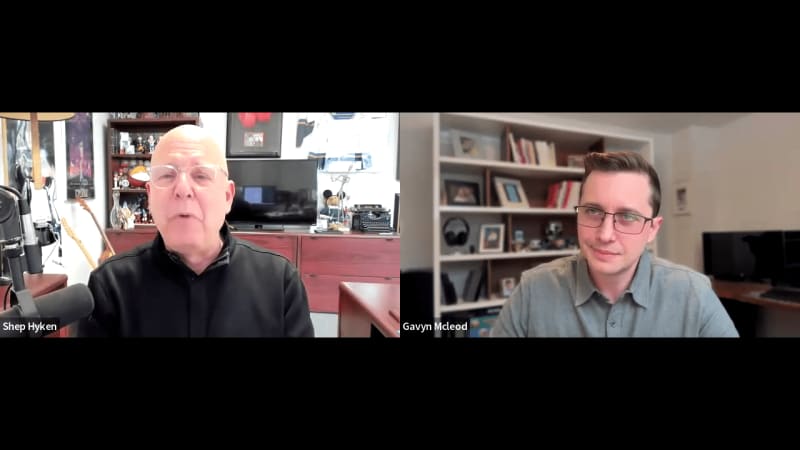
In this interactive session, Shep Hyken, a leading customer experience expert, and Gavyn McLeod, Coveo’s Lead Product Marketing Manager, will dive into the top trends shaping CX in 2025. Together, they’ll explore:
- How generative AI is driving smarter self-service and boosting agent productivity.
- The role of omnichannel strategies in delivering seamless, personalized experiences.
- Ways to redefine benchmarks for success and achieve measurable ROI.
You’ll learn how forward-thinking organizations are transforming customer experience through live examples of personalization and measurable outcomes, all while addressing critical challenges like data privacy and governance.
Discover how to capitalize on 2025’s trends and align your strategy with evolving customer expectations. This is your chance to see the future of CX come to life.

Make every experience relevant with Coveo