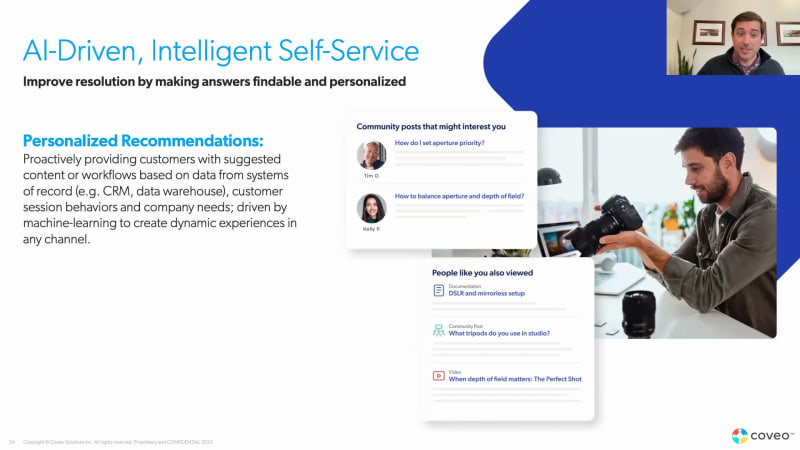
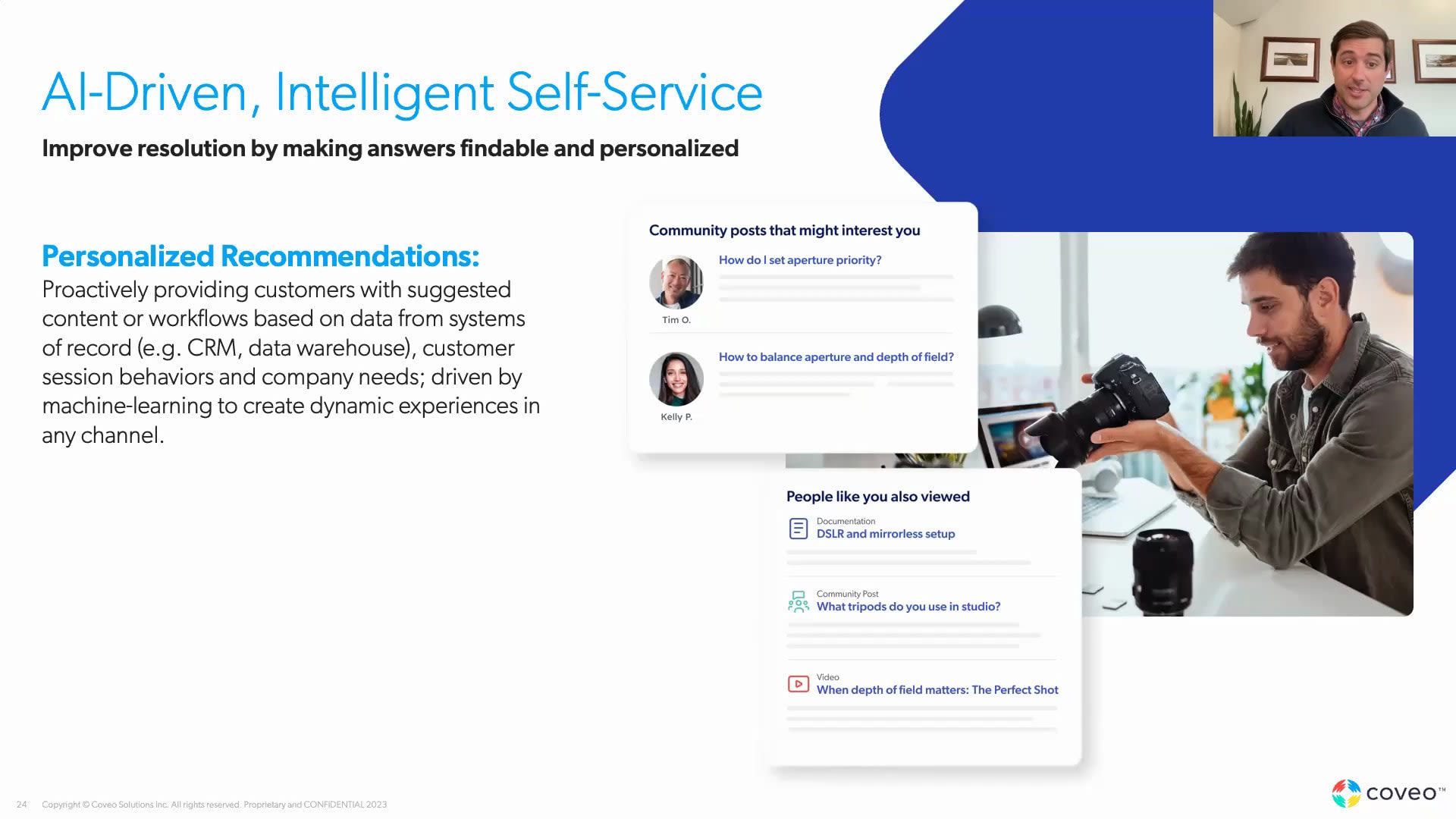
Enabled. Do you know? It should be. Alright then. Hello. Good afternoon to everyone. We're gonna get going in just a a minute here. Just, making sure that everyone's got a chance to, log in to get themselves settled, get a glass of water, all of that stuff. So, for those of you just logging on, and I I see that the number's going up really quickly here. We'll we'll get going at about one, two past the the top of the hour here. So you've still got time to go grab a glass of water and afternoon coffee if, that's what you're into. Yeah. Like, we should get some hold music, Matt. Maybe you can say Yeah. No. No one wants to hear that. I promise. Our attendance will go way down. For folks just hopping on here, we're gonna get going in just a minute or so. Just letting folks log in. Alright. Couple of minutes past the the top of the hour here. And and so let let's hop in. And hello, and welcome to today's session, everyone. My name is Devin Poole. I'm a senior product marketing manager for Coveo. Really, really glad that you're able to be here with us today. And also, you know, excited to be back on the line here with my good friend, Matt Dixon. And, Matt, thanks for joining us. Thanks for having me, Devin. Great to be here with you. Now, I'm sure that most of you already know Matt from his best selling books. Yes. He's got three of them. And his latest one, the the Jolt Effect, is sure to be his fourth very soon. It was just released earlier this year. I've read it cover to cover. It's absolutely fantastic. If you've not picked up a copy, please do that by, all means. But, today's session, we're actually gonna be taking about a step back and then a step forward. Right? We're gonna take a step back to rediscover a topic that's become a foundational principle of smart customer service strategy, and that's creating an effortless experience. And then we're gonna take a look forward as how that's evolved today. Because, Matt, you know, the the book could turn ten this year, and I know you and I have both been speaking with leaders around the globe, over the past decade as they start to put these lessons into practice. And so what we're gonna take a look today at, you know, what's changed? How has all of this evolved? And so, Matt, I guess, to to preview some of the things that we're gonna talk about today, what are some of the biggest high level changes that you've observed in the the decade that, you've been leading, talking, speaking about effortless? Yeah. No. It's a great question. This is the tenth anniversary of the effortless experience, to, Devin's point. And, it's pretty it's pretty fascinating to see how this topic has evolved. I think I would say two things. One, I think at the high level and we'll go through kind of a recap here, Devin, in just a couple minutes. We'll get everyone grounded in the foundations of that research. But that as you said, that's gonna be the jump backward, and then we're gonna do the jump forward in terms of where we are. So I think there's two things that are exciting to me. One is that these ideas, as you you've said very well, these ideas of delivering a frictionless low effort experience, continue to endure, in, in companies, in organizations. I literally just, right before I joined this webinar, I was on the phone with a global business services team from a large scale tech company. So this is the team that provides internal service, to employees, so, finance, HR, IT help desk. Right? And they are trying to think about how they apply it. So so it's continuing to find its way into different parts of organizations around the world, which is exciting. The flip side, I think the second thing is, how exciting to to see how many changes there are in some of the techniques, in some of the, the application of an effort effort reduction strategy, much of that enabled by, technology and much of that about AI. Right? So I think if we were to rewrite the book today, certainly, the the the I would say the overarching or overarching story, I think, would be the same. But I think what you'd find in each of the four pillars is we're gonna talk about a little bit, in particular, the one around technology, but not exclusively so, I think, would have evolved, quite substantially just given how many advances there have been, in techno in the technology space and around AI in particular. Yeah. And, you know, I mean, that that's it. Of course, technology is the the biggest change. And for those of you on the line that don't know, right, Coveo is, the world's most powerful, you know, service technology helping you to analyze data using machine learning to provide, you know, intelligent search, smart personalized recommendations so that your customers find the right information in the right place at the right time. Right? And what what, all this technology is doing for us is it's, you know, enabled this mass ubiquity of convenience. Right? Everything is so convenient these days that, when when I have to wait just a minute or two for something, I'm looking at my phone, looking at my watch going, well, what's going on? Why can't I have this now? Right? It's like, we're not patient anymore. Right? So as we'll talk about here, it's about, you know, applying that artificial intelligence in order to, you know, enable leaders to make their experiences for their customers and for their employees way more convenient than they were before. Couple of of quick logistics announcements here before we do hop into the research. First, most of you saw the announcement. We're recording the session. It'll be available for replay on Coveo's website as well, so you can send it to colleagues. You can relisten to it, all of that stuff. If you're interested in a copy of today's materials or a copy of Matt's book, The Effortless Experience, stay tuned at the end here. And then most importantly, we do want this to be a discussion. So, find the q and a box. I'm sure we're all, Zoom experts by this day and age. Right? But, find the q and a box at any point during the conversation. Pop in the question. And if we haven't answered it in subsequent slides, we'll answer it. We'll pull up at the end. We'll have plenty of time for that. I anticipate we'll probably go until about ten minutes till the top of the hour. So fire away with discussion, all along the the time here. And, you know, Matt, let let me just kick it over to you. Right? Take everyone back through some of that initial research, that discovery moment of customer effort and, ultimately, why it became the gold standard for great service experiences. Yep. Happy happy to do that, Devin. So this is again, it'll be a bit of a refresher maybe for some of the folks who are on the on this, webinar who are more familiar with the work. But, stay tuned. We're gonna get to some of the the here in about twenty minutes or so after I go through the kind of the core or the one zero one around effortless experience. We're gonna get into kind of where we are today, with respect to modern technology and AI. So our jumping off point really starts with, I would say, an examination of the conventional wisdom out there. I think if if you were to ask, certainly before the book came out, we'd go back ten years, and and I would argue even today, if you were to ask any, service, leader, any customer experience professional, they would probably agree wholeheartedly with what, the great, legendary Phil Koller, said here, the godfather of, marketing, who said it's no longer enough to satisfy your customers. You must delight them. Now, of course, I I would not be, here to disagree with, doctor Koller. I agree wholeheartedly, but I think there's typically a misconception about where companies should be spending their delight dollars. So, Deb, we can go to the next slide. You know, there's been a lot of work out there, over the years, and it's not to pick on any any in particular, these are actually all wonderful books, but there's been a lot of work out there that has, spoken to this idea that one of the places you want to delight your customers, you wanna go provide an over the top experience, is when things go wrong. When they reach out to you for customer service, that's a moment of truth. I think we all know that in the, in the broader customer experience is that that customer service interaction. And one of the most important things you can do there is not just what the customer asked you to do, but actually do more than what they actually do to leave them surprised and wowed and delighted in some way. And and all the books you see here kind of speak to that idea. Right? And if you were to travel to any, I think, Devin, you and I have been to many, many service organizations in our careers, visited a lot of call centers, spent time with service leaders, And, you know, every every call center, every support organization I've ever been to has a wall of fame on it, which is where we we tack up those, you know, those emails, those Facebook posts, those tweets, those letters written to our CEO, the where we take great pride in when our customers reach out to us and say, well, you really helped me out in a moment of need, and you surprised me and valued me. And that's the stuff of TV commercials and press releases. Right? It feels really good. It kinda pulls at the heartstrings, and and then we tell everyone else on the team, go out and do that. You know? Don't just do what the customer wants you to do. Do more than what they want you to do. So we actually use that as kind of the jumping off point in our research. And to be totally candid, our research started, with an examination of three, big questions. And I I would say upfront, we were not out there to try to disprove this notion of customer delight. In fact, our original study was designed to try to understand the best way to delight customers. So, but let me let me speak to you about the three questions we're gonna address here over the next, fifteen minutes or so. The first is, to understand what is the impact a service interaction has on the customer's future loyalty. So the how does the way in which we handle this interaction impact the customer's propensity to, keep buying from us, to buy more, and to say great things about us to our friends, to their friends, to their family, coworkers, etcetera? Number two, what are the things that service can do to drive loyalty upward? Again, our ongoing assumption here is that this idea of delight is correct, but the question is what are the best ways to delight our customers? Because I'm sure not all of them, pay off equally. And then the third question, are there ways we can actually improve customer loyalty that also reduce service operating costs? That would be a real win win, especially in the current environment. I think something everyone, would sign up for. So we actually, packaged our findings from, from the around these three questions. We go to the next slide, Devin. Into a book called The Effortless Experience. As Devin said, you can get a copy of this, here at the end. We'll do a a poll and see how many folks want copies of the book. If you're not familiar with it or just like another copy for a colleague, then raise your hand and let us know. I'm gonna show you a couple of database findings that were, in many respects, surprising and pretty counterintuitive to us, especially because, again, we were in that mindset as well that the keys to great customer service really are in this idea of delighting customers and wowing them and exceeding their expectations. Before I show you the data, let me define terms. This is pretty important. Of all the data that we collected, we regressed against a dependent variable of customer loyalty. Now customer loyalty, I often find, is this, can be this fuzzy notion. So we try to get really down to brass tacks and think about, as companies, what are we really talking about here? Well, what we're talking about is customers who come back over and over again. So we're looking at repurchase rate, customer retention. Second, we're looking at customers who, want to spend more of their money with us, whether it's a business customer or it's a a consumer. Right? They're they're open to more upsell and cross sell offers. They wanna know more about what we can do for them, because they've had such a great experience in the past, and they wanna give us more of their hard earned money. And then number three, we want customers who are gonna say great things about us. So we're gonna go out to their friends, family, coworkers, colleagues, you know, you name it, and tell us tell all those people how great we are. That's the old NPS notion of advocacy. Right? We want raving fans out there. So we created a dependent variable constructed of these three outcomes, and all the data I'm gonna show you here was regressing against that. So let's let's get into it. Devin, the first finding was, a bit of a head snapper, to us. Devin remembers this because he was, at CEB at the time when we were doing this research that this was a kind of an inconvenient truth because it really flew in the face of the conventional wisdom out there. You know, again, the the conventional wisdom, as I talked about before, is that the best way to customer loyalty is to delight, surprise, and wow your customers. You go to the next, slide, Devin. This is this is kind of what that conventional notion looks like. We all tend to believe that we don't earn a lot of loyalty by simply doing what the customer expects. But when you do more than what they expect, when you surprise them, delight them, and wow them, that's really where you build a moat around that customer and you earn their loyalty. But when we actually ran, I think now, probably millions of data points to our model, we found the reality is actually quite a bit different. There are two things that stand out, if you look at that blue line. The first is that, we do a lot of good, actually. We generate a lot of positive loyalty by simply meeting our customers' expectations. Again, the conventional wisdom there is that that's kind of table stakes. It's not good enough. But as you see here, it actually is really powerful when we can consistently deliver against our customers' expectations. And the second thing I wanna call out is how that line sort of flattens out. You hit a point of diminishing marginal utility beyond the point of meeting expectations. So what does that really mean? Well, what it means for us as companies is that, you know, we spend a lot of time and energy and money trying to delight customers. And if we really get down to it, what does that stuff mean? Well, that means refunds. That means out of warranty service. That mean that means givebacks. It means, exceptions. It means escalations to leaders and managers, etcetera. It means long interactions, long calls, etcetera. In fact, we we found that companies that profess to be Delight brands spend about ten to twenty percent more from an operational standpoint running their customer service organization. And the other thing is, if we're totally if we're brutally honest here, delight really doesn't happen that often in the ads of customers. They are not delighted. Eighty four percent of the time, it's somewhere south of delight. So very rarely does the customer actually feel delighted. So the takeaway here, again, is that meeting expectations is actually much better than we think, and exceeding expectations costs us a lot of money, and our customers don't really pay us back with any incremental loyalty. So that was a head snapper to us. That was kind of a a really surprising finding, but it begged actually a bigger question, which is, well, what is the impact? If if great service doesn't deliver higher levels of loyalty, this conventional notion we've all been talked to believe, but what is the impact of a service interaction on customer loyalty? So we're gonna go from surprising news to actually depressing news here. So what we found was, when we run this through the model, that service interactions are almost four times more likely to create customer disloyalty than loyalty. Now some of you might look at that and say, well, of course, the customer's in a bad state of mind because they've had a problem with the product or service they bought from us or what they need help with. They're just they're frustrated. Right? They're confused. They're they need our help. And so it stands to reason that they would be in a bad state of mind. But what the data is actually telling us is that we take that customer in a bad state of mind, and by the way that we handle that interaction, that issue, we actually actively make it worse. So the customer is more disloyal at the end of the interaction than they were at the beginning of the interaction, and this is a process through which we are actively disappointing them. So then the question you're probably wondering is what in the heck are we doing to make our customers that upset with us? So here we get to kind of the third big finding, which is when you peel apart that disloyalty effect, what you find is, you know, what Devon and I think for many years have called the usual suspects of bad customer service. So it's stuff like repeat contacts when you make your customers, chase down an answer to their problem. They've gotta call you or email you or or message you or chat with you multiple times to try to find out what's going on with their problem. Channel switching, one we're gonna talk more about in just a moment. But this idea that customers go to, their channel of choice increasingly today, that digital or self-service channel, and they get confused. They get turned around. They can't find what they're looking for, and then they call. And then they're increasingly aggravated every time they hear that IVR message say, did you know you could solve this problem at w w w dot acme dot com? And they're thinking, I was just on acme dot com for an hour, and I couldn't figure it out. So that's why I'm I'm sitting in this phone queue. Transfers. So this actually, takes a couple of different flavors here. One is, when the customer is transferred across different departments. So I can't help you. You gotta talk to tech support. You gotta talk to billing. I'm I've gotta forward this with, you know, tier two or tier three engineer, but also, upward escalations. When the customer doesn't feel like they're getting anywhere with the support professional they're talking to, then they've got demand to speak to their supervisor or their manager. Repeating information. So this, this takes both, simple and complex forms. So the complex version of this is when the customer's got a callback or or reach out to the company over and over again and find to find an answer to their problem and chase down the resolution, and they've gotta tell their story over and over again even though, you know, the story is sitting right in front of the representative who has the notes from the previous representative who handled the issue. This also takes more simple forms, which is when customers are asked to authenticate in the IVR by keying in their account number or, you know, some other identifier. And then the first question they're asked by the representative is, can we, authenticate your account? Can you give me your account number again and give me your password? Now we know why we do that, but it frustrates customers. Robotic service. So this is where the customer feels like they're being treated like a, like a number, not like a real person who has likes and dislikes, wants and needs, preferences. They don't feel like they're getting that tailored, personalized interaction that customers today have come to expect, but they're feeling like they're being treated generically. Policies and processes that customers don't really understand, but feel to them like hoops that they have to jump through just to get what they're looking for, which is a resolution to their issue or their problem. Now if we were to sum these these drivers of, disloyalty up, one of the members of our research team, I remember distinctly, we're kind of trying to think of what's a catchall phrase for all of these things. And this person said it's all about customer effort. We said, what is customer effort? And this, researcher said, it's all about the work that we put on the customer's plate to get their problems resolved. Now if we put these findings together, what we suddenly realize is the thing that we've sold the customer, the product or the service, is not doing what the customer needs it to do. It's not working to the customer standard. So they reach out to us for help. Then we run them through this gristmill, and no surprise, at the end of that interaction, they're more disloyal than they were at the beginning of the interaction. Now if there's one takeaway, if you were to hop off here, and there's one takeaway I'd want you to remember from all of this research, which still holds true despite all this, you know, modern technology and AI implications we're about to talk about here in a moment, the one thing I want you to remember is rather than trying to surprise and delight your way to customer loyalty, what you should be doing instead is playing great defense when things go wrong. Plug the hole in the bottom of the loyalty bucket, mitigate disloyalty by making service interactions easier than you make them today. Reduce customer effort, reduce those friction points, and good things happen. In fact, let me show you what actually happens when we do this. Let me show you this in two dimensions. One is the, the top line, business case. And, in fact, Devin, let's just let's click ahead till we get all the bar charts here populated on the slide. I'll just kinda hot walk through them. So, when we contrast customers who have easy low effort experiences, that's the bar on the left, the dark blue bar, with those who have high effort difficult experiences, those are the light blue bars on the right hand side of each chart. And what you find is the effect on all those, if you will, elements of customer loyalty is pretty dramatic. So repurchase rates are much higher when customers have easy service interactions than when they have difficult interactions. Customers who have easy interactions, they're very open to renewing, and you've kind of built a moat around that customer that makes it hard for your competitors to come in and steal that customer's business because you fumbled the ball. Now if you do fumble the ball and you deliver a hybrid experiences experience, those customers are not very inclined to repurchase. Increasing spend and share while it's same exact thing. Customers who have easy experiences are much more open to spending more money with you than customers who have high effort experiences. The word-of-mouth effect, we're presenting this as negative word-of-mouth. So, only one percent of customers who had easy experiences said anything negative about the brands, to friends, colleagues, neighbors, etcetera. Eighty one percent of customers who had difficult, high effort experiences went out of their way to share that negative experience, to share negative word-of-mouth with basically anybody who listen. And we know the Internet was LinkedIn, Twitter, you know, Instagram, Facebook, TikTok. It makes this like a digital soapbox for our customers to share that negative word-of-mouth. Now the overall disloyalty effect is is pretty stark here. Only nine percent of customers who had any sort of, low effort experience had any kind of disloyalty toward the company. So a lack of intent to repurchase, lack of intent to, spend more, or a desire to spread negative word-of-mouth. Contrast that with the customers who had high effort experiences. Ninety six percent of them, were actually open to a competitor's offer, not inclined to renew, not inclined to spend any more, and one other way to say bad things. So that's a top line perspective. Let's go to the bottom line, here on the next slide, Devin. Now we we also what we like to say about customer effort is it's, it's good for the top line, and it's good, for the bottom line. As you can see here and this is really, I think, germane in the current environment that we're in with. There's a lot of budgetary scrutiny. There's a lot of, you know, a lot of thoughtfulness in, in deliberation about expenditures, capital expenditures and operational expenditures. Making things easy is one of the best things you can do from a cost savings standpoint and an operational efficiency standpoint. This is some benchmarking data we collected, during the research, and we found that, when you deliver a low effort experience, it's actually a lot cheaper for you. So it's actually a cost savings your customers want. Now why is it cheaper? Because your customers go to the self-service site, and they're able to find what they're looking for. Because they call in, and they they only have to call in once. Right? They don't get passed around. They don't have to repeatedly contact the company. They don't get transferred all over creation. Your representatives have the tools and and, capabilities there to deliver a law offered experience. They got the knowledge at their fingertips. All of those things help create a streamlined, efficient experience, which, again, not just good for the top line, also good for the bottom line. And the last thing I'll say on this slide is it's also good for the front line. And I think in in the current environment, in this weird kind of economy we find ourselves in, where, you know, despite all the layoffs that we're reading about, especially in the tech sector, this is still a really tight labor market out there, and most of the service leaders I'm talking to are still saying they're finding it hard to find and attract and and retain really talented support professionals. And here's the thing. While there's no slide on this, what I can, tell you is and we'll talk Devon and I will talk a little bit more about this in just a little bit. Is your frontline people don't like delivering a high effort experience to customers any more than your customers like receiving a high effort experience? When you can create a low effort experience, that's an experience that your folks enjoy delivering. It's one in which they get thanked, not yelled at at the end of the experience. And so it's good, again, for the top line, to the bottom line, and for the front line. So, let's go to the the next slide here, Devin. We'll use this as our jumping off point, Devin. I'm gonna, grab a drink of water here. I'm gonna pull you in, but, we got four pillars. You know, one of the things I always tell people about the effortless experience is, it the data is cool, but the application is actually way more interesting. Because what we're able to do in this large scale study where we've gotten out millions of customer interactions we've looked at through surveys and using, unstructured data machine learning to study the impact of an effortless experience on customer loyalty. What's so interesting is we're able to identify the companies who get it right, you know, and and pinpoint those companies who are delivering consistently a low effort, easy, frictionless experience. And then we spent a lot of time with those companies to try to understand the way they think and the way they operate. And and a lot of what we found was actually kinda counterintuitive. The first one we're about to jump into here is this idea of channel stickiness. And, Devin, you know, we I mentioned before there's a lot that has changed the books being, you know, ten years old. I think technology, of course, is one of the biggest changes. And this one is one that I think, from an overall story standpoint, still highly, highly relevant, but the way it's enabled, I think, has changed dramatically. So this idea of channel stickiness, the first pillar of low effort experience, is all about this idea that low effort companies have embraced self-service and digital, just as much as the rest of us, if not more. But the way that they approach their investments in those spaces is quite a bit different. Their focus is, how do we create a simple, intuitive, guided, digital, and self-service experience for our customers? It's not about just throwing more bells and whistles and tools at our customers because in many respects, that that creates choice overload, and it leads customers to default to the lowest common denominator, which is pick up the phone and call, which is not what customers today wanna do. They wanna go and try to solve the issue on their own. We actually found when we did this original research that fifty seven percent of inbound call volume was from customers who are first on your digital property. So they're first on your support website. Now granted, some of those customers were just using your website as a high end phone book, but many of the majority of them were actually on there trying to find an answer to their problem, but they couldn't, so they gave up, and then they called. Right? And so what and, by the way, that number is a lot higher today. North of eighty percent of customers are going to digital first before they go to live service. And so how do we keep them in the channel that they wanna be in? Because remember, channel switching is a huge driver of customer efforts. That means that a customer who is on your digital you know, on your app, on your website, in your expert community, they were somewhere trying to self serve on their issue, trying to solve it themselves, that means if they have to abandon that channel and then they have to call, they are more disloyal than but they are more in a state of disloyalty before your representative even says hello to them. Okay? So this it's imperative that we keep our customers where they wanna be. Now, of course, AI and and ML and modern technology has made the way we deliver a sticky self-service and digital experience very, very different. And, obviously, I just write about this stuff, but Devin lives this stuff. So, Devin, I'm gonna hand over to you. Talk to me a little bit or talk to the audience a little bit about what Kaveo is doing and seeing, in in the way that AI can impact the ability of companies to deliver that sticky, simple, intuitive guided, self-service experience. Yeah. And, you know, I mean, one of the things I've always found so interesting about this is if, Matt, you know, remember the the early days, you said, oh, if only you could get your customers to the website, but that wasn't actually the real problem. People were going there, as you said, and they continue to work there. Yeah. Yeah. And, you know, what's not changed though is that as we've added more and more and more to the website, more content, more different types of content, you've got documentation, you've got videos, you've got communities, you've got all of these things, it still does come down to a fundamental issue of findability. Right? And and that's the real kick in the teeth for a lot of companies is that Yeah. It's not that we didn't have the resources for you to solve this problem on your own. It's that you couldn't find them. We couldn't make them available in an easy intuitive way. Right? And that's it costs you on every aspect of it. Right? Customers are more annoyed. It costs more. Customers are willing to churn. And the reps, they've gotta solve issues that they shouldn't have. They've gotta deal with customers who are, you know, annoyed and pissed off. So a couple of things that we've been observing here, right, is, when people abandon, it's because they can't find what they're looking for. So it starts with a a couple of levels, but it's ultimately right about making your self-service far more intelligent, making it more personalized, by understanding what's already worked for for other customers. So the the first aspect here, right, around personalized recommendations. And so when you're able to look at large amounts of service data, service information, you're able to run that through machine learning models like Coveo has, ones that are specifically trained for service experiences, you can start to identify, well, what content, what tools, what aspects of our service are most used in certain situations. So following either a click path or what a customer has been looking at, you know, you're able to proactively put that information right in front of someone, as they're coming through. A a pop, you know, that says, wow. Here's an article. If we know we're looking at, you know, this piece of our product, you know, then then we can start to create a more dynamic experience based on what you've done. We can personalize that for you. The the second one to me, it's funny is for for years and years, I I never really looked at it this way, but it's like, duh, it's search. Right? We're all so used to having the Google experience these days that when some company doesn't give it to us on their own website, that becomes a problem. Right? So, the the ability to use smart you know, what we use is cognitive search, so the the, way that you can put the right most relevant resource in front of a company or in front of a a customer becomes imperative for every company these days. Because the first thing most customers do when they have a problem in any aspect of life is Google it. Right? And so you can start to cut that, pull content sources in from all like, if you have a YouTube channel as a company who doesn't these days, right, that can live on your website just by indexing it through a unifying platform. We keep documentation in all kinds of repositories these days, SharePoint, Google Drive, etcetera. Like, you can pull all of those things into one repository and make them searchable. Right? And just give that experience that that customers are looking for when it comes to just give me a search box, put it in front of me, and I'll go from there. And then the last aspect is around analytics. And this has been the missing piece of the puzzle for so many service leaders I've talked to over the years where they say, we just don't know what our customers are doing online. We just don't know what they're looking at, what they're seeing, and where the gaps are. Right? So starting to study what customers have done and identifying simple things. I I just talking to a a major financial institution that said, we we had no idea what our content gaps were. Right? We we didn't know what was missing, what people were looking for. And this was a huge blind spot. Right? So the right result, if it wasn't there, but it was or if it was there, but it was in the tenth position, then there was a gap in what we were putting in the content versus what the customer, you know, what was looking for. And so the ability to see that. We also had, a great quote from someone in the the telecom industry that's, you know, was talking about our analytics and said, look. Customers don't lie to the search box. And if you wanna know what customers are looking for, look at your search results, and they'll tell you exactly what they're trying to do. Right? And so, that that was like a light bulb moment to me when I heard that. I was like, oh, yeah. Of course. They like, they're gonna tell you exactly because they wanna find an an answer to this. Absolutely. And so, Matt, you know, like, I I know you know that the drive not to call is so much stronger today. What are some of the considerations that you're seeing when it comes to self-service in today's, you know, intelligent AI driven environment? Yeah. You know, I think you hit on a lot of them, Devin. One of the things I always tell companies is, you know, a lot of this comes down to, again, how do we simplify and make more intuitive that self-service experience? I love this point about, analytics, for instance, because and that that whole that, quote about, you know, customers don't lie to the search box is that it allows us to identify a few things. Right? Not only the the issues that customers are having. Right? So it allows us to size those issues. That's gonna be critical information for us to feed onto our product partners, other parts of the business as we try to root cause those issues and ideally eliminate those those contacts from happening at all. Right? Wouldn't it be better if the customer didn't have this problem with their product? It didn't have to actually reach out, for help. So it's super powerful from that perspective. The identifying, content gaps as your, financial services, client, told you. You know, what are the null searches, the things that are not resulting in hits or are getting, not getting traction with our customers. We're serving up it's not exactly the right content. It's not exactly on point for what they're looking for. And then the last thing I would, to this allows us to close those gaps. Obviously, the last thing I would say is it allows us to understand in in customer articulated terms, what those issues are. So I think this is a really kind of a brave new world of of really understanding, you know, what is that customer's digital experience and what is the mismatch between where we are today and where we need to be. And I think a lot of the fixes really come down to, making things more simple, making content more consumable. So not just more findable, as we're seeing here, but also once they find it, making sure that that knowledge article, that, that FAQ, that post from the expert community, that it is actually articulated in terms that the average customer will understand, which is not, you know, the level a an internal employee would understand or a technical user, but the everyday user. And so I think thinking about language simplicity, we've always found to be a winning approach to generate greater channel stickiness. It always frustrates companies when they see a lot of call volume for, like, the number one FAQ on their website. Right? Or, you know, things that are right there in the, smack dab in the middle of the support page, and their customers still call about those issues. But a lot of the reason has to do typically is not that they couldn't find it in some cases that they didn't understand it because it was has so much technical jargon and industry jargon laden in it that, it's not understandable for the average user. So, again, that's just some of what we're seeing, and I think some of those concepts and principles are kind of evergreen. But but if you want them, we go on to the next pillar and talk a little bit about, the second idea, which is, the idea of next issue avoidance. Now everyone, I think, on this, on this Zoom today, everyone on the webinar is familiar with the concept of of issue resolution. Right? In some organizations, we think about issue resolution rates or case closure rates. Other organizations might think more in terms of first contact resolution. Right? That's certainly a a big metric in the consumer world, at at least in consumer call centers. This idea of next issue avoidance is a little bit different, which is, to say that low effort companies, they do care about issue resolution. They do care about first contact resolution. They do care about case closure, but they don't only think about that. They don't only care about that. They're as focused on solving the issue the customer calls in about as they are about forward resolving the issue the customer might call back about. So, maybe, you know, if we think about those experiences we've had with companies in our our business lives or personal lives where it felt like it took multiple outreaches to solve the issue, and each each particular question or each particular request was different, but they were all kind of woven together, and it took multiple attempts to try to solve the overall event. Right? Well, it turns out customers don't measure issues in the same way that companies do. If this happened to you, Devin, you had a complex issue and you had to call in about one question, then twenty minutes later, you got an error message. You had to call back about another question. Then the next day, you you've submitted a ticket about yet another issue. It might all be related, and we might even know it's related, but we don't treat it as related as a company. Instead, what we do is we pat ourselves on the back every time we solve each one of those issues, and we give ourselves a a good score on that first contact resolution rate number. But for the customer, that is a failure to resolve the issue because in their mind, they're thinking, you knew that all these issues, these three different contexts were all related. Why didn't you just tell me in the first interaction that all this other stuff was gonna happen so that I could be forewarned? Right? Think one step ahead for me because you guys do this stuff every day. I only I'm a customer. I only experience it, you know, once in a while. But, again, AI is making it much more powerful to really understand what those downstream issues are and how we might fully resolve them. So, Devin, tell us a little bit more about, what you're seeing out there, what you and the Coveo team are are seeing in the space. Yeah. Because, I mean, Matt, what what you're saying is it's so much of I don't know what I don't know. Right? And so sometimes service leaders don't know what what they don't know as well. And, you know, what the technology can do, especially with, you know, machine learning's ability to, you know, just look at so much data, process so much data, through this. Right? It's, you know, about providing that those recommendations and doing them in a couple of different ways. Right? First is in self-service. So, you know, using that contextual information from someone's current session, you know, and then using the things you have in your systems of record in order to deliver the the next most logical thing. Right? So in this example, someone's typing in, you know, saving up for college. Right? Well, of course, you're gonna wanna show them the five two nine plan. That's gonna get to the direct issue. But, you you know, they might end up, contacting you again because they need help setting up their budget. Right? It's like, actually, we've got a tool for that too. And if you put those things in front of them, it becomes more of that, you know, overall, we get you type of scenario. That that situation that says, oh, yeah. You know, this is what happens. Now, of course, it's great when this happens in self-service, and you can pop the next content. It's also about your front line as well. Right? Giving them don't put the burden on your front line to know all of the next situations, you know, but give them the the opportunity, to say, hey. You know, with their recommendations, this is what we'd recommend you talk about next. Right? If someone's calling about issue a, you should talk about issue b and c, what while you're on the phone, with them. And that again, when they have that at their fingertips, they don't have to go diving through, you know, any web forms or any knowledge repositories to look for it. It's put there. It's like, hey. Here's the thing. Or, you know, if it's like a a video, yeah. You know what? I can attach this to the case, or I can send it in a follow-up email. There's this next thing you ought to do. So, again, I can get you on your merry way while also continuing to do it. And, you know, something that's been changing, at least in our opinion over time, is that it doesn't have to be that single, you know, contact point. You can deliver this in more of a continuous experience. So that next online visit, if we know you went and then you left, and, again, maybe that five twenty nine example, maybe you didn't click on the home budget. We pop that up to you the the next time that you log in. Because we know you're probably still thinking about these things. Right? And so, just popping and and using what you know about that person, what you know about their history, you know, in order to make this much seem like much more of a continuous journey that we're on with our customers. And, you know, Matt, to me, one of the biggest things is is about, you know, how AI ultimately helps us to scale this. And I'm gonna ask you to tell the the story of, you know, Bell Canada that that we went Barca. It was revolutionary at the time, and and you almost couldn't imagine it these days. You know, but they were so far ahead of their time. Do you mind telling that story? Yeah. In the book, we we do tell the story, as Devin's talking about about Bell Canada and their experience trying to figure out, what are the so Devon talked about, like, you know, for a representative, when your customer calls in, how powerful it would be to be able to recommend for them fun knock on issues or downstream issues. So if a customer calls about this issue, don't forget to also address this issue even though they didn't ask about it because it comes up as a driver of significant callbacks, right, in repeat contacts. So Bell Canada spent more than a year, a whole team of business analysts, continuous improvement, six sigma experts, going through millions and millions of of, transactions, customer, interaction records, to try to create that, that framework. Right? Here are the issues that we get most often. Here are the downstream issues that tend to co present with those upstream issues, and here are the ones that happen with enough frequency that it makes sense for a representative on the first contact to forward resolve this next issue. Now, that took them again, it was really, really, arduous work. There's a lot of work to go, collect all the data and do that analytics, project. We've Deb, you remember this. We we traveled the world, and we talked to service professionals and say, well, I don't have a team of of business analysts or continuous improvement experts with, like, a year with nothing to do and millions of data points I can give them to sift through. So was there a shortcut here? And we used to jokingly say, like, well, you could probably buy your high performing reps, like, ask them to stay for another hour or two after work, buy them a pizza and a six pack of beer, get them a whiteboard, and they'll probably figure it out. Right? So Yeah. So that was kind of the shortcut we used to recommend. But, obviously, you know, AI makes it much easier now to understand, what how issues are related to one another, and, what upstream issues drive what downstream issues. Yeah. Exactly. It it won't take you that long. You can crawl through a year's worth of data in, you know, minutes using the the power of, a company like Coveo. And so, you know, that that then starts to change the role for the the front line, right, as they move into, being much more, you know, advisors. And that's where, again, experience engineering as relevant as it ever was, Matt. Yeah. Yeah. This is all about the power of language. I mean, look. They're the the reality is we do the we do the analysis. We find that, effort is very much in the eye of the beholder. So it turns out that, you know, only about a third of the effort equation in the customer's mind has to do with the things that they actually have to do. The fact that they have to call you back four times, the fact that they have to submit multiple tickets, the fact they get transferred, the fact that they have to repeat themselves, or they go to digital first and then bounce out and go to live service. It turns out two thirds of the effort equation is how they felt about what they had to do. So it's a lot of perception. And what that means is that language can have real bearing and real impact in terms of our ability to make an otherwise high effort experience feel like actually a lower effort experience. Now this is not kinda simple, soft skill stuff, and, you know, I'm not gonna tell you to stop doing soft skills training with your reps. But I will tell you that low effort companies do a lot more than that. They are equipping their principles of human psychology, behavioral economics. They're really about trying to engineer, an experience so that the customer leaves feeling like even if in fact it was a high effort experience and there's a lot of friction there, they feel like it was actually a low effort experience. And companies who have invested in this have seen remarkable results in terms of effort reduction, reduction in, repeat contacts, complaints, improvement in survey scores, improvement in upsell, cross sell, all the kinds of metrics we care about in the service organization. Yeah. And, you know, as that's starting to to get just smarter. Right? Back back to the the core principles. Again, it's smarter, and it's about putting that directly in the the frontline reps workflow. Right. Don't make them go diving. Don't make them memorize all of the this stuff today. Continue to feed them with this through throughout the the time. Right? So, the the first one, I called it, you know, coaching air quotes here, because it's what the supervisor used to do when we were all sitting in contact centers. Now most of us are remote and probably not going Barca. And so the ability to, you know, index some of your training and skills content. And when you know a certain situation is coming up, right, you just pop a reminder, like, advocate for your customer. That was one of the biggest experience engineering skills. Like, show me you're on their side. Right? If you need a quick reminder of, you know, starter questions or things like that, yeah, you you can look at that. But, you know, showing a screenshot of what we call our hosted insight panel here, where that is gonna show you within, Salesforce or or Zendesk or whatever desktop you're using. Here's the thing that that you need to do. Right? And that's gonna be able to pull, based on, all of your systems of record, based on all the things you have to say, this is what you need to show the rep at this time. Right? And then, you know, personalizing that, again, based on the situation. So, what what you have coming in, your Salesforce, it says, man, this is the question, that the customer is asking. This is the product they have. And by the way, this is a new customer. Well, this article would pop up, as a a higher order for you without the, rep even having to go to search for it. Right, say, hey. This is the thing for new customers. This is what they most often need, in order to make it more, you know, impactful for them in order to solve this problem. This is the the thing. Right? So, you know, Matt, we we've talked a lot about, you know, the concept of, like, rep effort. Right? And how much easier, you know, it it makes, people to, it it makes people to go or it makes people when they have to, go through all of this effort to find the recommendations, well, now, you know, we're allowing them to focus on these higher order skills like engineering the experience because they don't have to think about other things. Yeah. No. It's a great it's that's a great point. Actually, it's a great segue to this last one, Devin, which, you know, a lot of people ask me. I know they've asked you this in over the years. You, you know, you spent a big chunk of your career out there presenting this research to service leaders and CX professionals. And, you know, one of the questions we always used to get is what do we do first? And I always used to say, look. We're in measure, which we're gonna talk about in a moment. But, but, if that's one a, then one b is, the idea that low effort being low effort begins at home. Right? So you can't it's hard for your employees to deliver a low effort experience if you make the job hard for them. And so if they if you have shackled them with, you know, antiquated knowledge and technologies and tools that don't, as you're saying, Devin, liberate them to be able to focus on these higher order skills, actually engineer the experience and really own the experience, but instead, they're too busy, you know, fussing around with your antiquated systems. They can't find what they're looking for. They feel like they're playing defense. It's really hard for them to then make then make the customer feel like it's easy if they're scrambling and you know, they're our reps are not ducks where it's, like, placid above the water and then turn furiously below the water. Right? It just doesn't work that way. What you're gonna find is that high effort employee experience will translate to a high effort customer experience. Now one of the things that we've, we've written about this is not in the book. We've written about this idea of trying to equip people to be controllers. And I won't I won't go into too much detail here, but we did a study after the book, came out where we found that all service professionals fall into one of seven different service postures or profiles. The winning profile was the one we called the controller profile, which surprised folks because there was another one called the empathizer profile. Devin, you remember this. It's like the people person. And every service leader, when we showed them those seven, they all said, I want, you know, the empathizer to be on the phone with my customers. I want that's the person I want. And we found is that those folks kind of finish middle and even kinda slightly lower in the pack when you look at ability to deliver a low effort experience, and these controllers delivered a much easier experience to customers. And when you dug into their calls and you talked to them, you started to understand why. What a controller doesn't do is lead the interaction with an apology. That is the calling card of the empathizer. What they understand is that today's customer look. They've already gone to YouTube. They've already gone to your service. So they're already they've already tried this on their own, and now they're calling. So by the time they call, what they don't want is an apology. Again, the calling card of the empathizer. What they want is to talk to somebody who's smarter than they are about the issue they're experiencing. They want somebody who's gonna demonstrate subject matter expertise and instill confidence that you know what you're doing here. And you know what? While I'm talking to you and you're solving this problem at an extra level, I'm gonna bang out my to do list with your company because I got a couple other questions too. Yep. And I found the person who clearly knows their stuff. So that is the kind of person who delivers a much lower effort experience. Of course, we've got to equip people to be controllers. Like, not everyone is born that way, but everyone can play the part of the controller with the right tools and, technology. So, Devin, I think it's the last one we'll talk about. So tell us about, you know, Coveo, obviously, a lot of, a lot of bearing on the frontline representative and and make it easier for them to deliver that controller experience, for the customer. Exactly right. Like, controllers without the right tools can only lean on their their natural abilities, and you can make them so much more impactful when you Yep. Give them the right information to do their job. Right? Because a a controller is not, hey. How can I help you? They wanna pick it up in the middle of the conversation. As you said, they understand what's been going on. Right? And so the the easiest thing and something a lot of companies have always said we want to do is show them what the person's done online. Right? We we call it user actions. Right? So when, you know, you're deployed with with Coveo on a website and in your rep desktop, right, you're able to see, man, what what was the most recent session that this customer went through? What what did they click on? What documents did they look at? What's their activity timeline with us? And when a controller rep knows that, right, when they have this type of information, they can be so much more impactful in what they do. Because like, oh, I know you've said this. What questions do you have rather than have you read the article about redeeming rewards points? Like, I said, I know you read this article on redeeming rewards points. Is there something that didn't make sense, or is there some other question you have? And that just makes the customer feel like I'm dealing with a competent person here. Right? I'm dealing with someone who who gets what's going on. But it's not just about the people who are naturally controllers. It it's also about enabling others to act like controllers as well. Right. So when you're thinking about your knowledge management strategy, when you're thinking about, what you're showing everyone on the floor, right, badging things, you know, like, this was useful for other agents. This was useful for our top people. If I'm a new rep and I'm just coming up to speed, awesome. That's where I'm heading right away. Or if I'm a little unsure of the knowledgeable, I know that other people mark this one as useful, so that's gonna help me to to get into the problem. But another thing I we're not really showing it as as much on the page. Anyone who subscribes to the KCS methodology, right, is allowing your frontline to update knowledge articles, in the in the moment, on the fly. Right? If they're typing something in, whether it's an email or whether they're taking case notes, and that is something that everyone else ought to know, like, that's the type of stuff that's really engaging for controllers. Right? That's the, type of activity they want to get involved in, because they said, man, I wanna share this knowledge. I wanna help everyone else. They are the ultimate team players when it came down to it. And so, you know, allowing them to get into the knowledge base and be editors, it's just it's huge, for that community, your highest performers, hitting one of their biggest engagement drivers. That that's what we all need today, you know, when it comes to keeping our people so they can keep our our customers happy. So we're gonna throw it open to questions and answers here. I see a couple that that have already, come into the queue. Folks that, are thinking about this, please, throw your questions in now right as we're we're looking at this. Matt, you you kinda touched, actually on the the first question I'm gonna throw to you here, which is how do you measure effort? Right? Is the customer effort score still the the thing? How can technology help us to determine different levels of effort as well? A couple of different ones that then go fit into that key thing, which is measure first. Right? What do you see in that space? Yeah. I mean, as the old adage goes, right, you can't manage what you can't measure, and the same is true of of effort and finding out where effort is happening, sizing it, prioritizing effort reduction opportunities, and then trying to figure out, in game plan, how do we eliminate it? How do we reduce that friction, that effort, and make an easier experience for our customers or for our employees? When we wrote the book, we actually, came up with a metric called the customer effort score, and that was a really a survey question. It was, how much effort did you personally put forth to resolve your issue? We revised the wording just because we found it was sometimes led to a, a false false positive, read or or response from customers. It also was hard to translate outside of English. And was prone to misinterpretation. So we changed that to be more of a scale based question, so an agreement scale. You know, agree or disagree with the following statement. The company made it easy for me to resolve my issue, or to to do what I was trying to do, from strongly agree to strongly disagree. And we found that that actually is a, a scale that or I should say strongly disagree to strongly agree. It works the same way as other survey questions, ends up being less prone to misinterpretation, easier to translate. But I would also say to to Devin's question that, you know, surveys were kind of state of the art in terms of customer experience measurement back when we wrote the book, ten years ago, and I'd argue even state of the art up until, like, maybe four or five years ago. But now with advances in, machine learning and, unstructured data analytics, we can actually teach a machine to predict the score a customer would have given us, but just use the unstructured data, the recorded phone call, the chat interaction, the SMS interaction. Just use that unstructured data to basically predict what the survey score would have been. That's a game changer for c CX and service professionals and leaders because what it means is you don't have to rely on low sample size survey responses. You can get a response, if you will, or machine generated score on a hundred percent of your interactions, then that allows you to be laser focused at scale on those, things that our reps are doing or saying that are creating really low effort experiences or really high effort experiences. The things that are happening at with what frequency. Right? What are the things that are creating the worst of the worst interactions so that we can go and do something about it? Then it allows you to use your surveys for a much more in a much more targeted way. So imagine, Devin, if, rather than being asked to fill out a survey after you had a frustrating experience, the company mined the unstructured data and then reached out to you with a survey and said, you know, Devin, based on our read of the interaction, I don't think that the last interact you last interaction, last call you had with us went the way that either of us would have hoped. We have a couple of questions here so that we can improve, understand what happened, what we can do to make this better, and see how we can improve. That survey feels very personalized and tailored, and it represents the company understanding that this wasn't a great experience, and now we wanna know what we can do better. So that's the and I'll call it not the end of surveys, but maybe the end of the misuse of surveys. And now we can rely on modern technology, in unstructured data, which we are all sitting on, like, mountains of to actually understand the customer experience at scale. Yeah. You know, that that said, it's the broad generalized how was it survey. It's like, you wanna know how that went. That Well, there's nothing more frustrating and high effort than being asked how high how how much effort was your experience when the company just recorded a twenty minute phone call in which you were losing your mind because it was high effort experience. Right? That's super the way I've ever done that. Right? Yeah. Nobody does. No. Yeah. Exactly. Well, thanks, Matt, for for joining us. Always great to to talk with you. Folks on the line, there are two ways to to keep this conversation going. Right. One, if you want the the experts from Coveo to come in and take a look at, you know, what ROI, you can expect to to get, what, you know, we can do in terms of customer effort. And if that's a key initiative for you, great. Let let's start to look at that, together through an a complimentary ROI assessment that we do. Second one, right, if you wanna continue the conversation, continue reading the book, and, ultimately get lunch on us. We'll be following up with everyone and happy to to send you a copy. Happy to, send you, you know, an Uber Eats gift card for lunch as well to take some time and continue this conversation over a meal. But with that, thank you all for for joining us. Really, really appreciate the time and look forward to talking again soon. Have a great rest of your day. Take care, everyone.
Using AI to Reduce Customer Effort with Matt Dixon
As technology has advanced, leading service organizations are using AI to create an effortless experience
Digital customer service leaders must focus on improving self-service resolution with personalized content recommendations and intelligent search. And, contact center leaders must enable customer service agents with recommended content embedded in agent desktop workflows.
Matt will join Coveo’s Devin Poole for this session to discuss:
-
Why the effortless experience still wins in the experience economy
-
How leaders can create a low-effort customer service experience in all channels
-
What personalized content recommendations have to do with effortless self-service, and how they guide customers to resolve issues
-
Effortless assisted Service by enabling frontline reps with information about the customers web activity and helping them to find the right knowledge articles quickly


Make every experience relevant with Coveo