Awesome. Thank you so much, Haley. Hi, everyone. My name is Carrie Anne AI. I am the senior product marketing manager at Coveo. I'm super excited to be joined today by a recent Coveo customer, AI Dutillo. He's the director of digital marketing at Lexmark. We are really lucky today because Mike's gonna be giving us a behind the scenes look into the search evaluation process, having just gone through this himself. So the conversation that we're going to have is going to be filled with insights that you can take directly back to your organization, whether you are in the throes of a website redesign or simply rethinking your digital experience, your approach to search. We are here to help you demystify some of that process. And then I, of course, am also joined by my esteemed colleague, Paul Sheridan, who's a solution engineer at Coveo. He's going to be taking part in the conversation, but also giving us a live Coveo demo at the end so you can see some of these things in practice. So you definitely wanna stick around. I'll give them both a chance to just say a quick hello starting with Mike. Hey, everyone. As, Carrie Anne said, digital marketing director here at Lexmark. Looking forward to our talk today. Hi. Thanks, Carrie Anne. And, Paul Sheridan here. I'm a solution engineer, as it says on the screen, with Coveo based in Toronto. I've been with the company about ten years and had the privilege to, work with Mike, during their evaluation process, as well. So really looking forward to hearing, hearing more today. Me too. Okay. So before we jump into the conversation, I just wanted to give a little bit of an introduction to Coveo for those who, are less familiar. Just kinda set the stage a little bit. So we are known as the AI relevance company. It's truly at the core of what we do. We have an AI search and generative experience platform that helps organizations turn all their content, their enterprise knowledge into engaging digital experiences that convert. We have over a decade of AI experience and have been consistently named a leader in the space by industry analysts. And the way that we're able to deliver these relevant experiences is thanks to our AI platform. It includes a suite of machine learning models, including AI search, recommendations, generative answering, and these can be applied across the entire user journey from your dot com website, getting prospects to find the info they need to support, maybe your support portals, even helping agents, solve issues faster, and then into commerce if you are selling different things on your AI, and all the way into workplace, which is for your internal employees because employees are customers as well. So I'm gonna dive right into today's topic at hand, which is search. So site search is a term that's widely used in websites. Right? But it's not always understood in terms of its impact on the overall digital customer experience and your team's ability to convert visitors. So, of course, sites are just gonna help customers find and discover the content that they need, but, really, it's so much more than that. It's truly the foundation of your website and your digital transformation strategy off of which all of these other features are going to be built, including those AI cutting edge generative answering. So it's really important that you nail that first search experience. If you can't get them when they're searching, they're going to leave. You don't get to build that relationship, that loyalty, that trust, moving forward. It's also a window directly into the customers and their needs and their wants. They are really signaling to you what it is that they're looking for, so you wanna be listening to that. And it represents this opportunity to capture those high intent inbound leads. So you've done a great job with outbound marketing. You're AI traffic to the site. Once they get to your site, are they able to find what they need? Are you able to build that trust exercise? So it's really a one to one conversation that you're having at scale, and it's crucial to be looking at these insights to be able to further optimize your site. And then finally, it's also the glue that connects all of your sites together. Even if you don't own all of them, there are different users that are gonna be interacting with all of the parts. And this is especially true if you're able to surface knowledge that lives outside of just your CMS, but in your support portals and in all of these other, repositories where you're creating and storing content. But we also know that, unfortunately, these experiences are still lacking, and we have information findability and relevance being at the top of this list, which is where I invite you to, fill out the first poll that we have here if you haven't already so we can kinda get a sense of where everyone is at, where people might be struggling, because it's probably similar to a lot of other organizations. Maybe AI speak a little bit about it in his conversation as well. So I'll just put up the slides if you have them the pool open for you. On the next slide, and then we'll hop right into our conversation. I'm not sure if I'm seeing the answers here for the polls that are coming in, so I'll keep this up here for now. And then we can go oh, actually, here. They came right here. They're right in front of my face. Okay. So we're seeing, a lot of people have core for content findability and discovery, so you can't easily find content. There's also issues of a lack of unified search across sites. Again, so being that glue, it's hard to have unified search if your content is stuck in different repositories across the organization. We're seeing some, siloed knowledge and some lack of personalization. So I think these are really, really resonating with a lot of organizations or challenges that a lot of a lot of people have. So excited to get into the conversation. We'll go to our last slide that we have, and that is with challenge comes opportunity. Right? So we know that we have these challenges, but there's huge potential to really reimagine the entire digital experience and raise the search bar, if you will. I did have to put that AI in at least one place in this conversation. But we know that prioritizing search is not always easy. Right? You have so many different competing priorities within your organization. You have limited budget. Maybe you have technology lock in. And then once you do prioritize it, where do you even start on this journey? How do you know what criteria to look at? How do you know who to look at? And this is where we're gonna start our conversation with Mike. So I'm really excited to get right into that. So, Mike, without further ado, can you tell me a little bit about your roles and responsibilities at Lexmark, and also which part of CX you're responsible for? Sure. So, yeah, Lexmark, I'm director of our digital marketing, organization. That includes our, marketing technology, team, who, implements a lot of the technology across our our technology stack, our design and creative organization, our commerce organizations, and our content operations organization. And, as far as the part of the customer experience that we're responsible for, it is more on the marketing side of things, but clearly work with with, with others for other parts of the experience. Awesome. So, I wanna talk a little bit about what led you to even start this search journey. What were the the challenges or the opportunities around search that led you to prioritize it and really look into this? Yeah. So for us, we had been coming, through a multiyear journey, with a content management platform. So we're using Adobe experience manager. And really, it was a series of prioritization, needing to get, content management in such a way where we had AI good content supply chain from request process to content creation, as a priority. But, you know, search was a struggle for us. We were using an open source solution, and lot lot of lot of time, lot of effort associated with, with that. And we knew that was a next priority that we needed to, to work on. You know, the previous, solution was was one that took took a lot of effort and energy from from the team and didn't deliver a great result, so we knew we could do better. That that makes sense. I think that's something that a lot of a lot of teams are are struggling with. Can you talk a little bit more about the those kind of hitting costs that we like to call it that you were dealing with of, like, implementation and maintenance when things are super manual and they're taking a lot of time? Yeah. Absolutely. So, you know, a lot of people think websites just run themselves. We all know that that's not the case. Those those on the call here. You know, there's a lot of effort on, in you know, creating site index, getting those site index updated, creating some sort of relevancy within your search results, even just trying to get content indexed correctly. So, really, we were spending a lot of development AI, just keeping the search experience kind of active, and and trying to make it somewhat functional. This, number one, kept us away from other priorities, that that we really wanted to focus on of of making better user experiences, and ultimately, you know, didn't deliver the search experience that our customers, were looking for. So, you know, we knew that they were having a harder time, finding the results. And, ultimately, when you think about, being able, as an example, on the service or support side of the business of of delivering an unassisted solution, you're certainly reducing cost in, in doing that versus handing it off to a human agent or chat, associated with that. So a lot of hidden costs, for us as as I'm sure with a lot of other countries, companies in the search experience. And when you were able to look at this, you had some new resources that you're able to put towards search. How did you build the case internally and get other people to join in this journey with you and really all rally towards the same thing? Yeah. You know, the the good point there is, it is a team effort. So, we did not try to take this on by ourselves as a marketing organization. We spoke with other organizations that had similar types of issues such as our services and support organizations, and really kinda came up with with a AI, strategy that, we all needed to to increase, or create a better search experience, for our portion of the business. This was part of kind of a road map, where we we were, centralizing, some disparate content, systems into one central system. And in doing so, and and that was actually, being moved from kind of a a premise based to a cloud based and install. And so we had some savings, from the the project that we were, applying then to a search experience improvement. To some degree, it's it's not a hard business case to make to the executive team in that, search is one of the main access points for our customers, whether that be on the marketing side, looking at, you know, the beginning of the of the funnel journey, or whether that's on the back end where they're they're a current customer and they're trying to get support, driver information for our products, you know, these these sorts of things. So, it's a it's a huge entry point, and optimizing that entry point at any step of the journey is is gonna create huge benefits for us, potentially increasing sales in the front end and certainly reducing those service cost and such on the back end. Having said that, you know, it's one thing to say it's a big need. It's another thing to kind of free up the the cost associated with that. And that's where, like I said, this was part of a bigger journey of kind of a digital transformation of modernizing some of our platforms. And we wanted to make sure to use some of the savings that we had with that process, to do the enhancement on search. And and with those funds available, it was a pretty easy sell to our leadership team to be able to use those funds in order to improve our search experience. That's great. It really sounds like the stars kind of aligned for for this initiative to to happen in that specific time. It's also really not uncommon to package search initiatives into these larger kind of digital transformation initiatives, right, where you're already kind of looking at your website, your resource it. A lot of AI, it'll come in, part of, like, a larger website redesign because you don't wanna be putting all this effort into redesigning your site or into digital transformation and forget about search and still have old outdated search Right. When you're making that move. So that makes a lot of sense. I do wanna talk a little bit about the the evaluation process. Right? So now you've done it. You've gotten AI in. Amazing. Where do you start? You know, obviously, you are not expected to be search experts, machine learning experts. Like, how do you even build this out? Yeah. So so, that was a little bit of the difficulty in the start of the process. We certainly had our own internal, requirements. We knew AI of what our systems needed, what experiences that we wanted to do. One of the things that we were lacking though was just knowledge of kind of what modern search capabilities were. So, for us, part of that process was reaching out to vendors and just getting initial demos of capabilities so that we could kind of understand, you know, what we were using was was maybe a decade old. What are the more modern, capabilities that we should be looking for in in, in search? Actually, we met Coveo at Adobe Summit. Believe that was last year, twenty twenty four. And so you all became part of our process as well. But, you know, again, just kinda talking with with people in the industry, talking with some of the vendors, collecting information that we needed for our requirements to kinda start an RFP. And then, like I said, making sure that we included other business areas that we knew were going to be able to use this new capability as well, getting their requirements, as as part of the process, and including them in the evaluation as well. That's that's such a that's such a good point. I think that's part is often kind of forgotten, but it is really important to drive everyone together, especially because CX is hard where I kinda asking who owns CX is a bit of a trick question because it's kind of like an everyone and no one. You all kind of own your your portion of the AI. Right. You truly the the customers don't see it that right way. Right? Like, they're really interacting with all these different lines of business that you have, not just the one that you own. So being able to bring everyone on that journey, have that unified search, it is part of the expectation. It's how your brand shows up as well. So, that's awesome that you were able to do that. And then can we dive a little bit deeper into the specific requirements that you were looking at? Obviously, you're looking at use cases of findability for marketing. You also talked about support. Mhmm. Was things like connectivity important to you? Can we just dive a little bit deeper into that? Yeah. Yeah. So our main use case, was, we wanted a better experience with less effort. You know, this this is kind of the the the bar that we needed to be able to cross. We were spending, like I said, a lot of effort, and and frankly, the end results, you know, weren't weren't great. We weren't really happy, with with those. So so findability, being able to find what you're looking for in an easy way that's easy to maintain, was was a big piece for us. You know, from a connectivity, you know, we we basically, the requirements were our content sources. So we knew where we had drivers or support documentation or marketing, pages, marketing, material, and we needed a search provider to be able to connect those different sources so that we could have a singular solution that could index and serve, the results for those different contents, repositories. Also, we we have different types of content for different audiences. So Right. Needing to be able to create permissions on search. So, you know, if if you're searching for one thing as an admin for a business, you may have, access to more than, someone who's a standard business user for that same business. So being able to, permission, that content and serve relevant personalized content based off of the role, that people are in. Certainly omnichannel. So so it's not just a search bar and a website. There's a lot of different vehicles. We have mobile apps as an example that some of our technicians use and, these sorts of things, and we wanted a solution, that we could use in all these different applications. And then, you know, the the modern capabilities of things like autocorrect and relevancy and, and these sorts of things, without kind of dedicated resources to to curate. So so so, certainly, we need people to to to look at and moderate search. But as far as not having to have dedicated roles to be able to get the results that we want, and then, for us, one of the big, AI or concluding factors with looking at Kaveo was the generative solutions. So we do wanna be able to serve the content that we have, but the reality is a lot of questions aren't answered in one specific document. It may be answered within this part of this brochure and this part of that guide and this part of this web page over here. So being able to, culminate the different content that's within those sources and generate a response that uses, those those was another big part of our AI that, that we want to look at. So, you know, as far as just business requirements, those were probably the main factors that we were driving. Those are pretty good. I think I think you've covered you you really looked at it holistically. You looked at all the things. There's so many points that you just touched on that I wanna kinda reiterate really quick. Of course. I so I love how it's kind of like first, you're like, okay. We gotta solve the findability issue. Right? So we gotta unify access to all these different pieces of content that you have because you probably have content stored everywhere, and that's not gonna be helpful if if you can only search within each one of them. Right? You need to really bring all of them together. So you mentioned AM, but then also having pieces in support. That's very common, right, for people to have or for organizations to have content that's stored across all of these different repositories. Organizations are are complex. The document level permissions as well. Right? Super important, especially with security. I'm sure you have so many types of different use of the content that maybe certain people shouldn't be able to see and certain people should. So being able to not lose that, in the search experience is super important. The personalization as well. You have so many different people who are coming to your site who are also at different parts of their journey Right. With you and also just internally. So there's a lot of things that you really have to think about when I think sometimes people could just be like, okay. It's search. So we just we need people to find it, and that's Right. That's cool. We're great. But there's so many pieces that you have to think about. To your point AI, like, you don't wanna be, like, manually tuning like, tuning everything constantly. Like, you wanna not set and forget because it's not a set and forget type of thing, but you do wanna be able to set it up and know that it's going to be AI of self optimizing. The last few years Yeah. You want a you want a solution that that, you know, somewhat learns on its own. Right? Is Mhmm. You can imagine if somebody comes to your page and and they're searching a particular term, you know, you want an engine that can notice that, oh, the the fourth item on this list is the one that people end up clicking on at the end of their journey and and kinda self promotes that upwards, if if you will. And, again, a lot of the search tools that we had, before, those weren't things that the tool sets would do. Those were things that we would have to notice, and we would have to Mhmm. And we would have to, you know, AI manually create, rules and relative AI, rules around. And, you know, it's just, like I said, hidden cost of those are things now that, I have people doing that they're not doing other things that are adding other value in into those, into the business. Yeah. Definitely. You wanna be able to be picking up on all those context queues too, and that's AI why we talk about, like, intent based search. Right? So it's Right. It's not just doing a lexical, search. It's it's really semantic where it's understanding your intent. It's understanding where you've been, where you're no. K. Can't see into the future. But who knows where you're gonna be going to understand exactly what it is that that you want. Recommendations come in interestingly there as well too because those are more starting to play with maybe you didn't know that you want this, but I kinda understand what it is that you're looking for, and I actually have something that can help you there. The last one I definitely wanna talk about is generative answering that you that you mentioned. Right? So I think a lot of people who are spinning up search projects right now, whether they're looking to spin up generative answering currently or, like, three years down the line, that is going to be a really big requirement that you you wanna choose a a solution that you know you're gonna be able to grow into that in the future. So at this point, we'll get into talking a little bit more about AI because I I really wanna know that more. But in the meantime, let's put up a poll here just to see where, kinda AI test where everyone's at. Look at that poll popped right up. Thank you, Kaylee. We'll see where are you, looking at generative answering in your organization. Like, is it, you know, not really on your radar yet? You haven't explored it. Are you actively trying to learn about it? Maybe you have POCs. Maybe you're using AI internally for marketing on content creation. I think, that's obviously been a really big area where marketers are using it just to make themselves more efficient. Or are you using it on your websites? And that's the kind of generative answering that we're talking about right now is the ones that you're putting on your website that's able to, generate an answer to a question. And, Mike, you mentioned this a little bit before. What's really cool about this is it can actually take the most relevant parts from different pieces and put them together into a new answer, but it's still grounded on all of your own content, because there's lots of things out there on the Internet. You just want your own secure, approved fresh. Content. So so, yeah, how did when you were go going to search, was AI automatically part of the criteria? Did you learn about it through doing some research? Yeah. I mean, it it large corporations really for the for the past couple of years, AI has been AI a big buzz term that all the executive teams are talking about and so on and so forth. But you're really thinking about what's practical AI. So so there's a there's a lot of AI, that is interesting, but it it it's hard to find an actual business requirement that it helps solve. AI think generative results is is a really good business case for where, AI and and Gen AI in particular can help solve business needs. And and so, for us, this did become a a key requirement, that we had. We We actually had multiple search providers before, and we were looking at one specifically for generative type solutions. And and so as we were kinda replatforming, we wanted a solution that could do all search requirements. And so Generative, was really a big piece of that. For us, the starting place, is more of our services experience, and really, internally for our service reps, who are answering customer, you know, tickets and issues and these sorts of things, not to have to go through all kinds you know, you could pull up a a, user's guide, and and these things can be a hundred pages long. We don't want people to have to go through and, so, you know, you you can imagine. You type in a search result, you get a user's guide, you open it up. Now it's a hundred pages that I gotta scroll through and figure out, you know, where this answer is. So being able to take relevant information from, users guides, from knowledge articles, from from other things and present them as a, unified result for the agent to be able to answer customer problems, and and solve those things, is a much more timely redo reducing the time that the agent is on the call and trying to find a solution to the answer. And a lot of times, a lot more accurate because it is those, you know, AI of triangulating different sources, to come up with one solution instead of only looking at maybe one document type, and and only getting part of the solution that's associated with there. So, for us, it did become very key in our search criteria. And and actually and I think it'll be shown a little bit later in the demo, but, there were some real life examples that you all could show us on, you know, here's how we're doing this for other companies. And that was a big thing for us of it wasn't just talk that, oh, we have these capabilities, but there's actually customers that are using it that you can see, that you can play around with. And internally, that was a big thing to help get executive buy in, to have some links that we could send, because it still is somewhat new. And, people some people may not fully understand what it is that you're talking about when you're talking about generative results and these sorts of things. But being able to send them some, you know, sample page and say, hey. Type this in or type that in or so on and so forth and let them see how, you know, it pulls kind of different results together, was was, a big part of, you know, the decision to to move in this direction. Yeah. No. That that makes a a lot of sense, especially with something like you're saying with generative answering. Like, you you need to be able to see it in action. It's one thing to, you know, talk about it, have it in a POC, get lost in the POC AI of purgatory, like, to actually have results that you can see, especially in industry that are similar to your own. Right. You mentioned the service application. This is such a great one. I think this is, like, the first one that people kind of look at immediately because you can really see that ROI. Right? It's like people are answering their own questions. They're deflecting cases. They're you you have so much support documentation. As you said, they're putting it together in, like, the easiest way for the customer to digest it. And then you can also like, when it still makes its way to a case, you can help the agents, and they can actually use it themselves to be more efficient as well. So that makes so much sense. People are using it a lot, internally as well to help your own own, employees find information. I know we use it internally at Coveo. It is so helpful in my day to day. Mhmm. And And then also being a marketer, like, I always just really love the use case of kind of knowledge findability and kind of scaling your output so you don't need to pea create, like, a blog post or an article on every single thing that someone could possibly search, and I need to word it in a specific way so it's going to show up. It could actually take different pieces from content to create something new, and that's that's really exciting as well. So definitely a lot of, of cool momentum, in the generative answering space. I do wanna kinda tie it up a little bit with just why you ultimately chose Coveo as your search partner. Yeah. So for us, when we run an RFP, we create a scorecard. So what what are our requirements and how do people, meet those AI? But also, how did demonstrations go, how flexible the company was, pricing, you know, all these these sorts of things. And whoever the deciding group is AI of, you know, we'll fill out our scorecards and we'll get together and review. And, you know, this particular case was pretty easy because the scorecards all aligned that Coveo was really a solution that, that met our business needs. It was a good value. You had tangible, industry users using the solution. So, again, it's not vaporware that sometimes you you kind of fall into. And, you know, again, AI think it was it was somewhat of an easy solution or selection, in the process. Everybody, you know, internally kind of agreeing just based off of the the business requirements we had and and the other factors that were there. So, and and, you know, so far, we're we're and I know we'll get into kinda where we are on implementation, but, so far, everything's kinda living up to the hype. So, you know, that's that's the other thing is when you get on the other side of, after your selection, you also want the implementation to go well, and, that's that's been going well as well. That's very important for sure. Yeah. Can you speak a little bit to some early results that you're seeing? You are you know, this is still pretty pretty new. Yeah. Yeah. So I should say our public AI is not using the solution, so don't judge, based that just yet. We are working on that, so that'll be available not too long. But, our first solutions are internal. So we have an internal sales enablement portal, where, basically, we we use Adobe Experience Manager assets, for all the sales enablement assets. We're having Coveo, index these assets in the metadata that's associated with those, so that our internal users can then search either based off of the content and the files themselves or the metadata or tags, that that are associated with them. There's also a filtering faceted filtering, kind of built in functionality out of the box from, Coveo that that interface is using, and lots of positive feedback on our previous search experience and kinda how you had to get exact terms and wording and so on and so forth, versus, you know, the more modern in search, experience that we have with with Coveo. So we're looking forward to getting this to our other properties and getting similar results. That's that's awesome. Love to hear that. Would love to continue to see how this progresses for you for sure. And then I I lied. I said we were wrapping up, the conversation both. So just a little bit more, and then we'll get into the demo. This already been such a great convo. Thank you so much. I AI talk to Mike all day long. So for those who are on the call here and looking to do something similar, looking to update their search, looking to redesign their website, Do you have some, learnings or just kind of recommendations for them? Yeah. So, you know, you you do need to kind of do some discovery on your own, understand what is available. You know, again, for us, we were we were kind of using something that seemed like a low cost solution. But as I said, there's a lot of hidden costs to some of these Mhmm. Lower cost solutions and and really putting the business together a case together for that, even for me as I started kinda putting in the hours that we spent on it and so on and so forth and, deflected, you know, search search results that didn't answer, customer's problems, these sorts of things. It actually became a a a pretty, expensive, proposition for us of of where we were. So don't settle on on what you have. Look at what's new in the industry, and and, you know, what you can do. AI think one of the things just honestly because we had looked at some other generative type solutions in the past, I won't name names, here, but, that seems somewhat out of the budgetary responsibilities that that we had. We were somewhat surprised that the the total search package, including the generative solutions, was affordable, for us within the budget that we had with with Coveo. So, you know, again, do do your do your research, And, there are solutions out there, and, you know, the implementations, are much easier than some of the older solutions are. And, you know, the the maintenance and configuration of those are are easier as well. But, but, yeah. So so that would be that that would be my advice. Do your do your, do your research, you know, including researching your your current experience and the total cost of that experience, not just what you're paying for a software license fee, but, all the other impacts that are what what are you not doing because you're spending time, on this and and and those sorts of things. And then have that as a combined business case, to to your leadership team. I think it becomes a very compelling, case to upgrade. That's a brief I think that's a really good point. Those are some good recommendations that everyone can kinda take back with them. So thank you so much for the conversation, Mike. I think we will, go into a live demo to see kind of a little bit of this in action, and then we will also be answering your questions at the end. And before AI will well, as Paul gets up that demo, let's share some of the poll results from generative answering. It actually seems like more than half are actively learning and exploring possibly with some POCs. So we are really in the age of of Gen AI. It is it is everywhere. Some people are using it for marketing, twenty one percent. That makes sense. And then, nine percent are actually already implementing generative answering. So it does truly feel like this is shaping it's kind of one of those interesting things where technology is also shaping customer expectations. Right? Like, customer expectations shape technology, and then technology shape customer expectations. And it's kind of like this this feedback loop. And now we're typing longer. We're typing natural language. We're typing long questions, and we want to get back answers, in a in a similar fashion that, like, sounds like a human as well. So that's that's cool. So, Paul, you wanna lead us into a demo? Sure. Happy to do so. Yeah. Thanks for the discussion. That was really, extremely interesting, and there were some really good questions in the in the q and a, section as well. I haven't been able to answer all of them yet, but, I'll do my best to get to them before the end of the session. Yeah. Maybe you could even answer some, like, as you go. That might be a little bit difficult for you to multitask. Yeah. But we'll try to set some of the general subjects that were, that were brought up. I thought it was interesting in that in that, in that poll, that so many people are actively, you know, doing POCs, exploring, and so on. That's certainly my experience as well, whether it's an internal POC. Almost every organization that has a certain amount of technology involved and that there's there's some group who are like, oh, I wanna build this. I wanna build this myself. And, what we've found is that there's that sort of build versus buy attention. Sometimes yeah. Yeah. Absolutely. It's a fun project to work on. You you know, a team might want to, explore that as well, and it's not a bad thing by any means. Where we feel maybe, we might have, some additional value to offer is that, often, you know, Coveo and, you know, similar platforms are are really the the r in an RAG kind of solution. We have connectivity to information security of of that connectivity as well. And you can leverage a platform like Coveo to feed generative answering models with a good content that that will help to answer questions with a minimum of hallucination. I'm going to show a couple of examples that, I think we talked, with Mike about during, during the process of selecting, Coveo as a platform. Well, almost all of the questions that came in in the q and a had to do with generative answering. The first one I'm going to share share here as a as a Caveo customer, does not yet, use our generative answering capability. It's really more of a combination of product and support search. And, Carrie and and Mike, you're talking a lot about this concept of siloed information. You you have a product catalog wherever it may be. You have a support knowledge base. You have learning information. You have, inspiration, I guess, on your on your website. Canon, of course, sells a really wide variety of, both business and consumer facing products. And they wanted to have an experience here where a user, you know, customer potentially or or a prospective customer could find what they need. Now they've got a community discussion board. They've got resources and, and, you know, articles about how to use their various products. And they were having problems, just simply being able to, surface that information. So leveraging Coveo with a variety of touch AI here. As I start to type in a query such as, digital camera here, we can see, type ahead query suggestion. So this is a machine learning model that they're, leveraging from Coveo. Effectively, we're learning from user behavior to say, these are effectively, potential successful queries that, that, other users like you have done. They've they've executed this sort of search. They've gotten results. They've gotten results they've that they've clicked on and so on. So continually learning from that user interaction helps to, AI, say, predict the intent, of a user as they're as they're searching. I almost fall back on more of a suggest intent. Now as I'm starting to type in words here, I'm getting type ahead query suggestions that get longer and more specific than what I'm typing in. So it's it's almost suggesting an intent to the user. I'm looking for, you know, a digital camera or camera lens. I can also see in this case, because they're partially searching for product, as well as simply articles, they're also suggesting and this is very common in a in a commerce sort of scenario. Here are actual, you know, products that we'd suggest over in that in that AI of drop down. Of course, excuse me, when you execute the search, you're gonna get, different kinds of results. I think sometimes we overlook the, the the the design, the user experience, I suppose, of a search result page. But, you know, when you're when you're searching for products, having a an image of the product, having a star rating, a little description, the price, all that kind of stuff is super important as well. Whereas, let's say AI looking for information out of the product support repository. That kind of information is not necessarily as important, but metadata about, this article, what, what, what product or products is this does this article, apply to similarly with the, learning here as well. This is kind of interesting in in Canon's, use case here. These are really, brochures and documents and training courses potentially about, how to use their their products. So it's an interesting example of that multi use case support and and product search. Now, of course, in the last couple years as, you know, many of the questions in the in the q and a today, indicate, the idea of more semantic search and potentially in certain use cases generating an answer, not just returning a list of results, that's still certainly extremely important, has really come to the fore. And we've been, Coveo has been involved in that, really for a good two and a half years now, of course, since, generative language models really took off. Before I go into explaining a little bit of the architecture of how we do what we do, I thought I'd show, an example of of a customer who a Coveo customer who does this. And and one is Dell Technologies, obviously, a pretty significant, technology organization. On their support site in particular, If, I go in and ask a question now, Dell's been a a Coveo customer for, oh, good, six or seven years now, I believe. And they've been using Coveo to search a variety of things. Their their discussion forums, their knowledge base articles, manuals, and so on for really all of their products. But what they really needed to do was to start to cut down on the number of support tickets that are being opened for especially for relatively simple, questions. And they have a lot of really good content. AI that those knowledge based articles, they're continually revising and updating and and making sure they're up to date and accurate. So what what they've done with Coveo then is to use what we call our relevance generative answering, component on top of, really the retrieval aspect, the traditional Coveo search. From a user experience point of view, I've gone and asked, why does my laptop fan keep running? And we can see here at the very top a generated answer. Here are some reasons for, potentially, my laptop fan, continually running here as well, and here are some recommendations, in fact, about how to fix the situation. Most of well, most importantly very importantly, I would say, an an idea here of where did that information come from. These are citations to Dell documents from which this answer was generated and, of course, the traditional ability here for, an end user to provide feedback. Thanks. That's a great answer. You know, or no. That's not a good answer. And and why was it not a good answer? It was outdated or inaccurate. Then those sort of that sort of feedback, of course, is sent to the, the end usage analytics platform, which on the back end of the Kaleo platform and allows for knowledge creators potentially to look into how, the content could be updated where appropriate. How does this all work? Effectively, what what, what Coveo is doing bear with me a second. Is performing a combination of a lexical and semantic search to return the most relevant documents to the user's query. So as we've indexed the content, these knowledge based articles and such, we've also applied a semantic encoder model to chunk that document, to create vector embeddings right within the Coveo index. And I'll come back to why that's important in a second. We're not using an extra an external vector database. We're storing those embeddings in the Coveo index. And when we do a query, when we take that user's, AI does my laptop fan keep running, we're also converting that, to a a vector representation. So we're combining together here a keyword or or lexical search, which is still, a very relevant way to find information. You think of those traditional search algorithms, BM twenty five and such. It's a very effective way of doing, certain kinds of searches, and it's it's perhaps more precise. There's one of the questions was, in the q and a session was about the balance between precision and recall, and I think that's a super important point. Semantic search provides amazing re amazing recall. We're gonna get everything that's even similar to my my user's query. Balancing that with the the precision that lexical search also provides is is a part of what we're doing here. So we're returning again here that those most relevant documents combining lexical and semantic techniques. But then we're also saying, okay. From those top twenty five, fifty, one hundred documents, what are the most semantically similar chunks or embeddings from those documents? So we're comparing again that query that how you know, my laptop fan keeps running. Comparing that to the embeddings that we found within those documents, and we're sending just those top most semantically similar embeddings to a generative large language model that's under our control, that we're controlling the prompt to, that is not retaining any information, that's not being retrained. It's simply being used to say, can you answer can you answer this question grounded entirely on this subset of information that we've deemed as relevant to the user's query? And we'd far rather, you know, not answer a question, of course, than than give something that's that's not grounded on our customer's content. That's obviously, you know, very important. People talk about hallucinations and and factual drift and and concepts like that. Of course, generative large language models themselves cannot tell what is true or false. They, they can, tell what is grounded on the information that they're given, and they can give a confidence level perhaps in that response as well. So we're allowing our customers to control those confidence thresholds. Do we want to generate an answer somewhat more frequently, somewhat less frequently? Do we wanna be a little bit more conservative about when we generate answers? I'll show another example in a second that, maybe illustrates some of that as well. Oh, that's a really great point. Just kinda wanna, touch on quickly It's AI, I think there can be kind of some fear hesitation around gender answering without kind of knowing all of these guardrails that are available. Right? That you're grounding it on your own data that you can well, your own content that you can set the kind of confidence levels or, how far they're willing to reach or not. So there are a lot of parameters that you can put around it to make you feel comfortable and ensure that it's going to be giving relevant answers, and it won't try to give an answer when it doesn't when when you don't want it to, essentially. Yeah. Very, very much. It's different kinds of of companies are are more or less, as you said, comfortable, with generated generated answers. And one of the reason I think one of the reasons I think that, it differs across different types of organizations is that for better or worse, people look at this sort of generated answer, and they feel much more confident that that's correct, than, you know, taking the time and the trouble to to go through these, these actual articles. So there's a it's a it's a good thing and and a challenge as well. People will take this generated answer and and and take it as, as the truth when in fact, of course, you know, really, they should probably look at the original documents as well. But it but, to me, the question is often, is this useful? Is this helpful? Does this help me do what I need to do? Oh, these are some good reasons why, why my laptop might be, running all the time. I'll go and I'll AI and I'll do these things, and that should help me to to do my job. So is it useful is what it often comes down to, from AI I do. Whereas, for example, a medical, organization may not want to use generative anthrax, associated with AI, of a health problem. Again, there are different levels of comfort with with these sort of generative answering. But the ability here for Coveo to ground your answer at the very least in in the approved content that you want or even use for search, is is a key a key part of this. AI at Dell still, I know that, you know, they're grounding their answers just on approved knowledge articles. They're not, for example, grounding them on discussion board comments. They deemed to be able to search discussion board comments, for their forums and so on as well. But this isn't approved content. This is just comments that somebody's making on their on their discussion board. So, you know, I AI say it is really important to think about what kinds of questions you want to be able to answer in this manner because people trust them a lot and, what content you actually want to feed to the generative model. You have the ability with Caveo to say, hey. I wanna index everything. But I only want to use certain content, certain pages, certain websites, let's say, as the fuel for the generative answering capability. I'm gonna touch on, one or maybe two. Just checking the time. Additional examples here as well. One of them, this is a relatively new customer of ours, and, they're a robotics company headquartered in, in Scandinavia, ABB Robotics one. I've, I I think they've taken an interesting approach here as well. I can ask them a question along the lines of what, kinds of robots are suitable in a clean room. Very, well, I AI put a space in there properly. Interestingly, in their case, they haven't, they're not using that AI ahead query suggestion capability, but, you know, they're really asking people to ask a longer question or potentially when they're searching for products, really, you know, use more AI keywords and, you know, filters and such to be able to navigate to the the content they're really looking for. But when I ask this this sort of question, I get a list of robots that are, you know, used for clean rooms and so on. They are, however, also searching their documents. So I can go separately and look at those, look at those documents here. And one interesting thing that they've done is that they've kind of AI, this sort of AI or or generative AI support question answering capability here, but they don't kick it off unless you explicitly ask. So I can click on that button here, and then we'll show here's the generative answer. And here's here are the robots, the the products from ABB that are suitable for use, in a claim. Again, providing those citations over here. So you can see a little bit how, how the user experience can be tailored to to your particular needs. I'd also highlight as well, in many of these cases, they do our customers do, include a bit of a, I guess, disclaimer in a sense or, warning. You know, this is generated content. You may want to may contain errors, maybe a little, harsh, but, you know, I would say sometimes a generated answer may not be complete. You might wanna go and look at, at the details of these other product manuals here to really get the full story about, a robot that could be used in a clean room. It's a really cool example. Thank you for showing these, Paul. It is pretty fun. The last one I'd like to show, and this can be very brief, is a customer that, it's not so much about customer support. It's not so much about selling a product. It's more about questions about the services that this, this company offers. And this is, Schlumberger. Again, a long time Coveo customer just very recently went live with generative answering, and they're really highlighting it here on on their site, AI powered search informed by SLB content. I can go and, you know, ask a question AI, what what products does SLB, provide related to fracking? One of the reasons why they felt they wanted to take this approach of semantic and generative search is that the names of their products are incredibly opaque. Nobody knows what fraction is or reaction for that matter. They recognize this, and they nobody knew to search for that name of the product. So, the ability here to start to generate an answer that includes information about their their products, they found they're finding, is really helpful in driving people to ask for more information, to look for more information about their products. The interesting thing, though, and the different thing about their AI, and just to highlight that idea of, lack of, hallucination, I guess. If I ask if I modify his question, say, what products does SLB SLB provide related to fishing? Of course, they don't have anything related to fishing at all. They generate an answer here or they generate a response that says AI couldn't generate an answer because your question didn't closely match available content on the SLB website. So to me, I I like this sort of, this sort of response here because it's being very clear, as to why you know, rather than just not showing a generated answer and, of course, showing, search results down here, some of which, in fact, do talk about fishing, of course. There's some, projects around the fishing operation or case study here as well. But, you know, there's nothing that's close enough to actually pass that confidence level and generate an answer. So I think, you know, some of these, concepts that we're putting out here today have to do with user experience and how you how you leverage, generative answering capabilities. I hope this has been useful and interesting to you all. I think we're probably pretty much at at the end of the time that we've got all of this. I'm gonna stop sharing. We're do we're doing great. Hopefully. Everyone everyone's still here. So hopefully, this has been, yeah, hopefully, this has been really insightful. Thank you for the demo, Paul. I'll get to a couple questions before we wrap up. You actually did answer a lot of them, I think, in the demo, or you have answered them in the chat. They are quite long, so I don't think I'll call out those ones, but you can go check them out in the chat. And we're happy to follow-up with you as well if you wanna dive deeper into this because I see there are some, like, really great specific type of questions. So it's awesome that everyone is thinking about this in these ways and kinda asking those critical questions. I do see a question here for AI, kind of about your experience, asking how large is your internal team that was working with search. Yeah. So so we have no one dedicated to search. But as an example, in our initial, solution with, with Coveo, basically, we have one onshore lead and, an offshore counterpart working with them on the implementation. And then, you know, they move on to other things once that implementation is is is done. So, very small team, looking at this particular implementation that we're working through, with them right now. That's I think that's the case for a lot too and also why as you mentioned, you you you said you want something that's kind of, like, has out of the box components that are you don't need to, you know, be this search expert machine learning expert to set up everything, do all the manual tuning and all. All that small but mighty mighty teams that we're powering, as well as large ones. There is a question as well just kind of around who we are compatible with. So I just wanna reiterate we are system agnostic. So, really, we have connectors to the leading applications that you already have, either native integrations or connectors, that you're able to pull or push the content from. So, we we do like to say that we're future proof. So anything that it is that you're going to be on now or in the future, you will be able to index that knowledge and have it be available for search and recommendations and of answering. I think we made it, really up to up to the time. So I will say thank you so much to Mike and to Paul and to Hailey, and to everyone who's joined today. I hope this was an insightful conversation. We do have some resources for you as well that you can find right here. And, of course, we'd love to keep chatting, so definitely reach out to us if you want to dive further into this.
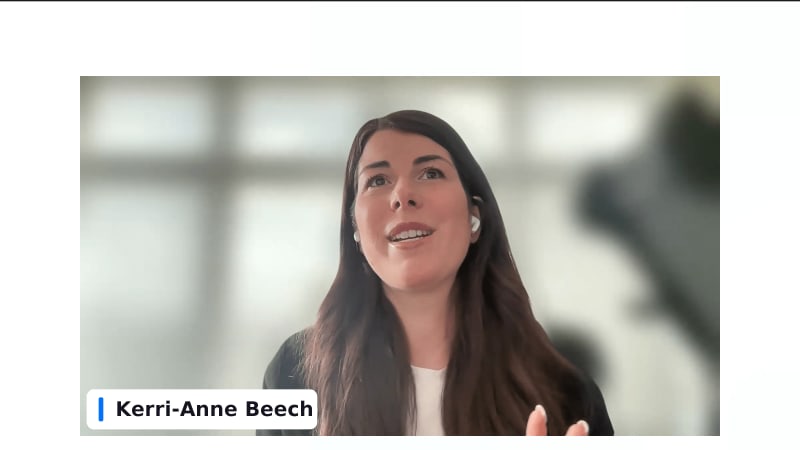
Choosing the Right AI Search Platform: Inside Lexmark’s Evaluation Process
Search has become a mission-critical layer of the digital experience—central to how customers find, engage with, and act on information. But with so much at stake, how do you confidently choose the right partner to get it right?
Choosing a search solution shouldn’t require you to be an AI expert
But with big promises, hidden costs, and lookalike platforms everywhere, it’s hard to know what really matters. That’s why Lexmark—a global leader in imaging and IoT-driven innovation—set out to find more than just a vendor. They needed a strategic partner to transform CX and future-proof their investment.
Join us for an insider session with recent customer, Lexmark
Get a behind-the-curtain look at how they evaluated, justified, and ultimately selected the right AI-search platform to drive growth, scale personalization, and deliver real business impact.
Plus: Stick around for a live demo of Coveo’s AI Relevance Platform to see what made them Lexmark’s first choice—and what it could do for your team.
What you’ll learn:
- How to approach your own AI Search evaluation with a proven framework
- Key capabilities to look for: from connectivity to generative answering
- Hidden costs to avoid (hint, implementation & maintenance adds up!)
- How generative AI is reshaping expectations for digital experiences (with a live demo!)