Good afternoon. Good afternoon, everyone. Thank you for making time for us. We're looking forward to spending about the next half hour together. My name is John Grosance, and I'm the chief revenue officer at Coveo. Thank you for joining us today, and I'm joined by Paula Mitchell. Paula, thank you for joining us. Paula's from Freedom Furniture, and we're gonna talk a bit about Freedom Furniture's transformational journey, how you're driving digital transformation and leveraging generative AI to try to drive better, more personalized customer experiences. So with that, why don't we jump in? So first, let me take the liberty of introducing Paula so I've got the opportunity. We're so thankful you're here. Thank you for joining us. Paula leads as the digital general manager of Freedom Furniture. She has a broad set of responsibilities. She owns the omnichannel strategy and execution. She owns all things associated with their website user experience and user interface. In addition to that, she also owns all things ecommerce and drives all the operations associated with that and omnichannel. So she gets to think deeply about what are the ideal channels to drive across the business to reach customers. So she comes to us all the way from Sydney, Australia. So please, a warm welcome. Thank you. Thank you for making this trip. Super excited you're here. So with that, we've got an agenda in mind that we're thinking about, and we're gonna have a conversation a bit about who is Freedom, a bit about who are they, what's their business, and we're gonna hear a bit about some of the challenges that they face, their vision of how they wanna drive a digital transformation going forward. And we'll talk a bit about online, in store experiences, how they're blurring really in day to day. And then at the same time, we'll make our way into the commerce ecosystem that Freedom has decided to leverage to drive the transformation. We'll then get into product discovery and talk a bit about learnings in product discovery and applying generative AI and product discovery to optimize the customer experience, and we'll talk about some results and some lessons learned. So with that, Paula, tell us a little bit about Freedom Furniture. Help us learn a little bit about your company. Thank you, John. So as John mentioned, we are an Australian, New Zealand furniture and homewares retailer. We have sixty doors across, both countries. We're in all capital cities. We have about nine hundred employees in our business, and we talk about ourselves as being the home of design. So we are deeply entrenched in, you know, the development of our product, the design of our product, and then, you know, getting that manufactured and then all the way through to the shop floor. We have two ecommerce channels supporting our in store experience, one obviously in Australia and one obviously in New Zealand. And, no. I think we're we are, enjoying the ride of what it looks like. Yep. It's fantastic. Maybe share with us, looking back, a bit about some of the challenge that you've that you've faced as a company. And we'll set that stage when we talk about vision. Yeah. For sure. If we go back about four or five years, the the business was in a little bit of trouble. I think that there there was a lot of shift and change in our space in the Australian market, and probably Freedom didn't keep up like it should have. It's a forty year old brand. It's been around a long time. It has amazing brand awareness and brand recognition, but it was getting this, perception of being your mom's brand. So everyone would say, oh, yeah. My mom shops at freedom. It's like, oh, that's not a a good way to have longevity in your business. So our new CEO joined Blaine Hallard in twenty nineteen, and he started the business on a transformation journey. So pretty much every corner of our business has been turned upside down in the last four years. It started, you know, with the product mix. Everything starts with product. Complete, you know, reprioritisation and restructuring of our categories into our retail store experience, what that looks like, how customers shop in store, through to a repositioning of our brand, new logo, and moving from being your mom's brand to wanting to be your best friend's brand. So how do we go after those younger families, that emerging demographic, and, you know, move them, you know, from your entry level price point furniture when you're that uni student and then you're finally moving to your own home? How do we make sure we're part of that consideration set of that age bracket? And then the last kind of pillar in that transformation journey was the the omnichannel and and ecommerce replatform. So it was in December twenty twenty, we migrated onto SAP Commerce as our, our platform to move forward, and it's been a hell of a ride since then Yeah. And bringing that to life. Yep. Amazing. Well, as you think back on all the things that you've taken on, all the things that you've driven in terms of the change management agenda, and along the way, you took the product catalog from fifteen thousand, I I believe, almost fifty thousand products now, which is amazing to think you've over tripled the number of products available from Freedom. Maybe spend a moment or two with us on the vision now. So here you are, four years in. What's what's your vision looking forward? Yeah. I think our vision has been quite stable. I'd let you know for the first two or three years, whether you a lot of people talk about being digital first. Oh, we're digital first. We're not. We're omnichannel first. And the interesting thing about Freedom as a business is there's no sales on my p and l from the ecommerce channel. Every sale goes to the store, and the reason for that is to make sure that we're putting the customer first, all the decision points that we have, and, you know, knowing that our customers are chopping and changing between those two channels, and whether they research in store and purchase online or research online and purchase in store, where they choose to finally transact and and give us their cash, we don't care. You know, it doesn't matter to us. It's as long as we're providing a good customer experience and we're learning about them to provide them a better experience moving forward is the focus. So with that omnichannel vision, everything we do is around that, and how we've been iterating the website always has that in mind. You wanna try and replicate your ecommerce platform to be just like an in store experience, and you don't have that personal connection to do that, so how do you do that with technology? So over four years, you know, we integrated our loyalty program. We brought New Zealand into the fold. We knew that there was an opportunity to increase our product catalog. Our CEO always says the stores don't have rubber walls, so you can only fit so many product in the store, and customers are coming in and asking for certain things and we don't have them. How do we provide them, with that same shopping experience and not let them walk out the door and go to a competitor? So we implemented ContentSquare, first of all, into SAP Commerce to help us understand the customer journey, at the same time as partnering with Miracle, which is a dropship technology, to allow us to expand the catalog to the size that it is today. But that itself brought with it some challenges on on how customers were discovering. And, you know, we'll talk about change management in a in a second, but you have a view from the business that this drop ship product should sit over here. This is our business. This is what we're talking about, and those dropship products sit over there. And when we went live, customers weren't finding. So ContentSquare gave us insights into how customers were shopping and how customers were finding, and no one was going off into that secondary catalog. So we slowly started to migrate that product into the primary catalog and we saw there was an opportunity there, but it was quite a rudimentary way to do it. It wasn't very forward thinking and definitely wasn't driven by AI by any stretch of the imagination. But that was kind of the first big shift in how how we did that. And then we are the first and only, I think I'm yet to be, proven wrong, the only Australian furniture, homewares retailer that sells and can return a drop ship product into store. So you can come into one of our stores and, you know, using a module we extended with the SAP Commerce platform is you can browse the catalog with an associate with you. You can check out. It's delivered to your home. And then if things don't work out, you can bring it back into store. So that was a game changer for us in regards to, you know, joining those omnichannel dots. But then also that brought challenges around how the stores were discovering the product, and we were starting to get feedback from customers and from our store staff that it's amazing we have these fifty thousand products, but I actually can't find the thing that I would like to quickly. So and then probably challenge, I think, was, you know, SAP Commerce has, an inbuilt solar indexing engine, but I just didn't have the scale or the intuitiveness that we needed to take us to the next level, hence, going down the path of a RFP process for something better and a bit more of twenty first century, I guess. Yeah. Very good. Very good. While we're at this point in the conversation, maybe maybe you could reflect for a minute for everyone to learn a bit about how you think about your commerce ecosystem of partners. You know, how do you think about that commerce ecosystem? You mentioned SAP Commerce. I know, you know, you've been a customer now for over four years of their commerce platform and more. Right? Other ecosystem partners that they've recommended, and I know you've been a pioneer in looking at what are the options out to us. Maybe we'll spend a minute on the commerce ecosystem, and then we'll come back to product discovery. Yeah. I mean, most people would tell you SAP Commerce is a beast, and it is. It's it's a tool that I worked on for a number of years now. My previous role had this platform as well, And I think what I enjoy about it is the flexibility and my ability to innovate at at scale without having to wait for someone else to tell me when. So we have a small offshore team, our SI team. It's it's an extension of us, but they work with us on our sprint plan. And, you know, I made the joke earlier today that if tomorrow I wanted the background to be green and unicorns dancing across the front, I can do that because I have we have total ownership of the agility of the planning, the development, the code. You know, we own it. And then, you know, then talking to partners, SAP is building some really great relationships with the likes of, you know, Miracle, Lamasas, Kaveo in making it easier for us to integrate to then take it to the next level. Right. You've really been driving that innovation roadmap with them over the last four years, and so I know you've been some pioneering with them as well. So it's amazing. It's amazing journey you've been on with them. Yeah. The the ability to buy and sell dropship in store is an initiative that we call NLS, never lose a sale. And we made that up internally, but it's caught on with the sales team. By the way, that NLS my team's gonna hear about that, never lose a sale. I'd be right at that. It'll cost you some money. Good for you. Good for you. But I think that was something groundbreaking. We took an SAP module. We, you know, we iterated it, and we made it available to deliver this functionality in stores. So it's definitely a game changer for us, and we're now looking at what next that looks like to the point of a self serve kiosk where they can browse on their own and or maybe have a start as, you know, salesperson assisted journey, but that'll be what that looks like next. Awesome. That's awesome. Let's move now to product discovery. We've increased the catalog to remind the audience from fifteen thousand to fifty thousand items. Can't fit it all in the store. And I imagine your CEO is thinking, gee, is fifty thousand enough? Maybe I should think about what are my best sellers. Maybe I should think about expanding there. Maybe I should think about maybe even removing some things from the catalog and refreshing the catalog. And so product discovery becomes really critical, but share with us your thoughts there, what you learned. There's a couple of kinda key moments on what to do next, and one of them would have been an email I received from our CEO which had a where's Wally picture in it. And, you know, his context was around how do we make sure that our Freedom One Pay product doesn't get lost. Right. But how do we also make sure that we're providing that personalized journey for a customer who might not want something as of the Freedom aesthetic but slightly, you know, associated with it. And the challenge that we had was just that lack lack of relevancy of the results that were happening. So if he brought his phone into me one more time and said, I'm not getting white sofas, It's like, I hear you. I hear you. I'm listening. So that was one. Introducing MLS into stores then opened up, the stores used it as a website to search anyway, but now it was accelerated because it wasn't just ten thousand products. It was fifty thousand products. And on our internal chat system, we're getting feedback around, I can't find. How do I find? Where am I looking? I can't, you know then we just weren't getting that kind of traction. It was just increasing complexity for them. So we knew we had to, you know, look how do we how are we smarter? How do we leverage, you know, all the AI technology that is available Mhmm. In a number of of partners? But how do we get more robust results happening at the front end, but not overcomplicate it for the team? I have a small merchandising team, and they're spending all this time manually merchandising pages for ten thousand products. Now we've got fifty thousand products. It was just getting overly complicated. So it was time to kind of open up the the discussion and go on the search for, a partner to support us Mhmm. To take it further. Okay. A rich set of challenges to be sure to think about. And Yeah. So as you, you know, move forward, and I know, you know, ultimately, we participated in RFP, you know, and maybe you could share a little bit about, you know, your experience of going through that process, maybe a bit about, you know, your experience in getting to know Coveo and how we work together to ultimately arrive at a solution. Yeah. I mean, RFP process are always fun, and you start wide. And, you know, the documentation comes back and you start to go through it. And what stood out really quickly was the right partner for us from a technology robustness, from a sophistication of the, you know, machine learning models, how it could be integrated. Being an SAP partner was definitely something we considered from an integration perspective and a and a road map and a scale moving forward. I I I come from the partnership side. You know, really, my team have driven a lot of the the technical discussions, and I come in at the end to sign the check and make friends. But I'm looking for partners who have boots on the ground in Australia, who are available to us, who have similar, mantras around retail customer experience, and and working together as someone who's gonna challenge us and push us to the next level because everybody wants to play in AI. We all know we all have to do it. Some are doing it better than others. A lot of people are scared Mhmm. To make that first leap of faith. Right. And, you know, it would be a miss of me to sit here and think say that I know everything. I definitely don't. Yep. But, you know, I think it was Albert Einstein who said I don't own my own phone number, but I know where to find it. So I don't know everything about AI, but I wanna find the right partners to work with me to help educate me on how we make the right decisions for the business. So and Conveyor lent in on that education piece, which was important for the team and for bringing the rest of the business on that journey because it's scary when you're opening up something to be run by a machine where previously someone has sat there and dragged and dropped and made the magic happen. So the merchandise team go, well, I want that product there. We're like, cool. We can do that for you. But now it's a whole new world. Right. Right. Very good. And maybe a bit about, you know, how we work together. I think that it'd be helpful for you to talk a bit about just the experience with the Coveo team, and then maybe, you know, talk a little bit about your experiences to this point. Yeah. We obviously started, slow and low hanging fruit first, which is indexing that product catalog. That's the part that's gonna, I guess, turn into dollars more quickly. Right. So we've indexed the product catalog. We have some query pipelines running through the tool, which is serving our search box, the recommendations inside the search box. And probably what I'm most excited about as well from an efficiency perspective is now merchandising all of our product listing pages. So, you know, that that particular task would take my team two or three days a week after a major promotion or leading into a major promotion. It was quite labor intensive. And, yes, the same rules exist around boosting or pushing down or pinning, so you still have a little bit of confidence. You can control it to some degree, but the ability to let the technology work its magic and to see how ten people in the business can pull up our sofa page and it looks different, that's what gets me excited because it means we're talking individually to our customers now. It's more meaningful for them, and really keen to see, you know, what that's gonna do from a a bigger results perspective as we go. How long did it take you to implement Coveo? People are probably curious. Gee, how long did that take? So the back end would have been probably ten to twelve weeks. K. We made the decision to break it into two for two reasons, from a sprint planning perspective, but it it is important for us to put the Barca end in first because the back end's the engine. It's the one learning. It's the one, you know, helping to build up the knowledge to make sure we can be more relevant to customers Right. When we go live. So we put the back end in, I think, in October, and then we're in these crazy retailers that do deployments right before Boxing Day because we wanted it in for peak trade. We missed Black Friday, but that was intentional, and we put it live on the tenth of December. So we we didn't put the solution in on the tenth of December cold. It already had some learning, some knowledge of our business, what were our high selling products. So when you flick it on and it ends up in production, wasn't a huge shock to a lot of people because it had that time to build up some learnings. That was fantastic. Please share with us some of the results. What sort of results have you seen now? We've been we've been live for, you know, about about a month. Be excited to hear about, well, what results you've seen. I mean, it's early days, and, you know, it's an interesting time in the Australian retail landscape where, this Boxing Day used to be this single shopping day event that people would line up for and it'll be on the news and it doesn't exist anymore. So everything shifted to Black Friday for us where, you know, the market here is a lot more mature in around what that kind of cyber weekend looks like. Australia's been catching up. But last year was the first year that Black Friday was bigger than Boxing Day, and this year did that again. K. So we went live in quite a strange time where where results were kinda moving around from a sales perspective. But we did have an increase in traffic over the time, which is good. But that what we're also seeing on the back of that is not only a five percent uplift in traffic, but a fifteen percent uplift in sessions with search. So and repeat usage of the actual search box. Maybe our regular customers knew that it was rubbish and so they weren't using it, but we've been trying to give it a little bit more prominence to direct customers towards it. So we've seen the fifteen percent uplift in just the usage of it, and then the most interesting stat that was a bit of an moment for me just in this first month was the five point five percent lift in average order value. So those who are coming through that search discovery are spending a bit more versus those that don't, and we're only four weeks in. Yep. So there are other green shoots popping up in places that are interesting, and I think they're gonna be quite mind blowing in the weeks to come. But, you know, they're the first two that we can probably hang our hat on and go, that's definitely related to the implementation of this technology. It's incredible. Congratulations on those results. I mean, it's incredibly interesting to think about how you've had that fifteen percent uplift in generative answering sessions with customers. It means that they're getting results that they find relevant and personalized, so they're coming back and digging in further, which is fantastic, and it's showing up in shopping carts. They're finding more products, getting recommendations that are really relevant and personalized, and it's fantastic to see that see those results start coming together. And I'm sure as the models mature, we'll see even more improved results and more insights into how you think about merchandising. Well, I think this is just the tip of the iceberg. We've, you know, we've picked, I guess, the biggest part, but there's so much more to come. What makes it more exciting for me about what this partnership is gonna bring is bringing those, you know, large language models and the conversational type questions into our customer experience. So four weeks ago, if you went to our search box and asked how much delivery was, no search results. If you go and you want to ask how do I clean my sofa, no search results. But the future looks totally different. So we're now looking at indexing, store locator so you can find your closest store, what's its opening hours through the search box, our blog content. So if they do ask that question around cleaning, it's gonna surface the blog article. K. And then the third phase of that is we have Zendesk within our business, which is also an AI tool around customer commerce and customer conversations. And so Kyvaya will have the ability to read those conversations between customer and, customer service team where we're answering questions, which is the best sofa for a orange haired cat, or what's the warranty of this product. And so now with Coveo being able to read that, the long term goal is to better surface those questions to customers in the moment. So we're building trust because we're not burying these things four, five pages deep. We're allowing them to find it really quickly, building trust, hoping that they convert, but speeding up the process for them. And the goal there will be reducing contact into customer service. It's fantastic. And it's amazing to think, you know, where that'll take you. We're hearing as a consistent theme with nearly all of our customers is that they see a future where the commerce personalization recommendations context needs to be consistent with the customer service experience and it extends then into warranty experiences and you know add on follow on buy experiences and how to get service for products experiences. So very much we see a convergence of commerce and services experiences needing to come together for customers. They're expecting it. They expect it. Fantastic. So have you share all that with us. Maybe a couple of reflections on lessons learned and then we've got some time maybe to open it up for for q and a if anyone has any questions. But lessons learned that you'd like to share? I I think in the early stages of testing in a UAT environment that's not like your production environment was challenging. Oh. So you're never gonna build yourself build confidence in what you're about to roll out if you're not getting the expected results. So we had to backtrack slightly and update our UAT environment to be as identical to production from a product catalog perspective as possible because our, UAT environment had a lot of our one p product that didn't have the drop ship extended aisle that we'd been working so hard on. So the results weren't meaningful, and we weren't able to see how that was going to resonate on the front end. So updating that first and then testing was absolutely king. We spent weeks and weeks testing and pulling things apart and then putting them back together and making sure that the results were expected, which which also dovetailed into the change management piece as well. Because for those who work in a retail environment with a very passionate product team, they've got certain opinions on where things should sit and where you should position them on the product page. And now we're about to hand that all over to the machine in the cloud to make these decisions for us. So explaining to them what it was doing and how it was behaving to give them confidence that when they came to the website on the first day and they didn't see our number one bestseller in position one, there was a reason for it. So we did manage some rules in the system for day one, just till it was a huge shock when we flicked over. So some boosting, some pushing down, some some, I guess, management of how our one p and three p products sit together. And then once they could see that the page was changing and iterating based on the customer behavior, we've slowly started to relax those rules to get the technology work the magic that's built into it to do that for us. So, bringing the team on the journey from a merchandise perspective made it a lot smoother for us when we flicked the switch that we didn't get a whole bunch of where's my product feedback. Congratulations on all the success. Amazing. I hope that the CEO is giving you the credit you you deserve based on the results you've delivered so far. I'm in New York for the first time. I'm really Well, there well, okay. Good sign. Good sign. Make it. Very good. So why don't we open it up? Are there any questions, that anyone would like to have Paula address? Please go ahead. I don't know if we have a handheld or some way to help. That gentleman seems to have one there. K. Fantastic. Is it on? Fantastic. Yeah. Thanks for the talk. Very, very insightful, information. You I think one of the slides mentioned that you'll have fifty thousand SKUs. Would you share some of the pain points that you went through when you were managing all of the products to be published online in terms of attributes product attributes? Thank you. Oh, excellent question. I think that was, it's a challenge that took people. So we had to look at how our team was structured and the support that we had for the team. So we did bring more people into the fold to help us do that and to categorize it accordingly because our obviously, our customers know how our categories are structured and where to find things, and to making sure we were mapping it consistently for them was important. The the I think the advantage of a drop ship model and how we went from ten to forty thousand is when you're working with third party vendors, building a partnership with them and then providing you a lot of that information made that part really helpful. So we built us a document which clearly articulated our expectations around, you know, whether it's a buffet or a bedhead or a lamp, the attributes we expect you to give us, to publish on the website. And interestingly enough, they're also more accommodating than our internal team. So I use it as example sometimes ago. You could look like this if you gave us more information. So my guidance there would be be clear on your expectation, share it, and they'll give it to you because everyone wants to make money. Right? So if if you tell them what you want and they give you that right information, that will help translate it into front end sales. Welcome. Thanks for the question. I think we can do one more about that. So, like, you know, if you see that the overall, there's a huge shift now in the last ten years, mostly after COVID, the online, sales. But how the transition of the furniture business? Because still here, you know, the people want to have a touch and feel or people do more discovery online. Then after that, they come to the store to buy. And if you see I don't know in your Barca, I'm from Dubai. So generally, your average order value online is much more lesser than the offline. So how do you manage the journey of the customer from the discovery as well as the challenge of touch and feel? Another good question. And I came out of fashion, so coming into furniture was mind opening for me around exactly that. There are definitely a number of tactile products in our catalog where people want to touch and feel, sit, line, and my talking points earlier around being omnichannel first is all all we try to do. So we know that about eighty percent of our customers are dealing on both channels. So from a product page presentation, videos, really clearly defined images, we've got AR functionality, giving them as much information as they can to help that exploration phase. If they go in store and they choose to convert in store, I'm really happy with that because we played a part in that journey. So our contribution to company sales from those tactile categories is less, but we make up for it in other categories that aren't so tactile. Like, you don't need to touch a buffet or a bedside table. It feels like wood. So the the and also homeware's candles, sheets, towels, they're less tactile, so we find we over index on those categories. So all we're trying to do in in our particular industry is do as much as we can with the product content and making it as immersive experience as possible to let them make their decision where they wanna transact. Awesome. Thank you. Thank you very much for joining us. We really appreciate it. Thank you so much again, Paula. We really appreciate you joining us. Thank you. Thanks. Awesome. Thank you so much.
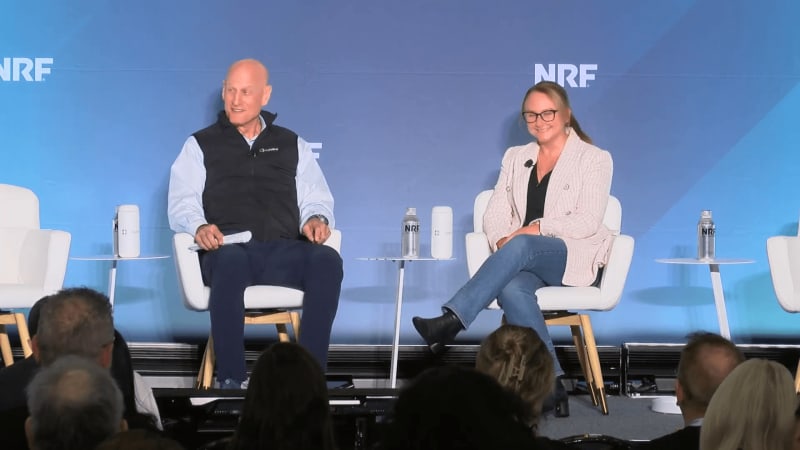

Freedom Furniture: From Rapid Expansion to Seamless Discovery with AI
Paula Mitchell, Chief Digital Officer at Freedom Furniture, explains how strategic AI deployment helped the brand overcome key challenges.
From improving product discoverability across a massive 50,000-SKU catalog to streamlining labor-intensive merchandising processes and bridging the gap between in-store and online experiences, AI became the driving force behind Freedom’s transformation.
Watch the interview to:
- Discover how Freedom Furniture achieved a 5.5% uplift in average order value with AI search and product discovery in just 30 days.
- Learn how automated workflows cut down merchandising efforts by 50%, giving the team time to focus on strategic initiatives while maintaining control over results.
- Understand the role of search and recommendations in unifying online and in-store experiences for a customer-first journey.


Make every experience relevant with Coveo