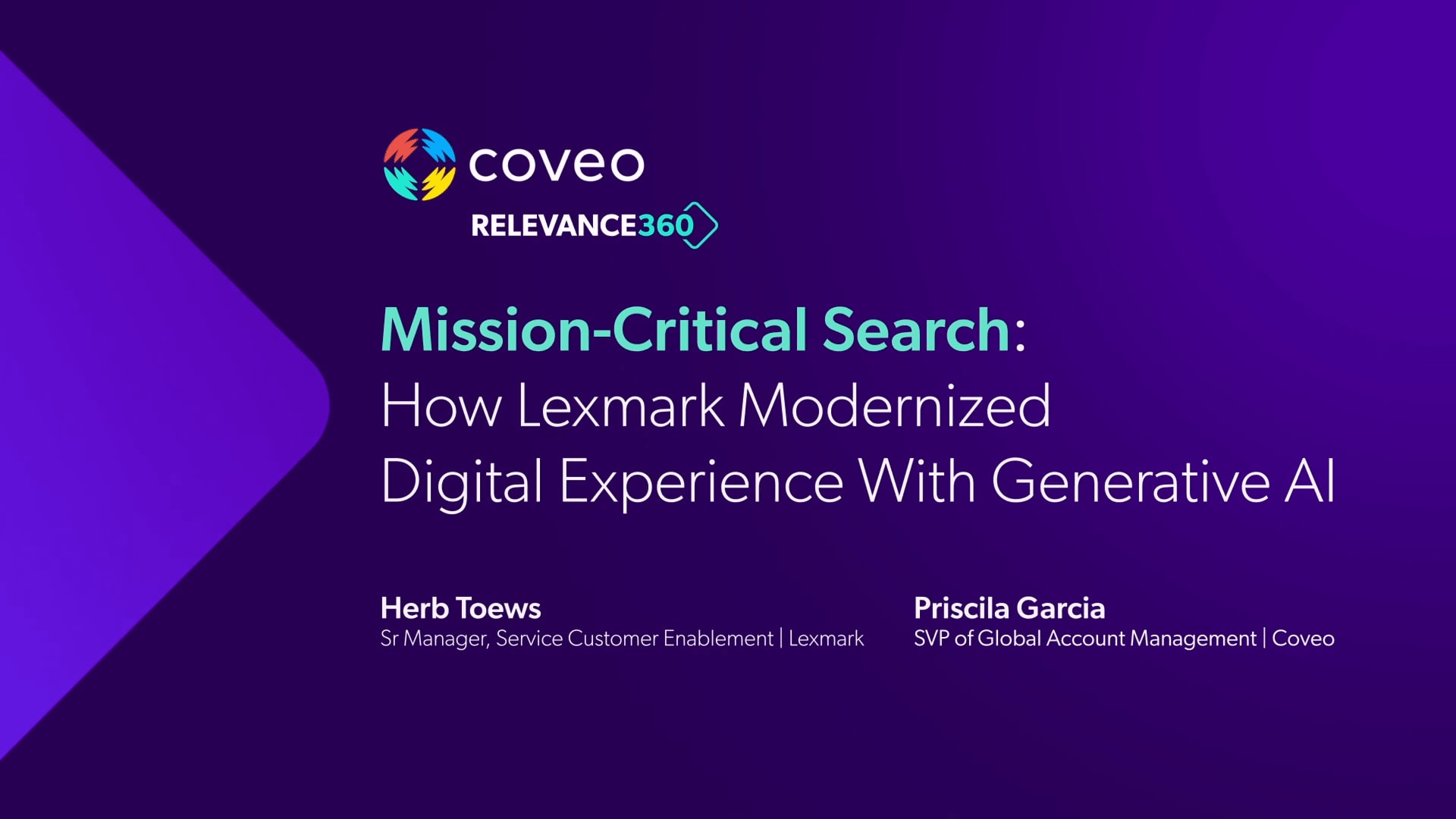
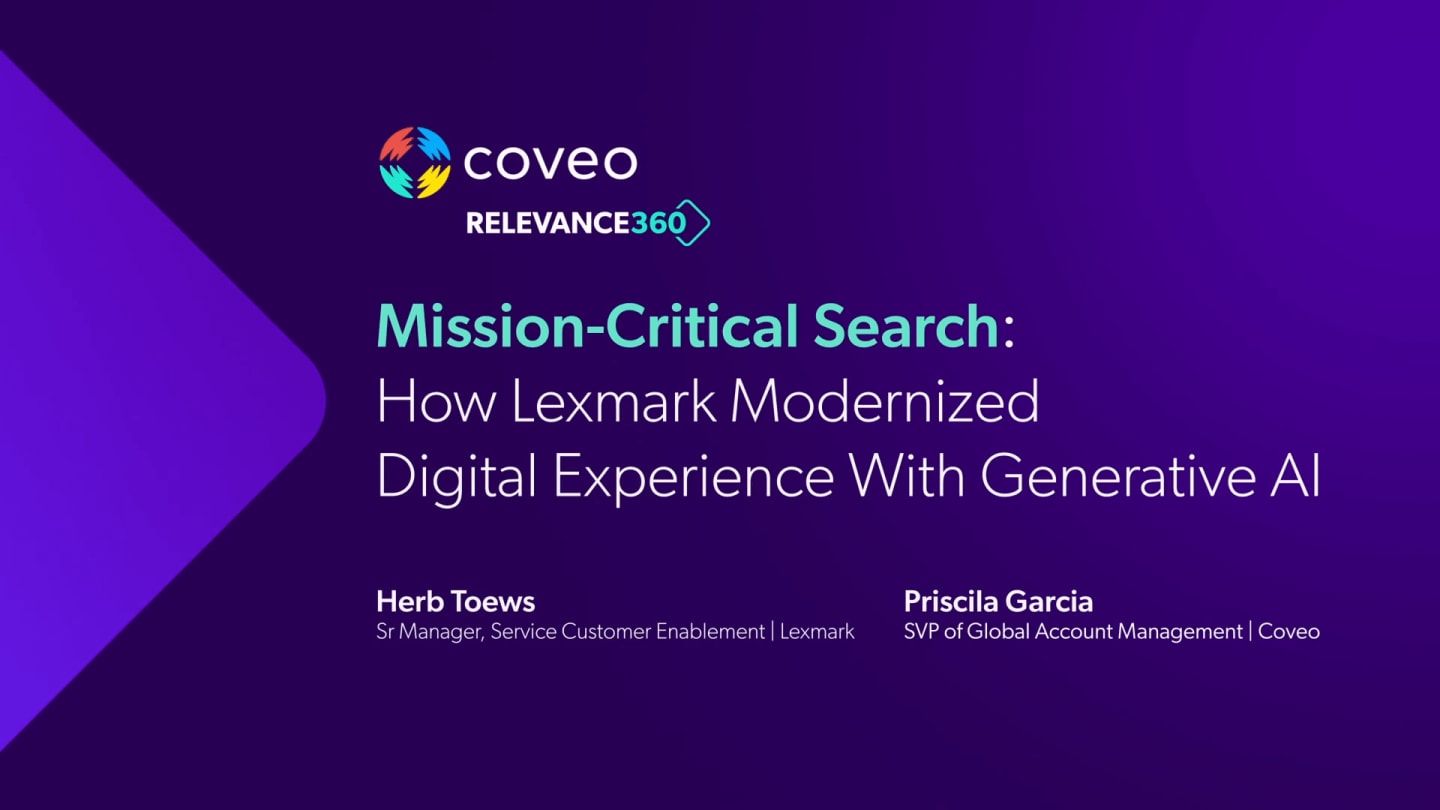
So hello, everyone. Search has become one of the most mission critical layers of the digital experience. It's no longer a utility. It's how customers discover products and content, access support, enable sales, and ultimately make decisions. But evaluating search today is complex. AI promises everywhere, hidden costs and lookalike platforms. That's why I'm excited to welcome Herb Thesaurus from Lexmark. Herb is the senior manager of customer enablement at Lexmark. Herb, welcome. Thank you, Priscilla. It's good to be here with you. So tell us a little bit about yourself and your role at Lexmark and your team. So I am a manager of customer enablement, as you highlighted, and the responsibility I have is with our digital support experiences, whether that's support. Lexmark or whether it is our partner and field facing portal where they access technical information. Excellent. And how, if you had to summarize, how does Lexmark think about search? What would you say to everyone? I think one of the keys for us is that search is about enabling our customers to easily connect with the information they need, when they need it, whatever device they choose to access it on. And really, how do we make it fast, responsive, and available when they query? Right. And if you were to think back about, you know, trying to set the stage and go back to where you start thinking about Coveo and Search, tell us what wasn't working and what were the stakes if you didn't modernize Search in the way that you have done? So a year ago, search for Lexmark was really still outdated. It expected exact term match in order to return results. Users often found that they could only get results if they input one or two terms. And so, as you know, in today's world with generative platforms, etcetera, users are now familiar with and expect a more natural language type prompt and interaction with search. And they expect the search to deliver a summary of the available content. So that's where we were is it was outdated, maybe ten year old technology. And I know that, you know, you made a really important point in your evaluation. It was, you know, open source, looks affordable upfront, but there was a lot of hidden cost implementation, tuning maintenance, obviously, relevance optimization, and everything adds up very quickly and things that we didn't even think about at at, you know, before. So can you tell everybody a bit about the operational burden of owning search internally when you're not search experts as well? Yes. So that's a very big highlight for the partnership that we have with Coveo. We started to evaluate what it would take to modernize the search experience, but not just to modernize it with a short project, but how do we maintain that for the future? And so technology, especially with web technology, is often as a service. And so we saw this as an opportunity to partner with someone where our search functionality and capability would remain modern as we moved forward and not be a twelve month project, and then it becomes to become dated again. So talking about, you know, being dated and maybe moving forward and, you know, where expectations are shifting, customers don't just want to do, you know, a list of links anymore. It's about getting direct answers, especially for support and product questions. So with that expectation in hand, I know you know where I'm going, is what gave you confidence to move forward with new search platform that included also those generative experience from the very beginning? Yes, I think one of the keys was we had a little bit of experience both doing some AI ML analysis of our content, as well as evaluating other partners offering in the generative space. And so based on that experience, we had uncovered scenarios that we could use to test generative experiences. We also had data from our web analytics platform that told us what search terms users were using, what content they were landing on. And so we were able to evaluate with a generative platform, was it delivering relevant, accurate content we could trust? What was the experience from the technicians and the people that are finding the information more closer to what they originally thought? Yes, I think that is one of the key feedback we have received from users is they really appreciate the concise summary that the Generative Answer provides. It will read through the content, five, six, ten documents, and provide a concise summary to the user. And then the user does not have to spend as much time searching. They can find what they need very quickly, and as well, the citations that the Generative Answer use to create the summary, the user can click on that citation if they want to understand more detail and the technical behind it. Perfect. And that leads us to, very nicely, can you share some of the early signs of success? What have you seen? What have you experienced beyond that? Sure. So we first implemented this on our field and partner portal, because that experience is an authenticated experience. The users are high frequency repeat visitors to that site. And so we believe that they would identify quickly whether they believe that the results that they were seeing were accurate or potentially had hallucination. So that was important for us. And what we have seen is that approximately eighty to ninety percent reduction in the queries and prompts, which have no relevant results returned. And so that for us is huge. That was an important success factor when we were looking for the search and relevance of the content. Excellent. If you could, Herb, give one piece of advice to leaders that are reevaluating search or replatforming their website, what would that be? I think the important thing is finding a partner that you can collaborate with, and who will enable you to remain cutting edge as you move forward. It also speeds up the deployment and the time to begin achieving business value in return. So for us, Coveo was an important partner, and I think we have seen the value both from the business results, as well as what we expect moving forward and maintaining a cutting edge experience. Yeah. So what I love about Lexmark's journey is that this wasn't about chasing AI that we hear quite a lot these days. It's more about consolidating your infrastructure across website and support experiences. It's about reducing the hidden operational costs, designing relevance with a lot of intent, right, intentionally, and your future proving for that generative experience early on and treating search as a very strategic infrastructure decision and way forward. So that's how, in my opinion, that's how you turn search from a cost center into that growth engine that I know you're after. So Herb, you so much for sharing your story with us. It's been fantastic hearing your piece of the world and your piece of search and giving some advice to everybody here listening today. Thank you, Herb. Thank you, Priscilla.