

Universal connectivity
Connect your CMS platforms, scheduling, and knowledge systems into one unified index without replacing your existing systems.

HIPAA-compliant
Stay compliant with a dedicated SaaS platform with full HIPAA certification for your IT stack.

Secure-by-design
Enforce document-level permissions with early-binding security, so users only see content they’re authorized to access.

Intelligent ranking & tuning
Fine-tune relevance with customizable ranking controls, taxonomy management, and business rules aligned to promote the right care priorities.

Analytics and optimization
See what people search for, where journeys break down, and where there are content gaps or content needs improvement with robust analytics.

Continuous freshness
Automated rescans ensure content remains accurate and up to date in fast-moving healthcare environments.
Built for every person searching across your health system
Patients, members, clinicians, agents. Coveo gives each of them fast, trusted answers across every part of their digital healthcare journey.

Public websites
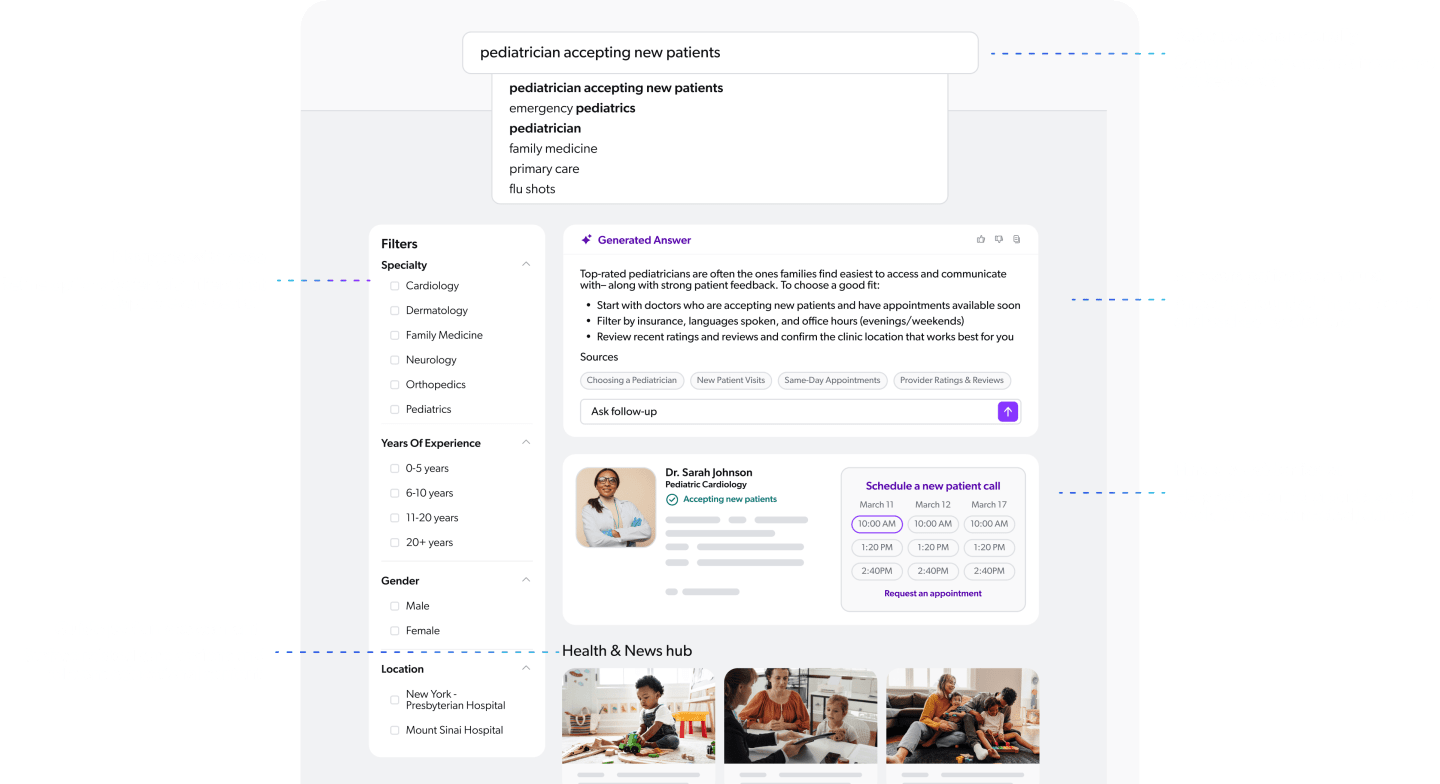
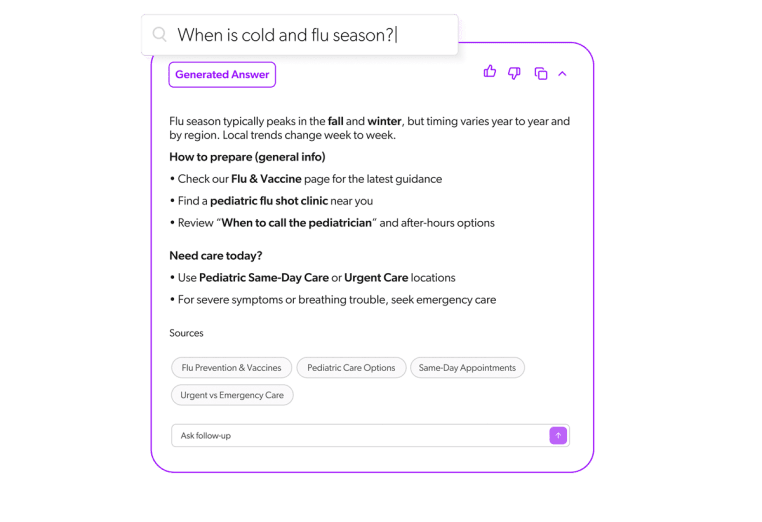
Guide patients from discovery to scheduling, and deliver trusted answers grounded in your approved content.

Booking & scheduling
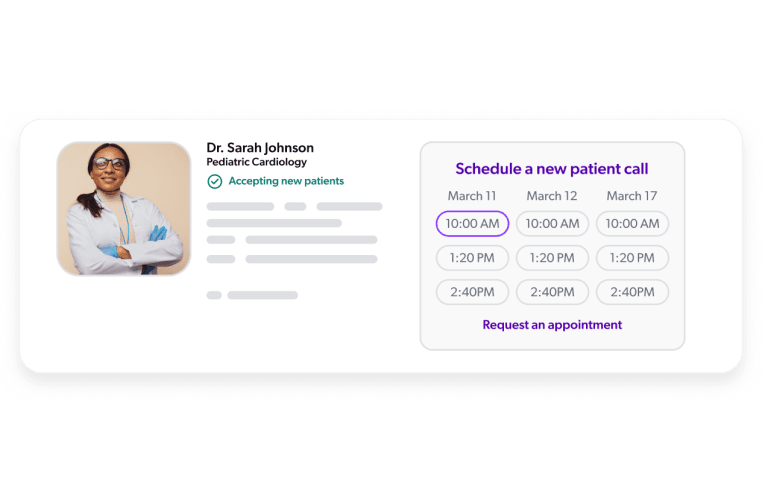
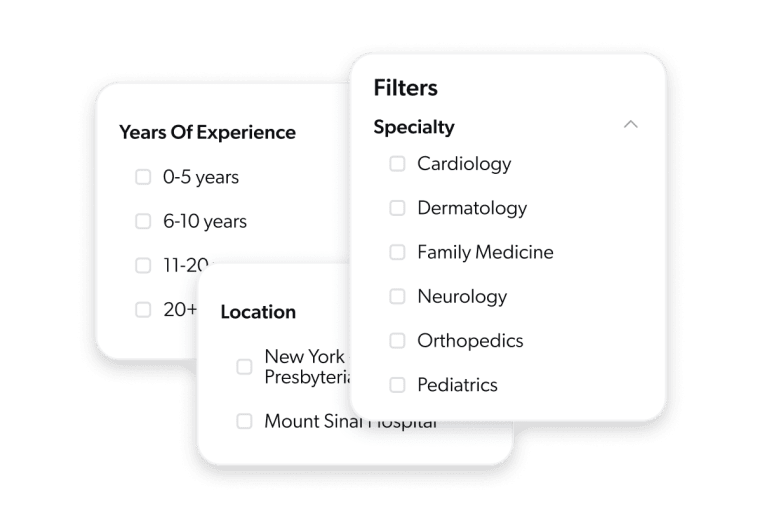
Unify find-a-doctor and booking into a single journey, eliminating third-party handoffs and reducing access friction.

Healthcare associations
Deliver secure, permission-aware answers across association sites and portals, helping members quickly find the latest content, services and benefits.

Internal agents
Help agents find the right knowledge instantly, reducing escalations and improving resolution times.

Internal sites
Help clinicians and staff quickly find trusted information across policies, guidelines, and knowledge systems, without compromising compliance.

Multi-site systems
Unify search across hospitals, service lines, and affiliated sites while maintaining consistent relevance and governance.