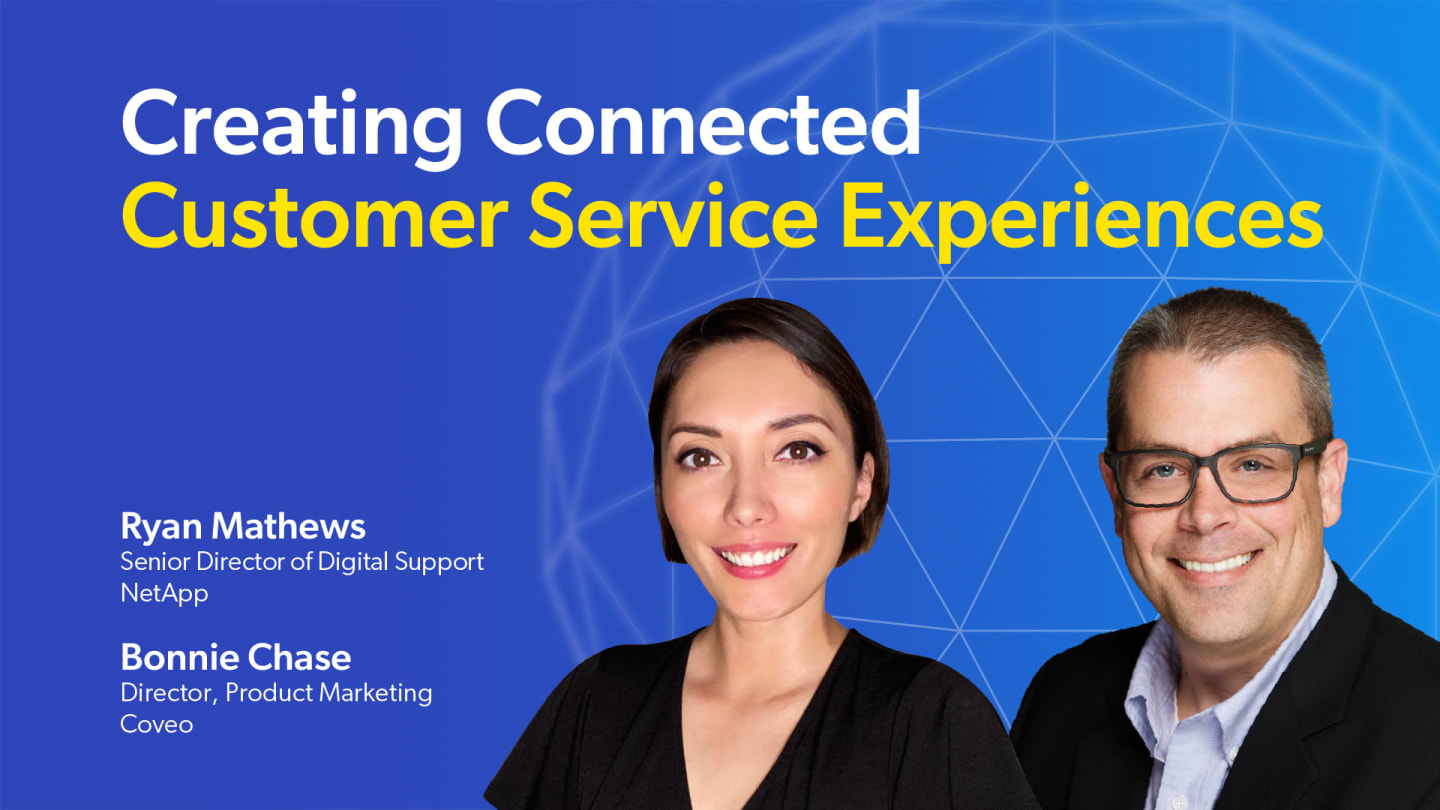
Xero is one of the world's fastest growing cloud accounting platforms, and as we grow, we're committed to a couple of things. We want the whole customer experience end to end to be a positive and intuitive one. And everything we build, we build with that scale in mind. Today, we have more than two million customers globally, and we're building for a future where we have tens of millions of customers. So we partnered with Coveo to make sure that we could deliver truly satisfying, relevant customer experiences at scale. And it worked. Today, over ninety five percent of the questions asked in Zero Central are answered by self-service help content powered by Coveo. Now that's more than a million queries each month that don't turn into support tickets. And Coveo also proactively recommends content that matches with what you're trying to do, sometimes before you even know you need it. And that helps make it possible for Xero to keep adding millions of users whilst ensuring our customers have an amazing customer experience. Our support specialists, incredibly smart people, many with accounting degrees, are spending significantly less time answering those simple, repetitive questions. Much of our customer interaction is now fully automated and our specialists can therefore focus on engaging with customers to solve the truly hard problems. Today, we use Coveo's artificial intelligence with eight different use cases. Everything from self-service portal and agent console to our app marketplace. Coveo helps us deliver relevance at almost every single customer and partner touchpoint that we have. And thanks to Coveo, we're better delivering on our commitment to make the whole customer experience an overwhelmingly positive one. Hello, everyone, and welcome to the session creating connected customer service experiences. My name is Bonnie Chase, and I'm honored to be joining you today. I'm excited to get us started, but a few housekeeping items before we do. First, I strongly encourage you to ask questions throughout the session. We'll be answering them in the Q and A portion at the end of the presentation. Please note there is a chat for the entire event and one for this session. So make so make sure that you're using the chat tab per session, just to make sure that that your questions related to this one get answered. This will be the same place where our following session in the track takes place. So be sure to stick around for personalized service delivery where we'll be covering customer service from an industry perspective. With that, let's get started. Today's session is about creating connected customer service experiences, and I'm very excited to be joined here today by Ryan Matthews, who is the senior director of digital support at NetApp. Ryan, thank you so much for joining us today. Hey, Bonnie. Glad to be here. So I wanna go ahead and and get started by, you know, covering a little bit of, background information to give us some context for this presentation. Now when we think about holistic customer service experience, it's really impossible to overlook the impact that the pandemic had on digital transformation. And we can see in this recent report by Zendesk that seventy five percent of leaders agree that this accelerated their their digital journey. So what does it mean to accelerate digital adoption? Well, for some it meant rolling out new digital channels like chat bots and communities to support the overwhelming increase in case volume and for others it really meant, you know, shortening that six month or that five year plan into a six month plan. So it was really a rapid transformation that a lot of people had to undergo, especially in the last year. Now we know that creating several digital channels does not mean that customers will find the information that they need. Right? We we spend a lot of time building out these digital touch points for our customers, but when we're when we're thinking about these touch points, we need to make sure we're not thinking about them in silos. So I wanted to just kind of, call out this this point that really each interaction should be bringing more value to the customer and to that customer relationship. So it's going beyond just thinking about individual touch points and and looking at it as interactions that are opportunities to strengthen brand loyalty and improve customer satisfaction. And, you know, really, each interaction should be informing the the expectations for the next one. So really wanted to to kind of give a an example of going out to eat. Right? So let's say you have a favorite restaurant or favorite chain that you go to eat at this restaurant every day. And every time you go into that restaurant, you have a great experience. The menu has the food that you want, and you say, hey, I love this chain. I'm going to recommend it to my friends. Let's say you go to a different location and you wanna go to that same chain in that new place, but this time that experience is completely different. The ambiance is a little bit different. The experience isn't that great, and the menu doesn't have the meal that you really like or or really what you want in that time. And so and it doesn't feel like the same chain. So maybe now you won't necessarily recommend that chain as much as as you used to because you realize it's not the overall chain that's great. It's just that one location in that one experience. And that's how we really should be thinking about the digital experience as well. Creating it that connected digital experience really ties directly into setting those customer expectations and delivering on those expectations. So it's about creating these experiences that are seamless from channel to channel, having the content your customers need when they need it wherever they may be interacting with you, and with each interaction being more valuable than the previous one. Because the more value they can continue to receive, the more loyal they will be. So let's talk a little bit about how to deliver these experiences. And Ryan, you know, definitely invited you here today to talk a little bit about your approach at NetApp and, you know, what that content strategy looks like. So welcome again, Ryan. Can you tell us a little bit about NetApp and your role there? Sure. Well, I lead the, digital support team. So we're responsible for our support site, our KB site, our community, all of our digital interaction with respect to delivering support to our customers around the world. Also, you know, I think a unique part of our role is we also lead our content strategy within the support organization. And that's critical because, you know, you can't run a digital support practice without having a close coupling with your assistant support teams. You know, they, operate, you know, every single day supporting our customers, partners around the world, and we view those interactions as a learning opportunity. And if we can capitalize on that learning opportunity and feed it back into the system, then we can increase our relevancy with our customers, solve problems, quicker, and ultimately get them to the resolution that they want and need in the right place that they want. And we try to design all of our experiences as opt in and make it as easy as possible for customers to find a solution, find an answer in the place that they wanna connect with us. And that's really what my team's job is, is to make those connections outside of assisted support and leverage the digital channels to the maximum extent possible. Yeah. And and can you tell us a little bit more about the size of the team and types of issues you come across? Do you get a large did you get that large influx of support tickets in case volume during the pandemic? You you know, I think we we did. I think we were in a a bit of a unique situation. You talked about the acceleration. You know, we were planning for over a year, a new support site, and, we were ready to launch, basically, a new support site in March of twenty twenty and then, April of twenty twenty. So right as the pandemic was kicking off, we literally were replacing our entire digital support infrastructure. And it was one of those moments where it was like, you know, this is either the worst possible time to do this or the best possible time. And I think that it ended up being the best, looking back on it. You know, the remote work, really drove home the need for high quality digital engagement, and we had a a path there that was really in the form of of being accelerated. And I think we saw lots and lots of adoption. You You know, the world was kind of a weird place as people went through the transition. But in the fall of last year, we definitely saw a massive uptick in, you know, volume once things kind of settled down a little bit because, you know, I think people got very internally focused on their companies and their businesses, and then it was back to business as usual as best in this new world. Right? And digital was such a critical moment. Everybody was remote. Everybody was, you know, using, knowledge and knowledge sharing and and collaboration tools, and it really accelerated our our path. So we saw massive, adoption rates, you know, on these new sites and new systems and new experiences. But, you know, we were planning them for for many, many months and and really years to to be honest with you. So I I think we had a a perfect, scenario where we the the pandemic happened. You know, you don't want that ever to happen, obviously, but we were in a position to take advantage of it. And I think that, looking back on it, that will be incredible for change management purposes because, you know, wherever you roll out new experiences, that's a a real challenge is to get people to try something, see if they like it, adopt the new behavior, and then ultimately kinda set it set it, in for the long term. And I think that was was definitely accelerated. And, you know, thanks for calling out our award winning support experience. So we're really excited to have this, you know, designation, and and it was a lot of validation, I think, you know, because we went to the organization and said, look. You know, the industry has deemed this an award winning support experience, and and everybody gets excited about that. But then to have it perform during a global pandemic when remote work was so crucial to success all around the world, it was a real affirmation moment. So it was it was great to be award winning and performing at the same time. Yeah. Yeah. Congratulations. That's amazing. And this is the fourth year in a row, which is really great. So, kudos to you and your team there. Thanks so much. Now you mentioned a little bit about about, you know, knowledge, and and that's really kind of the core of the experience. And you follow the KCS methodology. Can you kind of summarize what that means to you just for people who may not be familiar with KCS? Absolutely. So we are ardent, believers in in KCS and active members of the consortium of service innovation who kinda oversees the methodology, knowledge centered service for those, wanting to learn more. You know, NetApp is a a high complexity environment. Right? We we operate at, you know, I always say customers and we're lucky because employees of NetApp and customers and partners in NetApp, you know, you're dealing with a a very smart group because to make all this stuff go in in the complex environments that they're at, you know, they gotta have a big brain. So we we try to take advantage of that, and we also have to factor that into our planning because, you know, if we were going to hire a bunch of dedicated content specialists and have them, you know, create KB content that drove self-service and partner with our support engineers, if you add all up the time that you'd have kind of these dedicated roles working, it just wouldn't be efficient. Right? The reality is is that it was clearly obvious to us in our business that the right person to write that content was the person at the point of demand, and that was our support engineers. And so the brilliance of of KCS and the the methodology is that it takes advantage of of that, point that, you know, that if if the content is gonna be created by those support engineers solving problems, driving to resolution every single day, then how do you do it as as a byproduct to work in those issues? And how do you evolve that content based upon demand and usage? And that's really the concept of of KCS. And so it works for us because of our high complex environment, our our smart employees, our incredibly, brilliant customers and partners who give us feedback every single day. So it creates this efficiency mechanism that we can take advantage of. And, you know, we had to double down over the last two years as we started to revamp these experiences and build it in the orientation of the the customer, kind of an outside in approach and looking at high context articles starting to reduce wall of text articles that we had built up over the years. And and that was a key to our strategy is that by moving to a KCS practice where we really tried to be as close to the best practice in the industry as possible. We wanted systems that aligned to that that virtue and that ideal. So we looked at search that that was, you know, certified and validated and aligned based upon the KCS Academy and the consortium standards for KCS. Because if we're gonna hold ourself accountable to KCS best practices and our behaviors, we needed tools that that did the same. And so KCS was kind of a foundation, a first principle, if you will, of both how we create content, but then more importantly, how we engage and create those feedback loop content in self-service. Mhmm. Yeah. Yeah. And I know that, you know, from a from a KCS perspective, one of the things that I I really like is that you're creating content that's in demand, so it's more, more in demand creation. Whereas if you're trying to, you know, hire hire someone who to really focus on that holistic experience only. You're maybe trying to think of all the possible things that you could create, and then you end up with a lot of content that may not necessarily be used. So I think that methodology really does help to make sure that the content you are creating is actually useful, because it is in demand. And That's right. So one of the principles with KCS is really, search early, search often. And you've mentioned we've in discussions before that you don't really see search you don't see good search necessarily as a silver bullet, but more as a necessary differentiator. And I I thought this was an interesting perspective. So I was hoping you could kind of dig into that a little bit more. Yeah. Well, I I think we, you know, sometimes you create a natural experiment where you prove this this theory out. So we we had a a a bit of a dilemma, challenge, obstacle to overcome, and and we elected to, change knowledge based platforms. And in doing so, we we looked at our our cost that we had done a similar move in the past, and it was, like, forty percent of the overall cost of the project went into migrating content. And when you really start to analyze the value of your content, both internal and external, to think that you're gonna spend forty percent of your resources maintaining the status wasn't interesting to us because we didn't think it added a lot of value and it didn't have relevancy. It didn't add anything to the customer experience that that we wanted to to preserve. Right? We we didn't want the content to go away, but we knew that that content wasn't delivering the value that we needed it to in self-service. And so rather than just bringing all that stuff together and it's it's it it probably equivalent to moving. Right? If and when you move houses or homes or, you know, wherever you're moving to, you you bring a lot of junk with you that you probably forgot you even had. And and so there's certain things that, you know, is on the truck and you need it and you need a day one in your new home. But there's other things that maybe were in the attic that you hadn't opened the box in a couple years, and it's like, if you never saw that again, you wouldn't miss it. And so convincing our team that, you know, look. We're gonna start fresh, and we're gonna run kind of these these KBs and parallels, and we're gonna build back up, was a big ask. It was a big ask to them because it put a lot of burden on them to create content. It put put a big ask on our our customers and partners to tell us that they were missing something that they had come to rely on, that they needed to be this feedback loop. So it created lots of transparency. But from a search perspective, it was fascinating. We were struggling with a search provider, preview Kaveo, one of the reasons we were looking at Kaveo. And it was interesting to watch the retirement of that content as we move platforms. And and when I say retired content, we didn't throw it away, but we took it out of self-service use. And and it's, like, seventy five percent of our content we took out when we made this move. So we really focused on the high value content that was performing, and then we retired, from self-service, the stuff that wasn't. And it was impactful. I'm I'm not gonna lie. But if you look at the search metrics, it improved dramatically. And it was an, you know, moment for me because academically and philosophically, I knew this to be true. Right? It was like, search is not a silver bullet. You gotta have great content. You gotta have great context in your content, and then you gotta have a great search that's that's self tuning and and constantly keeping that up to date to to take advantage of it. It. But by reducing so much content, all of a sudden search performance went up a lot. Right? You know, standard measures of content gaps and and and click ranks and and query, click throughs, you know, across the board, it went up. But it it it it flattened out, right, because the search wasn't keeping up. It wasn't tuning itself. And so that's when we moved to Kevea later, and we got a higher you know, a better search relevancy engine, more tuning, and that's when continual improvement kicked in. And so I think through that journey, it was great for me to at least talk with my team and review the the the experience, the journey that, hey. Look. We cannot rely upon search exclusively. Like, we have a big part to play in making sure that the content is as good as we possibly can make it. And that means it's been updated regularly. It's been pruned if needed. It's been, you know, modified, according to usage patterns. And then more importantly, we're constantly doing relevancy tuning. And and I liken it to the fact that, you know, you really ultimately need to look at that as a hidden cost of any search engine is that if you don't have kind of a cadre of data scientists that are pouring over the interactions and seeing these touch points between content and search and and improving it on a daily basis, hourly basis, real time, you know, then it's you're never gonna, get to continual improvement. And a lot of search engines will will have a relevancy, you know, model, but, you know, you do four or five updates a year, and that's just not enough. Right? You you need it to be automated and kind of have AI behind the scenes that are constantly doing it because it's this dance between great content, adding content, subtracting content, and doing relevancy tuning. And that it has to all be in balance, and it has to be all aligned for it to work in the way that that customers expect it to. And and, ultimately Mhmm. From business point of view, that's what you wanna do, is you wanna deliver, to the expectations of the customer. Yeah. Absolutely. Now, you know, wanted to kind of cover this engagement model a little bit. So you talked a little bit about KCS and how knowledge fits in. Can you go into a little bit more detail on this slide and kind of speak to that strategy a little bit? Yeah. Absolutely. So this is our view of the world. This is kind of our model. What I really like about it and and this is born out of the customer, demand model from the consortium of service elimination. And like I said, we're an active member there and proud of that. We're also an active member in their subgroup that talks about how to measure customer success in this environment. And so, you know, traditionally, you've seen I've seen a lot of industry, information that for every case that you have in assist support, you you might see ten engagements in self-service and twenty engagements in social and and community. And so I kinda define those traditional channels of support as one to one. Right? That's assisted support with cases. One to many with self-service, and then many to many, which is communities and social. And depending on your type of business, I think those ratios are all, you know, very dependent on your business. Right? But what's interesting about this particular model is it I think the holistic nature of it is that we add in a detect and predict channel, and we add in in product experiences. And so this ultimately becomes a five channel support model, right, where not any one channel is more important than the than any other. We clearly see assist support as the place to learn new issues because if something's not documented, we don't know about it, where is it gonna go? It's gonna go to assistant support. So it's crucial that that's the the straw that serves the drink if you if you, will. But we also know that customers wanna self-service on the order of, like, seventy five percent of the time they wanna they wanna self serve. And so if you're gonna deliver on that expectation, and be proactive in your support rather than purely reactive, then you have to shift that demand left. Right? Because they want you to shift it left. It's also great for business because, you know, delivering support and assistance support is is so much more from a cost perspective, you know, intense, right, compared to things that can scale and be re repeat, resolution. Plus, they never get tired. Right? Twenty four by seven support sites and community sites and and proactive service never gets tired. So, it's good for the business. It's good for the customers. It's great for the employees because it reduces the noise and assist support. So knowledge is that key underpinning that must flow between all of these channels. And you can start to measure that by saying, look. We wanna push people left to low cost to to low effort, experiences. We want known issues to migrate to the web, and we've had great success with this model. Our self-service channel and detect and predict represent, like, ninety five percent of our engagement. The other engagement comes through assist and support in our communities and social. And it and it's been an amazing ride to watch the, noise, if you will, get, kind of rung out of the system and and watch engagement shift left across across the model. And and this is, you know, textbook of of how you wanna look at it and how you wanna think about it, but it's a reality at NetApp, and the team is, could be proud of the team for executing that strategy. Yeah. It's amazing. Especially, you know, when you think about retiring seventy five percent of your content, I think that can be, I mean, for me personally, I would I would have a little anxiety around that. But, I mean, to your point, right, it's it's garbage in, garbage out. You gotta have good content. You have to have in demand content. It needs to be available and accessible. So you so you rolled the strategy out. Would you share a little bit about your results? Yeah. Absolutely. So, you know, the the biggest thing we, put a goal out there is is we wanted ninety percent of, you know, our knowledge to be available to customers, and we want it to be available in zero minutes. And this is, you know, a long standing pillar best practice of the KCS principle, but, you know, we move from a share rate of about sixty five percent. And so in a mature business like NetApp, where we've got, you know, global customer base, we've got, people that have been using NetApp for, you know, twenty years, to to increase the share rate of our knowledge by thirty five percent was significant. Right? That was not a a small undertaking. So we really became transparent with our users and focused on context. We it was not enough to have internal articles where we knew how to solve things. We needed to basically share that information rapidly with our customers and and have them take advantage of it. And as a result, we found that, you know, ninety nine percent of our support journeys have digital involved. And I think this is another great opportunity to educate the team because I think the prevailing wisdom was that, you know, customers move through these channels in linear ways. But, you know, because of this pandemic, because of just normal, you know, usage patterns that people have got used to and experiences that people got used to with mobile phones and ubiquity of compute, you know, they're always hitting multiple channels at once. And, ultimately, they're gonna use the channel that comes back with the resolution. So we saw, you know, massive increases, in our contact ratio, and and so we're seeing, you know, more than three million plus support site, page views in a month. We're seeing, you know, a growing number. Like, we've got thirteen months straight of growth on our KB site from this content, experience where we've really revamped things. And it just keeps growing. Right? We've tried to leverage Google as much as we possibly can. When when we get on our site, we wanted to have that same high quality search experience with Kaveo. We wanted to take Kaveo inside, our case management system inside. So, you know, we we had an in product experience for our support engineers. We believe that a better engineer experience equals a better customer experience because they were able to keep content up to date, share it more rapidly. Furthermore, we actually took Caveo into our dot com site. We took it inside to our workplace and our Internet. And so having that common, you know, high quality search performance both inside, outside the company, and then, you know, looking at the experiences that people, you know, start their journeys on Google and and factoring that in, you know, led to, that ability to shift left and reduce the amount of interaction to about three percent of the total. And so, again, it's not about case deflection and assistive support. It's about complementing and, you know, taking advantage of of customer success in all channels of support. And that's a big differentiator because, you know, it gets you out of the conversation, especially as a digital support leader. You know, that's that you always have to combat this this focus on case deflection. And it's like, well, if we talk about case deflection, we're only talking about a very small percentage of our engagement. Let's look at the big picture here, and let's see what's going on because, a, we don't wanna turn a blind eye to it, and, b, we wanna celebrate our success there because our customers want us to celebrate success. They don't wanna, you know, have to open a case every single time. They want good information. They want a quick resolution. And sometimes they just want, you know, multiple points of validation of a particular answer. And so if you can get it in social, you can get it in community, you can get it in the KB, you can get it on the sports side, and get a case, your level of confidence with that resolution goes up and up. And so that's kinda what we've seen over the last year is this major transformation that has been fueled a little bit by the pandemic and the changing nature of of work. But more importantly, we were set up to to take advantage of those forces for the long term. And so I think, you know, that's what we saw in the pandemic. Right? If you had something that was going bad, the pandemic exacerbated it. If you had something that was going good, the pandemic exacerbated it. And and I think that's held true to form here at NetApp as as, you know, we we saw greater adoption rates, and the team took great advantage of this this, model. Yeah. That's great. I mean and and luckily, you had already, had this change in in progress and and ready to go when the pandemic started. So you were you were a little bit more prepared. Before we get to questions, I I wanna try to kind of summarize the key takeaways of of this discussion and really, you know, in in creating that connected, experience, there are a few things, you know, based on this discussion. So one is having that knowledge management strategy, whether it's KCS or something else, but really making sure that your knowledge is is in a good spot. You know, you're, creating in demand content. It's easy to find, easy to read, making sure that it's accessible. Having a a unified experience, so one where you can access the right knowledge wherever they are. So you mentioned, bringing Coveo into a bunch of different areas within your business and customer facing. So I think that's one way that that you've approached that. You mentioned to be aware of those hidden costs. So, again, when you're thinking about a connected customer service experience and you're rolling out all of these different channels, you know, how can you make sure that you're you're not spending extra on content migration that's necessary? Or maybe are you sacrificing, you know, maybe you're you're going for something cheaper, but then at the end of the day, it requires, you know, more data scientists. Looking at change management, making sure that you're able to to make those changes both internally, but also communicating those changes to the customer so that they're prepared and their expectations are set, for for those new experiences. And then, you know, the the last point to call out is it's more than more than case deflection as you said. So if you have all these different experiences and you're just looking at case deflection, you're really not you're really missing out on a whole bunch of value that you can really bring to bring to the customer into the business. So, making sure that you're able to do all of those things. You know, what would you what would you add to that, Ryan, if you if you had to kind of summarize your key takeaways there? Yeah. I I I think that's a great list, and I would just further emphasize the hidden cost portion. I think that's really difficult to tease out. I I've, you know, brought Caveo into a couple different spots, along my career and, you know, so I had an opportunity of of operating a KCS kind of strategy, a five channel strategy with with multiple search, multiple CRMs. And, you know, you're looking for a tool that sells itself and helps you with the change management, makes it easy. And what I found is that those hidden costs, you know, are there. Right? When you do evaluations on searches, you know, inevitably, you create a stage environment. You do kind of a bake off, but it's really difficult to see it at scale. And I can tell you beyond a shadow of a doubt, those hidden costs are, you know, are what's gonna kill you in in the long run if you don't factor that in. So, you know, think about things like relevancy tuning. You know, the automated relevancy tuning in Coveo is, in my opinion, the the the the thing that differentiates in the marketplace and from a digital support provider, crucial. And it's not because, you know, AI is running a background and you can turn to your leadership and say, hey. We got this whiz bang tool that's running AI. But it's, I mean, it's in performance. Right? Every single day, almost every single hour, you're getting relevancy tuning updates. On our previous search platform, again, we were doing handful of relevancy updates, and they were a lot of work because we didn't have that team of data scientists that were pouring it in. So, you know, really do your evaluation and do your due due diligence and look at those hidden costs of of migration and relevancy tuning within your search platform because it makes all the difference in the world. And that's, I mean, inevitably, that's why Google is great. Right? They they've got all the world's data, and they do relevancy tuning all the time. That's a that's an advantage that the Internet provides. When you move on premise into your experience and you're managing content, it's a finite resource. And so, you know, you you have to think about it in those terms. Like, how are am I doing relevancy updates? How am I how are those hidden costs gonna hit me over the long run? And, the the piece that goes into that, I think, is to marry it with your content strategy. I think the, certification process of, you know, Caveo Achieve with the consortium, the KCMA linking, you know, to that methodology, is a great way to do it. But there are others out there. Right? So if you're gonna do, content based upon, you know, ITIL or or or other mechanisms, right, look at things that align. Because if your if your search and your CRM and your community and your KB and it's all aligned to a methodology or best practice, then good things are gonna happen, and you're gonna prevent some of those hidden costs that might sneak in there. Oh, that's great. Alright. Thank you, Ryan. I think it's time for us to get some questions. So I do wanna take at least fifteen minutes to get through some of these questions. So, the first one is really about relevance tuning. So how many hours do you think you were spending in manual relevance tuning? So I guess maybe this is a before Coveo, after Coveo type of comparison. Do do you have that? Yeah. I You know? I mean, it's hard to kinda put hours to it because I think some of it goes into, how you deploy the tool. So we everything we do in digital support Air NetApp is a partnership, and and we're very proud of that partnership. But those partnerships, you know, create checks and balances. And so engaging with your IT, partners and pouring over data with your support engineers, I mean, it ends up being a lot of work, right, because you're you're making your case, you're asking to change things, you're explaining things. And so we were only able to really push out, like, four or five relevancy updates, and they were big data projects. And when I compare that now to automated relevancy tuning, and I and we watch this, by the way, very closely because we've been on Caveo now for about a month in our our service experience, almost a year on our dot com experience. And so, you know, we're still in the process of of these things kind of, learning. Right? Because the AI is doing its thing. But we're up to now, like, fifty percent of our searches. You know, the relevancy tuning is is showing, you know, the option, and then it's getting click rates almost at the same percentage. We we achieved nothing like that previously, not even close. I mean, it's not even in the same stratosphere. So for me, we spent hours and hours and hours, and we got very few relevancy updates. Now we spend, you know, very little time. We we monitor. We but we let demand drive it. And now we're getting relevancy updates daily, hourly, monthly. And it it's not even a comparison. And the cost to match this, with a team of data scientists and and getting a partnership with your IT organization and getting kinda keys to the system and being able to make those updates, I mean, it it would be astronomical. Right? It not even comparison. So for for me, what we're doing today and what we're doing previously is is not even on the same, wavelength. Great. Let's see. How did you identify what data needed to be migrated over and what should be archived? Great question. You know, it's all about demand. We looked at usage patterns, so view rates. In KCS, you have this concept of of a link rate, so you associate an article with a link. So anything that was demand driven from a customer point of view and outside looking in is what we based that migration pattern on. So we picked out basically the twenty five percent of the content that drove the most demand, and, we migrated that or that that that was our focus. And then the seventy five percent that created that long tail effect, you know, we didn't wanna lose it. So we we came up with an internal mechanism where the support engineer still had access to it, which was great. They didn't wanna lose that information that had built up over the years, but we didn't, make it a hallmark of the new support experience. And it was amazing. I I got, like, a handful of complaints, and it was probably the biggest call of my career, to be honest with you. And it you said it was nerve wracking, thinking about it. It was nerve wracking doing it. I remember, when we elected to do this, it was like, alright. Here are all the good reasons why we're doing it, but it still was was a nervous moment. But it was it it played out beautifully. The team executed it flawlessly. They dug in, and they they made it work. The systems made it work. Our customers made it work. And I think, they saw that at the end of the journey, they we would be in a much better place, and we would have a much better, ceiling, if you will. We could push through some of the the the holdback that that old content was was pouring on us. And so I I think the lesson there is be, you know, exclusively demand driven. Don't let your emotions about content, drive the day because, you know, your sport engineers are too close to the problem. It's like usability testing. You wanna if you're too close to the problem, then you can't see the flaws. If if you create some independence, then all of a sudden, they're obvious. And so taking a demand driven approach really does this. And knowing that if you create a a system and a mechanism like KCS, you can fill gaps and move down the road quickly, and, you know, you're gonna be in a much better place in the long run. So, it's that long term view, I think, and demand driven that's the secret there. Great. Alright. Take another question. What is Coveo's affiliation with the consortium and KCS? That's a that's a great question. We do you know, we talk about KCS quite a bit. Part of that is because we are a KCS v six aligned product, which means that we do support most of the the practices, with the KCS. So everything from search, attach in the flow, bringing that that relevance and that search experience inside that service, that service cloud experience, and then, of course, extending that to the product itself is b six aligned. But we also have several, members of our our company on staff who are, KCS practices certified. We have a couple of KCS certified trainers. So I I would like to say, you know, KCS is a is a methodology that we do believe in, and a lot of our our our, customers do follow this. So it's definitely one that we we like to be tapped into and and be informed about and and really share those experiences as well. Alright. Let's see. What is your strategy for addressing, retiring, updating, KBs in line with product release and hot fixes? That'll be for you. Yeah. Well, the the key there, I think, is you cannot continually add content forever and always and not subtract. There's actually a great book out that was released this summer, but and I might mispronounce his his first name, but Lidi Klotz, wrote it. It's called subtract. It's it's I I read this summer, and it was like, that's fantastic. Right? The whole premise is that we as humans overlook, subtraction too much when we go to solve problems, and we shouldn't we should add and subtract, not just simply add. And I think this is the best I can give this particular question because, you know, we subtract in the product. Right? Like, we retire products. We end of life products. We take products out of circulation for good reasons. Right? The technology gets dated. Maybe the hardware, maybe the software is not updated. Maybe we need to write new software. And so I think you need to definitely take a life cycle approach to content. And I think that having an amazing search overlay like Cavea where, you know, what is relevancy? It's really the subtraction of noise. It's putting you on things that that matter and match what you're looking for. And so I I think, you know, as products come out, if you have a great search tool, it gives you a little bit of of wiggle room because it'll automatically surface the things that are relevant and the things that maybe are dated start to fade the the background. But you also have to take the step of helping the search out by, you know, retiring or archiving or putting content that is no longer relevant to anybody, taking it out of the system. And so I I think that's the secret is you have to add and subtract. That's great. And what was the title of that book, subtraction? I think it's subtract. It's subtract. Subtract. Okay. Maybe Just saving a note for later. Yeah. It's great. It's a great book. Very insightful. Awesome. Alright. Another question. At NetApp, did you use the Coveo js JS UI for building the experience or use something else? Yeah. So this is one of the things that I really like about Kaveo, and, Bonnie, it fits into that comment you just made about KCS aligned. You know, KCS obviously is is a methodology, and you have to adapt it to your environment, and that's crucial. Right? That applies to your CRM, that applies to your search, that applies to your KB, your community, the entire digital infrastructure that you put together, the technology stack, has to be adapted to your business and your and your environment. You know, I've been lucky enough to deploy Kaveo at a couple different companies. The first one, we used the Kaveo UI and built the experience around that, and it worked great. Here at NetApp, we had a bit more of a custom case management, UI that we adapted and brought in Kaveo in, and it was beautiful. Because I told you that we had started this journey on content and improvement, and we didn't wanna be beholden to one particular piece of part to to delay the rollout. Right? And so we were able to take out the old search, put the new search in, and not disrupt the rest of the case management flow and all the customizations that later layered in on top. We did the same thing in our support site experience. We did the same thing in our dot com. And so, you know, what was fantastic about that is Kaveo gives you options. And, you know, there that was a huge takeaway for me in in graduate school. I think that was the number one thing I think I remember from graduate school is the option is always more valuable than the thing itself. Right? And so Kaveo gives you options. Kaveo does not lock you in. If you wanna use their UI and all their components and features, it's fantastic. If you wanna use bits and pieces and plug it into your UI, you can still get great high quality search. You can take advantage of all the automatic relevancy tuning, and you can do it that way. And you can transition later if you decide, hey. There's something in there that I wanna take advantage of. So I I think, you know, you can do either one, honestly, and I've done both, and they both work beautifully. Great. Take some more questions. I think we have six minutes left. The next question is you mentioned on premise. Is Coveo, an on premise or cloud solution? Well, that's a great question. So Coveo is one hundred percent cloud native. We have been on the cloud since the very beginning. So there really isn't a a transition phase from a technology perspective. We are, we are cloud native. So, I think that answers that question. If you have yeah. You wanna add to that. I probably, yeah, I probably used the wrong, descriptor there. What I was just suggesting is that you came on to your URL. Right? Like, you your website, your web property. And, you know, we absolutely use kind of as many cloud based solutions and it tied all together. But I was trying to differentiate, you know, being a Google versus when you come on to your web property. So I I used the wrong screen. My apologies. Yep. No worries there. Alright. So I think I'll go ahead and wrap up a little bit. You know, Ryan, want to thank you again. Thanks so much for sharing your story, your journey at NetApp, and and the great work that you and your team have done there. Love having you as a customer. So thank you so much for joining us today. For everyone else, please yes. Thank you. So for everyone else, please, feel free to join our next session, which is really about personalized customer service across industries from manufacturing and health care to financial services. So thank you again, and I hope you all have a great day.
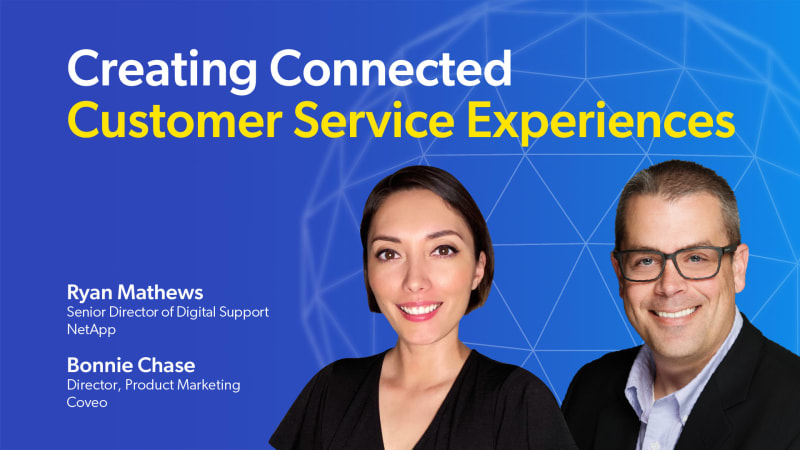
Créer des expériences de service à la clientèle connectées