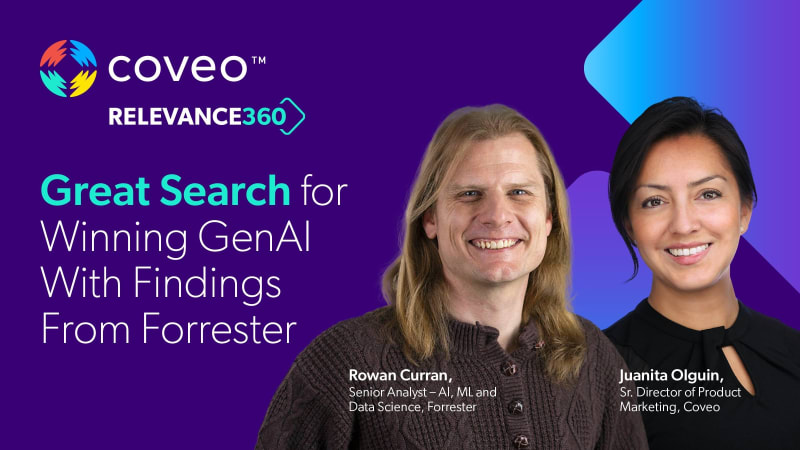
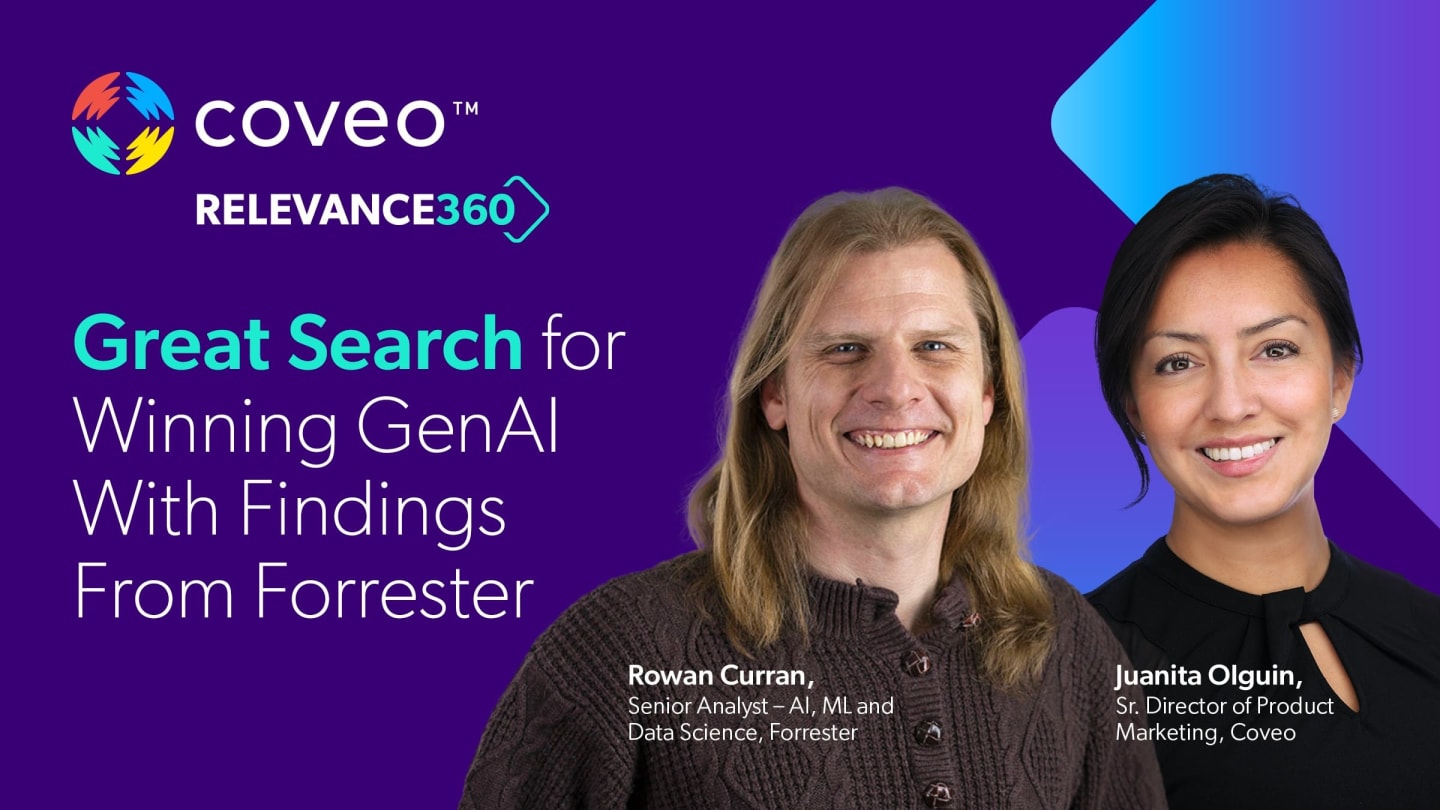
I'm Juanita Olguin, and I'm delighted to be joining you at relevance three sixty today. Joined with me today is Rowan Curran, senior analyst at Forrester. We have a lot of great content to cover today and no minute to spare. Rowan, let's jump right in. Sounds great. Thank you so much for that wonderful intro, Wannies. And I'm super excited to be here with you and with, everybody on the line today. It's a very exciting topic, and I think it's gonna be a lot of fun as we go through, and also answer some questions at the end. So, what we're gonna go through today is basically taking a look at how generative AI is impacting search and how search is impacting generative AI. And, really, you know, at the core of this, as we've all kind of seen over the past, I'd say, you know, fourteen, sixteen months or so, we really seen generative AI come almost out of nowhere for a lot of us, less out of nowhere for others of us, and really just start to take over the cultural zeitgeist. And as we're seeing it today, generative AI, has effects that really go way, way beyond business. They extend into our lives as individuals and into our, lives as customers and also to the way that we interact with businesses as employees as well as constituents with our governments. And so there's tons of different use cases that are spread across, you know, all of these different areas. But how we actually got to this moment wasn't just, you know, through the introduction of a, you know, new model, into the world. It wasn't, you know, the release of, GPT three point five series of models, that have been released by OpenAI in, the fall of twenty twenty two. You know, those models were up on their website available for nerds like us to play with, but it wasn't until this really great, you know, application experience was released in late twenty twenty two that everybody suddenly realized how powerful this stuff could be and how useful it could be in business and in our daily lives. And, what this led to once we kind of got this great application that everybody, very quickly stuck onto was this really wonderful complimentary pressure from the top down and the bottom up, in our businesses and in our enterprises, both from the executive and shareholder and board level as well as from the individual contributor, in consumer level, where everybody is was excited about the potential of generative AI to, transform our organizations. So it's really, adjust the way that we seek, find, and, retrieve information and also act upon it within all of our workflows. Now what this did overall aside from having this, you know, broader, appeal, across, you know, the enterprise was really change the conversation around AI from being a very kind of high level boardroom conversation where, you know, it was very much about data science and building these very complicated models and perhaps implementing them for end users, to really bringing it down to a much more kitchen table conversation where, you know, now the average person has some idea of how AI can actually affect them in their lives in both positive ways and ways that maybe a little bit, more nerve wracking. But, ultimately, what this means is that we have a huge amount of excitement and a huge amount of pressure to start building applications around this stuff. And the way that this has manifested over the past year is, a lot of folks in this call may be aware is that, we have tons of people just yelling out, I need chat g p t for my enterprise. In the same way that we had many of our customers yelling, I need Google search for my enterprise for the past, you know, eighteen years or so. And in the same way that, you know, it's not as easy to build, you know, a public facing, you know, a high quality search engine. It's not as easy to build a high quality enterprise, chat based knowledge retrieval system as it is to build a very compelling consumer experience like chat g p t. And, one thing that this, you know, really drove was a huge explosion in the interest and, the attention around search in twenty twenty two. And it actually led to search being the top use case that we saw within, generative AI over the past year. And when I say search, I mean, broadly, any type of knowledge retrieval and or search type of, business process that you are trying to go after and attack. Now, this is being used, you know, kind of across organizations, for use cases like, research and development. It's one of the earliest use cases for, large language models and search and knowledge retrieval, was with a, that I was, with a primary manufacturing company that was doing some materials materials design, and they wanted to use large language models to better understand the context of their previous research documents and, research, papers that they had published before. And then we also have lots of folks using search and knowledge retrieval applications, supported by generative AI in all kinds of, employee and internal facing customer support types of use cases. So, these are, things like having a more intelligent help desk support tool, like we've seen in a couple different telecom companies, both to help, the, you know, internal, enterprise end users kind of get basic help desk support, but then also to do more complicated things like help folks request environments for, like, virtualized, compute environments for, testing applications and where those folks didn't necessarily have to know all of the details about that, the technical environment they're requesting because the language model is able to reference the, the necessary information and then generate the answer for the technical folks that were actually implementing it. But overall, you know, we're seeing, these knowledge retrieval use cases be kind of a key approach here, and we'll look at a bit more around the architectures, later on in the presentation. But the most common approach that we're seeing to these knowledge retrieval use cases right now are some flavor of retrieval augmented generation, which you may have heard of, and as I said, we'll talk a bit more about later on. Now I'm also gonna talk about a few of the other very common use cases that we're seeing in the generative AI space before we move on. And I think it's really important to note these because, particularly with the first two, they build off of and also complement the knowledge retrieval and search use cases. And then for the latter, it also can build off them as well, though, in a little bit of a different direction. So, the second, you know, very common use case that we're seeing for generative AI, and this is probably the most common use case when we exclude, you know, grounding an actual company data, is using large language models for writing and knowledge support. So this is everything from marketers and salespeople using large language models to help them write emails or generate new copy to, grant writers who are using, large language models to help them, you know, write the new request for whatever type of research grant they need to get. We have a lot of government folks who are looking at these types of use cases. But then, we can also use this, in support of our knowledge or people in search use cases as well. We've started to see folks actually integrate, generative AI into their knowledge management and knowledge creation process because, these language models basically allow you to reformat, and readjust and change content to fit whatever, need you have. So for example, a lot of folks, especially, you know, large manufacturing companies are experiencing high turnover or very high, employee agent or employee retirement rates. And so they're trying to capture all of that knowledge from all of those folks, and a lot of folks aren't necessarily knowledge creators. And so they're looking at using generative AI. So we're having those folks kinda write down, you know, a simple, procedure for how to solve, you know, a particular maintenance issue and using a language model to then reformat in a way that everybody else can communicate. So and kind of building off of that, we're also seeing tons of use cases, for generative AI in content summarization and transformation. And now this one almost even more obviously fits, directly into the knowledge of Trebel and search use cases as well as being its kind of own standalone use case. So, you know, anybody who has been in the search space for the past couple years has seen large language models be used for chunking documents, summarizing documents, things of that nature. But, this has really started to, you know, hit a new fever pitch of adoption as well as a kind of broader set of applications for what types of content you are summarizing and why you are summarizing it. So probably, you know, the quintessential example, this year is using large language models for summarizing call center transcripts, which, you know, a whole host of different folks are doing at this point in time. But it's not just the value of summarizing those transcripts so you can have a good idea of, you know, what happened on the call without having to read, you know, line by line. It's that urge an additional step where we're seeing folks actually use generative AI large language models in the data pipelines to extract additional metadata. So things like topics, entities, sentiment, etcetera, from that summary so that you can then drive a better search or a better text analytics experience down the road. So all three of these categories of use cases kind of bleed into and support each other, but ultimately do kind of where the locus of generative AI use cases are today with the, very large exception of, Turing bots, for coding and testing. So I'm not gonna talk too much about this here. I just wanted to, make sure we are all aware of this significant space. So this is basically using large language models in support of software development, for the generation of code and prototypes and things like that. And also to a lesser degree, in support of, analytics and data science. But this is another very important area of generative AI that we're seeing a significant amount of adoption and deployment. But, ultimately, you know, the focus of these things is really around the search and knowledge retrieval, types of use cases and types of asks. And given that, you know, so many folks are really interested in in, search once again, and they're asking for it being to be embedded in all of their, applications, We've seen a plethora of companies just, integrate, you know, some kind of adjunct search capability into their platform or into their application, or we've seen a lot of these, what I will kindly call ankle biter companies who have kind of come out and said, okay. Well, we can do, you know, a question and answer with your PDF, so therefore, we have a search experience for you. But, when it comes down to it, what you really need for a true enterprise search experience, we're actually going to be searching across multiple different data sources and pulling back, different types of information, dealing with all kinds of different things around security access controls and things like that. You're going to need a platform that can support all of these things. And a lot of the newer entrants, into the search market can't necessarily do that, because while you can skip a lot of the steps, to get to a good search experience, by using large language models in a simple simple kind of vector retrieval today. There's lots of things that, you can't just kind of gild with the snap of a finger like these, security access control to various data sources, like having the proper, methods of filtering and, pulling from various application and, data source connectors, being able to do reranking of the results in a way that makes sense, or even doing chunking of the documents. You know, this is an area that a lot of folks don't recognize as an important part of actually building generative AI applications is taking a five hundred page document and knowing, what pages to break that up into in order to be able to reference it in a vector database. Wow. So much great information, Rowan. We're gonna have to cut it short for now, but don't worry. We'll continue this conversation. And for those of you joining us, you'll have access to our full exploration of all things AI and generative experiences. For now, Sheila, back to you.