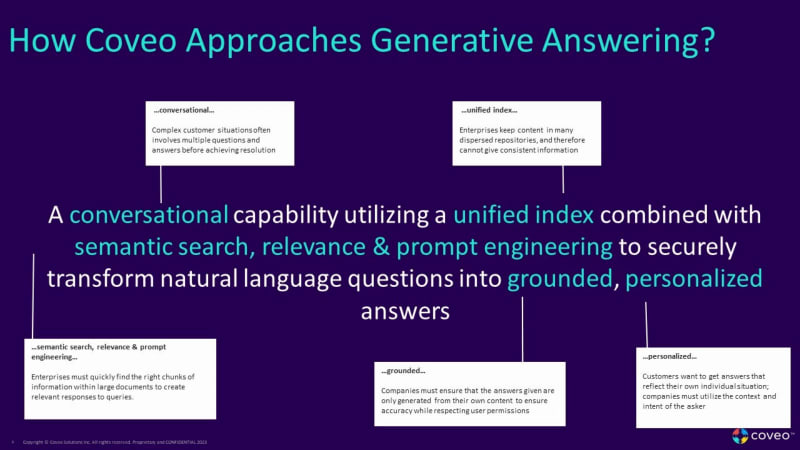
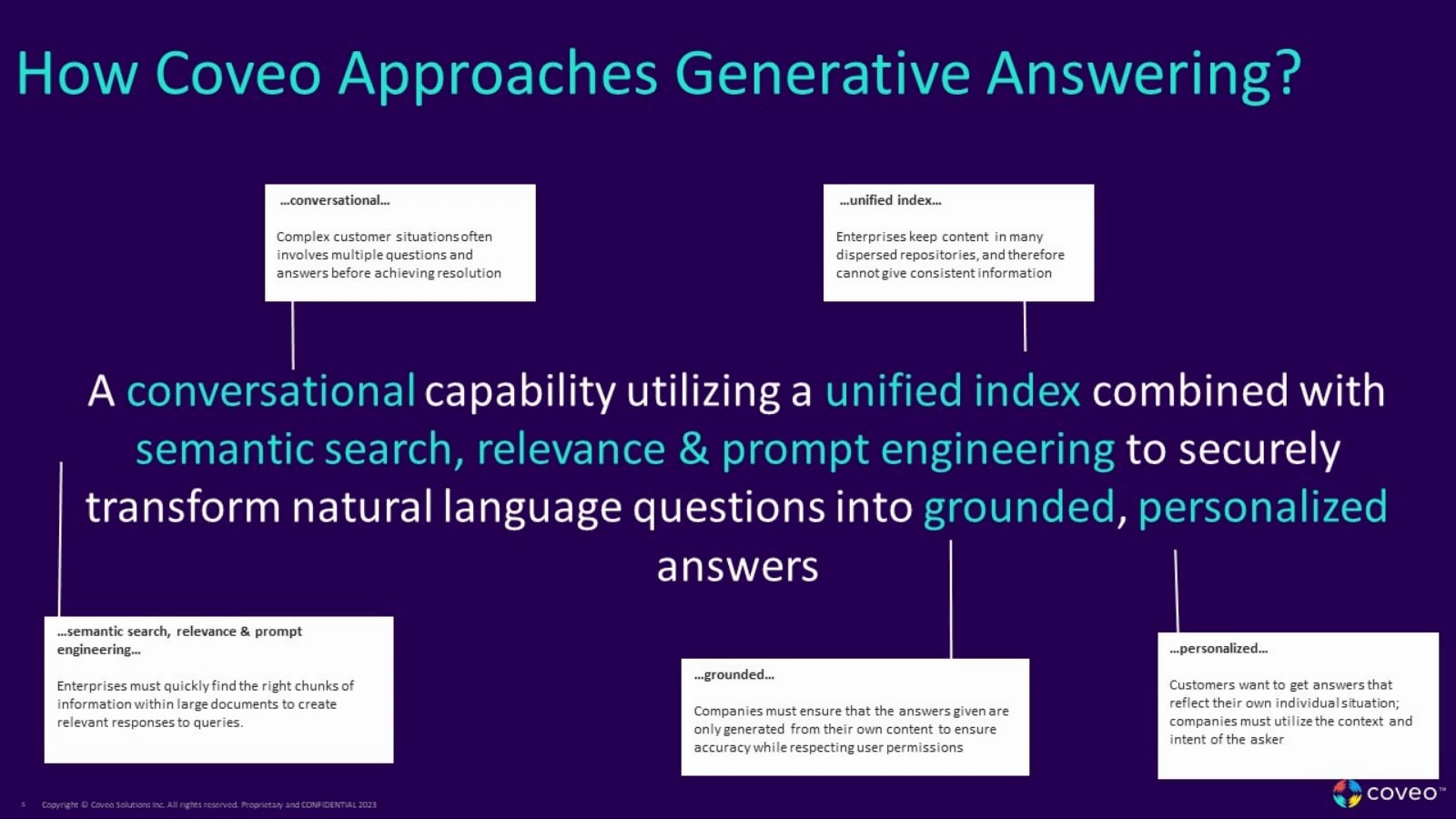
Hello, everyone, and welcome to today's CRM Magazine web event brought to you by Verit and Coveo. I'm Bob Fiernkes, and I'm the publisher of CRM Magazine, and I'll be the moderator for today's broadcast. Our presentation today is titled contact center transformation with AI and automation. But before we start, I just wanna explain how you can participate in this live broadcast. We will have a question and, answer session at the end of the event. So, please, if you have any questions, just type them into the question box when they pop into your mind, and we'll circle back to them at the end of the event. Don't worry. If we can't follow-up somehow during the show, we'll just, email you, within a couple days. Plus, if you'd like a copy of the presentation, you could download a PDF from the handouts tab on the console once the event is archived. And just for participating in today's event, you could win a one hundred dollar Amazon gift card. So now to introduce our speakers for today, we've got David Singer, global vice president, go to market strategy at Verint. Welcome, David. And Devin Poole, senior product marketing manager at Coveo. Welcome, Devin. So now I'm gonna pass things over again to David Singer from Verint. Welcome to the broadcast, Dave. Hey. Thanks, Bob. Really happy to be here. Thanks for having me, having me on the show today. So, hello, everyone out there. I'm really excited to talk to you about, CX automation as a way to, you know, transform your contact center with with AI powered automation. And so I'm gonna take a few minutes to go through, you know, the, you know, how we got to where we are today, you know, from one perspective in the call center space, a new approach going forward for how you can you can bring the power of AI and automation to drive business outcomes now without massive, disruptive projects and some of the basic requirements for a platform to do that. So without further ado, let's let's jump in. So when we talk about increasing CX automation in the contact center, what we're really talking about is AI powered automation to improve CX while creating capacity and lowering costs. It's, you know, it's the the dream, forever. I've been, you know, in this space for about thirty years. And there's always been that seesaw diagram, right, of, you know, you know, costs versus experience. And finally, we've put, you know, put all of that on, like, on the same on the same track. We could drive capacity up, cost down, and CX up all at the same time. And what makes that possible is really the the the pivot from the the past to what is today and the future. So if you think about contact centers of the past, they were really, you know, telephony centric organizations. Right? Everything was built around, built around an ACD, and then, you know, companies or brands would would hang different technology and applications off that to to augment capability. But what that really meant was, in order to, you know, create more capacity to drive better CX, you had to hire more people. That was the primary lever to pull. It was really hard to deliver on the especially with, today's ever increasing, ever higher expectations from customers. Even if even with unlimited budgets or with the people to hire. So the the old model of, you know, route calls and and and hope for the best just just doesn't work. So in order to increase CX automation excuse me. What we look at now is contact centers, you know, built on data and AI centric platforms. So data and AI is the center versus versus telephony being in the center. That allows you to have, AI powered bots, and we'll talk about what do we mean by bots. It's not you know, people often think bots. Oh, chat bots. Got one of those. We use it in a in a much broader context. I'll talk a little bit more about that as as we go further. And that's what allows you to elevate, CX to the same resource is the the instead of hiring, you know, ten new people, you put ten bots supporting every employee. And you're gonna you're gonna drive, you know, you know, increase that capacity, improve your CX, and it keeps the costs much lower than than augmenting with people. So that's that's really what we're talking about, in terms of the the we're trying to accomplish with with CX automation. And the the whole focus of this is you don't wanna wait till, you know, till next next year, next month, or even tomorrow before you start getting these benefits. You you wanna drive this now. So we we look at the, you know, the middle of the slide. And, historically, you know, to get the power of of AI and this kind of automation, largely, you know, brands were were looking at traditional CCaaS type solutions. Right? You wanna move to the cloud, so you go to CCaaS, which means you rip and replace all your telephony and workforce engagement infrastructure, all that stuff, move it to the cloud transform, and then, you know, some months or or or sometimes years down the road, you know, you're finally back to where you started except in the cloud, and you can start taking advantage of all this all this new capability. Now that that's a valid approach for for some brands. There are cases where there's burning platforms and and and pending events and driving requirements to do that, but not for everybody. So at Avera, what we think about is how do we deliver AI business outcomes now. Right? We want to enable brands to innovate at their own pace, achieve measurable ROI every step they're moving. So if you've got, you know, a great, you know, ACD on prem, you spent ten years optimizing your network for voice delivery, great. Keep it. We can add, you know, AI powered automation from the cloud seamlessly connected to your your on prem kit in a in a hybrid mode so you can start taking advantage of all of this AI capability from the cloud, you know, right now without waiting for other projects to take place. So how do we do this? Well, it requires a platform that that has three core components. Right? It's or three core characteristics rather. It's gotta be open. It's gotta be AI powered. And and we we talk about AI powered bots as a way of of of, operationalizing the benefit of AI. Again, as I keep promising, we'll talk about that in a few minutes. And it's got to enable data driven operations. There's tremendous amounts of data available in, in contact centers. And historically, it's been trapped at different silos by by department, by channel, by modality. So you wanna make sure you have data at the center as well to to help drive all these benefits. So let's take a minute and dive into each of these characteristics for what does it mean to be open, what does it mean to be, what does what does it mean to be a data driven operation, and what does it mean to have AI powered bonds? So let's start with open. So an open platform is is one that can seamlessly fit into your existing ecosystem. It provides, you know, flexibility, modularity, and and and future proof characteristics. So what we mean by that is well, I think of it this way. For any any brand, for any contact center, all the capabilities you need are gonna fall into one of three categories. On the on the one hand, there's gonna be capability you need that, you know, you know, that you just don't have. Then in the middle, there's gonna be capability that you need that you have, but it's not really working that well. It's not really driving the benefits and the outcomes you expected. And then the third bucket, all the way on the other end, there's there's capability you need, that you have, that's working brilliantly. You love it with all your heart, but you never wanna let it go. So, you know, flexible and modular means that you can plug in the stuff in bucket one, the stuff you need that you don't have seamlessly into your ecosystem. And once you've filled up that bucket, well, now you can start thinking about the stuff that you have that's not working that well and and replace that at your own pace. And the stuff that you have that you love that's working great, never change it. Right? So an open platform doesn't try to doesn't demand that it be all things. It fits to your ecosystem, and it provides the outcomes and capabilities you need when and where you need it. So, you know, we we've got a, you know, the the obligatory architecture here on the slide, and I wanna focus on these four bubbles on the outside, because I think it's it's it's really important. So, you know, free data exchange, you know, we talk about data powered, operations. In the next slide, we'll talk a little bit about more about what that means. But we wanna have free open data exchange in two directions with with any part of your data ecosystem. Data warehouse, data lake, CDPs, etcetera, etcetera, etcetera, etcetera, etcetera. So data should flow in and out seamlessly, with pre built adapters that, you know, depending on on what you need. And top right. Right? You you need your choice of CRM. There's gonna be every every company I talk to has one or many CRMs already in place. And you want again, you wanna have seamless integrations there, some data integrations, some UX integration. But, again, it all has to work together as as one value driver for your organization. Bottom right, you know, brand's choice of ACD or CCaaS. And that's that piece of openness I I I focused on a couple slides ago. You shouldn't have to make the mandatory first decision to get to to cloud based AI be rip out your your ACD and move to someone else's CCaaS. If you're happy with your your channels and your your telephony today, keep it. So the platform has to be able to integrate with whatever communication channel, including ACDs or CCaaS that's working in your environment. Again, that's that's key to to getting things now without disrupting the the, you know, the Coveo plumbing. And then on the on the bottom left, your brands can bring their own large language models. So I'll talk about AI more in a moment, but it's really important to understand that, you know, more and more we see, especially, you know, in in, industries like like health care, brands are investing a lot in LLMs that will understand their specific language, their their, policies, their offers, their treatment plans, their drugs, their, you know, what have you. So you wanna have an an open AI approach that says, you you know, brands can use the LLMs that you've invested in that are that are, proprietary and unique IP to them, but not have to build all the operationalization around it. We'll talk about what that looks like in a moment as well. And the, you know, the the other dimension is, you know, we look in the the middle circle there of all those capabilities around the core of data and AI. And there there's a a tremendous amount there on the platform. But, again, part of open means buy what you want from the platform, buy what you want from some other platform, and, you know, use what's working well for you for your environment. So, again, I I would I would you know, I'm a I'm a vendor. I would dearly love to sell you everything from my platform, but I recognize that, you know, my friends at Coveo have some fantastic stuff. If you buy, you know, everything they have, then that should seamlessly interoperate with what we have and plug into your ecosystem, and it should be grand. And that's what that's what it means to be open, and that's how you can start to drive benefit, you know, from AI and automation now versus waiting for large scale transformation projects. So when we talk about data at the core, it it's a couple of things. One thing is not to call it really clearly here is is the data at the core should really, you know, centralize and unify the behavioral data from across your operation. Right? That you're gonna have interactions stored from, multiple communication channels. There's gonna be experiences from different feedback and survey channels. Mean, workforce data from different platforms. And and, you know, historically, that's been, you know, trapped in silos across the the organization, across parts of the contact center. So step one is, you know, again, you want a a data hub architect at the core of the platform, which we we've done with the the Verint open platform that allows all of this data to be normalized in one place. So whether, you know, we we control it, record it, capture it, or we ingest it from other sources, bring it together, it gives you one simple source of data, one one view of the truth, one view of insight across everything happening in in your contact center. And then we'll talk a little bit more about broader parts of the organization. And that's gonna power broadly two things, you know, your human workforce and your your bot workforce. So on the human workforce side, it's gonna power operational analytics, CX insights, real time insights. So really understand what's happening across the organization. You know? Hey. We've we've got a a call volume spike and it's driving service levels down, and we're just having, you know, negative experience on this skill channel or a skill group. All of that comes in one place. It becomes really simple to see in real time What's happening in the operation to allow you to make data driven decisions to to improve and and resolve things very, very quickly? Understand what is the customer experience, what are the drivers. Make decisions both in real time to to address problem now and systemically to fix it going forward. And then on the other side, you need you need a rich source of data to to power your AI initiatives. Right? Every and, you know, we I've see companies, I see brands doing AI experiments and AI, labs all the time. And it's really easy to get licenses for, you know, OpenAI or Bard or Prophet or, you know, Bedrock or or all the new stuff coming out. But if you take those models and you don't train them on data that is is on behavioral data that is ever fresh and specific to you, then the kind of answers you get, the kind of responses you get won't be, you know, won't be, won't be as accurate. Which leads us into, you know, what do we what do we mean by bots? Right? So bots, you know, I said it's more than a chatbot. Although the you know, chatbots are are are an example. But bots are how we talk about AI that is trained on data, encapsulated in workflows, and driving value. Right? So we'll have a a next slide I'll show you a number of examples of bots that we have. But the idea is a bot does one thing, does it really well, automates a task, drives measurable outcome, and they work together in teams. So so the way we do this is we have the, the Verint da Vinci AI, you know, bot factory at the core of the platform. And what that is is a, you know, a robust, you know, AI and ML ops, environment that that we've built over the last, four or five years that makes it very easy for us to take in any, any AI model, encapsulate it in this Verint da Vinci framework, and then, then then use it. I'll I'll talk about how we use it going forward. What it means is as the models change, as price performance points change, as customers bring their own LLMs, it's easy to, you know, inject them into the factory. They'll it becomes a new brain for the bot, but it doesn't disrupt the operation. It just makes it more efficient. So that's step one is is we build the bots in the factory. Step two is they they train in the excuse me. They train in the gym. Right? That's what we call our data hub because we we want the bots to become more and more smart, more and more relevant to what you are doing. So the the gym's a secure place. Right? The the data never leaves your environment. The models trained on your data never leave your environment. So the these bots are ever ever trained, ever fresh on your data in a secure and safe way. And then finally, and this is this is, you know, a key part, is they're injected into workflows where people are already working. So you don't have to go and pick up your AI app. If you're doing, you know, working WFM, then the AI is embedded in the models. You don't have to change anything. Working on quality management. You know, the bots are embedded into the evaluation workflows to automate the tasks going on. And that's how we can deliver the power of this AI to drive outcomes immediately with minimal, you know, minimal human disruption. Right? So we really think about this this three three factor approach to to building and delivering bots to drive outcomes. And, you know, there's there's a, you know, going on fifty now on on the platform. We got, literally, twelve or fifteen here as examples, of of the kind of things we can deliver. So look, you know, the containment bot is something contained within our IV and IVR. You You know, the data trains it on what are the right, conversation flows to automate and how do we deliver. You know, the the wrap up bot does, you know, post call summarization and and and post wrap up notes into your CRM of choice. You know, performance and sentiment coaching bots provide real time guidance to the agents in the moment to help them handle calls. And then outside of the agent population, there's bots to help the other parts of the enterprise. So workload forecasting helps your WFM team. Intent discovery helps your IVA design team. Knowledge creation helps, you know, spider existing, you know, SharePoint sources and uses Gen AI to to generate knowledge to be available for for for knowledge source. And the the point of these is all of these can be delivered against your your on prem deployments. There's no massive, transformation project needed to take advantage. And they work as they work well together. So each bot has, you know, discrete measurable ROI and and beneficial outcomes, and they all work together. So as you add more and more bots, the benefits just stack on top of each other. And these really power, you know, capabilities that are, you know, you know, delivered from the platform. So if we think about all the things needed for, for a contact center, if you look on the right, it's really about that that, you know, the interactions and and the bots. Right? So we we have automated interactions and routing across telephony, digital, social, etcetera. Your your your IVA, both in voice and digital, increased containment rates. The bots, we talked about a lot, right, allow for for differentiated outcomes depending on your role. And then these sit behind all the traditional, you know, workforce kind of applications. So voice to customer analytics, you know, speech, text, survey feedback, struggle detection, all that stuff. You know, automated quality and compliance, you know, AI powered forecasting, scheduling, and workforce management. Vast, you know, analytics and and AI powered insights to to allow you to have conversation through data, ask the questions, get the results you need. You know, again, you know, more capabilities behind every one of these things. But the idea is it's a platform that has every capability you need for the contact center, but it's open, modular, flexible, and future proofed. So you can just, add in the capabilities you need, the bots you need to drive the outcome that's most important to you without disruptive, complex, time consuming rip and place, exercises. So, you know, the the other piece of data that I alluded to briefly before is that, you know, the the data is, data is more than just, you know, a contact center thing. Right? There's data from, you know, the office of the, CX officers, from your web and mobile properties, in the back office, in branch retail or or or franchise locations. And all of that data is is important to power contact center decisioning. Right? If I know we're about to miss a whole bunch of SLAs in claims processing and insurance company, Well, I know if we're doing that, then if we're about to miss those delays, I can forecast for higher call volumes of certain type in the contact center and prevent that decreasing CX when they're trying to call in. Right? So all of these, you know, all of this data comes together. It can help the the contact center operate better and make better, business driven decisions. So when we talk about that behavioral data hub, it spans more than just the contact center. So, you know, I just got my my one minute warning just on time. So I'm gonna I'm gonna wrap up with with this slide. But at at Verint, when we think about our our entire goal is to improve CX automation, to create business outcomes for our customers now with minimal disruption and minimal delay. So it's a leading contact center platform and a CX automation category leader. As a company, we're we're committed to success, and that's both for our customers and for our people. Right? For our customers, we have domain expertise. We have services and policies and practices around customer adoption, success, management. And internally, you know, we've won great place to work awards in in every locale we've applied. A highly engaged workforce, everybody committed to to discuss our customers, and driving success of of our CX automation platform to drive more benefits to the brands we are we are privileged to serve. So with that, I think I'm pretty close to my mark. And, Bob, I'll I'll I'll pass it back to you. Hey. Great. Thanks so much. I mean, that was a a fantastic presentation. And I really love the imagery of the bots because that's something I can understand. The bot factory, the bot gym. You know, it just it it it really kinda cleared things up for me. So that's fantastic. And I also love your approach of no rip and replace because that's that only affects, you know, a very small percentage of of the business world, and everybody else has got to kind of, you know, take a more incremental approach. But this that was fantastic. So thank you so much for that. Now I am going to, pass things over to, Devin Poole, senior, product marketing manager at Coveo. Welcome to the broadcast, Devin. Yeah. Hey. Thanks for having me and Bob. Dave also really enjoyed, that that talk as well. Learned a fair bit myself. And it's so interesting, you know, as we're we're both in different companies, approaching the the problems that service leaders face in different ways. You know, what we're gonna be be talking about here from, the Coveo perspective, and we're talking about transformation in the contact center. Well, there is no new technology that's gonna be more transformational than generative AI. Right? And what we've been seeing is that many enterprises are kind of hot on the case to start to identify and really implement Gena within their service function. And for most of the companies that we're talking to, that function isn't just the contact center. Now I've been looking at this space for, over fifteen years as a researcher and analyst and then on the, tech solution provider side. You know? And what we've seen is that service and support has taken on that broader role. It's not just answering calls, then we, you know, added emails, we added chats, we added messaging, and now we have responsibility for things like self-service and digital channels as well. And so that's where folks are starting to look, and that's become really the top priority for most customer service leaders today. How can I get higher resolution rates in my self-service channels? And for most organizations, they're looking at GenAI as a new foundational tool to get them there. So what we're gonna look at across the next, twenty or so minutes are a few realities of service today and and where your peers see GenAI fitting in. We're gonna look at how you can get over the hurdles for security, accuracy, and consistency regarding Gen AI. And then we'll look at examples of companies that already have this in production. At Coveo, we've got about a a dozen or so organizations that are already live. So we'll show you a few of those to to get a sense of not just, where they're using it, but how well it's been working for them. So let's start here just by taking a look at some of the the realities of service and, ultimately how your peers are starting to see GenAI fitting in. So going left to right on this page, starting with a stat from a BCG study, near ubiquitous agreement here from service leaders that they they expect, their customers be served by an AI bot at some point in the journey by the end of this year. Right? And I'll emphasize there at some point in the journey. Bots are not here to replace everything. They're not taking us Coveo, at least not yet in the near term future. But you know, for now, it's going to become a tool in our toolbox, and that's the way that we wanna start to think about it. How and where can we add this capability into our existing service resolution journeys, and how can it play a a significant part of capturing those right issues? Well, if you look to the, next two boxes here, what you see is that eighty two percent of the companies in the middle, and eighty six percent on the right hand side expect to offer generative AI in either their customer facing self-service or, their knowledge bases by the end of this year as well. Right? And what this is telling us is that service leaders are making the investment. And, I'd love to hear from folks who are looking in the comments, the questions, you know, where is your organization? What's holding you up today? Feel free to throw those types of things in there because let's talk about it. Your peers are clearly making the investment, and what they see from it is largely again self service, customer facing. How can we start to deliver that? Well, there are three key roles that that leaders play. This comes from some research that we did with the folks at, CCW Digital earlier this year. And, you know, we asked what what do you want GenAI to do for your self-service function specifically? And it's about those three things you see along the bottom, relevance, speed, and insight. Eighty nine percent of folks say that, you have to make self-service more relevant to the customer's situation. Right? And that situation is not just the question they've asked, but who they are, what they've done with you recently, what products they hold with your company, all of those contextual items that need to flow into any answer that that's given. In the middle, right, we just need to get answers faster. The the way that I I tend to look at generative answering is if you have long documentation or a customer has a more complex multipart question, it's not a straightforward answer, and the answer exists online. It's there, but it would take the customer fifteen minutes or three documents that they have to read through in order to obtain that answer themselves, and then you hope that they understand it and have put all the right pieces together. Well, GenAI can do that in seconds. And then on the right hand side, what we needed to capture and analyze data to better understand customer intent. It needs to be insightful so that it can continue to inform the the rest of the service function. Time and time again, when I would talk to service leaders in prior roles, they'd say, you know, what what's the the biggest thing that you struggle with in self-service? It's all we don't know what in the world customers wanna do. We don't know what they're trying to do there. And and what we found at Coveo, you know, from our roots is that if you put a search box in front of customer, well, they'll tell you exactly what they're trying to do. Right? One of our clients, a large national telco who you've all heard of, you know, gave us the quote that customers don't lie to the search box. You put it in front of them, they're gonna tell you exactly what they need. And, of course, you can capture all of that and start to identify what people are after. Now, of course, if it were as simple as, yeah, go get GenAI, I'd be done already here in seven minutes, but it's not that quick. It's not that easy. In fact, it's not even that straightforward with what it comes to when when we're talking about generative answering or Gen AI here. Right there are four categories along the top, that that Gen AI tends to fall into. Right? There's content creation. That can be image or video. That can be text or speech, coding, audio. There's content discovery delivered through search analysis, knowledge management. There's conversational AI, which fits in with this world of Gen AI simulations as well with synthetic data and digital twins. And so that there's lots of things that you can look at. There's lots of things you can do, but, you know, I'd encourage everyone on the the line here to remember this at the bottom. Right? At the end of the day, our job is to give customers answers, and they want those answers in as fast and easy of a manner as possible. Right? And so that is where it starts to to look, and that is how, you know, we've started to view the world here at Coveo. How can you get a customer an answer as quickly as possible? Well, turns out, you know, there there's a number of core components to doing this here. So this is, you know, our definition and our look at the the world and how we look at what we call generative answering. Right? What can you do to leverage the power of the, you know, human communication that comes from a large language model, and put it into a format that customers can use. Now I'm not gonna read out the the definition here. I suspect I you can see we're calling out a a couple of core things. So starting along the top and moving left to right. I wanna make sure that, generative answering is conversational. Right? We we wanna, focus on those more complex situations. They may involve multiple questions. Right. And that can be delivered through some sort of bot interface. It can be delivered through a web interface as well. It can be delivered if you're a technology company in a SaaS product. Right. That that conversational capability is key. How do I ultimately, you know, converse with the content library, with the data, with the documentation that your organization has? And how can we make sure that we're keeping the contextualized thread of that conversation throughout, you know, any user session? Well, that that starts ultimately by, you know, applying a unified index. What we see and and most of you on the line will probably be familiar with this pain. You've got lots of great content, and it lives in fifteen different places. Right? And so we've gotta start to unify those and build that single source of truth for our customers. And then we have to combine that with the powers that you see starting along the bottom left hand corner here. Right? Semantic search, relevance, and prompt engineering. Right? So it's not just about having good content. It's not just about having a conversational interface. If you can't find the right things, if you can't find the right documents, the right chunks of those documents, and you can't apply relevance models to them in order to say, well, what's better? Is it this document or, you know, the the transcript of this YouTube video that we have for this customer to draw from? If you don't understand contextually what this customer's been going through, well, then you're you're gonna struggle to do that. And then, of course, prompt engineering, if you've heard of the this new science. Right? It's how do we get customers to ask better questions? That's the the layman's approach to it, but this is a new interface for customers. The bottom middle here, we've gotta make sure that we're we're taking anything that comes out of a a large language model, and ground that within your company's own, domain specific answers and fact based. Right? The the secret of how chat GPT and many of the these large language models that are public and open facing is that they were never designed to be factual, and that's not a knock on them. Those the the they produce wonderful, you know, creative human like things, but they're never designed to be factual. So what you have to do is ground any answers, that you have in your own company's content. Right? And make sure that everything is coming right out of your own fact base, and you have control over that. And then at the end of the day, it's gotta be personalized. Right? I've said contextual a few times, personalized, contextualized, run together, right, that they are first cousins. And so you wanna get things that understand, that, understand what the customer has been going through and the intent of the asker. So how do you start to do that? Right? What what's the framework, for making that a reality in today's, customer service environment. Well, bit of a busy slide here, and so I I apologize for the eye chart, for everyone. But, you know, where it starts, ultimately is along the bottom of the page. Right? Securely connecting all of the places where your content lives. Right, it could be content on your website. It could be content in some knowledge base or some repository. It could be marketing videos you have out on YouTube that can help customers solve those problems. Right at Coveo, as, you know, Dave sort of talked about earlier. Right, connection and sitting and playing nice in the existing tech stack is paramount to success these days. Right? So you've gotta seamlessly integrate, your content sources into, this, and then connect them securely. Right? And that secure connection means looking at things like document permissions. Right? Imagine you're a, a financial services company. Well, not everyone has access to the same documents or the same level of documents. And so you have to have, permissions that follow, you know, whoever is asking and and follow the documents. So that way, you understand, well, you know, Bob doesn't have access to this, but Dave does. And if Bob and Dave, ask the same question, we're we're gonna be able to give Dave, the the document that he's got access to. Right? Within that connectivity also comes with, you know, document chunking. So taking larger documents and breaking them down into smaller bits, and then generating vectors, out of that. Right? The the numerical representation, of something. So that way, what we're able to sorry. Not that that's not very what I mean by vectors is, of course, the the relationships between certain things, right, and so that all then flows into, this unified hybrid index. So that's where the the vector graph structure comes in. And number two, the ability to understand the relationship between those different components, and then start to practice it in the middle. This is the the core component here, relevance augmented retrieval. Right? So it's not just about finding the right thing. Right? It's finding the right thing based on who's asking, based on the relationship between key things, based on the permissions that the user has, all of that happening instantaneously, and then finding the those core components before shipping them out to an LLM. Right? That's what when, you know, we are are able to protect your company's content, make sure that you're not shipping anything else, than a set of numbers for an LLM to fill in the next bit of that sequence. Right. And so from there, right, we're ultimately using these, larger, language models as the world's best English professor. Take all of this and make it better. May synthesize it into a condensed relevant answer for what this customer ultimately needs. And then number four, it's about having that unified experience. Right. So again, back to something Dave mentioned, where you plug this into your existing resolution journeys. It can be plugged into your website. It can be plugged into your customer portal. Right? So your website behind a firewall, even more personalization happens there. It can be plugged directly into a, you know, get help button within a SaaS product if you're, you know, a tech company and your customers are working within your product, their mobile apps, case submission workflows, of course, your CCaaS or your CRM platform for your agents. Wherever your, frontline is working, they can have the the power of this. Right? That unified what we call the the text is a bit small there, but what we like to call the intent box. Right? Tell us the intent, and we will bring the right information from your organization to bear in order to help you to solve that problem. Of course, every single thing that you do creates a learning opportunity for the organization. And that's over on the the right hand side. Right? This idea of closed loop learning. Every search, every click, every answer, everything the customer does, how they interact, with your company's information creates, you know, a learning. Did this thing work? Did it not? Did the customer like this? Did they not? Did they open a case after seeing an answer on a case workflow, or did they not? Right? And all of that allows the machine learning models to run and continuously get better without you having to mess around with it very much. Alright. And so that that's what's fantastic. You can also pull things out into your data lakes, your CDPs, all of that as well. So the ability to to generate data, the ability to learn from each and every customer interaction becomes, you know, the the great way that we've been able to start to, to to start to, generate a lot of these answers. So, you know, with that, let's take a look at a couple companies that have, you know, been a little bit, out ahead of the curve when it comes to utilizing, you know, these, utilizing the the generative functionality and capability, that that's out in the market today. We'll start by taking a a look at a company called Xero. Xero is a, tech solutions provider that is, that makes accounting software. Right? So they're dealing with, in a highly complex customer issues, that they're dealing with a very intelligent customer base. Right? CPAs and the like. So folks that that are using, you know, the so folks that are handling complex issues. And what they found was that, six weeks after launch that they launched about January this year, they were able to increase their self-service resolution by twenty percent. Now you can put that in dollar terms with your own company's cost to handle an assistive contact, whether that be a chat, a phone call, an email, or a case. Right, and they attribute that to a couple of things. One, they were able to give faster answers. Customers didn't have to spend as much time searching for things. And you can actually see that in the, purple diamond on the bottom center here. Forty percent reduction in time for resolution as well. They were getting customers the things they needed. Because they were utilizing, relevance augmented generation, they were able to provide secure and accurate information. They said, yep. The the answers that are coming are, you know, as accurate as anything that that our agents would have provided. And at the bottom, because they're using citations, they're able to show it's not just here's an answer. It's here's an answer, and here's where this answer came from if you need to do some further research on it. That boosted customer confidence. Right? They found customers weren't saying, I don't trust this. Like, pick up the phone or submit a case or chat you just to check and make sure that, you know, the the thing I saw was right. Customers were confident because they knew where it came from. Similarly, again, another technology company f five, you know, that they found a eleven percent boost in their self-service success rate, because they were able to integrate this at various touch points throughout their customer journey, to provide secure and trusted answering for their their customers. Right? So you can see in the the bullet points along the bottom here. And now again, relevant and accurate results. They were ground like everything, grounded, in, their own company's fact based, and that delivered the the right results. They put it in a user interface that allowed customers to have a familiar experience. They they were able to easily integrate this into what they're doing with a low code implementation. So, you know, with that, let me wrap here. The last one is, of course, Coveo. We are our own first customer with everything that we do. We've also seen a high improvement in self-service success, you know, by utilizing that. So I'd encourage anyone who wants to hop on the Coveo doc site, you can go and play around, with the generative answering, tool that we have there as well. So with that, Bob, I'll throw it back to you. I think we've got a number of questions that have come into, the the queue here. So looking forward to answering those, and thank you all for taking the time. Hey, Devin. That was a fantastic, presentation. I'm I'm glad you guys had a few more minutes, just because I think it it kinda really helps, flush out some of these more, you know, difficult concepts or it just helps, put it that way. So that that was really fantastic, and we do have some great questions. You know, I'm I'm gonna jump back to David just just because we haven't heard a minute a few minutes, but feel free to jump in, Devin. And the first one is from, I'm gonna I'm gonna ask the first one from, Dan, which is kind of a fundamental question. I've heard this asked different ways. And his question is, some of our employees have had negative experience with bots, either personally or professionally. How can we rebrand bots to help users, being more open to using them, within our program. And I'm just gonna preface, Dan's question with, an observation that I had, David, when you started your, your presentation and and you jumped right in and embraced bots. And I think everybody's got like a, sort of a negative connotation of the old dumb bots. So how would you answer, Dan's question? One is, you know, just the the connotation of bots. And the second is is, hey. When these things, you know, become more intelligent, will they take our jobs? Sure. So let's address that in the in, I guess, two parts. The the, I'll I'll do the, you know, the Skynet version of are they gonna come for our jobs first and then come back to, you know, how how do we make sure we we break the the old perception of of of dumb chatbots. But, you know, we're very, specific, you know, when when we talk about bots bots in in the broader sense than the really of any, AI powered automation, not just the chatbot side, to position as augmenting human performance, not replacing human employees. Right? So, you know, bots will will never be better than your best employees. Right? They they they're never gonna do all things for all people. So position them internally that these are here to support and augment. Like, they these are here to take away the parts of the job that you hate and let you focus on the bits that matter, like, you know, talking to customers, you know, helping them solve problems, you know, you know, expressing empathy, all those things that humans do do really well. So when we position them to to employees as these are here to help you, not replace you, these are here to make your job better, the first few you know, and the first time they see that working out, it changes it changes the perception. I'll give one example. We have, you know, bots that do automated, quality monitor. So they'll they'll automatically score, the the agents. And there was a fear when we first deployed them that, you know, people are gonna, you know, add I don't want robots invalidating performance. I want I want humans monitoring me. Turned out, if you're a very, very short period of time, the agents, preferred it because it was objective. It was unbiased. It would they never got into well, you know, Bob loves Devon and he hates Dave, so he's always gonna rate Devon well and Dave badly. Right? It it they don't, like, go away. It got away from, you know, the one percent sampling where, well, you sure that's the one call on Wednesday when my kid had been up online. I didn't sleep. So, yeah, that I can ignore your coaching because that never happens. It took all that away. It made made all of the coaching fact based and objective. So the the the agents start to really, really appreciate it. On the on the other side where we are talking about chatbots, really, we they just need to you know, once they start to transform into into things that solve customers' problems where they are the way they want them, the adoption goes up. Right? So it it's when when, you know, the chatbot's well, we can answer, you know, six of your ten questions. Then when you wanna do something with that answer, it it fails out, then you gotta call in a waiting queue for for ninety seven minutes anyway. That's a terrible experience. You know, as, you know, the the the bots are able to answer more and more questions in a more and more, you know, conversational way using as as as Devon talked about, using using generative knowledge, using generative answers. They they can they can answer across more and more of the knowledge base on needing, you know, distinct conversation flows built for everything. Well, then the, you know, the impression goes up because now they can answer what you want. When when the, you know, when the the bots are, you know, plugged into back end systems, they can then take care of your request after the answer. You know, they they're they'd be the perception of these goes up. So if you, you know, or, say, you're in a hotel and you're chatting, you know, with the, the the chatbot, say, hey. Yeah. What time is checkup tomorrow? Oh, you know, mister Singer, the checkout's at eleven AM. Could I, you know, extend my checkout to one o'clock? Checks availability. Yep. No problem at all. I've made that change for you. Have a nice day. That's a great experience. Right? I I need some information, wanna make a change, and it's all covered in one place. So as we start to roll these kind of capabilities out, as they actually solve for the problem they promised to do when they bots were chatbots were first launched. The the perception naturally changes. So I'll I'll pause there. Devin, do you wanna add anything? Yeah. I I I think we're in agreement, you know, when it comes to we've got to embrace them, and they're not here to replace. They're here to help. Right. And I suspect most of the people have had negative experiences because bots were pretty bad in the old days. Right? They they were rules based and limited in scope, and that meant, man, they're not gonna be able to provide what humans ultimately seek. Right? So for the people worried about, oh, this is gonna replace our job, no. It's gonna make your job way more interesting. It's going to allow you to handle the those harder customer service questions if you're an agent. And, ultimately, what I've always called that the professionalization of service. Right. And so when it comes to getting your folks to embrace it, it is start small, give them small wins, and reward them, even with just praise for utilizing the technology that's available to them. Right. It it seems like bots, you know, have a chance to, you know, just give people a great reality check. Hey. Am I on track or not? And, and by the way, David, by the end of your presentation, I I thought bots were really cute, and I I kinda Coveo them. So my perception changed right away. So that was great. Hey, Devin. I'm gonna ask, this question, and I kinda have a little follow-up question that I was thinking about myself. But this question is, will generative AI replace the need for, organizations to have search solutions? How's that gonna work? No. You know, they they won't. And, you know, the reason is because, the the foundation of good generative solutions is built in the the core principles of search. Right? Which is finding and retrieving the most relevant information based on the inputs that you have. Right? So the the, best generative solutions are going to be built on top of platforms that already thrive at search, that have, you know, mature models for things like ranking results that have, the those vector databases that allow you to see the relationships between things that that have, you know, dynamic navigation elements to them. So it's a great question and something, you know, you've seen a lot of, analysts initially start to say in the market, oh, yeah. You won't ever need search anymore, but Google's doing as well as that they ever have. Right? And you can see that their, core interface is not necessarily changing. They're adding it on top of it. And so you're gonna see that start to happen. It's not going away. It's evolving. Right. Okay. Okay. Just, for my own edification, you can't actually, you know, if if you're using one of these box bots, find out the answer of, you know, the the, score of the game last night. Right? It's it's self contained in these LLMs. Is am I getting that correct? Well, it'll depend on, you know, where the the model has been trained to, but no. Right? You'll still utilize that for the most dynamic and up to date information. And that's why in the enterprise, right, it's so useful in knowledge bases, which, for some organizations have become cumbersome. And there's a lot in there, and getting to that right component quickly, is not easy for customers. And they might have to look through a couple of different documents. And, man, does that make it much simpler? Does a a large language model being used to, again, transform all of that longer complex documentation into something more readable and usable for the the customer, that's where they're really starting to thrive, especially in the short term. Great. Yeah. I I would I would I mean, it seems to me that, just pattern recognition is just, you know, sort of the key to generative AI. David, so here's a question, and it's an interesting question. Do all of my systems have to be in the cloud in order to deploy AI and automation? How how does that work? Sure. So, before I answer that, I gotta come back to the previous question about, Oh, yeah. Absolutely. Sorry. Answer, you know, what was the score of the game last night? I think the question is, do you want it? Yeah. Right? If I if I build a bot to help my workforce management team understand, the impacts of customer sentiment and website performance on, you know, call volumes, no. It wouldn't answer that. But if I built a bot that is going to be the front page to a a, a sports website, I probably want it to be able to answer that question. So the the the really important thing is all these bots, you know, as Devin talked about, can use, you know, these generative capabilities to, you know, to use whatever knowledge source is relevant for the use case. Right? So they're they're gonna be contained there. So it would be no if they're not supposed to, and, yes, if they are supposed to. And that that where things are starting to evolve. But that you know, to your question, does everything have to be in the in the cloud? Absolutely not. That that that's one of the the, core tenants of the the approach we advocate, which is, you know, that this hybrid connectivity, did let's get the best of both worlds of of cloud and on prem, technology. Right? If you're gonna start from scratch, you're probably gonna deploy everything in the cloud because it's easy. But we know a lot of, a lot of contact centers, a lot of brands, you know, they're not starting from scratch. They have a lot of existing infrastructure technology capabilities that's on prem. And what we wanna do is make sure that you can consume the the AI and the automation you need from the cloud seamlessly connected to your on prem deployments So you can start to achieve those those AI powered business outcomes now, and you have to wait for that that migration transformation before it starts giving benefit. Wow. Fantastic. Devin, I I I just saw this note here. Did you wanna add something? No. That that was the the first question, so we're good on that. Okay. Great. So here's a question, and I and I wanna jump to some of Brian's questions too because he's he's got some great ones. But, let me just ask you this one. Can you provide guidance on how to select content for generative answers? Which was kind of in my question before is, yeah, and and, David, you answered it great. But so, Devin, can you just give some, guidance on how to select content for generative answers? Yeah. I mean, quick guidance on that is don't select everything. Right? Not all of your content is gonna be relevant for that. To me, it always starts with, look at the questions that that you're trying to answer. Really, the question categories, you know, is it account management questions? Are you looking to answer technical questions? Are you looking like, what what are you trying to do? What what do you need a generative solution to to start to answer for you? Or what do you think customers should be answering on their own without, without having to talk to a human. And so that's the type of stuff where where you wanna start. Right? And then from there, you start to load in your your documentation. Now, I mean, we allow up to a million documents in the index, and so you can go very far. But, what we're seeing with those successful firms that that I I showed examples of, they start small, and then they start to add from there. And they start to add more and more capability into it as their model continues to learn. Right? So look for, you know, short con short pieces of content. Look for things that don't have a ton of graphics in them. Right, more text based, and that allows you to pull from that, and also relieve some of the burden on having to make all of your content so, like, perfectly, customer ready so far. Right. Hey. We've got, like, one minute left, but I I have to ask this, question for Brian because it's a fantastic question. And it's it maps to this. And he says, how can we ensure that AI, algorithms, are unbiased and avoid perpetuating discriminations in customer actions? So how do we how do we make sure the AI algorithms are, you know, getting it right? Charles, I'll jump on that one first if that's okay. In thirty seconds because we're right at the top of the hour. Sorry about that. No. I'd say We may have to get back to Brian. Yeah. No worries. I'd say, really quickly, there are very well established ethical AI frameworks that have, you know, protocols and methodologies for, evaluating and and preventing, bias and drift and hallucination and all of these things. So it's important to follow these, these frameworks and make sure that you understand that implementing AI is not one and done. The the great and the, scary thing about generative AI is that it it it can learn. It can change over time. It doesn't give the same answer every time. So wrapping all of this into, you know, continuous testing and ethical AI frameworks and modeling and working with vendors who have these, these systems in place and can monitor for you is is critical to making making sure that you avoid unbiased and and, discrimination free, AI. Thank you. Yeah. I mean, I was just gonna pair with you wholeheartedly there, Dave. Yeah. I I'm I'm glad you guys answered that just because it's it's something that, I'm sure a lot of people thought about but didn't quite know the answer to. So I'm I'm glad that somebody has that on their radar. I'd like to thank everyone, that joined us today, especially our speakers and sponsors. You guys were fantastic. We went a little bit longer, but, I I just it was the whole thing was very fascinating. So that's all the time we have questions. Don't worry. We'll have to follow-up with a couple of people. Thanks everyone who joined us and submitted to us. Thanks our speakers and sponsors. David Singer, global vice president, go to market strategy at Verint, and David, Poole, senior product marketing manager at Coveo. If you'd like a copy of the presentation, you can download it Once the event is archived, which will be tomorrow afternoon, don't worry. You know, you can use the same link that you used for today. You can send it to a colleague if you wanna get back to it. And, we will follow-up with an email, so, that won't be a problem either. And just for coming on to the today's event, you could win this one hundred dollar Amazon gift card, and we will let you know by email again on June twenty eighth if you have been selected as the winner. So that concludes our broadcast for today. Thanks so much for joining us. Thanks, Bob. Thanks, everyone.
Contact Center Transformation with AI and Automation