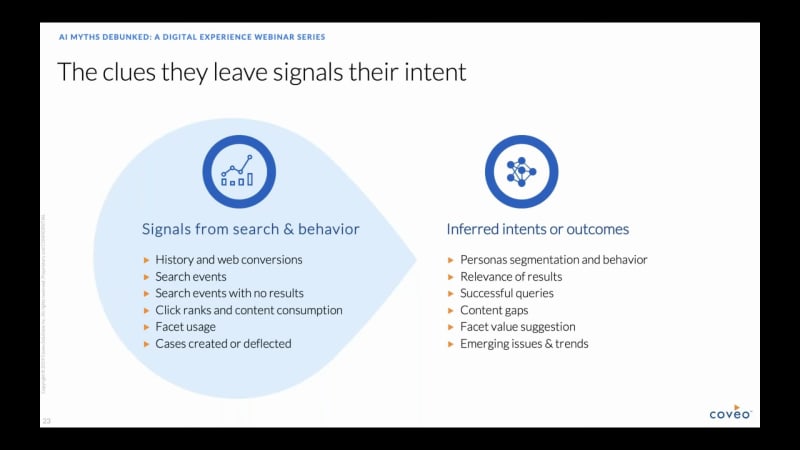
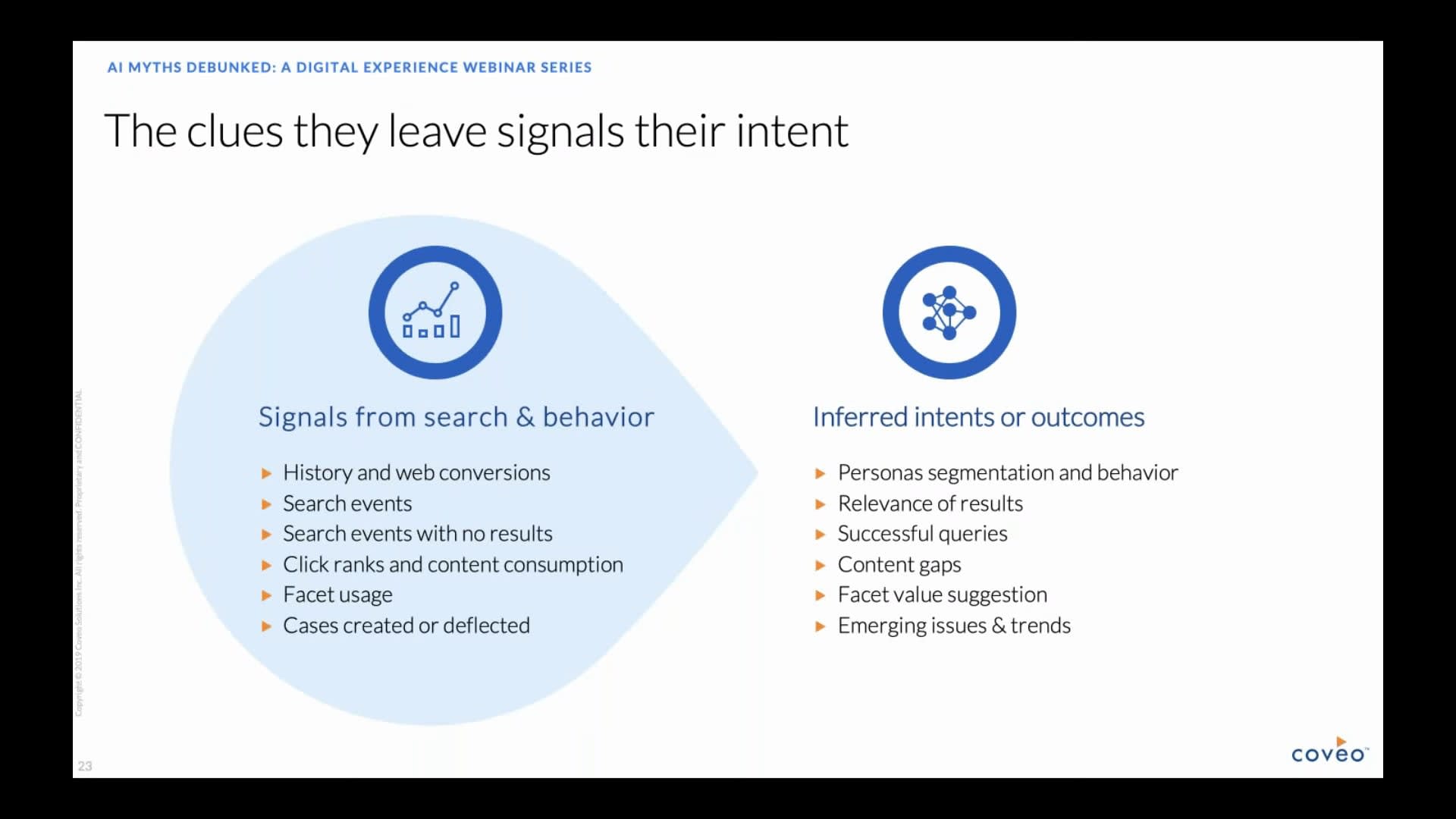
Hi, everyone, and thank you for joining our AI at your service webinar session. I'll be your host. My name is Clara Boulanger, and I work on a marketing team here at Coveo. And I'm really a part I'm really excited, sorry, to be a part of today's session. I'm also thrilled to be joined by our speaker, Neil Kostecki. He's a senior product manager here at Coveo for Salesforce. I have a couple of housekeeping items to cover quickly before we get started. So first, everyone is in listen only mode. However, we do want to hear from you during today's presentation. We'll be answering questions at the end of the session, so please feel free to send those along using the q and a section on your screen. Today's webinar is being recorded, and you'll receive a presentation within twenty four hours of the conclusion of the event. Finally, there will be a brief survey at the end of this session. Please help us improve future webinars by providing your feedback on the webinar content and experience. For those of you just joining us, welcome to our AI at your service webinar session. Now let's get started. Neil, please take it away. Thanks very much, Clara. So, yes. Hi. My name is Neil Kostecki, and I am a senior product manager on our Salesforce line of business. I'm happy to be here for the first of this, digital experience webinar series. In today's session, we're gonna talk to you about AI at your service. So we're really talking about improving customer support, at every interaction, and how AI fits into this this piece. We're how we're gonna frame this is we're gonna cover three myths that are commonly perceived, about AI and sort of break these down and, make it a little more, down to earth and and factual. So these are the three myths. Let's, let's dive into the first one here and talk about why AI and ML are, you know, not the same thing. So there's this myth that AI and ML are this interchangeable, you know, subject or or or thing that you can go and just implement an AI strategy. We're just gonna add AI, and we're going to, you know, solve, the problems that exist in our our organization. And that, you know, AI or ML, it doesn't matter which one you use. They're they're you're talking about the same thing. Well, in reality, ML is a an application of when we talk about AI, of course, artificial intelligence and ML being machine learning. So what we're talking about when we talk about AI is a larger picture. ML is a subset of that. It's an application of that intelligence. And AI is is really about, trying to they're trying to be successful at doing something. It doesn't really care about the accuracy of doing that thing, and that's where machine learning comes in. Machine learning is about data, and it's about doing something based on that data in a very accurate way, performing a task that's that's, that it's learned from. AI is about, you know, solving really complex problems and, you know, there's various different ways to do that and different technologies that can be used. But again, machine learning, and that's something that we employ here at Kaveo, is learning from data and and maximizing performance on a specific task. So really just to to kinda start the conversation around what these two things are, and let's dig in a little bit more here. So AI contains things like ability to do personalization, perception. So if you think about, you know, the way that we, see the world and experience it, so things like optical character recognition, image recognition, being able to understand the the, you know, the things that, are perceived. And then you've also got automated reasoning, which allows, you know, you know, that concept of, AI that can just answer any question and essentially think on its own. Right? We're we're getting to a a level here where we're trying to create something that's that has that, you know, that AI intelligence to decide, on its own reasoning. And then, of course, robotics, as well. So these are different different types of AI. And to show you where we started, Barca in two thousand fifteen, we implemented machine learning to provide AI powered relevance. So really about providing an experience, in search that goes beyond keyword search, identifying paths and correlations between the way people search, the keywords that they use, and returning content that directly relates to that, so understanding that journey. In two thousand sixteen, we moved on to more intelligent recommendations, so understanding people that, viewed certain things, in the same session and and being able to recommend those similar items. In twenty seventeen, on the personalization. In twenty eighteen, we focused on unified interactions and using all of these activities, these signals to unify the experience across the different touchpoints. In twenty nineteen, where we are today, is we're really talking about personalization at a level where you can deliver a million experiences for a million people. Extreme personalization, really understanding your users and providing each one of them an experience that's tailored to them. Second myth, AI is the future and not a reality. I mean, this is clearly, you know, if we look at the statement, from IDC, service is gonna see the biggest investment in AI this year at four point five billion dollars. This is just an absolutely massive amount of money, and it's a clear statement that, you know, AI is happening right now. You need to invest in it. If you don't have a strategy around AI, it's definitely something you need to be thinking about. There's various statistics that we can reference to to kind of prove this out as well. And there's reasons that the industry needs to adopt AI. For example, increasing case volumes. And, you know, we have a number of different channels and ways that people interact. And therefore, we have more cases and more interactions coming in. We need to be able to handle that volume. We need to be able to understand, you know, what someone's doing on all those different channels. Of course, digital transformation is is an absolute necessary. And when we talk about digital transformation, we'd like to talk about relevance transformation, you know, bringing that experience, the the personalized relevant experience that you expect to all of those different channels. You know, it's really about understanding your customer at at a really unique specific way. And as far as proliferation of AI, the numbers really here, a hundred and forty three percent over the next eighteen months. And this is, you know, in a general sense, but, you know, we're seeing this through a very, you know, bunch of different, paths. And as far as how you can get to that and understand and reimagine the service experience, just to talk about some some tangible ways that we're we're seeing this is, you know, first off, augmenting agent intelligence. So you have agents that are trying to service customers. They need the tools and the information at their fingertips to be able to to help that customer. They need to understand what that customer has been through, and, you know, this is where AI is able to help, delivering relevance, delivering results in the context of your customer's persona. So, again, understanding who that person is and the attributes about them, to deliver them content that makes sense for them, that, you know, other users have used. Increasing engagement through experiences that are, you know, are relevant. You know, you use everyone, on the call here has probably used something like Netflix or Amazon. These are experiences that, you know, that are are sticky. They're they're something that, you know, you you pull get pulled into, and that's, you know, AI is able to give that level of engagement and that level of of, experience that people expect. And fourth, what we're starting to see from our customers, quite a lot now is this desire for providing contextual support inside of, you know, their own software, their own cloud based applications, you know, rate where customers are working. And that's really something that, that, AI and machine learning are able to provide. When we talk about machine learning at Coveo, the the types of models that we use are these three. So we offer query suggestions, which, you know, you you could go by a second name of the type ahead. So it's really about what have people searched for before and what has proven to have positive results, you know, resulted in them finding the thing that they're looking for. So we're we're providing the user, you know, leading them down a path so that they are not searching for something that's kind of, on the fringe or is not gonna return good results or deleting them towards the the the good content. Then, of course, when they do that query, we're looking at what did people click on and what was the helpful document at the end of that session, and how did they get there? What were the queries that they used, finding the path along the way and and therefore shortening that the second time so someone doesn't search and they find that content right away? And then recommendations is really about what did people look at in that same session, what did people previously view together, and drawing correlations so that when, you know, let's say you're looking at a a knowledge article or piece of documentation, we can propose content that is supporting, that is related to that content. And so these are the three types of of models that we offer. And just to give you a kind of visual, to understand, you know, where these fit in, This is an example, actually, right from our own community, and you can see the query suggests here. So users typing MA, we're proposing some some suggestions to that user. And it goes a bit deeper than that, and I'll I'll go into that a bit more. But, you know, this is this is the type of experience that you wanna give to your users. Of course, once they've done that search for machine learning, you wanna propose results that are highly relevant and not just based on, you know, the number of, keywords that happens to meet. They're really looking for something that's meaningful. So this is this is not just based on, you know, popularity, but based on, successful outcomes. So we're we're, you know, for example, drawing correlation between keywords that might not actually be in the content. You know, that's that's really important for, for organization who doesn't necessarily know exactly how to write content that's gonna meet every customer's need. It allows you to understand and provide content in context to however your customers are describing it. And finally, we'll move on to recommendations, it's really about, you know, this content here is also relevant. So, you know, keeping people engaged, essentially doing a search for them before they even think about it. You know? They're looking at something, and it might not be the right thing. Here's their opportunity to disengage. Well, what we're doing is we're giving them another, another piece of information that's gonna lead them down the the path to the right content. So here's an example inside of our, Salesforce Lightning Console. And what's really interesting that we're doing here is, of course, you've got, you know, your relevance and your queries to just available here. But additionally, inside of the the Lightning Console, we're using something called intelligent term detection to extract high value keywords out of the large blocks of text. So in this case, the subject and description. So we're looking at all the correlation between all those words, and previous cases that have been opened and and what we've learned from those other cases. And we're able to extract and identify those high value keywords or even phrases, and rate those in order of relevance, and then use that to provide automatic recommendations. So you can see on the right side, the recommended results are are becoming are Barca coming up due to the identification of those terms. And this is automatic. So, you know, an agent opens a case, they have results right there, and this is gonna get this is gonna get better over time. There you go. Really, what you're looking to do is, of course, make it a great search so that you're driving agent adoption through reliable search. Of course, agents are only gonna use a tool if it's giving them what they need. You're gonna improve collaboration by encouraging agents to use the content that's available, and seek out to create new content if it's not available or requests, you know, new information. So have having everything at your fingertips enables you to make, you know, make the assessment that the information you're looking for is is maybe not there. And, of course, improving case close rates. So, you know, making these agents proficient so that the second they start on day one, they have the information they need, and they can help customers. In the community, it's about providing relevance right from the very beginning. As soon as you land on the community, providing trending queries, popular documents, giving an engaging experience that's you know, relevant to the things, the products that they own, and the attributes of the user, and starting the experience from the very beginning. Of course, when they do a search, giving them those relevant results with a a rich user interface, and, you know, having the ability to to make those results dynamic. You know, it's really about content discovery, through through search. Once they move into, you know, needing to contact support, you, of course, also wanna leverage everything that's happened on the search page, all the searches and clicks. And so we're able to translate that over here, as the user is entering information to recommend and actually use the same technology, the intelligent term detection that's being used inside the console is being used here. We're extracting, you know, could be a paragraph of text that the customer has written. We're able to identify the most valuable keywords and return great results. In product is, again, something that is very interesting. We're seeing a lot of interest in building this out and bringing a relevant experience directly into, you know, various customer products, in context to what the user is doing. So here, you know, here I am on a dashboard. Show me information related to that. And and so the the goal here is really to bring the experience directly, into the workflow, give the the relevance and the query suggests that you expect, as well as any, you know, rich information that we can, influence using that, using what we've learned from the interactions of the the customer. So, of course, with that improved experience, you're gonna drive increased traffic. You're gonna have less people needing to go out, and do a search on Google to find your support page to then get into your sport experience. You can have them hooked directly in your software straight to your content. And, of course, it's gonna improve your retention and and adoption of your own software. So it's really important to to leverage this kind of strategy in order to connect everything. Right? Have the same experience inside your product as I'm gonna have inside your community, and, you know, use all this information to, like like I mentioned, augment the the agent's intelligence and provide them the information they need to know on how a customer is interacting, across these different points. So the third myth is about the types of models. And, you know, there's this assumption that machine learning is just, you know, machine learning will turn it on. It's it's gonna do this, you know, one thing over the same on, you know, different places, and it's not it's not that simple. One way we like to frame up how we use machine learning is is this formula of content plus context plus intent is equal to relevance. And just for a basic sense, if we break that down, you have an ecosystem of information across, you know, many different repositories and different systems. You wanna bring all that together, of course, secure it and unify it, make it available, in a single search. You also need to know what, what information about the user, you know, attributes, the different, you know, profile and information of, you know, where they're located, the products they have, entitlements they have, whatever information valuable information we have about the user. Plus, what is that user doing? Where are they? Where have they been? You know, what is what is the, you know, the the user? What can we draw from the way they've browsed, the way they've connected with these different, interfaces? You know, they're, you know, on a case deflection page, we we know that they're looking to submit a case. We can start to presume some things about them. And then, of course, you add all these things together, and we analyze that information using niche machine learning, and we can drive relevance based on data. You know? So we understand all of this activity. We compute it, and we can provide what that person needs. Just to break it down a little bit more, when we talk about context, we're talking about the user profile, the persona of that person, where are they from, what products do they own, what's their user role and department. These are just examples, but this is going to be very specific to various industries, various companies. There's going to be things that are explicitly known about the user. There's also going to be things that are implicit. The more information we know about the user, the better we can tailor the experience. So it it's definitely important to have a strategy around what's important to relevance for your users. For example, it might be important that you know the device I own, but maybe regardless where I, you know, where I'm geolocated in your particular use case, it doesn't make a difference to the the content. But in another area, maybe, in another industry, location could mean the difference between different, you know, different, laws or, you know, processes, things that are, related to that. And so it's how these things interact is is gonna be unique to your business. Additionally, there's there's all different types of signals that are gonna help us understand the intent of the user, you know, their history and if they've converted, different types of search events, of course, and and the the content they've clicked on and consumed, how they filtered or submitted or not submitted cases. And all this information that we we get from the experience can then infer intent. And, you know, we can start to look at where does this user fall into user segmentation? Where what kind of are they an admin? Are they a developer? Are they, based on your business? What type of users do you have? We can derive that from behavior. We can start to influence the relevance of results or suggest queries. Of course, we can close content gaps. Content gaps become something that, of course, you can track through analytics, but machine learning is able to actually identify where a gap exists and make a correlation to close that. And, you know, other things as well, facet value suggestion or or identifying, you know, issues that are are new and trending. All of the all of these things, we can, we can derive from the data. So it's really about having good data, good context, and then taking the intent and and really turning that around into something that we can we can action. If you think about it as a simple loop here, really what you've got is a user interacting with an interface, whether that's search or recommendations or any type of search based experience. We're tracking those unified interactions into usage analytics. Machine learning adjusts that information and can draw conclusions to then influence the experience the next time. So we're we're taking that context intent. We're bringing that in. We're getting the information as to where they've, interacted and how they've interacted. And then we're using that information to improve the relevance the next time around. What's key here is that usage analytics is the foundation. Without usage analytics, without the information, from your users, machine learning is just a a model that's waiting for data. So you really need to have a good foundation of analytics and a way to a way to ingest and and analyze that, and that's what machine learning is all about. You know, without the analytics, you really can't identify the the insights, the the things that your business users are doing. And you really need to have this data available and and easily accessible to, you know, to the machine learning and to the platform. So having it all in in a single place, of course, is is ideal. And you need to be able to, you know, in some cases, make changes to ensure that your KPIs that you're tracking towards are are being achieved. You need a way to be able to do things like AB testing to, you know, add additional context or to remove context. And in some cases, you need to be able to send as many context as makes sense, and let the machine learning identify which, you know, which are most effective. So these are all things that, that can be done once you have the raw data. And so once once you have the the platform to do it, you need to have a strategy on how to implement. And this is key. I mean, you can take machine learning and just throw it at a problem. But I don't think, you know, of course, you're gonna get the right outcome if you haven't identified what it is you're trying to solve. What what is the expected outcome that you want? And so the very first thing you you need to do is identify and align on those those KPIs. What, you know, what is it you're trying to improve? Not not we need to have machine learning, and now machine learning's on and, you know, we're all done. It's it's about, you know, okay. We need to increase engagement or we need to, we need to improve, the ability for, you know, case deflection, drive down the number of cases, improve agent handle time. You know, all of these things are are, you know, related and and are things that, of course, are important to your business. You need to identify which ones you're you're tracking. You need to know where your your benchmarks are. So as a as a second point, you know, you need to you've identified the KPIs. You you you know, you're gonna aim to improve them, but where are you at and where do you wanna go? So it's important to to assess your your current state and, you know, have a baseline. And the third, you wanna look at one use case. So, of course, you know, you turn machine learning on everywhere and and hope for the best, but, I think there it's really important to have a good base. Of course, you know, there's a there's a good base of relevance when you, you know, initially implement, and you should have a, you know, good relevance from the start. Once you're ready and at a point that you have the the amount of, usage analytics and activity that you need to turn on m ML, Really wanna focus, I think, in one area and analyze and and, you know, kinda watch what you know, to see if you're getting expect expected results that, that you're looking for. And, of course, you have the tools available to you to to, you know, analyze and look at those things, to make changes if needed. And assuming that, you know, you're seeing the progress and the impacts that you expect, As an as a next step, you wanna share that information. You wanna share that success. You wanna say, you know, like, this this is what we did. This is what we, aim to do, and, you know, this is this is working. Right? And really show that it's not just, this isn't just another search tool. This is really a platform that's gonna provide the ability for us to better understand and and, provide people what they need. And, of course, just repeat that. So you, you know, you've you've implemented, let's say, the experience for agents, and it's working well, and you're seeing continuous improvement. You wanna move on to building that out into maybe your community, let's say. And then, finally, once you have all your different touch points enabled with machine learning and you're seeing success, looking at how those different signals and context can actually, number one, unify across the journey. So be able to, for example, use the inputs that you're seeing from your end product support to influence the experience and the relevance that you see on your community, or use what's been learned from your customers to help agents. And, you know, use this information as well to try and drive a better and holistic customer experience across all all your different departments. So this is the plan, and, you know, this is the way that you wanna approach, you know, implementing AI and machine learning. I think we, you know, obviously, of course, have the platform to enable this. And on that note, you know, if you want to start, if you're ready to start, next steps towards a more intelligent self-service, you're looking to, you know, improve what you've got, this is a self-service journey map that you can download. And, so if you wanna visit the the link here, this will give you the information you need to get started. And, on that note, again, it is a webinar series, so we have a couple more sessions coming up. Clara, I don't know if you wanna add anything. Yes. Thank you, Neil. So, as Neil said, this, webinar today is part of a bigger webinar series on, debunking, the AI myths. So we do have two other sessions, coming up in the next two weeks. So, next week on June eighteen, we have AI and how we buy. So the application, will focus on commerce and websites. And then, the week after that, we have AI and the nature of work, on June twenty fifth. And this will cover more Internet and, employee employee, intranets. So, please feel free to register at the the link that you see here. It should be an interesting series. So, Neil, I think we covered everything for today, and we'll we'll be ready for a q and a. So I'd also like to introduce another colleague of ours, Olivier Bonneau, who is also product manager, more focused on machine learning here at Coveo. So he'll be assisting Neil in answering any questions that you may have. So now is a good time to, type in your questions in the control panel, and, he'll be able to offer another perspective on, your different questions. So, I'll start with the first question that we have. So is there a pretrained model in Coveo for videos or facial recognition? No. There's not a a pretrained model for for videos or facial recognition. This is something that is sort of, beyond the typical use case that we see. But what what I would say is that, you know, one thing that we we do offer is, what we call extensions, indexing pipeline extensions. And what that allows you to do is to plug in additional, you know, specific use case based, types of models, like, for example, you know, facial recognition or let's say let's say, you know, video transcription or something along those lines, and that can be done at the time of indexing. So what that means is while you're adding a source that contains video content, you can apply some additional intelligence that's gonna help, fill out the, you know, the the the concepts of the video or the transcription or the metadata. And, of course, there's there's many different, APIs and and algorithms out there, that can be plugged in. Olivia, I don't know if you wanna add anything on that, but that that would be my take on it. Yeah. I mean, that's, that's pretty much spot on. The the only thing I would add to this is that, we could use output from third party, AI, you know, AI services such as, image classification, video classification, speech analysis, and so on, and use, at run time pretty much output of these services, as augmented information for our query engine. So we can make all of that work altogether using our our API. I mean, it's pretty much out of the box for us. So that would be the only thing I would add to this. Perfect. Thank you both for the response. We have another question here. So how many staff are required or recommended to monitor the real time data and adjust the ML models? What kind of skills do they need? I mean go ahead. Go ahead, Neil. Yeah. No. What I mean, you mean, how many how many people in your company you would need to support, cavalier deployment, Clara? Is it what he's been asking? I think mostly to to see, what would be recommended if you want to to monitor real time data and adjust the ML model, I think I mean, overall, I would say you you you, you know, the platform does that. There is we give the ability to you know, the models are transparent so you can see, the types of candidates, you know, the documents, let's say, that are being, or or the the queries that are being learned or the top documents that could the top queries that could return documents. You can see the amount of data that's being ingested, searches, queries, clicks. You can see the context, you know, so the number of items that's been learned to a particular context. There's not a lot of management required. I would say more so it's a matter of understanding what you want the outcome of your model to be and, of course, testing to see if if that's you know, and what monitoring to see if if if that's what's happening. And then using, you know, we have AB testing. So you can do model testing real time, in the platform to compare results with one model against another, where you've maybe made some subtle changes, to the dataset or the context that you're sending, to see the impact. But I don't think you really need, you know, a team of people. That's the whole point of of, you know, how we've built learning. It's usually on autopilot almost. And just just I sorry. I just wanna say that, the person that asked the question, just specified that, yes, to adopt our solution, how many people do we need and, what scale do they require just to specify? Yeah. I mean, usually, the stakeholder for a convo deployment that, you know, that includes machine learning and it includes indexing, or search API and everything that revolve around our offering, most of the time, it's only one person that's gonna be, in charge of that. That's in a digital experience manager, will be, like Neil say, I mean, the platform is there as the big tool to help you out, to have a good understanding on what is the status of your current relevancy, in your different domain. Are you having a content gap and so on. So, beside the technical implementation of it, which could require, professional professional services or a couple of developer to make sure that all your website is being properly monitored. From, you know, monthly standpoint, it's, you know, one person's job. I mean, even with our bigger deployment, in which me and Neil are involved quite are are are involved a lot. No more, I would say, you know, one or two people usually, and it's not a full time job. It's just making sure everything is, working fine. So to add on And, of course Sorry. To add on that, the per that person says that, basically, once we add up Caveo, we would only need the users of the system to make business systems and conduct AB testing, etcetera? Yeah. I mean, there there are multiple different personas inside the platform. So we do, of course, have customers that have, you know, larger teams of of people there. Just to give you a couple kind of roles, you have, of course, some administrators who have the capability to do everything inside of the platform, you know, make changes to the experience, add new content, you know, set the permissions for other users. You have a, I would say, a permission of, you know, relevance manager, who maybe is not an administrator of the system, but is just going to tune and manage the, you know, the experience in search, You know, things like, thesaurus entries and top results and, you know, really just caring about the relevance. And then you, you know, you might have reporting, people who are interested from a reporting perspective. So those are, I would say, the three kind of personas that we usually see. And, again, like, like, Olivier said, it really depends on on the implementation and the organization, how many, how many users they wanna have involved. Yeah. But bottom line, it's not it's not, a full department that needs to be involved. Let's get that let's let's get that tier. Usually, let's say one or two person, part time just to make sure everything is working fine. And we offer a CSM, customer success manager service, which will help you guys. I mean, they can have, like, monthly meeting with you, just to overview and and be your first point of contact for any questions or improvement you would like. Great. Thank you both. We do have a couple other questions. So, if we invest heavily in Salesforce and use Salesforce Cloud as a platform for customer self-service, what's the difference between something like Salesforce Einstein and Coveo machine learning? So, overall, I would say, you know, Einstein is is about automation. It's about, you know, your your your customer data and and making, you know, making predictions or automating things based on that customer data. And where we seek you know, where Coveo is is, investing in, it's all around content and relevance. You know, so as far as is there overlap? I I I don't really think there is. There's definitely opportunities where we see, you know, collaboration. For example, we just, in our spring release, we released a, an implementation or an integration into Einstein bots. So it's I don't think it's a consideration of one or the other. I think it's, you know, what applications, what things, problems are you trying to solve. And, of course, if you're trying to solve a, you know, a personalization, a content, discovery problem, then then, you know, that makes makes sense to implement Kaveo. And in in a lightning community context, we're, you know, well prepared with many lightning components right out of the box. So hope that answers the question. Yes. Thank you. Another question we have. So in order to access the, so in order to to have the the information, like the interactions with the site and the assisted support content, to be for it to be actionable and accessible, does the AI require a customer to identify themselves? Olivier, I'll let you take this one. Yeah. I mean, not necessarily. I mean, of course, if there is a way to either, get logged in information through an, identified person, of course, it will provide machine learning a little bit more information on the context and also stitch, that user visit to maybe past visit he already did. So in order to further improve, the the experience, but still, even, anonymous user will benefit greatly from machine learning since, we can still, machine learning can still leverage the user action and behavior. And as for all the, you know, the search terms, action, document is being clicked, by a user to perform machine learning analysis here. So, I didn't log unlocked user benefit greatly from machine learning. It's not mandatory for them to be logged in to benefit from it. Thanks, Olivier. Another question. So our data strategy is not where it needs to be. Do we need to accumulate a large customer dataset prior to even considering AI and machine learning? You know, the the the first thing that is the most important thing when you go in the AI slash ML path, it's actually on which dataset are you gonna build your your machine learning model. Machine learning model is pretty much nothing without good data. So, of course, yes, the first step to be taken is to make sure that you are monitoring properly your your your different touch point, your different domain, with and that you gather the proper information from it. It doesn't need to be, a ton of it. I mean, a ton of bad data is not is not better than a little bit of data. So, so, yes, this is the first step is to make sure, that you are getting the right information from the right touch point. And for that, here at Coveo, we do offer the full stack of analytics, through a public API that you can, reach quite easily from pretty much virtually any domain. And so using OracleVIO analytics, then you can start feeding into your Coveo organization all the proper dataset, all the proper all the proper information that would be required down the road by machine learning, to further improve your digital experience. So, yes, this is a first step to take. But one thing I would add though is, you know, machine learning is essentially it's looking at a dataset and and making correlations. Even with a low volume of data, machine learning will be able to learn some things. So it's it's it's obviously more ideal to have a lot more data. But even with a, you know, a small amount of data, we can start to make some correlations. And and so, I think it's about getting started as as soon as you can so that you can, you know, set yourself up for, you know, improvement over time. Thank you both. This is all the time that we had for today. If we didn't get to your questions or if you have more questions, please let us know, and we will follow-up with you, as soon as possible. So just a couple of quick reminders before we sign off. We'll send a recording to all attendees within the next twenty four hours. And please remember to help us improve our future webinars by completing the brief survey at the end of this session. On behalf of Neil, Olivier, and the rest of the team, I'd like to thank you for attending our webinar, and I wish you all a great day. Thank you. Thanks very much.
Part One: AI Myths Debunked (So That You Can Deliver A Great Customer Experience)