
I'd like to introduce, your host today, mister Brian Beck, who has over twenty plus years experience in ecommerce, including more than a decade as a hands on c level ecommerce executive. Brian's currently an advisor to manufacturers, distributors, brands, and retailers on digital commerce strategy, and he's also the author of a comprehensive book entitled billion dollar b two b ecommerce. He is joined by mister Artie Sharp, senior welcome, Brian. Senior director innovation and experience design at Hearts on Fire. Artie spent the last eighteen years building exciting technology experiences from across multiple industries at and at Hearts on Fire, he leads the day to day initiatives of all technology platforms and customer touch points. And then finally, they are also joined by Lindsey Reiner, VP marketing operations and creative services at Acuity Brands. And Lindsay is a seasoned marketing leader with over fourteen years of experience in the b two b marketing world. And at Acuity Brands, she oversees website development, content management, and search experience, marketing automation, and creative services. So you are in great hands today. Those and with those introductions, I'm gonna hand you over to Brian to take it away, sir. Thank you, Shereen. Can you hear me okay? Absolutely. My audio coming through okay? Awesome. Well, hey, guys. Thanks so much for joining us here on this session. I am super excited. And, gosh, after that keynote, we've got a lot to talk about and a lot to dive into. So I'm I'm thankful you all are here, and I'm super excited to be joined by Artie and Lindsey. You guys are, you know, just such you're in the thick of this, and I'm so excited to have a great conversation here, around some of these topics related to relevance. And so, you know, and our team today is reinventing your commerce strategy with with AI. So I'm looking forward to diving into that. Arty, I I see you you got a nice you got a good kick out of my little shameless self promotion there. That's great. I did write I did write a book about ecommerce. It's all about b to b ecommerce. It's called billion dollar b to b ecommerce. And if you put a dot com at the end, you can go and find out more about the the book. But, you know, really and we're gonna talk today about this. You know, also, it's it's consumer e commerce has really grown. It's also about the b to b side and how you can reach b two b buyers with ecommerce, and that's the you know, I wrote about this because, you know, really, there's a playbook that's necessary for the market, around this. So let's let's first talk a little bit about, you know, who you guys are. And, and before we jump into that, I wanna share one thing because this is just you know, the the world has changed. Right? To twenty twenty, I hear people say, gosh, I'd love to press fast forward on twenty twenty. But if you're in the ecommerce business, you know, it's it's this has been a really dramatic year. It's created opportunity. It's created challenges. But this chart, I think, really says it all. Okay? So this is this is data from Forrester and Bank of America. And I've been in this business a long time. As as Shereen mentioned, I've been doing ecommerce for twenty years. Just means I'm old. But, you know, I've watched and grown with this business. I've been the VP of ecommerce, the CEO, COO of different ecommerce businesses. And if you look at this trend curve, I've lived this. Right? It's it's the slow and steady growth of ecommerce penetration to total sales and consumer and b to b sectors. Oh my gosh. Look at what happened when COVID hit. You know, ten years of growth in three months. This is, data from earlier this year. This has continued. We went from sixteen percent penetration of ecommerce purchases years of acceleration in no time at all. This is changing the game, guys. And we think about it, you know, just for context for our conversation, fifty percent of buyers are buying products from companies they've never bought from before. The the whole notion of loyalty is completely being challenged. And and Lindsay and Artie, I'm really looking forward to diving into some of this because, you know, how do you how do you address this this this customer? You know, thirty percent of cost of of people are gonna be working from home still at the end of twenty twenty one. The game has changed completely. You've got Amazon growing thirty five percent year over year doing holiday volumes in the middle of the summer. I mean, it's it's incredible. Hiring two hundred thousand people. So there's the whole game has changed. So, guys, tell us about who you are, and then let's get into the conversation. Lindsay, you wanna go ahead and introduce or, actually, I think, Artie, you can maybe go first. I think you got a slide here talk about. Great. Hi, everybody. I'm Artie Sharp. I work for Child Thai Book North America, and Hearts on Fire is one of our family of brands, within that. We are, part of the Chow Tai Fook family, which is really the world's largest jeweler. We have, beautiful diamonds, that we sell into, independent, retailers probably, in your neighborhood. Along with that, we have a large ecommerce business, and internationally, we have about two thousand points of sale in Greater China and Hong Kong. We are positioning ourselves as a leader of technology in in our space, in the jewelry space. And along with our strong reputation for that design and that quality, we're bringing the same thing from a technology aspect and making sure that we can deliver digital experiences that are as beautiful as our products. So I've been with the company going on, like, fifteen years now. I come from a a technical background. Started as a software developer. And through the years, we started to see that rift that I think a lot of companies start to see with between technology and marketing. It used to be marketing would ask technology for things. Technology would throw it over the wall and say, good luck. We'll talk to you in a few months and see how that went. And there wasn't that that that beautiful dance of things working together. And at CTFNA, we were lucky to be able to start a new group that we call the innovation and experience design team, and that was a group of marketers, technologists, developers, really focused on the customer, whether that is our end consumer or our business to business customer, and making sure all of those touch points, were thoughtful and thoughtful from, a digital experience, thoughtful from an automation standpoint, and making sure that we could deliver on on the promise of of being, a leader in this industry. So it's an exciting industry to be a part of. It's an industry as old as time, and we get to bring technology into that industry industry sometimes, which can be a lot of fun. But I'm and I'm also very happy to be here. And, Ardie, I wish I knew you ten years ago when I, married my wife both of my wife. Could you could you use the hookup on the Yeah. Same thing for me. I tried I got engaged before I worked here. Well well, no. That's great, Arnie. And I you know, what I love about your business is you're you're in so many different channels. These this relevance challenge is so real for you. Lindsay, tell us about your business. Tell us tell us about about Acuity. So, hi, everyone. I'm Lindsay Reiner from Acuity Brands. Glad to be here today. So Acuity Brands, we make and sell lighting and controls products, so not quite as sexy as, diamond rings. But you do need us to be able to see in the dark, so we're still very relevant. But we have Acuity Brands is comprised of many different brands. We are continually acquiring new brands, all the time. So it does become a challenge from a a data and web and search perspective to make sure that we keep everything up and running and keep it easy for our customers. But, yeah, so we we make and sell Liggett Controls products primarily in North America, but we do have a global presence as well. Lindsey, awesome. So you're living it too, and you guys have a lot of channels you sell to as well. Right? Yes. And through. Yeah. Yeah. That's great. So consumers and businesses. So yeah. And tell us a little bit about your audiences here. You have you have a slide. So, like I said, we have our direct consumer, side of the business, which is ecommerce. And that also that ecommerce business does support all of our wholesale customers. You know, we have a large, beautiful website that, does drive traffic down into those retail stores, which we love. So the b to c side is very important, and then our b to b side is really where we do a lot of work. That's our five hundred retail doors in the US, and it's also delivering a business to business experience for them, that matches that that same, you know, we've been you heard Bozeman talk about it, the the consumerization of b two b and how important that is nowadays, that they can find if they're a retailer in Australia, two in the morning our time, that they can get that product and that information that they need, we have that b to b side of the world. I love that already. I I have I in my, you you'd appreciate chapter, ten of my books. I talk about I talk about that exactly. Stealing smart from b to c for bringing to the b to b side. And and we should Dive into that. Get into that. In there. Yeah. Yeah. Yeah. No doubt. And, Lindsay, you you guys you guys have a similar diversity of audiences. Correct? We we're both a b to b and a b to c company. In terms of our website where we kinda differ from Audius that already, excuse me, is that we just have a pretty much a b to b presence on our website. So we we are looking at b to c websites routinely to kind of benchmark against in addition to the traditional b to b sites that we, from our competitors and all that good stuff. So we are trying to also make that transition probably a little more, slightly than what Arnie has done, because like he said, he's got two very distinct audiences that that he's catering to. But what we have listed up here are our primary customers in the b two b space. So, you know, each of these consumers, each of these people who either buy or sell our product for us, they have very different needs depending on what products they're looking at or what brand they're interested in or even where they are in the buying cycle. So it it does become a challenge to not only, create experiences for all of the different brands that we have, but also to cater to all of these customer types. So you'll you'll see as you look at our website, we have a lot of information available. And we are actively looking at ways to clean it up and really make that journey more seamless no matter who you are. But it is it is a lot of information for a lot of different customers for our website. Yeah, Lindsay. That's great. And I think, you know, it's interesting in this world where, you know, I I read this, I have this funny study in my book. Right? It's the the US, department of I think it's biotechnology research or something Did this study a few years ago. And this, they talk about how little attention span we have as humans now. Right? And they they the study said the study showed the evolution of the attention span of a human where it was, you know, it was fifteen seconds, you know, a hundred years ago. Now it's down to eight seconds, which apparently is less than a goldfish. I don't know how they measure the goldfish's attention span. The point is that we're pulled in so many directions. Right? And and it's it's getting relevancy and making sure you're delivering that experience. You have less time than ever whether it's b to b or b to c. Right? You know, you're talking Lindsay about all these different audiences you have. And you have their expectations set by their consumer experiences on places like like Amazon and other places where you're, you know, instantly getting what you're looking for. It's a search engine. Right? So tell us yeah. So tell us about that, guys. Tell tell us about how you've seen customer behaviors change even since COVID nineteen. Have you seen a change in how your customers are interacting, your b to b customers? Are they going more online? Tell us about that. That. Oh, absolutely. So it's funny. In in that eight seconds, they're also, you know, remote schooling their children, you know, working from home and online shopping. So you really don't have a full eight seconds there. So we we it's true. We talk a lot about, you know, like building trust and making sure that people are being served the information that they're they're looking for. Right? So that's getting the right information at the right time. And for us, there's been a massive increase in online, usage. We launched our new business to business platform in July of this year. And shifting of transactions online, we've done more digital transactions since July than we did all of last year. So more and more people are spending time, different hours of the day, at that brief moment, in that eight seconds that they have, they can go in and quickly place that order, so that they know that that that task based thing, that that that thing they need to order and get done quickly, we're making sure we serve that. If there's a conversation that needs to be have happen around business, that's why we have a a sales team, and we want the sales team to be focused on doing that. So by using that technology and that relevancy to be able to deliver answers quickly, we've we've we've captured a little bit of that time in there and made sure that our customers are getting experience they need to drive them to the checkout. So you've had to reinvent. Right? In in some ways, you how you're doing business. You know, speak and let Lindsey already chime in on this wherever you, you know, you you you you want to. But, I mean, this is, you know, hearts on fire. You talk about building a case for transformation, this slide. You know, it it you know, you need the leadership team in line with what you're doing as well. Right? But talk talk to us about how would they kind of reinvention? Yeah. So it's funny. I think anybody who's been in a position of running an ecommerce business, at some point, a c level executive comes to you and says, just do what Google does. Right? They just they may search. You just do that. Make that happen on your website. And it's it's it's very close to what Bozeman said. You know? That's that to me right here, just give me faster horses. Right? Because, yes, we wanna do all of those things that the consumer is used to. We want autocomplete in text. We want when we type something in that it does find those words, but there's so much more around, the experience and and delivering an experience. We at Hearts on Fire are very lucky that we get to be part of some very special moments in people's lives. That's what I love about my job here, and that we wanna be a part of that experience in a way that doesn't send them down a path that gets them lost or confused. This is a big purchase. They should feel comfortable doing that. So when we it was pretty easy for us to make this case because we knew that we wanted to make that, that experience an intimate digital experience. Right? So we wanted to make sure that we had a provider. We we we know that we are not experts in search, so finding the right partner, which was Coveo, to come in and help us design those models and design the the patterns that we would have to deliver those relevancy models was so important, for us. And it was an investment. You know, we had to say, we are making an investment in search, but it's not just about the search bar. It's about the entire search experience that our end, customers are happening. We then took this and all the learnings from this, and we were able to build our B2B site and take all the education we got from the B2C side and realize that, Hey, nobody, nobody walks into work and takes off their B2C hat and puts on their B2B hat. You know, they they have an experience that you're used to. The workforce, has been brought up in a way that things and answers are delivered quickly to them. So that same thing, should happen on the on the digital platforms. So we took all of that and we built our B2B site. And in the process, in talking to our customers, we learned that a lot of them were just using our b to c site originally. They were they were getting that experience from the b to c site because it was easy to use. It was beautiful. And then they were going over to the b to b site to look up the SKU and enter the information. So we wanted to stop that. Because also, our team that answers questions for end consumers was starting to answer a lot of questions for our wholesale channel, and that's not how we wanted to divide up the work. So by taking those learnings and making those making the case that this is also how we want to do it on the B2B side, we were able to deliver a really seamless experience, for our customers. I was talking about it earlier. We've done something. Our b to b site now mirrors our b to c site so closely that our customers are using it at the counter. So we've implemented a feature. It's one of our most popular features. It was a very simple thing, but we have a little toggle switch, and it's called counter mode. And you flick that switch, and it shuts down all wholesale pricing across the entire site. So they can spin that monitor around or use that phone and feel comfortable showing their customers. Yeah. It's been really, really popular, but still have all of that b to b stuff that they do need as a business to to work. So they're getting that consumerization experience, but also being able to operate as a business. So that was really our case in building to make sure that, you know, we were not having two different worlds. It wasn't the the beautiful consumer experience and the clunky b to b experience. We wanted to make the crossbow. Yeah. It cracked yeah. Already, it cracks me up. I mean, not cracks me up, but it's it's kinda painful. The, you know, the number of companies that sell b two b that, you know, do a green screen plug in to their ERP system. No offense to anyone listening here today. But that's not ecommerce. When you have to go online, you have to look at it and type in a SKU number. There's no pictures. You and it's it's not that's you to your point, Artie, consumerization and and and and Vos said it well too. You know, the consumerization of b two b is is really can be very impactful. We'll get into some of your results later. Lindsay, what about you? What are your what are your So we actually started our journey about a year and a half ago. So where we started, a little a little different from Artie's experience. So, Artie, I did write down some ideas from what you were just saying for some future projects. But we but we have about twenty websites that we manage. So, all all under Acuity Brands. We have about twenty websites. The main one being acuitybrands dot com, which is where you can find products for any of our brands. But then to cater to those customers who are loyal to specific brands or only interested in certain subset of products, we do have specific brand websites that we offer up to our users. So before we made the switch about a year and a half ago, we had many websites on many different platforms, whether it is a different CMS system to a different search engine to a different database even that we pull product information from. And as you can imagine, it made for a little bit of a mess at times. It made for, you know, just a experience if you are in the case where you're switching between websites and brands. So that was really our main goal was to solidify our foundation, solidify our platforms, and really get the data where it needed to be. That was definitely one of our biggest, focuses. And one of our biggest struggles was to get all the data pulling from the same spot because without doing that, we we didn't know what we were working with. You know, you're just kinda continually chasing chasing something that you're never gonna catch. So that was really our biggest focus was to get everything on the same platform and, like I said, get everything pulling from the same data. And then since we made that switch about a year and a half ago, we've been able to focus on the fun things and also more data cleansing. You'll if you talk to me for a long length of time, you'll hear me talk about data a lot. But getting everything on the same platform and kinda pulling from the same bank of data has allowed us to really take a step back and start to look at the fun stuff that we wanna do. So, like I said, a year and a half ago was about us really solidifying our foundation. And, you know, as we all know with web work, you don't wanna change things too quickly. So we have intentionally been letting things sit for a little while, and we are, actively in the stage of getting VOC on our websites from those different customer groups that I showed earlier, and really understanding what works for them, what doesn't work for them, and what can we change moving forward. So that that's where we're at. Hey, Lindsay. You raised a really important point. And by the way, can you go maybe a little closer to your mic? We can hear you fine. Yeah. If you if you can get a little closer, maybe oh, there you go. Perfect. One you know, you raised a really important point, Lindsay, and I've learned this the hard way. I'm sure you guys have too. You know, data. Right? I mean, it's and and and data is not a necessarily a fun thing to think about. Right? But it's but it's so critical to the entire process of delivering a relevant experience. Can you talk a little bit more about that process of cleansing data and, you know, companies I find I find companies that are particularly manufacturers are often they often underestimate the importance of this, the structure of it, the systems necessary to bring it to market. You know, and and, you know, too often I find companies, for example, that don't have a PIM or other kind of structured data system, PIM, product information management, by the way, for the audience. What what are your what's your experience been? I mean, what kind of effort did you got to go through, Lindsay, to to get to where you are today? You know, a lot of it is really around, change management. So we do Acuity Brands does have a PIM that we use that we feed all of our websites through. Luckily, just the one data source now, which has been, awesome. Yes. But, but, you know, it's we have lots of brands. We have lots of product managers. We have lots of different products that we represent. And the the data doesn't always line up completely symmetrically. So we've had to give a lot of thought and had a lot of conversations and digest a lot of opinions about how the various product leaders and the various sales channels want to sell their products. And then make sure all of that can come across in the website in a way that's consistent for our users. So, you know, the data is important. There's certainly a long lead time with identifying what needs to be done, actually getting into the system and physically making the changes. But I would say probably the biggest thing that people may not plan for, that it's a really long lead time item and an extremely important step is to get get the opinions of your stakeholders, get the opinions of the people who care about what you're showing. Otherwise, you're just going to be, in constant battles because you may not, website may think is important may not be what this product manager over here thinks is important. So you gotta get everyone on board early in the process and really make sure everyone's Yes. Are heard and that everyone, is bringing what they need to bring to the table so you can kinda collapse everything together and make sure it's all all relevant for your customers. You know, Lindsay, it's such a great such a great point. Alrighty. Go ahead. You had something to add to that? Yeah. It's so funny. I mean, it's we we have very similar stories here, and it's, we always say, you know, the devil is in the data around here. Right? That's that's always one of the hardest things that we deal with. And there's a couple of things around data. I mean, product data, yes. You need all of the product data. And you need to be transparent about that product data. We have, Dynamics AX as our ERP in the background, and it was a week a choice for us to make sure any piece of data we have about that product should be available to our b to b customers and then curated for our b to c customers. Right? Because that's that's the that answers the question. That's the transparency. That builds the trust. But that's a big lift. You know? When you've got I mean, we've got five hundred products, five hundred styles times x amount of SKUs and metal types and variations. It ends up being somewhere around two hundred and fifty thousand combinations, and that's in just in one pricing language. You know, that's it gets to be very large. So data can be a a very big lift in making sure that's accurate, and that that requires a lot of teams to understand the importance of where that data is going. It's no longer just about the PIM or the ERP. It's that there's endpoints that are your, you know, your B2B customer that are your B2C customer and that's important to them and making sure, that it's delivered. And then there's also the, the story with data, right? There's a lot of information there and I, I, there's a story. And this goes back a few years before we kind of had that lockstep of a team that was paying attention to all of this. We had a product that we almost discontinued. It was not doing great in the wholesale channel, and it just wasn't in anybody's store. And, we, we almost discontinued this product until someday, until somebody decided to finally look at the web data and found that this was the most searched for, most looked for products, that people were asking for, but then they were going to stores and nobody had it in the stores. So once we took that data and told it as a story, it became a top selling product for us over time. Amazing. With around having that data and that data story available to us. So there's the story with it and then there's the use of it. And that's where this the the new world is. Right? So every piece of data, every interaction on that website, every, product page visit, we take that and we're we're pushing all that to the data layer because we wanna consume that and bring that back into the AI models. There's there's truth there. There's a story there. We wanna reuse that, and then we know that's only gonna enhance the future experience. So, yes, things that we do that look good are very sexy, but the devil is in that data and making sure the data is clean and tells a story and is reusable. Yeah. No. And you guys are raising some important points. I think one of the things that you know, it's interesting in the when I wrote this book, I was I was thinking about, you know, kind of all the tactics, like like, implementing a PIM or, you know, cleansing data. But everything that you you guys both said alignment is so important before you ever get to that. And, you know, that's the first, like, four chapters of my book. You gotta get the brand owners on board. You gotta get the sales team on board, you gotta get the, you know, the IT team. Everybody's gotta be aligned around what you're doing in order even to just get the data done. Right? So fascinating. So so, oh, and by the by the way, I have to give the audience credit here, guys, those of you who are listening. Susie Weitzman, yeah, Artie, she wants some, swag from hearts on fire. She's asking. Swag from hearts, baby. So good try, Susie. Here we go. That's great. Thanks. You need the diamond support. I'll get some lights too. Swag bag from hearts on fire. So, guys, you know, a vision for, you know, what we're just talking about, you know, in terms of the relevancy. And you were talking also about the cross channel aspects and delivering that experience across different channels. You know, Artie, you're talking about the relevance of data. I mean, we could we could take this so many places, but I think, you know, the the important thing too is in in in b to b. Right? You know, you guys have different people that are selling your products. You probably have physical sales teams. You have distributors. You have retailers you're selling to. You got your, you know, your own internal sales process and teams. And, you know, these you know, I I read an interesting study. I don't have the data to share right now, but, it showed it was from Gartner, and it showed that the the digital and the physical interplay constantly through the sales process when the customer buys, whether they're a b to b or consumer, they're they're back and forth the whole time. It's not just sort of the sales, lead is generated from ecommerce and handed off to a sales team and they finish the job. Yeah. It works the whole way through and and that's true too with, you know, where there's channels you don't control. So, you know, you're you're selling your product to your retailer or distributor or whoever. They're reselling the product, you know, that so how do you align and deliver relevant experiences across all of that. Right? And and and and, you know, because it's not just about the search on your site, but it's about how you use data. Arty, you gave a great example. That use data in the channel and and internally and such in other places and to deliver those relative experiences. Any any thoughts on that, guys? So, I mean, for us, you know, it it's it's the end output for us. Right? It's it's all around making sure that our teams, whether they our our end customer, and that's, like I said, our b to c, our b to b, and even more often now, our internal sales teams. So by having all this data aggregated and indexed in a way that's useful, that's empowering all of them. So we use AI, for merchandising. That's a huge part of it. I mean, it's it's throughout the entire site. It's available for all the basic search stuff, but we don't have digital merchandisers anymore. We we have AI do the merchandising for us. And that's that's because one of the interesting things about our products, and I can say this probably about most people's products, is it mean different things mean different things to different people. You know? For us, a wedding band can also be a right hand ring. People might wanna match different pendants and different necklaces and think in ways that we have never even contemplated as merchandisers. And we're trying to also kind of mimic that that experience in the store, right, where there's a person on the other side of the counter. So how can we how can we do that to fit your need? That's where the AI comes into play. And it's creating outcomes that we could have never predicted and finding new ways of bringing relevancy that to our customers that would have never been there before. And that's assisted, like I said, both, like, great on the b2c side, on the b2b side, and even our internal salespeople are now using our tools that we've built as part of their sales tools, their suite of sales tools that's now available. So it's it's a core principle for us now. You know, we look at it and say, what can we use the technology? Where can we use the automation? So that our our people and our consumer can focus on what we want them focusing on. And some of the you know? And and, Lindsay, for you, I mean, when we talked to the head of this session, you were giving me some great examples about how, you know, you've used guided selling and some other things through the, you know, really, it's not about a disconnected channel from another. It's about bringing some of that expertise that the set that the Salesforce or that that, someone in, you know, physically in person would bring, but you're doing it digitally. Right? There's some of your guided selling. And I think that's that's another way to really bring relevance to the experience. Can you tell us about what you did there? Yeah. So, you know, like, Arnie, we're obviously very reliant on our website right now to do some selling for us. Traditionally, lighting is really a show and tell industry, but with the changes, with everyone, you know, that some of that aspect is gone now. So we're we're relying a lot on our website to do a lot of heavy lifting. You know, first and foremost, I won't talk about data again. But the data It's okay. Yeah. But, The what the data allows us to do is enable different search experiences like machine learning. So Coveo has really been an amazing partner for us with this. Actually, about half the clicks, if a user goes on our website and does a keyword search there in the the top right hand corner, excuse me, about half the searches that are actually clicked on are delivered through machine learning. So that is very powerful. That bay what that's basically saying is those are products that we may not have delivered up ourselves based on whatever keyword that user entered. But what we know through the data and through the analytics is that, typically, whenever customers search for whatever product that customer initially searched for, they tend to search for this next product next. And so instead of making them go through that process, we deliver up that machine learned result. And like I said, that that accounts for about half the clicks that we get whenever a user performs a keyword search on our site. So, I mean, it's not it's not only about us knowing and being able to anticipate what customers are going to look for. It's really letting the software and the search engine do a lot of the heavy lifting for us, but you can't do that without the clean data. So that is where everything just kinda kinda comes into play. And, you know, the website is where everything comes together. So, you know, for our different customer types, what we offer whenever they find product they're looking for. You know, if you're more of an architectural type product, we may offer you, you know, kinda sexier application photos where you can see how the light is installed and how the light distributes across your space. If you're more of a, you know, bread and butter commodity goods type product, we might really show you close ups of the product and how it is, how it's configured and how it might install in your space. So kind of Right. I love that. Of it. So depending on what the product is, we certainly offer different types of information. Yeah, Lindsay. It's interesting. I mean, I I don't know if you guys already if you guys have heard, Amazon is working on this thing, this predictive ordering. I'll tell them that we'll actually, you hear about this? They're they're gonna be sending you product before you even order it because based on your your behavior. Lindsey, that's kinda what you're talking about. Right? Is anticipating this is AI in action. Anticipating Coveo is doing this for you. Anticipating the need, before you, you know, before the customer even know knows they have it, which is which is a little creepy, but, you know, hey. It's that's personalization and action. Are you what you got I know you have some thoughts around this too. Yeah. I mean, there's so much there's so much power in, in AI and what we can do with it. I mean, we've we've we've built out some prototypes that are using computer vision because our product is so visual and how we can, use that as part of search or even, you know, the story that we kinda get a lot is the the significant other walks into the store with a piece of paper and goes, she wants this. You know? How can we solve that problem? You know? Looking at the visual and trying to do that. So that's some future based stuff that we're looking at that we don't have today, but it's starting to be where the world is going. You're you need to be able to have these technologies in place. And with resources being what they are today, you're not gonna be able to solve for all of these problems. So that's where we start to, to bring in these new technologies and really think about where the true power is in new and creative ways. I mean, I get onto these rants sometimes where I'm like, we could have, you know, the the neural networks looking at and possibly designing jewelry at some point. You never know what direction this could go. But right now, we're just gonna focus on the ecom side of it. But but there's still a lot there. I love that you I love that you come from a technology background because you're you're applying that too to the, you know, the merchandising and marketing side of ecom. It's just just it's it's really cool. It's a blessing and a curse. At some point. So, so guys, you you know, you guys have seen some results. I'd love to talk about that. And then I know we have some questions coming in too, so we wanna make sure we do some time to get to those. But let's talk for a few minutes about the results you're you you've seen, and kind of some of the you know you know, what is this all this done for your business? Right? So, yeah, Shareen, if you go ahead and and and scoot ahead to some of the results slides. There we go. So hearts on fire. Man, these are numbers that are off the charts. Yeah. It's been we've had the numbers here. So there's there's been a lot of start dollar either. What's that? You didn't start with a dollar either. No. We didn't start with a dollar. Thank you. But, you know, there's there's a lot of there's a lot of good things at play. I mean, part of it was a focus. Right? Like, this became a a digital was a focus. It had to be. That's the only way these businesses are gonna survive that we were gonna survive as a business. You know, we had to make sure that technology was in place for us to grow, and, you know, to start in the b to c side and grow that into the b to b side, was very important. Experience. You know, that was a real focus on experience. There there's some beauty to our site that I love. We have a really great team that spends a lot of time staring at size of buttons and color and placement to make sure that we are delivering an experience that feels, that that matches our products. You know? That that was really important, and and driving, that trust. It's it's a big purchase. This is a lifetime purchase. You're gonna wear this on your finger, on your ears for the rest of your life. We wanna make sure that you're comfortable with that. So we brought technology in to help us do that, and that obviously drove, you know, great conversion rates. And when we had an ecommerce site for a while, it wasn't a primary focus for us with making it a focus and investing in search and investing in the technology. We've been able to do a lot with there. So the numbers are great. One of the things that I think is really interesting is we had some, you know, some big increases here, bounce rates way down. Average time on page, it went up. Not a lot, but it went up. But I think there's an interesting thing there that, it only went up a little bit because we were delivering the information people needed on those pages, the relevant information. Mhmm. You know, we didn't they we didn't just serve it up, and then they were lost there for a little while. We really thought about, like, what is that funnel? What is that what are we trying to do with this person in that experience that we can drive them down a path? And that made it for that eight seconds of time that we have with them, the the the the the the what they needed. We got them what they needed. And this is and, Arty, you're seeing these results across consumer and business. Right? So this is not and I wanna dispel the the myth that, you know, the b two b buyer doesn't want this experience. We've been trying to hammer that home today. Yeah. Relevancy is as or I would say even more important Right. To a b to b customer because they're doing their job. They've gotta get on here find what they need right away. Yep. And whether that's search or navigation or through some other channel, they need to be they need to find it. Right? So this is across. Yeah. That's what we're looking at right now is b two c, but b two b the same thing. We're seeing major uptake. It's a major, focus for us to shift a lot of that business online because that's easier. And I always say it is the easiest, most accurate way to place an order with us. You are going in. You're having a fantastic experience, and you're getting the information, and then you're seeing what you just ordered. You're getting all the confirmation. It flows just like your Amazon order, and you're becoming very comfortable, with doing that side of it. So that that's been a a big push for us. We've been we launched in, like I said, in July, and we've already done more than we did the previous year on the digital side. Amazing. Big piece of that is that so we were we were lucky. We had this kind of we didn't know COVID was coming, but we started, you know, planning this back in September of last year. And it was literally me at one of our conferences that we have for our retailers walking around with a manila envelope with sketches in it, talking to customers and saying, this is what we're thinking. Does this work for you? And they were like, yeah. This is what we're used to. And then we have committed as a team to monthly updates to our platform because we talk to our customers every single month and find out what the pain points are and where we can improve, to to deliver that that digital experience. The b two b is just like the b two c, so we wanna hear more about what we can do to enhance that experience. And very very similar to what Lindsay said, we had to consolidate. Right? We went to a single platform, and that has been, our savior because now we develop at the enterprise level and decide, is it something that is beneficial for b to b and b to c? Does it need a little bit of a tweak for the b to b side? No. Nothing should go to the b to c that's cool that the b to b doesn't also get. So that's been kind of very important for us. And we're seeing the same, you know, uptick in in in orders online, which is awesome. And, you know, we could talk already for an hour about about plat just the platform. So Oh, yeah. Relevant importance to consolidation there. But yeah. Ab absolutely. Lindsey, what what do you see? You guys are seeing some amazing results as well. Talk about let's talk a little bit about what you're seeing. Yeah. So we, you know, as Arty just talked about before, whenever we had our disjointed platforms, we really had a hard time getting customers to the products that they were looking for. One, because, like I said, you're just kinda constantly chasing something you're never gonna catch when you're in pulling out of different systems. But pulling from the the singular PIM system and having the consistent search engine across all of our sites has really helped us to deliver customers to the product that they wanted. I will say kind of as a a fun thing. You know, before whenever I would go to sales meetings, and get feedback from the sales team, the website used to be just such a negative converse and such a negative And I'm trying to go into those meetings. But now it's an amazing experience, and people are actually finding what they wanna find. And our sales team is seeing the website as an asset now versus something they're having to fight against. So, I mean, this is this has been huge across the company, I guess, is what I'm trying to say, not only to my team. But a couple things along those lines of helping customers get to the product they want. You know, we already talked about machine learning. So that's that's one thing that we're doing. And like I said, that does have a pretty significant impact on our results. But a couple things that are or one thing that's unique to us is because we have the different brand websites, sometimes customers search for a product that may not lie within that brand. So like I said earlier, we have our main website for acuity brands dot com, which has all of our products. It has thousands of products available to anyone who wants them. But if you, let's say, are very loyal to Lithonia Lighting, which is one of our main brands, but let's say you're on the Lithonia website and you search for a Juno product. That's another one of our brands. Before in the old world, you would have done the search for the Juno product on lithonia dot com, and we would have just told you we don't have anything to offer you. Well, now with everything kinda centralized and everything synchronized, what we tell you instead when you're on the Lithonia website and you search for that Juno product, we actually point you to the Juno website. We don't push you there immediately. We make sure the user experience is one that, that makes sense for the user, but we direct them to the correct product. And without everything being tied together, we would never be able to do that. But that was that was a huge, driver of the customer frustration before before we had this, synchronized platform. The other thing we put in place, which isn't necessarily, unique to us and to our brands, but it's something that, it's just a nice to have. It's a great thing to have is if someone does search on our website for something that either we don't offer in a different brand or we just don't have any content available for that topic, instead of just saying, hey. We don't have anything to offer you. Now we say, we didn't find what you were looking for. However, here's another path you might wanna go down. So we try to offer the users an opportunity to continue on the journey. We don't quite know what it is. We just try to get them back on some kind of path to hopefully help them along that journey. So those those few things have been really, really key for us. And you guys have a constant theme here. It's also about list listening and looking at the data. Right? It's about interpreting what the data is telling you. I I I have a funny story from I used to run ecommerce for you guys know PacSun Pacific Square of California, the apparel company. Back you know, we're talking agent history here. But a funny story, well, on our mobile on our mobile, app, we had our mobile site. We were getting all these searches for the word jiggers. Like, what is a jigger? It was our top search term. And then we went and looked at the data, and we found out that there were these customers were looking for joggers, which are pants. Okay. It right? And and the pants and and we switched it. We redirected that term to pants, and it was and if anyone was just fat fingering the search term, we had a we, like, we had, like, a considerable lift in our conversion rate just on that just by looking at the data that. And making it say, what the heck are anyway. It was just kind of a funny story. So so before we get to questions, guys, are there some key you know, some some takeaways here you want to to share with the audience? I mean, there's so much here we could continue to unpack and talk for six hours. But let's let what are some key takeaways, you know, from you, Artie? I mean, I I thought a lot of it is what we've covered. It's it's it's, it's experience. Right? Making sure you have a a beautiful seamless experience because your b to b customer is very similar to your b to b, b to c customer, and really think about what is the path they're going down, and are you serving them on that path? Data, I mean, huge. Right? Looking at that data, responding to that data, looking for the holes in that data, that's that's where the secret sauce is. Because if it is that misspelling or a word you haven't thought of in a way somebody calls something or maybe they're spelling it differently, you have to be paying attention to, to deliver that. And then, you know, like I said, we can talk about platforms all day, but, having some sort of holistic platform and making sure you know, we we refer to ours as the platform because our consumer site runs on it. Our b two b website runs on it. Any other consumer site we stand up will run on this platform, and any other partner or vendor that we work with now connects to us through this platform. So technology investment, obviously, very important, and then realizing where your expertise don't lie and making sure that you have the right people and the right partners, to help with that. I'm not a data scientist. I'm glad that I have some at my disposal, through our partner, which is great. I would nerd out with Lindsay all day about data, but there's it's good to have it's good to have a partner there. So, yeah, I think those are the the biggest ones. So many you know, actually, one one one thing I wanna clarify for, for what I just just said, we were not using Coveo or or any real AI ten you know, that was probably eight years ago, misspelling example. We we but I think the point stands that you do need to be post to the data. Lindsey, what about you? What what are some what are some, you know, some, some examples, from you, some takeaways from you? Yeah. So, you know, like I said, we started on our kinda new website platform journey about a year and a half ago, but some things that really have stood out to us, both back then whenever we were developing the initial vision, as well as as we're trying to continuously improve and iterate on what we have is really having, a clear picture of what you're trying to improve. Have a clear picture of what your customers would like to see that they can't see today. Or, conversely, what are you showing them that they don't need, and it's just kind of adding noise to the discussion. So really trying to get clear about what your customers want and what that vision is for your experience and for your website. A really key thing for us is that we have a person on my team, who not only is extremely familiar with our industry and kind of the nuances of how the lighting and controls industry really works, but she's also our Coveo expert in house. Of course, she she didn't get that way by herself. She's done that by partnering with Columbia. But she's certainly our go to person whenever we have search related issues or questions. And she's also you know, she's really the data nerd of the group, and she would not mind me saying that. She'd take it as a compliment. But she she really knows kinda all facets of what we're trying to deliver. And so having that person that really is passionate about, what we're trying to do, but also how we're delivering it to our customers has really been key for us and has helped us really kinda jump step where we used to be. Yeah. No. That's and that's great, Lindsay. Thank you for sharing that. So now we have, we have a few minutes, for some questions here. I know we have seen a couple come through. We had a couple contributed in advance even. So I wanna I wanna, Shireen, maybe if you wanna facilitate that, I've got some, I got the questions some questions here and in our chat box. So I'm happy to to go ahead and, and and start asking those where you can if you'd like. Sure. No problem. I'm just gonna remind everybody, if you haven't completed the poll yet, go ahead, click over on the tab, fill in the poll, and we will share the results. And Brian will and and the panelists will also give some insight on on the the results as well. If you want to ask a a question live, you can request to do so, and we will put you on camera and you can talk to the panelists live. If not, you can also, type in that chat, in the session. But for right now, Brian, I would I would say go ahead with your first question while we get those lined up. Okay. Great. No no problem. So I guess my first question is around, you know, you know, with COVID nineteen, I I talked to a lot of companies, and I I see that, you know, it shifted kind of how people are thinking about it and investing in the digital channels. What have you guys seen in terms of the overall corporate focus on this channel? Have you seen changes either in the urgency or changes of mind in some cases? I was talking to a company yesterday where this, you know, they they said for they've been banging their heads against the wall with the CEO trying to get them to move on ecommerce, and he's finally moving because, you know, the urgency is is here. What have you guys seen? Any anything you can share about experiences in your companies? Yeah. So, for us, it was a long time coming. You know, the we've been wanting to have, a robust digital experience, and, everything has shifted to that. And it's a major, major focus for it. We look at it every day and how it's performing and how things are flowing. And the technology was one hurdle. The next hurdle was the adoption. Right? That that is the one of the hardest things to do is adoption because now you have a a sales team that needs to be trained in being a digital salesperson. So that's not what they're used to doing. They're used to suit casing it into a store and having conversations face to face with owners or being at a trade show, or doing it on the phone. And now we have built a a suite of tools at their disposal that they have to understand how it benefits them, how they almost have to rehearse at some level. So that was that was a big hurdle for us to make sure that we got, people onto the platform. We're still doing it today. Along with our internal, team, we have, you know, a massive, Salesforce in all of these internal stores, these wholesalers that we have, that we want on the platform and using the platform. If we're not providing value with the technology, they're not gonna do that. They're still gonna pick up the phone and call us. So really a a major focus beyond just the shift to the technology was the the training and adoption and making sure that everybody is is comfortable with it and that it's providing value. So digitally enabling the Salesforce in a ways they've never done before. So it's raised the urgency across the organization. That's interesting. When the doors are locked, what can you do? You have to use digital. Right? So, Lindsay, what about you? Any any comments there? Any anything that's changed in your organization in terms of the priority of digital? You know, I would definitely say, and I'm I'm sure most people would say this, the priority has certainly shifted to what can we do from a digital marketing, digital sales stand point. I I touched on this earlier, but, historically, our industry is very much about face to face interaction as as many were. So a big thing for us that we are still honestly trying to figure out is, how to make the the sample experience digital. So, you know, a a lot of times whenever we would come out with a new product, we would go and show it to a customer, actually physically light it up, let them see how it acts in their space, let them touch it, let them see it. But how do we do that digitally? So our company has actually I feel like we've gotten better at wanting to try things and maybe fail faster versus trying to analyze, analyze, analyze, analyze, and then coming up with something, you know, months down the road. I I think we've gotten really good at wanting to just try some things and see what sticks and see what happens. But but very specifically, we have we've gotten better at trying to connect with our extended sales team in a digital fashion. So, the lighting industry, we sell through sales agents that are spread throughout throughout the country. And they are they are our salespeople, but they're not necessarily internal to our company. So trying to find ways to interact with them and give them those digital sales tools, has been a key focus for us and has specifically been a key focus for me over the last six to nine months. The other thing that we have done that's kinda cool is, we recently launched an augmented reality app so that customers can download it, can actually place a product in their space, and see what it looks like. And, yeah, that's, that was not done by my team. That was done by another another group within the marketing team, but it's it's something they've actually been working on for a long time, and it just kinda happened to come to fruition during the COVID time frame. But that is that is one thing that we are trying, and it launched, I believe, just last week. So that is one thing we're trying to do to try to get more hands on, quote, unquote, experience into the hands of our salespeople and into the hands of our customers. I love that, Lindsay. That is really neat. And, you know, there's there's been a lot of experimentation with that kind of thing. You know, if you look at Sephora, for example, things they've done over the years, Wayfair, some of the, you know, in room. So so let's let's talk about a little bit about, you know, kind of particularly, Lindsay, in your business where you've got products. I work with companies that they where they're embedding digital technology into their equipment, IoT, Internet of Things. Right? And I have some case studies in the book about this, about how Bosch and some of the other, you know, manufacturers are doing this. Any any thoughts on that way? What's next for AI for you? Is is is Internet of things part of it? Is, you know, do you do you have any other, you know, as you think about all these additional touch points, right, in the customer journey that go even beyond the the web and the mobile device, any any thoughts guys on on that? What's next? And then Yeah. So we do, the Acuity brands does offer IoT services. You know, if you think about, going into a retail store, I won't name any specifics. But if you think about going into a retail store and they know what aisle you're on and they know what coupons to offer you and they know what ads to pop up to you, that's that's all through IoT technology, and a lot of that is coming through the lights. The lights are everywhere. So that is that is something that our company certainly offers and will continue to grow on, you know, not only from a retail selling standpoint to help just everyday consumers within a retail store, but, you know, think about airports and hospitals and areas where you need to, keep tabs on assets, maybe expensive items that your company really cares about, and, you know, figure out where they are. Where did that where did that thing get lost to? You can do all that through IT, through the lights. So that is something that our company is definitely Interest. And, Artie, I mean, can you can you guys design a ring that guarantees the, you know, the the person you're proposing to will say yes? Love it when we put chips inside their diamonds, so we'll probably stay away from that. It's and IOT is is some it's always something that's fascinated us. I mean, we've we've always kind of explored the, you know, from an experiential side. You know, what can we do in a jewelry store? What can we do to deliver, that online to offline digital experience there? Right now, not, not a major focus for us at all. We're really kind of focused again back on the the the digital side and where that data is flowing. And it kind of kinda curts out to the last question too. With with all these changes, there's so much velocity right now. Right? Like, we were not all turning our webcams on six months ago to talk to each other. And there's been such an adoption and comfort level that has been built across demographics, across age groups, that where I was talking about adoption earlier, that's gonna get so much easier, and we're gonna be able to introduce so many new technologies. Whether IoT is one of them, people are gonna get a lot more comfortable with that augmented, reality is gonna be there. That's that that's the kind of stuff we are looking at. You know, we wanna build the try it on tools that we can virtually put the ring on your hand or the earrings on your ears. Those are all in our eventual road map, but I think it's gonna get there's gonna be a comfort level there for that end user that's gonna be really important that's evolving over these next few months. And to that earlier chart that you put up, that is gonna exponentially grow over time. Uh-huh. Mhmm. Yeah. For for sure. So, one of the you know, this is kind of, like, a a a question which I don't know if you guys have a perspective on it or not, but, you know, we think about, how customer behaviors are shifting and we think about where, for example, product search is starting. You know, seventy percent of product search today is starting on Amazon. Yep. Right? Not Google, not not retail websites, but on Amazon or b or distribution websites. This is b to b, b to c. How do you, you know, do how do you guys think about that? And and and what role does relevance play in, you know, how you approach you know, do you sell on Amazon? What do you take from Amazon and learn from? And what do you bring? You know, how do you sort of engender loyalty on your own site and your in your own selling channels in a world where Amazon is controlling that really that much of the the product search landscape? Just the this story really of where customers are finding product. Right. So, I mean, Amazon sets expectations. Right? That's what everybody shops. That's the I'm gonna hit a button. It'll be here tomorrow. Right? So that's that's that's the the one that we're fighting against all the time. And for us, we'd love to deliver that tomorrow, but, you know, we we have to tell a story to kind of help support sometimes that it takes a little bit longer. And that's where I go back to experience being key. Right? You know, we Amazon, honestly, they haven't figured out fine jewelry yet. You not a lot of people are doing a lot with fine jewelry on Amazon because it's a very tough bespoke problem to solve. It's not it's not as transactional as people kind of think it is. So we we don't necessarily try to compete with them, but we do obviously pay attention to what the behaviors are, what expectations are being set, what best practices might be happening in design that we can also leverage to make a little bit more luxury on our side, because they, you know, have the world's largest testing platform known as production, available to them. So they can see what's happening there, and we can kind of learn from there. We are not big enough to to to to to to combat Amazon, right off the bat, but we will we will learn and we will learn what the consumer is doing, so that we can tell a better story is what we're is what we're trying to do. And I often argue that if you're a manufacturer and you differentiate in your product, Amazon is is just an evolution of selling channels. Yep. Now whether they just deliver that bespoke experience or not, that's that's a place where you can differentiate, I think. How about you, Lindsay? How do you guys think about it? Yeah. So we do sell a limited number of products on Amazon. You know, you think about the audience who shops on Amazon. It's not necessarily the the contractor looking to stall install a high bay in a warehouse. You know, it's focused more on the residential products. So that's why I say kind of a limited number. I would say, you know, for our company where we can get better, and I alluded to this earlier, is, you know, we are historically a b to b manufacturer. So the assets and the copy and everything that we develop is focused very much on a b to b interaction. So, you know, whenever you think about selling on Amazon and appealing to that customer base, you really need to shift your focus to the b to c selling and marketing model. And that is something that we one hundred percent need to, you know, get better at from that that sales channel standpoint. But also, as I alluded to earlier, you know, we're we're finding that that is important even on our own website where the majority of customers are b to b because as, you know, so many people have said so far, we don't take off our b to c hat whenever we go to work. You know, we're we're looking for things and thinking about things in the same way. And I think I think, you know, those of us on the b two b side are kinda coming around to that and realizing that, especially as we transform to more of this digital model. Yeah. For sure, Lindsay. And and at some point, we should talk about Amazon business. That that's a huge fast growing part of their business. It's gonna be seventy billion just a couple years. Shareen, I I know we're Yes. I know we're out of time. Don't wanna cut you guys out. Discussion, guys. Just one little quick comment that we had come in that was really interesting is the fact that you could actually use augmented reality to try on different rings virtually and see the lighting in the room and such. So that Absolutely. Yeah. That came in. So once again, I thank you thank you, Brian, Lindsay, Artie, for joining us, sharing your experiences with us today. There's a lot to think about when it comes to delivering those great experiences. There's, you know, you've done amazing progress and I can see you're both have your thinking hats on and where you wanna go next. So thank you. Thank you, everyone.
Réinventez votre stratégie commerciale avec l'IA pour susciter l'engagement et la conversion
It is a critical moment in ecommerce. Decisions made now will determine who wins and loses. Those who don’t accelerate and adapt will become fodder for a cautionary tale. Businesses, whether they are in B2C, B2B or both, need to quickly pivot by listening to leaders who leveraged AI-powered technologies and delivered relevant experiences designed to maximize revenue.
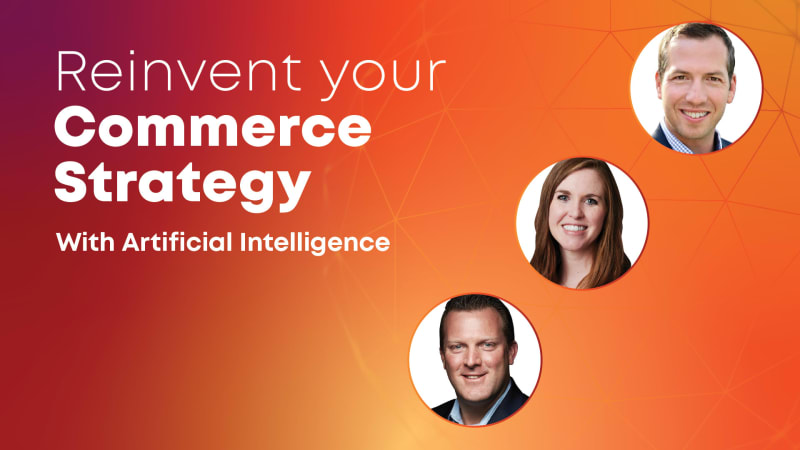
Join ecommerce expert Brian Beck, Artie Sharpe, Senior Director of Innovation & Experience Design at Hearts on Fire, and Linsey Riner, Vice President of Operations and Creative Services at Acuity Brands, as they discuss the impact that ecommerce relevance has on revenues of their B2C and B2B companies.


