Dieser Inhalt ist nur in englischer Sprache verfügbar.
Okay. We're gonna kick things off. So hi, everyone. My name is Sergio. I'm a product marketing manager at Coveo. So I'm hosting the webinar for you today. And just a little bit about me. So I've been working in ecommerce for around ten years now, most notably working alongside some big brands, globally, helping them kind of define their customer experience strategy and their ecommerce strategies. I'm also joined by our chief strategy and growth officer, Nicholas Darveau-Garneau. And in this short session, so it's about thirty minutes, it's all recorded so that you can share it around with your team, and refer back to it, when required. We're gonna try and unpack ecommerce's elephant in the room, and that elephant is profitability. So it's a huge topic, a lot to cover in in a thirty minute period, but it should be highly relevant for all of you. And it's becoming more and more of an of an issue within especially within b two c, but we're seeing it come become true in b two b as well. So we'll hopefully unpack it, make you aware of any any pitfalls that are coming, and and have a great discussion. So probably best to start off in by way of introduction. So, Nick, you have a really super interesting background. Do you wanna just introduce yourself to everyone? Yeah. Hi, Sergio. Thanks, and thanks to everyone for joining. By the way, feel free to ask questions in the chat as we go through this. Delighted to answer any questions. Yeah. Look. You know, I'm I'm at Coveo for the last five months now. Before that, I was Google's chief evangelist, and I was at Google for for eleven years working with some of the top b two c and b two b retailers in the world. And before that, I started four ecommerce companies. Two that went really poorly, two that went really well. So, you know, you'd you'd always had a hundred percent. But, yeah, I've been doing ecommerce since nineteen ninety six. My first company was called imix dot com, and we were selling music online in nineteen ninety six. And we had to explain to people what the Internet was back then. So I've, been doing this for a while, and and not not always well. Brilliant. Thanks. So I think what we'll do is we'll just jump straight into it, and we'll go into kind of the top questions. And, you know, we we've got, what, twenty twenty six minutes now to to kinda go through this. So my sort of first question, I think it'd be something that's kinda on everyone's mind is, what makes the ecommerce channel fundamentally different to others such as brick and mortar, and, you know, how does that affect profitability as well? Yeah. That's a great question. And, you know, and more and more, by the way, these two channels are are are combined into an omnichannel strategy, which is I think is the right way to think about this, which is, you know, start with the customer, not the channel, and think about what, you know, he or she wants. But in terms of from a channel strategy perspective, it's it's night and day. I mean, running an ecommerce side versus running, you know, a a brick and mortar, business is is different in every possible way in terms of the marketing in terms of the merchandising it's it's really you know in the different KPIs, right, I think for ecommerce, I think historically was growth at all costs, right, revenue, revenue, revenue, and and not so much a concern around profitability. And as a matter of fact, you know, one of the, you know, the elephant in the room is to have, you know, the great, great majority of ecommerce companies, whether they're pure play or whether they're part of a omnichannel retailer, are are still bleeding money, you know, year after year. And a very, very small percentage of the ecommerce providers drive a hundred percent of the profits of the industry. Yeah. You know, I think what's interesting about that is I think things must have changed relatively recently or the mindset on it has changed recently. Because, you know, someone that's been working in this space for a while, you know, I'm I'm relatively shocked by that concept that ecommerce profitability is a big issue because you you normally all normally all you hear is about success stories, about ecommerce growing. And you have I have now noticed on reflection how a lot of the time it doesn't include anything about profitability, but there's a lot around growth. And so what what's kind of going on there? You know, what what's causing this issue? Is it a reframe and a refocus, or is it fundamentally come down to how the business is, is build out cost wise? No. I think it's a number of things. Right? I mean, you know, in theory, starting a business online, you know, has a lot of cost advantages. Right? It should be cheaper to manage. You don't have to buy all this real estate and so on and so forth. But the reality is that if you add up all of the costs so that the you know? And I I used to work at Google for eleven years. Right? I mean, the the cost of customer acquisition is is is usually fairly significant. And then you've got, you know, lower margins typically because price comparison is so easy to do. And then you've got, you know, a much higher level of returns in in, you know, many industries, not every industry. And then you've got some heavy, heavy discounting as well. So, but, fundamentally, I think one of the top reasons why, most ecommerce companies haven't been profitable historically is because they haven't really tried. It hasn't been important. Right? I mean, until the market just recently collapsed. Right? I mean, if you looked at how even omnichannel retailers were valued by by Wall Street, it was on the ecommerce growth. And it was ecommerce growth at all cost. I think that's, you know, gonna turn very, very quickly now. And, you're gonna see retailers really focus on profits. So I I should think that if a retailer wants to focus on profitability and makes that their true North Star metric and starts to do a number of of clever things, which we'll discuss today, ecommerce profitability is achievable Without sacrificing growth, by the way, I think you can have your cake on growth, you know, and on profit as well. It's just that if you ignore profitability and you focus only on growth, you're you're never gonna get there. Yeah. Agreed. And, you know, what what I've been thinking about is how, you know, you have a lot of pure play digital native businesses. Right? You know, in in the market right now, they've grown grown, you know, brilliantly over the last few years. And then you've got your more omnichannel businesses that are used to brick and mortar and, you know, trying to make e commerce work. And some of them have done an amazing job at that, and the kind of shifting culture to become a more digital business. Do do these same issues around profitability plague, sort of your digital native brands, or is it something that's distinct to multi, to the omnichannel retailer? No, man. It it plays both. And, again, it's a matter of where you focus. Right? If you're a digitally native, you know, I I I started four Internet companies, and they were all purely digital companies. And and I was never asked once to make them profitable by by investors or by myself. Right? So I I I didn't even try. And the the thesis was that, you know, once you reach something, you know, escape velocity, once you get big enough and you start to win in your vertical, then you can, you know, focus on profitability. And that's, you know, obviously, Amazon strategy over the last twenty, twenty five years. But, you know, in the end, what ends up happening is that, yeah, maybe in your vertical, you can get some significant market share and become, you know, the the leader of the vertical, but then you've got Amazon to contend with. Right? And you've got, you know, omnichannel retailers or so in the end, like, most of the pure play companies that never reach profitability, and frankly don't get penalized for it until quite recently. So, I would ask you if the problem is even more acute for it's it's funny if you'd asked me, you know, two years ago, who's gonna win in retail? Now is it gonna be the, you know, omnichannel retailers, or is it gonna be the more, digital retailers? And I've got a digital, you know, bent to me, and I would have said, well, you know, the digital retailers know this stuff better. They're they're gonna win eventually. But now, actually, if you're a clever, you know, retailer and you're really leveraging your stores the right way and you have an omnichannel strategy, you can actually absolutely win against a pure play retailer that does a mistake that traditionally omnichannel retailers have made is to completely separate their digital strategy from their store strategy. And now in the last two years, we're seeing now much more omnichannel thinking. And I I don't mean just omnichannel, like, you know, buy online, pick up at a store. I mean, omnichannel marketing. Right? I mean, understanding that the consumer is researching online. Again, whether it's a b two c customer or b two b customer. Right? Like, if I'm a b two b customer, before I call a sales person or be you know, or while a salesperson is calling me, I'm doing some significant research online. So it's it's like the concept of really understanding that winning in commerce, you know, at every step of the way starts with winning the online research phase. You gotta get really, really good at Google marketing, right, for example. Because if you don't win there, you don't exist. Your stores don't exist. So it's it starts with that digital marketing strategy and how good you are doing that. It extends after that all the way to the extraordinary customer experience online that doesn't only just drive your online sales, it drives your store sales and your b to b sales as well. Yeah. Of course. And I think the the point on digital marketing strategy is an important one because that, you know, in terms of costs for a lot of these businesses, it is one of the one of the largest when it comes to your if you're if you're a digital native business. And it didn't kind of tweak for me until more recently that that's why a lot of these high growth, digital native businesses have started opening stores. You know, they're doing that to kind of elevate their brand and get as much basically, it helps them get as much organic traffic as possible rather than having to pay for it. And that that's that's an interesting turn of events because similar to you, if you'd asked me two, three years ago, I never would have thought that that's the way it would go. The idea was the re the high street will die, and it will all be online. And, actually, the opposite is becoming becoming true. And like you say, I think the combined approach is what is what is truly powerful. Well, let let me give you, like, the five three, four minute, you know, speech on digital marketing because I I spent eleven years doing that. Yeah. And I do believe, by the way, that it really starts there. Like, you know, any any commerce strategy, again, b to c or b to b, it's gotta start with an impeccable digital marketing strategy. So so here's some thoughts there. Right? So I imagine basically, being able to understand through a, you know, good enough measurement system the impact of digital marketing on your online sales and on your store sales. And let's take the Google example, for example, kind of piping back your store sales and your online sales back to Google and also piping back the margin of each of these sales. And then, you know, and asking Google for every dollar end of asking me two dollars on margin What happens online or in store? Okay. A two to one omnichannel margin ROI is what I would call it. So that that kind of strategy where you ask, you know, Google to do this, you can use machine learning to do that. You can automate that. And then if if you can achieve that, then you should then increase your marketing budgets and eventually have an infinite marketing budget to make as much money as possible. So that's, you know, and very few retailers are doing as well. Right? So that's whole idea of of making as much money as possible from a marketing perspective, looking at this as an as a as an investment on an expense is crucial. And then the next stage of that is even more sophisticated, which is not only should you worry about, you know, getting two dollars for every dollar that you invest in the short term, but you should really understand customer lifetime value. Meaning, if you acquire a brand new customer, can you forecast how much you're gonna buy from you in the five years and put them into, you know, a top twenty percent customer or a bottom twenty percent? Because if you can do that and by the way, it's not that hard typically. If you can do that and you send this back to Google, Google advertising can help you acquire even better customers. So, like, one of the dirty secrets of ecommerce is that almost nobody does this, and all they focus about is how many customers am I acquiring and what cost per customer. And then there's a whole bunch of churn after that. Right? And and nobody is really looking at this until it's too late, and then the unit economics don't make any sense. So one of the great, great tricks to make sure ecommerce becomes more profitable is to build in customer lifetime value thinking from the start. Yeah. Right? If twenty percent of customers drive ninety percent of all the the revenue, you know, in in a particular retail vertical, again, whether it's b to b or b to c, Can I acquire more people like that, more customers like that? Because that's really what I should care about. And then, you know, kind of going past the marketing piece, can I design a customer experience that is geared towards not the average customer, but that extraordinarily valuable top twenty percent customer? Again, whether it's b to b or b to c. Right? So I'll give you an example. As we as we build customer experiences, now we do a lot of testing, and and we we see, you know, is this page better than this page, for example? And we typically look at a metric like conversion rate. And that metric has been the gold standard of testing for twenty five years, and I test I did all my testing based on conversion rate. It turns out to be an absolutely awful metric if you really think through it because well, look, you know, like, I can help you convert customers out the wazoo. Right? You just you know, hey. Save ninety percent on everything. Get free shipping for life. Conversion rate goes through the roof, but but I just lost my shirt from a profitability perspective. But also conversion rate is the average conversion. Right? What if you build a page that converts better on average or converts a lot worse for your best customers? What have you done to yourself? So so step one is an extraordinary strategy in digital marketing anchored around customer lifetime value profitability you know, across all channels together. That's step one. Step two is, okay. Now now I'm building an experience for my customers again whether it's b to b or b to c. B to b customers, by the way, expect the same level of experience as a b to c customer today, and people expect Amazon. Right? So what it whatever it is that I buy online, I expect it to be as good as Amazon. Well, Amazon has hundreds of machine learning engineers and twenty five years experience designing extraordinary customer experiences. This is really hard to do. Right? So how do you make sure that, you know, the search results that you show are highly relevant to consumers? How do you make sure your recommendations are highly relevant? How do you make sure that the typically eighty five percent of customers who come to your website anonymously? Like, the whole idea of having big data, by the way, in retail is a bit of a misnomer. Typically, you have no data. Right? Like, if if eighty five percent of customers come in anonymously, which is gonna get worse, by the way, because of privacy reasons, like, assume that, you know, two years from now, ninety five percent of, you know, people coming to your website are not registered. You don't have any information on them. And even if you do, their first party cookies are wiped out, you know, by what Apple is doing. So, you know, can you create a personalized experience based on two clicks, two searches. Right? Can you can you get really good at delivering that? Because if you can't do that, now the second dirty secret of the ecommerce is that you can't win on Google or Facebook advertising if you don't make the most amount of money in your vertical. Right? If for every click that Google sends to Amazon, if they make five bucks and you make three bucks, good luck getting any traffic. Right? Amazon cannot bid, you know, cannot bid you by fifty percent. Their brand is typically better, so people click more on the ads anyway. So it's crucial not just to buy a bunch of ads and give some good signals to Google it's crucial to be in the top two or three in your in your industry at you know revenue per visit or even better margin per visit right if you can do that through an extraordinary customer experience, right, you know, people buy more from you, they buy high margin items, and then they come back for free you don't you don't have to pay Google a second time your lifetime value is higher now you can compete on the marketing side but for most retailers I mean for ninety five percent plus of retailers their experience creates a significant deficit compared to the best in breed I can b2c it's it's an Amazon and b2b it could be you know somebody else but if if you're stuck there right if your margin per visit is even twenty five thirty percent lower you're fighting on a marketing battle with with one hand tied behind your back. So so it's crucial. The second piece is is, yes, you wanna have a really highly relevant, highly personalized experience for consumers, which by the way goes much beyond creating, you know, rules for personas. It's gotta be kind of one to one personalization using machine learning at this point, and we can talk more about that and, you know, some concerns people have around that. But you create an extraordinary customer experience. People love it, but that's not enough. Right? You can create an amazing customer experience and still lose your shirt because you're delighting customers so much. You're give you're you're giving the store away. So you have to balance this customer experience with, you know, an eye towards profitable growth. So so imagine building a customer experience using machine learning that not only delights customers, but also, you know, has data for every SKU around profitability, likelihood of every SKU to be returned, the shipping cost of every SKU. And then, you know, the results that are shown to consumers are a a mix of what the customer, you know, wants to buy and what the retailer wants to sell profitably. And and, again, only a machine learning algorithm can really optimize, well, the margin per visits of every visit by maximizing the likelihood of under consumer converting times how much money is gonna be left over when the customer actually converts though the actual margin. Like, they're fully realized margin of that product after, you know, the likelihood of return and after it's been shipped. And then, you know, tack on a third piece of this, which is a really hot piece right now, which is retail media where a lot of retailers are trying to make money by advertising on their side, which is, I think, is a really good idea unless it pollutes your customer experience and you show highly irrelevant results to customers. And then you've just made a deal you know? Well, then you've made a deal with the devil, right, where in the short term, you know, it looks good. You're making money. But then, you know, if you watch your cohorts and you see, you know, the the the return and the lifetime value of these customers, there's a chance that it starts to go down. So so, ultimately, what you really wanna build is this highly complex system where, you know, everything that is shown in the search result and everything that is shown in a recommendation carousel is this idea of highly relevant to the customer part one, part two highly profitable, and part three are any of these products, you know, supported by retail media. You put all this into a machine learning algorithm, and it optimizes margin per visit, and the margin is combining the product margin and the advertising margin. Good. So that that's that's where we have to get to in our in retail to be highly profitable. Nick, could you just dissect, you know, retail media for everyone? Because just in case anyone hasn't heard it, you know, said in that in that term before, just what that is and kind of you've already mentioned a little bit, like, the trend that you've seen so far, but just dissect it a little bit more for everyone that's Yeah. I mean, if you go if you go to Amazon, right, and you search for something, you know, you look at the recommendations, a nontrivial percentage now is actually paid, right, not kind of organic results. Similar to what, you know, when you search on Google, there's paid ads and there's organic results. And Amazon has built a thirty five billion dollar business growing at thirty percent. Right? And it's, you know, ninety percent margin business. So my understanding, by the way, is that, you know, a hundred percent plus of their retail profits come from that one thing from from their advertising. But but what Amazon has done is quite clever like that because you search on Amazon and Amazon sees the search, Amazon returns, you know, organic search results, things that you wanna buy, and it returns ads, but those ads are also highly relevant. Right? They're not kind of, like, you know, plugged in to the system later. They're kind of part of the relevance algorithm for for Amazon. Whereas if you plug in, you know, a third party ad network, it it it can do a good job possibly, but, you know, it could also know, if you search for something, and there's a lot of evidence that this is the case, if the consumer search for something, you'll see the organic results or or, you know, can be okay depending on which search engine you use. Sometimes it can be great. But then you interspersed with this stuff or ads, and the ads, you know, don't match at all what the customer is looking for, and it creates this, you know, pretty bad customer experience. So you have to maintain these two separate systems. You don't talk to each other. They certainly are not optimized together. And next thing you know, you've got this poor experience. And then and and on you think you're doing well because the you know the the the advertising dollars are going up but at what cost on the other side right how much are you cannibalizing your sales And then, how much are you creating, discord with your customer, where the customer's not gonna come back for, you know, a second or third visit? Yeah. Definitely. And I think, you know, if you're a multibrand retailer, you know, that that's that can pose a big opportunity for you in the in the future. Right? It's an additional revenue stream where, you know, you can get people to start to brands that you sell to start to bid on the placement where they where they sit and, you know, have that kind of that arrangement with you. And I think that's even the relevance is a really important part. And I think we've got a few b two b businesses on the call. And their their their kind of luck in this situation is that generally you have to be logged in for those experiences. So you you do become a known customer pretty quickly, if you're shopping for b two b and whether which is very different to to b two c. But knowing them better and knowing what they bought previously and, you know, what's gonna be most relevant to them because you have all of that data and you can be certain of their identity poses an even bigger opportunity, I think, if you if you've got the scale and you've got the multiple brands, to start to look at, you know, retail media at some point. Yeah. I think no. B two b retail is interesting right now. You know, a lot of, you know, a lot of manufacturers are are you know, going direct to consumers. And, you know, there's a number of challenges from a logistics perspective, but from a advertising and customer experience perspective, like, you know, there's years and years of people who've broken their teeth on b to c commerce to learn from. And, you know, for clever b to b retailers, you know, can really leapfrog. I work with a lot of b two b retailers at Google, and, and some of them just went from, you know, not selling online to having a strategy that was you know, Amazon like, not quite Amazon, but but close. Right? And it started, you know, making money actually quite quickly, once they figured out the logistics issues. But so, yeah, I think for b two b, retailers, instead of really stepping back and and and and and I'm not starting from scratch, but learning, you know, what b two c has gone through. And, you know, one more thing, you know, before we we before we went out. You know, I've I've we've been talking about machine learning and optimization, and I do think that's a really critical element for profitability. But let's not leave out the human element because I think it's it's as critical if not more. Right? Right? Retailers have lots of knowledge about customers. Merchandisers are super important. So one question people ask me all the time is like, look, you know, this whole machine learning thing, is it, you know, replacing merchants or is it adding to merchants? And we saw the same thing in marketing where, you know, the automation of marketing on Google, for example, was extraordinarily helpful to marketers, and marketers ended up doing still different jobs. But most of the marketers I work with ended up having more marketers working for them. So so from a merchandising perspective, the way I think about this is, for many retailers, not all, but for many retailers, merchants are, you know, spend, you know, a big chunk of their time just keeping the plates, but try to mimic what I've just described, which is, you know, trying to boost products with higher margins or lower returns, but it just manually. Right and always changing that manually and that takes hours upon hours and a big team to do that. And next thing you know, you've got three thousand boost and berry rules that are probably at this point fairly incomprehensible and for sure are very unlikely to be optimizing the business to profitability right So I imagine replacing, you know, some of that, you know, a big chunk of that with a machine that is optimizing to profitability every day. Now, however, that machine, like as Picasso would say, it's kinda stupid. It it, you know, it doesn't, you know, it only has answers. It doesn't know how to ask questions. So let me give you an example of, you know, extraordinary work by the merchandisers that we're working with right now, and I know you've been involved in some of this as well. So, you know, at Coveo, we have all the tools that is described before, machine learning to optimize the profitability and so on and so forth. But we also have tools to have merchants try a bunch of new things to do a bunch of AB testing. So, for example, we were working with, you know, a a retailer that had the hypothesis that, in their shopping cart page, if, if a woman had bought a pair of shoes, What should we show her as an add on? Should we show her more shoes for her, or should we show her more shoes for, you know, her child or her husband if she happens to have a family. Well, we can test that easily, and turns out that showing shoes for men and for children for some of these female customers, like, significantly outperforms. But in machine learning, we'd never have done that. It would have kept showing her shoes for women because it would never have the idea to test this. Right? So so for me, like, I think, like, the real winning combination here is one, extraordinary digital marketing that focuses on lifetime value profitability, number one. Number two, a customer experience built mainly by a machine learning algorithm at first to drive maximum profitability, right, including retail media, including, you know, skew profits and so on and so forth. And then the third leg of this tool is a merchandising organization that is not spending as much time now keeping, you know, the day to day going, but is doing tens of thousands of tests a year to try new things that the machine isn't trying to see if we can lift customer lifetime value profitability right by the way Amazon does all this stuff Right? Amazon has machine learning out the wazoo, but they also have a team of people who do, you know, tens of thousands if not hundreds of thousands of tests every year to see what their machine has missed. Right? So the combination of machine learning and human knowledge is, you know, the ultimate goal If you liberate humans, they not have to do relatively menial tasks every day. Exactly. I couldn't think of a better way to to end it. I think, Nick, that was that was perfect, and we've kind of come up to our to our time. We've got one minute left. And I just to close out, you know, thank you very much for taking everyone through that, and, hopefully, people found that interesting. There's a lot to unpack in thirty minutes. I feel like we really didn't get even get beneath the surface on it. So there's a lot more that we can discuss. If anyone on the call ever, you know, wants to reach out to us, you know, Nick, how's what's the best way for people to get get get in contact with you if they wanted to ask more questions about this topic? Just email email me at n d g at Coveo. Type type it in n d g at coveo dot com. You'd be able to answer any questions at all. Yeah. That'd be perfect. So thank you everyone who joined. Listened very intently. Thank you. We'll close-up now. And if you have any follow-up questions, feel free to email them. Thank you very much.
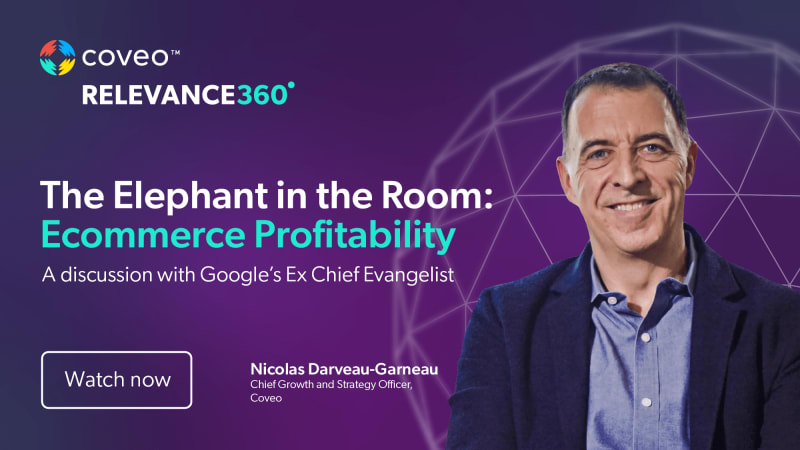
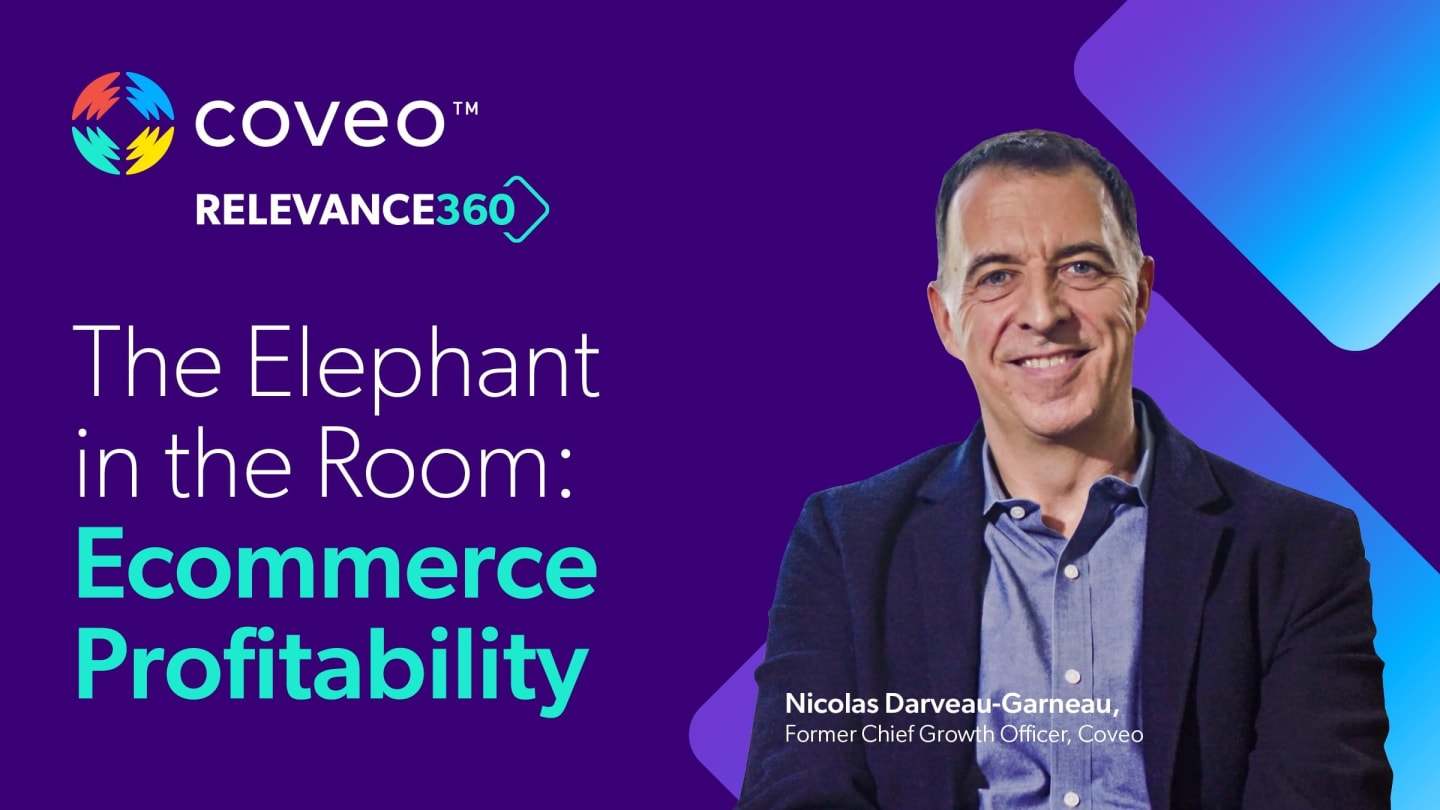
The Elephant in the Room - Ecommerce Profitability

Make every experience relevant with Coveo
